What Changes When AWS Acquires the Arizona Plant?
When Amazon AWS acquires an Arizona plant, wastewater compliance depends on the acquired facility’s flows, discharge route, groundwater setting and reuse plans—not on Amazon’s corporate policy alone. AWS says it now uses recycled water at more than 120 U.S. data-center locations, but each Arizona site must still verify its ADEQ Aquifer Protection Permit, sewer authorization, pretreatment limits, monitoring and closure obligations. During due diligence, confirm whether the plant discharges to public sewer, owns an onsite treatment system, supplies reclaimed water or requires a new discharge or reuse approval.
Amazon Sustainability reported on September 30, 2025 that AWS had expanded recycled-water use from 24 to more than 120 U.S. data-center locations. The company said the expansion was expected to preserve more than 530 million gallons of drinking water annually and that AWS was 53% of the way toward its water-positive-by-2030 goal at the end of 2024. Those figures describe an enterprise water strategy; they do not establish the permit status of an acquired Arizona asset.
The transaction question is narrower: can the wastewater system remain on its authorized path, must ownership or operating-control conditions be amended, or does the site require a new approval and capital plan? For comparison, the acquisition issue is similar to the site-specific review required in Amazon AWS plant-acquisition wastewater requirements in Germany, but Arizona law and groundwater constraints control the outcome here. The acquired facility also needs its physical flow and treatment needs reviewed separately from the corporate reuse objective, including any data-center wastewater and cooling-blowdown treatment assumptions.
Build the Day-One Wastewater Due-Diligence File
Acquisition diligence should produce a permit-by-permit evidence file, not merely a list of facility names. Request the current ADEQ Aquifer Protection Permit, sewer Construction and Discharge Authorizations, reclaimed-water authorizations, utility discharge or pretreatment permits, monitoring reports, inspection records, notices of violation, corrective-action plans and closure documents.
- Identify the permittee, legal operator and ownership structure. Ask ADEQ or the delegated authority whether the transaction changes the permittee, responsible operator, control conditions or design flow.
- Reconcile the water balance with the permits. Include process wastewater, cooling blowdown, sanitary sewage, stormwater separation, hauling, storage and planned expansion.
- Obtain written utility confirmation that the acquired flow is acceptable and remains within the receiving utility’s flow and effluent limits. A line on a utility map is not capacity confirmation.
- Check whether Arizona Department of Water Resources assured-water-supply or water-adequacy requirements apply, especially if the transaction introduces new water demand or expansion.
- Price monitoring, violations, sludge disposal, closure, sampling, reporting and capital obligations as contingent liabilities.
| Evidence item | Question for the transaction team | Decision affected |
|---|---|---|
| APP and reclaimed-water records | Does the permit cover the current owner, flow, treatment, point of compliance and reuse? | Transfer, amendment, redesign or closure |
| 4.01 authorizations | Are construction and discharge approvals current and consistent with actual infrastructure? | Authority to construct or operate |
| Utility correspondence | Will the utility sign for the acquired flow and confirm capacity? | Public-sewer feasibility |
| Water balance and monitoring | Do actual flows and effluent results match the permitted basis? | Significant-amendment exposure |
| Closure and enforcement file | Who bears sampling, reporting, residuals and closure costs? | Environmental liability and holdback |
The Texas and Mexico acquisition reviews illustrate why permit history must be treated as a transaction control rather than an operations appendix: see the Amazon AWS plant-acquisition wastewater requirements in Texas and the Amazon AWS Mexico plant wastewater requirements in 2026.
Choose the Legal Wastewater Route Before Selecting Equipment
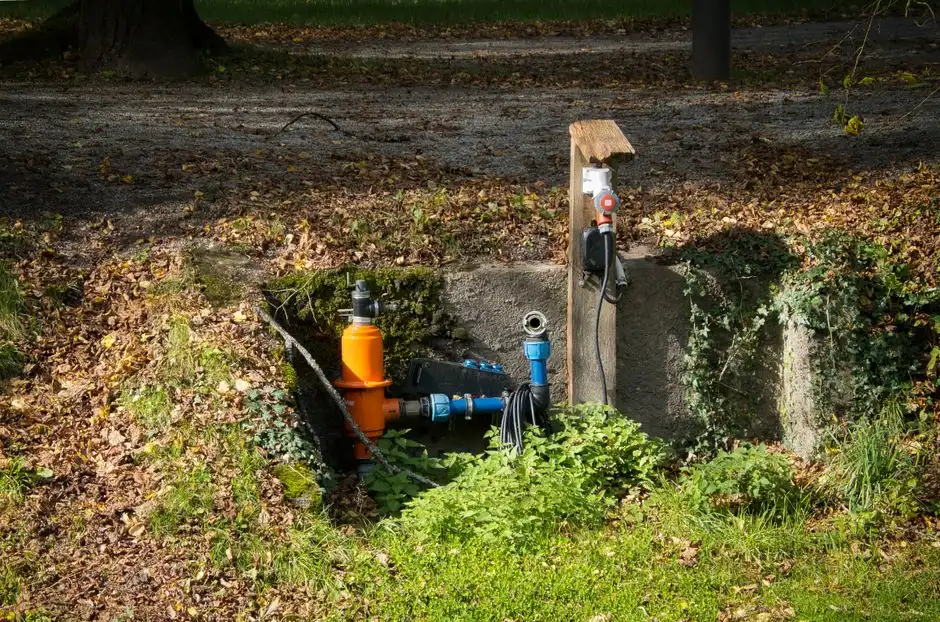
The buyer must establish legal ownership and control of the wastewater route before selecting treatment equipment. A public sewer, an onsite plant and a reclaimed-water supply each create a different permitting and operating chain.
| Route | Controlling evidence | Pre-procurement condition |
|---|---|---|
| Public sewer | Written utility acceptance, capacity confirmation and applicable 4.01 approvals | Confirm who owns the sewer and treatment capacity |
| Onsite treatment | Individual or general APP, design flow and groundwater setting | Obtain the applicable ADEQ authorization before committing to a process |
| Reclaimed-water supply | Intended end use, recycled-water class, supply agreement and APP conditions | Define the reuse classification before sizing treatment |
For public sewer, obtain written utility acceptance and wastewater capacity confirmation. For a 4.01 sewer, the Modern Engineering Solutions Arizona guidance states that R18-9-A301 prohibits construction before Construction Authorization and prohibits flow before Discharge Authorization. The receiving plant owner must also sign the required ADEQ capacity form under R18-9-E301(C).
For an onsite plant, A.R.S. § 49-241 identifies sewage-treatment facilities and onsite wastewater facilities among facilities requiring APP coverage unless an exemption applies. The Modern Engineering Solutions guidance, presented as general education on Arizona rules as of October 2026, says a central or larger plant generally needs an individual APP. An interim state provision extends general permits to some onsite systems under 75,000 gallons per day, but ADEQ should confirm the current path. If applicability remains uncertain, R18-9-106 permits a written determination request, and the guidance says ADEQ has 45 days to answer.
For reuse, select the end use and class before sizing treatment. Under the supplied guidance, Class B is secondary treatment and disinfection, Class A adds filtration, and the plus classes add nitrogen removal. Residential and open-access landscape irrigation requires Class A; golf-course irrigation may use Class B or better. Type 2 recycled-water general permits provide class-specific coverage, but they do not replace the facility’s individual APP. Seven Seas Water reported that Arizona finalized direct-potable-reuse rules in 2025, but potable reuse requires a separate pathway and cannot be inferred from a general reclaimed-water permit.
Treatment selection should then follow the confirmed wastewater character, effluent or reuse quality, hydraulic variability, land availability, operating labor and expansion plan. A general process description is insufficient for final sizing.
Translate the Permit Path into Treatment and Monitoring
Permit conditions define the equipment envelope: permit limits and point-of-compliance requirements must be translated into process guarantees, sampling points and monitoring controls.
For a new individual plant, the Modern Engineering Solutions guidance says the technical package must demonstrate best available demonstrated control technology and show that the plant will not violate aquifer water-quality standards at the point of compliance. Under R18-9-B204, the supplied new-plant standards are BOD5 below 30 mg/L or CBOD5 below 25 mg/L and TSS below 30 mg/L as 30-day averages, plus total nitrogen below 10 mg/L as a five-month rolling geometric mean.
The same guidance states that stricter pathogen limits apply at 250,000 gallons per day and above when seasonal high groundwater is within 20 feet, or where karstic or fractured bedrock reaches the surface. The R18-9-B204 package must also be coordinated with points of compliance, monitoring, hydrogeologic information and a contingency plan.
| Design issue | Relevant evidence | Equipment consequence |
|---|---|---|
| Treatment objective | Discharge limits, reuse class or utility pretreatment limits | Define required process and performance guarantee |
| Influent character | Current sampling, oil and grease, solids, nutrients and process wastewater | Determine biological, pretreatment or filtration duties |
| Hydraulic loading | Permitted design flow and measured peaks | Confirm equalization and treatment capacity |
| Point of compliance | Permit map, monitoring locations and groundwater conditions | Set sampling points and contingency response |
| Site constraints | Setback, groundwater, geology and available footprint | Select compact or distributed configurations |
The supplied setback guidance identifies 350 feet for sewage-treatment components at 24,000 to less than 100,000 gallons per day, reduced to 50 feet with full noise, odor and aesthetic controls. An MBR membrane bioreactor wastewater treatment system may be relevant where compact treatment and near-reuse-quality separation are required; the product description combines activated-sludge treatment with submerged PVDF membrane filtration below 1 micron. A DAF system for oil, grease and suspended-solids removal may be relevant where those constituents require removal before biological treatment or discharge.
Do not finalize compliance equipment without the permit effluent limits, reuse class, utility limits, influent characterization and groundwater and geology data. Process selection and permit compliance are separate decisions.
Plan Reuse, Construction and Closure Before Signing Off
Reuse and construction controls must be complete before closing because an unresolved authorization can prevent both operation and future reuse.
The Modern Engineering Solutions guidance states that every reclaimed-water use requires coverage for its class and that the plant may deliver reclaimed water only as its individual APP allows. R18-9-B702 reportedly limits runoff from reuse sites, requires purple pipe or tape on lines 8 inches and smaller, and keeps pipelines 50 feet from drinking-water wells unless built to an alternate standard.
For a 4.01 project, R18-9-A301 requires Construction Authorization before construction and Discharge Authorization before flow. The guidance says the discharge stage requires a sealed Engineer’s Certificate of Completion and passing field tests under R18-9-E301(E). For a plant permitted at 500,000 gallons per day or less, R18-9-A211 reportedly treats a design-flow increase of 10% or more as a significant amendment; confirm the permit condition and obtain agency confirmation.
| Obligation | Required evidence | Transaction treatment |
|---|---|---|
| Construction authorization | Approved plans and agency correspondence | Closing condition or escrow |
| Startup and discharge | Field tests, certificate and operator training | Post-closing milestone with holdback |
| Monitoring and reporting | Sampling plan, laboratory records and reporting calendar | Assign operating and financial responsibility |
| Residuals and closure | Sludge-handling plan and closure cost basis | Fund and assign a responsible owner |
| Amendments | Current design flow and expansion plan | Identify significant-amendment trigger |
Include construction authorization, startup testing, operator training, monitoring, reporting, spare parts, sludge or residuals handling and closure funding in the implementation plan. For each permit, assign a responsible person, required evidence, approval milestone and contingency for rejection, delay or redesign. Chemical dosing and residuals handling should be evaluated where the confirmed treatment process requires them; an automatic chemical dosing system cannot be justified by a generic process description alone. If solids dewatering is required, a plate-frame filter press also requires confirmation of cake characteristics, operating schedule and disposal route.
Make the Final Go or No-Go Decision
Proceed when the wastewater route is documented, agency and utility acceptance is clear, permits match current operations, treatment can meet confirmed limits and closure responsibilities are assigned. Escalate when ownership transfer, design-flow changes, contamination, groundwater sensitivity, reuse classification or an expired or inconsistent permit could require agency action.
| Close-readiness test | Pass condition | Action if unresolved |
|---|---|---|
| APP | Current authorization matches owner, flow and operation | Obtain agency determination before closing |
| 4.01 and reuse | Construction, discharge and class coverage align | Condition closing or allocate redesign risk |
| Utility | Written capacity and acceptance exist | Price connection or alternative treatment |
| ADWR review | Supply implications are documented | Escalate expansion proposal |
| Operations and closure | Monitoring, reporting, residuals and funding are assigned | Establish escrow, holdback or no-go |
Do not assign a capital value to the compliance plan until the team has the permit files, current monitoring results, flow data, utility correspondence and engineer-of-record assessment. A defensible capital and operating estimate can then be built from the 2026 wastewater capex and opex guide and confirmed project inputs.
Frequently Asked Questions
Does acquiring a plant in Arizona transfer its ADEQ wastewater permit automatically?
Do not assume an automatic transfer. The permittee, ownership and operating-control facts must be checked with ADEQ or the delegated authority. If those facts change, the agency may require a permit modification or other action before the acquired system continues operating under the existing authorization.
Can AWS reuse reclaimed water at an acquired Arizona site without a new permit?
Not without confirming the full authorization chain. The site’s individual APP, proposed end use and recycled-water class must align, and every reuse requires applicable coverage. Define the use and class before specifying treatment; a Type 2 recycled-water permit does not replace the facility APP.
How much will the wastewater compliance plan cost?
No supported quotation is available from the supplied research, so the buyer should request site-specific pricing after obtaining permit files, flow data, wastewater characterization, utility limits, groundwater conditions and the engineer-of-record’s scope. Request itemized equipment, construction, permitting, monitoring, residuals, startup and closure costs rather than a single allowance without those inputs.
How should treatment equipment be sized during acquisition due diligence?
Establish permitted design flow, current wastewater quality, discharge or reuse limits, hydraulic peaks, groundwater conditions and future expansion before sizing. Use confirmed flows to evaluate treatment capacity and use confirmed permit limits to define performance guarantees. A packaged underground integrated sewage treatment system, MBR and DAF should be compared by treatment objective rather than selected from generic descriptions.