Colombo hospitals must treat wastewater to meet CMC sewage discharge requirements, with enforcement increasing in 2025. Typical pollutant loads include COD (300–1,200 mg/L), BOD (150–600 mg/L), TSS (200–800 mg/L), and fecal coliform (10^5–10^7 CFU/100mL). The CMC mandates pre-treatment before discharge to the municipal system, with fines for non-compliance. Underground integrated treatment systems (e.g., WSZ series) are ideal for Colombo’s urban hospitals due to space constraints and climate resilience, achieving 92–97% COD removal at flow rates of 10–80 m³/h.
Why Colombo Hospitals Need Wastewater Treatment in 2025
The Colombo Municipal Council (CMC) requires hospitals to pre-treat wastewater before discharge to the municipal sewage system, a mandate that has shifted from passive observation to active enforcement in 2025. While many state hospitals in Colombo historically discharged untreated wastewater directly into CMC sewers, the 2020 Environmental By-Laws have closed these loopholes. CMC Environmental By-Laws 2020, Section 12, stipulates that any facility failing to meet pre-treatment standards faces immediate legal action and substantial financial penalties.
Recent enforcement actions underscore this shift. In Q1 2025, the CMC issued formal non-compliance notices to three major private hospitals in Colombo 03 and Colombo 07. These notices typically cite excessive Chemical Oxygen Demand (COD) and fecal coliform levels, providing a 30-day window for remediation before fines are levied. Fines currently range from LKR 500,000 to LKR 5,000,000 per violation, with repeat offenses potentially leading to the revocation of the facility's trade license or court-ordered closure. This regulatory pressure is compounded by the increasing scrutiny from the National Environmental Authority (NEA) regarding "Red" category industrial discharges.
Real-world evidence of successful mitigation can be seen in recent infrastructure upgrades. For instance, Nawaloka Hospital installed a WSZ series underground integrated system for Colombo hospitals in 2024 to proactively avoid CMC penalties. This installation was designed to handle high-strength medical effluent, successfully reducing influent COD from 800 mg/L to a consistent effluent of 50 mg/L. By implementing this system, the facility not only met CMC Schedule 3 limits but also eliminated the odors and logistical challenges associated with older, above-ground treatment lagoons that are ill-suited for Colombo’s dense urban environment.
Colombo Hospital Wastewater: Pollutant Loads and Treatment Targets
Typical influent quality for Colombo hospitals is characterized by high variability and significant concentrations of organic matter and pathogens, primarily due to the mix of clinical, laboratory, and laundry waste. Engineering data from Rikillagaskada Base Hospital and similar facilities in the Western Province indicate that COD levels frequently peak at 1,200 mg/L, while fecal coliform counts can reach 10^7 CFU/100mL. These parameters necessitate a robust secondary treatment process to ensure the effluent is safe for municipal discharge or potential reuse.
The CMC Environmental By-Laws 2020, Schedule 3, set the definitive legal ceiling for discharge. For a hospital to remain compliant, the treatment system must achieve a 4-log reduction in pathogens and over 90% removal efficiency for organic pollutants. Treatment efficiency targets are not merely suggestions; they are the benchmarks used by CMC-approved laboratories during annual audits. For example, achieving a 92–97% COD removal rate is essential when the raw influent is at the upper end of the 600–1,200 mg/L range.
| Parameter | Typical Influent (Colombo) | CMC Discharge Limit | Required Efficiency |
|---|---|---|---|
| COD (mg/L) | 300–1,200 (Avg: 600) | ≤100 | 92–97% |
| BOD (mg/L) | 150–600 (Avg: 300) | ≤30 | 90–95% |
| TSS (mg/L) | 200–800 (Avg: 400) | ≤50 | 92–97% |
| Fecal Coliform (CFU/100mL) | 10^5–10^7 | ≤1,000 | 99.99% |
| Ammonia (NH3-N) (mg/L) | 20–80 | ≤10 | 85–90% |
| pH | 6.5–9.0 | 6.0–9.0 | N/A |
Influent quality varies significantly based on the hospital's specialty and scale. A 500-bed general hospital typically generates higher hydraulic loads but more diluted organic waste compared to a 100-bed specialized oncology or infectious disease unit, where chemical residues and pathogen density are much higher. Designers must account for these nuances, particularly the high concentrations of disinfectants and antibiotics in hospital sewage that can inhibit traditional biological treatment if not properly managed through equalization and specialized microbial cultures.
Treatment Technologies for Colombo Hospitals: Pros, Cons, and Suitability
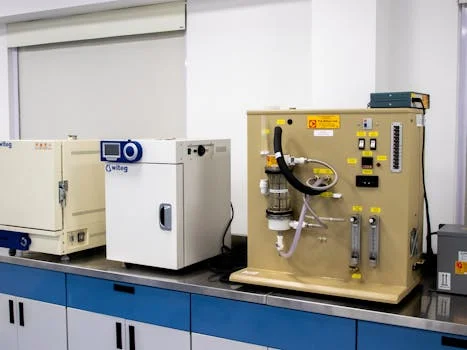
Integrated underground systems, such as the WSZ series underground integrated system for Colombo hospitals, are the most frequent choice for urban facilities in Colombo 02 through 07. These systems utilize a buried configuration that saves valuable surface real estate—a critical factor where land prices are among the highest in South Asia. They are fully automated, requiring minimal daily intervention, and are designed to withstand Colombo’s high humidity and monsoon-driven soil saturation. While they require significant initial excavation, their ability to achieve 97% COD removal in a compact footprint makes them ideal for hospitals like Lanka Hospitals or Nawaloka.
For facilities aiming for higher water sustainability, a MBR system for near-reuse quality effluent in Colombo hospitals offers superior performance. Membrane Bioreactor (MBR) technology combines biological treatment with ultrafiltration, producing effluent with a turbidity of less than 1 NTU. This water is often suitable for non-potable reuse, such as cooling tower make-up or irrigation for hospital grounds. The primary trade-off is the operational cost, as membranes require periodic chemical cleaning and replacement every 5 to 7 years, costing approximately LKR 1.5M to 3M depending on the system size.
Hospitals with significant catering facilities or large diagnostic labs often require a DAF system for hospital wastewater pre-treatment. Dissolved Air Flotation (DAF) is exceptionally effective at removing Fats, Oils, and Grease (FOG) and suspended solids that can clog sensitive MBR membranes or biological filters. In Colombo’s climate, where high temperatures can cause rapid anaerobic degradation of grease in sewers, leading to odors, DAF provides a necessary pre-treatment step to stabilize the influent before secondary treatment.
Disinfection remains the most critical step for public health compliance. A chlorine dioxide generator for hospital wastewater disinfection is often preferred over liquid chlorine or UV in the Sri Lankan market. Chlorine dioxide (ClO2) maintains a residual disinfectant effect that is more stable than chlorine in the presence of organic matter and is more effective against viruses and cysts. This technology is essential for hospitals with infectious disease wards, ensuring that the final discharge meets the stringent 1,000 CFU/100mL limit required by the CMC. For a broader perspective on disinfection choices, engineers may consult a comparison of chlorine dioxide, UV, and ozone disinfection to balance capital costs against microbial efficacy.
| Technology | Best For | Key Pro | Key Con |
|---|---|---|---|
| WSZ Underground | Urban Private Hospitals | Zero footprint, low noise | Fixed capacity |
| MBR Systems | Water Reuse Goals | Highest effluent quality | High energy use |
| DAF + Biological | High-FOG loads (Kitchens) | Handles shock loads | Chemical intensive |
| ClO2 Disinfection | Pathogen control | Residual protection | Precursor storage |
Cost Breakdown: Hospital Wastewater Treatment in Colombo (2025)
Capital costs for hospital wastewater treatment systems in Colombo range from LKR 8 million to LKR 70 million, depending on flow rates and the complexity of the technology selected. Underground integrated systems (WSZ series) for a medium-sized hospital (20–40 m³/h) typically fall between LKR 15M and LKR 30M. In contrast, MBR systems command a premium due to the membrane modules and advanced control systems required, often starting at LKR 25M for similar flow rates. These prices reflect 2025 market rates in Sri Lanka, including import duties and local installation labor.
Operational costs (OPEX) are driven primarily by electricity and chemical consumption. In Colombo, where commercial electricity rates range from LKR 25 to 35 per kWh, energy-efficient aeration is vital. An underground WSZ system typically operates at LKR 150–300 per cubic meter of treated water. MBR systems are more expensive to run, reaching LKR 500/m³ when membrane replacement sinking funds are included. Hospitals must also budget for sludge management; using a plate and frame filter press for hospital sludge dewatering can reduce sludge volume by 75%, significantly lowering the costs associated with CEA-approved waste disposal.
The Return on Investment (ROI) for these systems is increasingly favorable when considering the "cost of non-compliance." For a 200-bed hospital in Colombo 05 with a 40 m³/h flow rate, the financial logic is as follows:
- Capital Investment: LKR 25,000,000 (WSZ System).
- Annual OPEX: LKR 2,200,000.
- Avoided Costs: LKR 3,500,000 (Average avoided CMC fines and reduced municipal water tariffs through reuse).
- Payback Period: Approximately 4.5 years.
Cost drivers in the Colombo market include the depth of the water table (impacting excavation costs during the monsoon season) and the proximity to the CMC sewer connection. Systems designed for 10-year Net Present Value (NPV) calculations show that while MBR has higher upfront and running costs, its ability to facilitate water reuse can offset these expenses if municipal water prices continue to rise in the Western Province.
Compliance Checklist: Meeting CMC and Sri Lankan Environmental Standards

The Colombo Municipal Council Environmental By-Laws 2020 mandate that all hospital effluent meet Schedule 3 discharge limits before entering the public sewer. Compliance is not a one-time event but a continuous operational requirement. Hospitals must maintain a "Green File" containing all permits, test results, and maintenance logs for inspection by CMC or NEA officers. Failure to produce these documents during a spot check is often the first step toward a formal fine.
For hospitals with more than 100 beds, a National Environmental Act (NEA) Environmental Protection License (EPL) is mandatory. This requires a more rigorous application process than the standard CMC permit, including an initial Environmental Examination (IEE) or a full Environmental Impact Assessment (EIA) for new builds. the Central Environmental Authority (CEA) classifies hospital wastewater as a "Red" category activity, meaning it has high pollution potential and requires stringent monitoring of heavy metals and specific pathogens.
Compliance Steps for Colombo Facility Managers:
- CMC Proposal: Submit a detailed engineering design to the CMC Drainage Department, including flow calculations and effluent guarantees.
- Permit Acquisition: Obtain the CMC "No Objection Certificate" (4–6 weeks) and apply for the NEA EPL (8–12 weeks).
- Disinfection Protocol: Ensure the system includes a chlorine dioxide generator for hospital wastewater disinfection to meet the mandatory fecal coliform limits.
- Sludge Management: Contract with a CEA-licensed waste transporter for the disposal of dewatered sludge. Utilizing a plate and frame filter press for hospital sludge dewatering ensures the sludge meets landfill dryness requirements.
- Monitoring: Establish a monthly sampling schedule with a CMC-approved laboratory to verify COD, BOD, and TSS levels.
Noise and odor control are also regulated under the NEA Noise Control Regulations 2022. Systems must operate at ≤55 dB(A) during the day and ≤45 dB(A) at night at the property boundary. This makes underground systems particularly attractive, as the soil acts as a natural sound and odor barrier, ensuring the hospital remains a "good neighbor" in residential areas of Colombo 03 or 08.
Equipment Selection Framework: Choosing the Right System for Your Hospital
Selecting a treatment system requires a structured evaluation of influent quality, site constraints, and 10-year lifecycle costs. Facility managers should begin by defining their primary goal: is it strictly CMC compliance, or is there a strategic move toward water independence? In Colombo’s urban core, space is almost always the deciding factor, pushing many toward integrated underground or MBR solutions. For comparisons of how other regions handle these challenges, one might look at Florida’s hospital wastewater treatment standards or Fortaleza’s hospital wastewater treatment requirements to see how similar climates manage high-load medical effluent.
| Selection Criteria | Underground WSZ | MBR System | DAF + Biological |
|---|---|---|---|
| Space Availability | Limited / None | Moderate | Ample |
| Effluent Goal | CMC Discharge | Irrigation/Reuse | High-Grease Load |
| Budget (CAPEX) | LKR 8M–40M | LKR 15M–70M | LKR 5M–25M |
| Staff Skill Level | Low (Automated) | High (Technical) | Medium |
| Maintenance | Annual Service | Quarterly Service | Monthly Service |
The decision process should follow a logical sequence: 1. Audit Influent: Measure actual peak flows and pollutant concentrations over a 7-day period. 2. Site Survey: Identify underground utilities and soil stability for excavation. 3. Technology Match: Use the matrix above to narrow down to two technology types. 4. Vendor Vetting: Request quotes that include a performance guarantee specifically tied to CMC Schedule 3 limits. 5. Reference Check: Visit at least two hospitals in Colombo currently using the proposed technology to verify odor control and ease of operation.
Frequently Asked Questions
What is the average lead time for a hospital treatment system in Colombo?
From design approval to final commissioning, the process typically takes 4 to 6 months. This includes 6 weeks for CMC/NEA permitting and 12 to 16 weeks for equipment fabrication, shipping, and on-site installation.
Can we upgrade our existing septic tanks to meet 2025 CMC standards?
Septic tanks alone cannot meet CMC Schedule 3 limits for COD or TSS. However, they can often be repurposed as primary equalization tanks or anaerobic stages within a new integrated system, such as a WSZ upgrade, which reduces excavation costs.
How does the monsoon season affect treatment system performance?
Colombo's heavy rains can cause "shock loading" if storm water is incorrectly diverted into the sewage system. Modern systems are designed with equalization tanks to buffer these flows, and underground units are sealed to prevent groundwater infiltration.
Is on-site sludge incineration required for Colombo hospitals?
No, incineration is not mandatory for wastewater sludge. Most hospitals use a filter press to dewater sludge, which is then transported to a CEA-approved landfill. Only biological "Red" category waste from labs requires specialized sterilization or incineration.
What are the power requirements for an automated 40 m³/h system?
A typical WSZ system of this size requires a 15–25 kW connection. It is essential to connect the treatment plant to the hospital’s backup generator to ensure continuous aeration and disinfection during Colombo’s periodic power interruptions.