What Changes When Microsoft Takes Over a Hungarian Plant?
When Microsoft acquires a plant in Hungary, wastewater requirements are determined by the site’s existing authorizations, wastewater composition, discharge route, receiving infrastructure and Microsoft’s post-closing operating plan—not by Microsoft’s ownership alone. Before closing, obtain written confirmation from the competent Hungarian authority and receiving sewer operator on permit continuity, transfer, amendment or reissuance. Characterize each source stream, verify treatment capacity and analytical coverage, and allocate residual and historical liabilities. No Hungarian permit terms or Microsoft-specific process flows were identified in the supplied research, so numerical limits cannot be inferred.
The first diligence question is therefore evidentiary: what applies to this site now, and what would change after Microsoft assumes control? The answer must connect four items: the operative site authorizations; a source-specific wastewater profile; the lawful discharge or reuse route; and planned changes to production, chemistry, flow, cooling, water reuse or residual handling.
The supplied research identifies no Microsoft plant acquisition in Hungary, no permit number, receiving sewer, competent-authority determination or Microsoft-specific Hungarian process flow. It also does not identify Microsoft’s proposed buyer entity or post-closing operating plan. Those omissions prevent a conclusion about which authorization applies.
Front Matter’s “Microsoft acquires GitHub,” published through its academic acquisition record, discusses Microsoft’s acquisition of GitHub and reports that GitHub was last valued at $2 billion in 2015. That transaction history provides no evidence about Hungarian industrial wastewater requirements. Similarly, Microsoft’s support for wastewater-based carbon-removal projects, reported by Carbon Credits in 2026, concerns a climate strategy rather than an industrial plant acquisition.
A transaction screen is not a substitute for Hungarian legal advice or a written determination from the competent authority. The same sequence applies to Hungarian acquisition requirements for another technology manufacturer.
Build the Permit and Responsibility Register Before Closing
Permit continuity must be demonstrated, not inferred from the existence of an environmental approval. The buyer should obtain the current discharge permit or other site authorizations, industrial sewer pretreatment agreement, monitoring records, non-compliance history, sampling plans, chemical inventories, capital projects and every material amendment.
Ask the competent Hungarian authority to state in writing which permissions can transfer, which require a new holder and which require amendment because the operator, process chemistry, flow or reuse arrangement changes. The supplied research establishes no universal Hungarian transfer rule. The operative evidence is the authority’s written determination, supported by the underlying permits and correspondence.
The register should also identify previous-owner closure and decommissioning obligations, site-restoration provisions, financial assurance and records associated with earlier industrial use. Each item then needs a named post-closing owner, supporting evidence, current status, unresolved exposure and a transaction remedy: a closing condition, covenant, price adjustment, escrow or specific indemnity.
The CATL Hungary enforcement example illustrates why records must be treated as transaction evidence. HydropureWater’s 2026 CATL acquisition review, citing the Budapest Business Journal, describes a HUF 10 million enforcement matter involving waste labeling, collection points, hazardous-waste identification, security and logs missing deposit and removal dates. Its relevance is records discipline, not a wastewater benchmark.
| Register item | Required evidence | Decision allocation |
|---|---|---|
| Current site permissions and amendments | Operative permit or consent, amendments, correspondence and authority confirmation | Transfer, amendment, replacement, closing condition or indemnity |
| Sewer and pretreatment obligations | Agreement, local rules, permitted flow, monitoring, surcharges and capacity confirmation | Named operator, budget and unresolved-capacity remedy |
| Historical wastewater performance | Outlet data, sampling records, deviations, enforcement and corrective actions | Allocate historical liability or withhold reliance on seller data |
| Treatment and residual route | Ownership map, operating records, sludge route, disposal evidence and financial assurance | Assign responsibility and price or condition unresolved exposure |
| Decommissioning and prior use | Closure plan, restoration provisions, security and release conditions | Determine survival, security, release and responsible entity |
Classify Every Wastewater Source and Compliance Route

Every source stream needs a documented lawful destination before treatment is selected. Separate wastewater by production source, process step, batch or continuous operation, and normal versus upset conditions. A plant-wide average can conceal concentrated, short-duration discharges that control pretreatment and treatment capacity.
For direct discharge, obtain the site authorization, receiving-water conditions, sampling points, reporting duties and modification triggers from the competent Hungarian authority. For sewer discharge, obtain the receiving operator’s permitted flow, prohibited materials, monitoring requirements, surcharge mechanism, available treatment capacity and industrial sewer pretreatment conditions. An industrial sewer pretreatment agreement can impose obligations that do not appear in the environmental permit.
For industrial wastewater reuse, establish the required water-quality specification and whether higher recovery changes the residual mass balance. Treatment review must therefore include concentrate management, not only permeate quality. The existence of a sewer route does not prove adequate receiving capacity, and an installed treatment plant does not prove suitability for changed Microsoft process chemistry.
| Compliance route | Authority or agreement to verify | Evidence required |
|---|---|---|
| Direct discharge | Competent Hungarian authority and site authorization | Permitted route, applicable conditions, monitoring points, reporting duties and modification triggers |
| Sewer discharge | Receiving sewer operator and industrial sewer pretreatment agreement | Acceptance, permitted flow, prohibited materials, monitoring, surcharges and available capacity |
| Internal reuse | Process specification and downstream treatment requirements | Quality target, recovery, residual concentration, concentrate route and authorized disposal or discharge path |
Route classification should be maintained in the same permit-and-responsibility register. If the operating plan changes the route, feed chemistry, reuse rate or concentrate destination, that change must be checked against the applicable authorization or agreement rather than treated as an engineering optimization.
Characterize the Wastewater Before Sizing Treatment
Treatment sizing requires a representative, source-specific design basis rather than inherited outlet averages. Obtain flow, pH, temperature, suspended solids, oil and grease, chemical oxygen demand, fluoride, metals, acids and bases, solvents, PFAS and project-specific constituent data under documented operating conditions.
Reconcile the seller’s wastewater mass balance with process chemistry, chemical substitutions, supplier declarations, freshwater use, cooling, blowdown, reuse and final discharge. Model planned changes such as higher utilization, new products, chemical substitutions and expanded water-reuse targets. Each can change flow, constituent load and concentrate production.
For PFAS, request the full chemical inventory, material safety data sheets, supplier declarations and process chemistry. Historical outlet data cannot substitute for disclosure where proprietary chemicals or substitutions may exist. The analysis plan should also identify data ownership, sampling authority, method validation, detection limits, chain of custody and notice obligations for chemical changes.
The comparative New York dispute illustrates why analytical scope matters. HydropureWater’s 2026 review of CHIPS Communities United’s comments on a Micron draft permit states that testing was proposed for 40 PFAS chemicals using EPA Method 1633/1633A. It also reports that the comments cited Cornell University studies from 2021 and 2023 indicating that more than 90% of semiconductor-wastewater PFAS compounds could be missed by conventional analyses such as Method 1633. Neither point is Hungarian law.
| Design-basis input | Required information | Decision affected |
|---|---|---|
| Source-separated flow and chemistry | Producing unit, process step, batch and upset conditions, representative flow and constituents | Equalization, pretreatment and treatment sizing |
| Wastewater mass balance | Freshwater use, cooling, blowdown, reuse, discharge and process inputs | Water balance and route validation |
| Chemical disclosure | Inventory, safety data sheets, supplier declarations and substitutions | Analytical scope and treatment objectives |
| Forward operating plan | Utilization, new products, chemical changes and reuse targets | Capacity, permits and concentrate management |
| Representative sampling | Defined conditions, methods, chain of custody and quality controls | Acceptance of the design basis |
For a semiconductor-related process, the semiconductor HF wastewater treatment design provides a useful screening reference, but it cannot substitute for this plant’s characterization or Hungarian site limits.
Match Treatment Stages to Source-Specific Risks
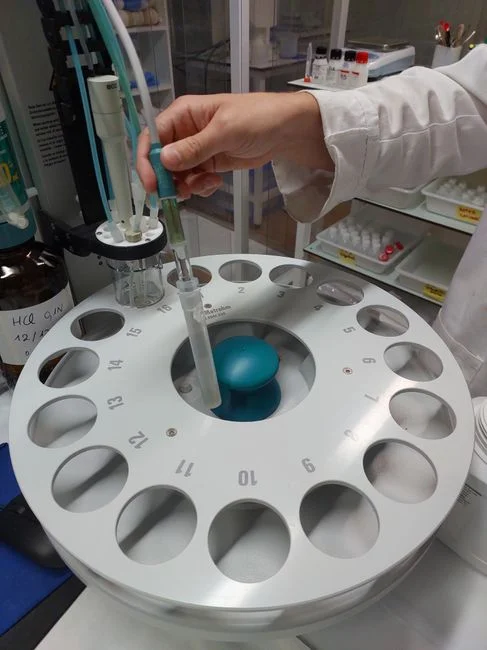
The treatment train must follow identified stream risks, not a preferred equipment brand. A defensible sequence may include equalization and screening; solids or oil removal; pH and chemical control; biological treatment where appropriate; membrane or polishing; disinfection; sludge dewatering; and reuse or final-discharge handling. Each stage needs a defined control objective and verified influent basis.
DAF pretreatment is relevant where suspended solids, oil and grease, FOG or colloidal matter controls the requirement. It should not automatically be presented as the complete treatment train. For water reuse, industrial RO systems for semiconductor water reuse require review of pretreatment, recovery, membrane fouling, required reuse quality and concentrate management.
Where biological treatment and solids separation are justified, MBR wastewater treatment for industrial reuse should be assessed against actual flows, chemistry, footprint and sludge-handling needs. A comparison of MBR and conventional activated-sludge approaches is available in the 2026 MBR and activated-sludge engineering guide.
| Treatment stage or option | Evidence to require | Key unresolved issue |
|---|---|---|
| Equalization, screening and solids or oil removal | Source-separated loads, variability, pretreatment performance and operating controls | Whether removal objectives cover the actual solids, oil, FOG or colloidal load |
| pH and chemical control | Neutralization basis, chemical demand, controls and downstream compatibility | Whether chemical additions affect reuse, treatment or residuals |
| Biological treatment, including MBR where justified | Actual flow and chemistry, footprint, validated separation and sludge handling | Whether biological performance and solids separation are fit for purpose |
| RO and polishing | Pretreatment, recovery, flux, rejection, reuse specification and concentrate route | Whether membrane fouling and residual management are acceptable |
| Disinfection and final handling | Disinfection objective, monitoring, residual or final route | Whether the final route is lawful under current authorizations |
Require treatment demonstrations for identified contaminants and relevant streams. A general claim that membranes or activated carbon remove PFAS is not performance evidence, and the supplied research establishes no universal removal rate.
Treat Residuals and Historical Liability as Transaction Assets
Treatment solids and RO concentrate require their own concentration, destination, monitoring, transport and responsibility records. A compliant liquid outlet does not close the residual pathway. The buyer must identify the waste route, required documentation, disposal evidence and party bearing operating, transport, exceedance and third-party-claim costs.
CHIPS Communities United warned that toxic chemicals can become concentrated in treatment solids. This is a comparative risk insight, not a Hungarian disposal rule. Its transaction implication is that the solid-waste route must be verified alongside the liquid route.
New York infrastructure examples show why costs and liabilities must be allocated contractually. HydropureWater’s 2026 review cites NY State of Politics for a $150,000 land transaction and $549 million in taxpayer-funded Oak Orchard upgrade commitments, and CNY Central for a proposed facility cost of up to $2.5 billion. These are New York values and are not Hungarian cost estimates.
Before closing, allocate ownership, operating responsibility, sludge route, disposal evidence, residual monitoring, exceedances, third-party claims and residual-disposal costs among named post-closing entities. Require financial assurance and release conditions for decommissioning, site restoration and prior-use obligations.
Residual controls should also be included in equipment procurement. The 2026 multiple-effect evaporator engineering guide can inform technical review, but it cannot determine the Hungarian waste route or residual liability without site-specific evidence.
Turn Wastewater Findings Into a Closing Decision
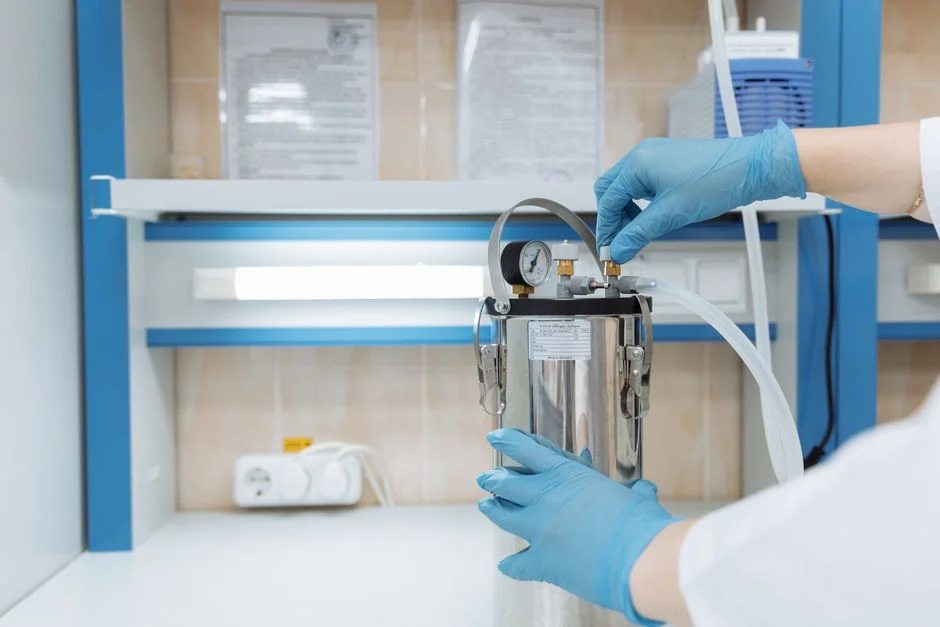
Proceed only when the permit register, wastewater mass balance, sewer agreement, receiving-capacity confirmation and treatment-performance evidence substantiate a complete source-to-destination compliance pathway. Where the pathway is credible but specified evidence or approvals remain open, condition closing on those items, price the work or withhold a defined amount.
When material wastewater history, contaminants, capacity or liability cannot be established, do not rely on unverified treatment or discharge assumptions. Hold or price the residual risk, with the price supported by identified work rather than a generic allowance. Every assumption needs an owner, the evidence needed to verify it and a deadline for conversion into a confirmed permit, agreement or performance result.
| Diligence outcome | Closing treatment | Required allocation |
|---|---|---|
| Route, capacity, permits and treatment performance are substantiated | Proceed with allocated responsibilities and operating controls | Named compliance owners, monitoring and residual budget |
| Pathway is credible, but evidence or approvals remain open | Condition closing, price the work or withhold a defined amount | Deadline, evidence, owner and escrow or indemnity mechanism |
| History, contaminants, capacity or liability cannot be established | Hold or price the residual risk | Explicit uncertainty treatment; no reliance on unverified assumptions |
| Equipment scope remains unresolved | Defer commitment until the design basis is verified | Performance objectives, exclusions, residual route and compliance owner |
Equipment bids should be based on a verified design basis, complete site-limit package, flow scenarios, reuse target, residual route, performance exclusions, monitoring integration and named compliance owner. The cross-border plant acquisition wastewater due diligence illustrates the broader acquired-plant decision sequence, but local Hungarian evidence remains controlling.
Frequently Asked Questions
Can Microsoft rely on the existing Hungarian plant permit after the acquisition?
Not solely because Microsoft becomes the owner. The competent Hungarian authority must confirm in writing whether the relevant permission can continue, requires a new holder, must be amended or must be replaced. The determination should be checked against the site’s proposed operating plan and any change in operator, chemistry, flow or reuse arrangement.
How much should Microsoft budget for wastewater treatment?
The supplied research contains no Hungarian cost figure, so a defensible budget cannot be calculated from corporate identity or flow data alone. Request stream-specific characterization, site conditions, average and peak flow scenarios, reuse targets, treatment objectives, residual routes, monitoring requirements and utility assumptions before obtaining comparable lifecycle bids.
Should wastewater treatment equipment be selected before closing?
Equipment should be quoted against verified treatment objectives, site limits, representative influent and effluent data, residual routes and performance demonstrations—not against an assumed industrial profile. Where treatment or residual risk remains unresolved, define exclusions, holdback, warranties, responsible parties and allocation of permit deviations or exceedances.
Does Microsoft need a separate PFAS analysis standard in Hungary?
No Hungarian PFAS mandate was identified in the supplied research. The Method 1633/1633A and 40-chemical discussion concerns a comparative New York dispute. For this transaction, the defensible approach is to obtain chemical disclosure, identify proprietary or substitutable substances and establish a stream-specific analytical scope with the competent authority and receiving operator.
What evidence allows Microsoft to close on the wastewater risk?
Closing requires a verified permit position, source-specific characterization, a lawful discharge or reuse route, receiving-capacity confirmation, treatment-performance evidence and contractual allocation of residual and historical risk. Where any element remains open, assign it an owner, deadline and transaction remedy rather than allowing it to pass into the post-closing operating plan.