Identify the permit and production category before selecting equipment
The enforceable requirement is the chain from 40 CFR Part 403 to the applicable categorical standard and then to the plant’s individual industrial-user permit. For plastics and rubber facilities near Rome, United States, the current permit establishes the site-specific limits, monitoring conditions, reporting obligations, and enforcement authority; generic treatment literature cannot replace it. The U.S. plastics and rubber pretreatment requirements identify the Control Authority as the POTW operating an EPA-approved pretreatment program, or the Approval Authority where the POTW has no approved program. The most stringent applicable requirement controls, so categorical limits do not displace stricter local or permit conditions.
Before issuing an equipment specification, obtain four documents: the current individual permit, the receiving POTW pretreatment ordinance, the approved-program documents, and written confirmation of the designated sampling point. Then map each production stream to its regulatory category. Plastics operations may fall under 40 CFR Part 414, including contact cooling and process water under §414.11 or emulsion process wastewater under §414.21. Rubber operations fall under 40 CFR Part 463, with separate treatment for tire production, latex-based processing, and general rubber products such as mechanical, molded, and extruded goods. These classifications are established in HydropureWater’s 2026 Romeo-area compliance guide.
| Regulatory layer | Decision it controls | Required plant evidence |
|---|---|---|
| 40 CFR Part 403 | General pretreatment framework, pass-through prohibition, interference prohibition, and program requirements | Waste-stream map, pollutant characterization, and evidence supporting permit compliance |
| 40 CFR Part 414 or 463 | Applicable plastics, resin, synthetic-resin, or rubber production category | Production method, product mix, and documented stream-to-subcategory mapping |
| Individual permit and local program documents | Enforceable limits, sampling point, monitoring frequency, reporting, and corrective-action duties | Current permit, POTW ordinance, approved-program documents, and written sampling-point confirmation |
The sequence matters. First identify the authority and permit; then classify the production stream; then verify which conditions the permit actually incorporates. Do not size equipment against a subcategory that has not been documented, and do not assume the Control Authority is merely the POTW without checking whether an approved local pretreatment program exists.
Characterize continuous and batch wastewater streams
Representative wastewater data must reflect both steady production and the discharges most likely to cause an excursion. Request the wastewater flow diagram, production method, product mix, raw-material and additive inventory, batch schedule, and recycle or zero-discharge return points from production, environmental, and maintenance teams. Separate continuous streams from intermittent kettle-cleaning, latex-finishing, rubber-molding, and other batch discharges before calculating equalization requirements.
HydropureWater’s 2026 Romeo-area guide identifies six parameter families commonly monitored in plastics and rubber operations: TSS, oil and grease, BOD/COD, pH, process-specific priority pollutants, and PFAS where fluoropolymers or PFAS-treated feedstocks are present. The Romeo-area plastics and rubber compliance guide specifically warns that a composite collected only during stable production can miss a kettle-cleaning or molding discharge. Sampling design must therefore cover the relevant operating states and identify the resulting mass and concentration loads.
| Investigation area | Required characterization | Why it affects design |
|---|---|---|
| Flow and batching | Continuous flow, peak batch flow, discharge duration, production schedule, and equalization return points | Determines hydraulic buffering and whether downstream units can tolerate intermittent loads |
| Conventional parameters | TSS, oil and grease, BOD/COD, and pH | Defines physical separation, biological load, solids handling, and chemical-control duties |
| Polymer-specific organics | Styrene, acrylonitrile, vinyl chloride, benzene, ethylbenzene, anthracene, and phenanthrene as relevant | Supports evaluation of source control, stripping, adsorption, and analytical monitoring |
| Catalyst metals | Metals associated with the plant’s process chemistry | Identifies precipitation or other dedicated treatment requirements |
| PFAS and 1,4-dioxane | Screen where fluoropolymer processing or PFAS-treated feedstocks are present; check current state and permit conditions | Determines whether specialized treatment or monitoring belongs in the project scope |
For relevant polymerization streams, investigate styrene, acrylonitrile, vinyl chloride, benzene, and ethylbenzene, together with semivolatile anthracene and phenanthrene and relevant metal catalysts. Include 1,4-dioxane in the investigation where fluoropolymer processing is present. HydropureWater’s 2026 U.S. pretreatment article states that no federal categorical PFAS limit applies under Part 414 or 463 as of 2026; state requirements and permit conditions must still be checked. Ask the laboratory for project-specific analytes, detection limits, mass loads, and sampling instructions rather than accepting a generic analytical list.
Build a treatment train around the pollutants present
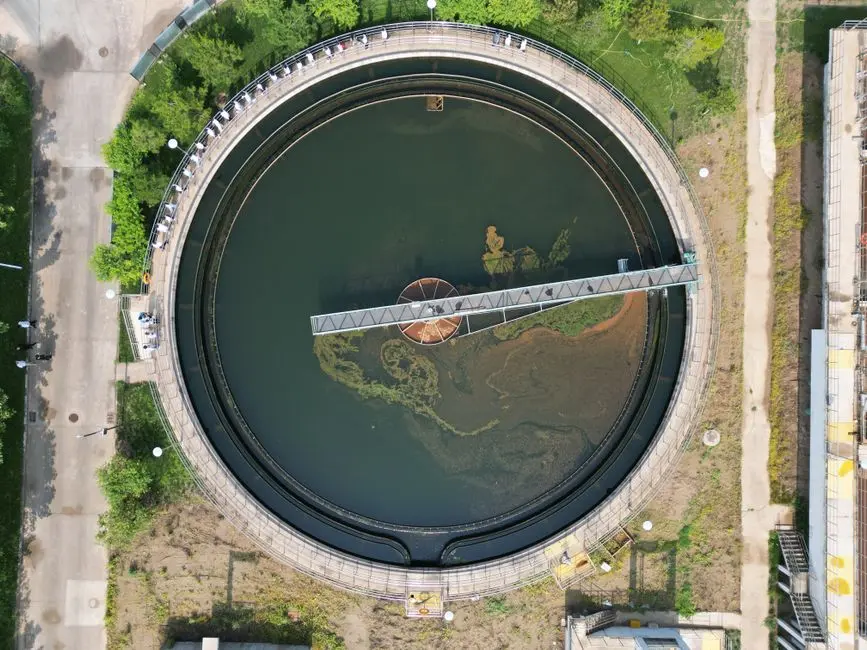
The correct treatment train begins with source segregation and equalization, then assigns unit operations according to pollutant form and concentration. An undersized or bypassed equalization basin can undermine downstream performance and contribute to notice-of-violation findings for intermittent discharges, according to HydropureWater’s 2026 U.S. pretreatment article. Preserve the distinction between continuous wastewater, batch-cleaning wastewater, recycle returns, and final discharge.
Use an industrial DAF system for emulsified oil and solids when polymer-coagulant emulsions, mold-release agents, latex residues, FOG, colloids, or suspended solids are present. HydropureWater’s 2026 article reports typical single-pass removal of 60–90% for oil and grease and 50–80% for TSS on polymer-bearing streams. These figures describe the reported application; final sizing still depends on representative wastewater and permit limits. A DAF versus sedimentation for industrial wastewater comparison can support a source-segregation review, but it cannot replace site data.
Use biological treatment for biodegradable BOD/COD and anoxic operation where nutrient and process-complexity requirements justify it. HydropureWater’s 2026 research identifies conventional activated sludge and MBR as possible biological stages; it does not establish a universal performance limit for a Romeo-area plant. Use UF or another polishing step when the permit or reuse objective requires removal of residual suspended solids and colloids. The referenced 0.03 micron UF polishing system uses PVDF membranes, accepts turbidity up to 300 ppm, and includes automatic backwash and air scour.
| Wastewater condition | Primary treatment function | Engineering condition |
|---|---|---|
| Intermittent batch discharges or hydraulic spikes | Batch discharge equalization | Base volume and mixing on measured batch flows, duration, and discharge sequence |
| Emulsified oil, FOG, colloids, or suspended solids | DAF with appropriate conditioning | Measured flow and loading, plus performance testing on representative wastewater |
| Biodegradable BOD/COD | Activated sludge, MBR, or another justified biological stage | Influent biodegradability, process chemistry, nutrients, biological control, and redundancy |
| Residual solids or colloids before discharge or reuse | UF or another polishing step | Permit or reuse target, feed-water quality, cleaning strategy, and recovery path |
| pH, coagulation, flocculation, or specialty contaminants | Chemical dosing and dedicated treatment | PLC-controlled injection with chemical inventory, alarms, and operating verification |
| Separated DAF sludge | Dewatering and solids handling | Solids characterization, selected filter-press area, cake-disposal route, and bypass control |
Use chemical dosing for pH adjustment, coagulation, flocculation, and specialty treatment. The automatic dosing product identified in the research supports PLC-controlled injection of coagulants, flocculants, pH adjusters, and other wastewater chemicals. Route separated DAF sludge to appropriate solids handling rather than treating sludge removal as an afterthought; the referenced plate-and-frame filter press covers filtration areas from 1 m² to 500 m².
Every final train remains conditional on the current permit, representative influent testing, hydraulic variation, redundancy, and the final equipment proposal. Treatment selection should not assume that DAF, biology, and UF are all required. Each function must answer a measured pollutant problem and support the enforceable limit at the designated sampling point.
Verify the sampling point and build a compliance record
For most categorical industrial users, the designated sampling point is downstream of all in-plant treatment but upstream of recycle or zero-discharge returns. Obtain written confirmation of the physical location and sampling method rather than assuming the final tank or sewer connection is the compliance point. HydropureWater’s 2026 Romeo-area guide identifies that missing link as a common gap between having equipment and being able to prove compliance.
Use the individual permit’s sampling frequency and method. Routine monitoring is commonly twice per year to quarterly, monthly monitoring may apply during permit-renewal windows, and priority-pollutant scans are usually annual, according to HydropureWater’s 2026 U.S. pretreatment article; the permit controls. Where required, use 24-hour flow-proportional composite samples that represent the actual discharge to the POTW.
Create a traceable record linking each production event to treatment operation, sampling, laboratory results, and corrective action. Online TSS, pH, and conductivity trends should be aligned with production and batch-cleaning records so an excursion can be traced to its source and the plant’s response. Use an appropriately accredited laboratory, preserve chain-of-custody documentation, and retain permit correspondence, monitoring reports, calibration records, chemical logs, and corrective-action evidence.
A defensible compliance file connects the enforceable limit to the represented discharge, then connects production, treatment, sampling, and corrective action to the same operating record.
This evidence chain is also how the plant demonstrates continued compliance with the pass-through and interference prohibitions. Numerical compliance alone is not the complete test: the discharge must not impair POTW operation or sludge quality. The record should show what was discharged, from which production activity, how treatment performed, and what corrective action followed.
Specify equipment against compliance risk, not headline capacity
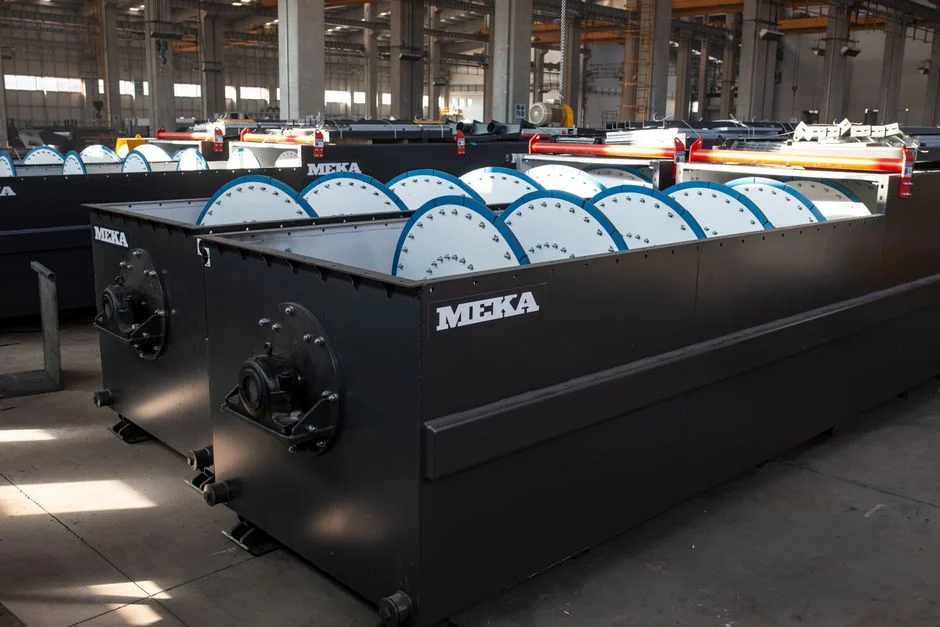
Equipment selection should begin with the permit, representative wastewater data, measured flows and loads, the production schedule, and the designated sampling point—not a generic plastics or rubber capacity factor. Size DAF from measured flow and pollutant loading. The referenced DAF catalog offers 13 models from 4–300 m³/h, but the model still requires site data; that catalog range is not a design calculation for a Rome-area plant.
For biological or membrane systems, match capacity to the largest relevant discharge condition and account for batch peaks, downtime, redundancy, and future production changes. The referenced MBR product range is 10–2,000 m³/day. For membrane or reuse cases, include feed-water variability, cleaning recovery, membrane replacement, solids removal, and the consequences of a missed permit limit. If reuse is part of the project, quantify water quality, recovery, and demand using current site data rather than treating reuse as automatic.
| Procurement input | Information a supplier should receive | Acceptance condition |
|---|---|---|
| Legal basis | Current permit, applicable category, POTW requirements, and designated sampling point | Proposal identifies the enforceable limits it is intended to meet |
| Wastewater basis | Representative analytical results, detection limits, mass loads, flow record, batch schedule, and discharge chronology | Guarantee applies only to documented and achievable influent conditions |
| Hydraulic basis | Average and peak flow, equalization strategy, redundancy, downtime, and future changes | Equipment remains effective during the characterized operating envelope |
| Performance test | Test protocol, sampling method, acceptance criteria, and correction for a failed test | Performance is tied to the designated compliance sample or a defined equivalent |
| Controls and compliance evidence | Automatic controls, chemical metering, alarms, maintenance access, and data export | Operating data can be reconciled with monitoring reports |
| Delivery | Installation schedule, commissioning plan, training, exclusions, and acceptance dependencies | Milestones identify permit, site, utility, and approval dependencies |
Ask suppliers to state guaranteed performance conditions, the test protocol, acceptance criteria, installation schedule, and exclusions. A guarantee based only on influent values outside the plant’s characterized operating range is not meaningful. Require automatic controls, chemical metering, solids handling, alarms, maintenance access, and data export as elements of the compliance system, not optional automation features.
Frequently Asked Questions
What will pretreatment treatment cost for a plastics or rubber plant near Rome?
No universal treatment cost or permit limit can be stated without the receiving POTW’s current permit and site-specific wastewater data. Request a cost breakdown based on measured flow, pollutant loads, batch characteristics, required redundancy, chemical use, sludge handling, monitoring, controls, installation, and commissioning. HydroponureWater’s 2026 research discusses membrane-train capital and operating costs comparatively, but it does not provide a defensible project price for a Rome-area plant.
Why is a generic DAF capacity insufficient for equipment sizing?
A catalog capacity does not establish hydraulic or pollutant-removal performance for the plant’s wastewater. Give the supplier continuous and peak flow, oil and grease and TSS loads, emulsion characteristics, batch timing, equalization behavior, representative analytical results, and redundancy requirements. Require the supplier to state the guarantee conditions and test protocol.
Which documents establish the sampling obligation and designated sampling point?
The current individual permit, receiving POTW pretreatment ordinance, approved-program documents, and written Control Authority confirmation establish the obligations and location. The permit also controls monitoring frequency, sample type, laboratory requirements, reporting, and corrective action. Do not assume that the final tank or sewer connection is the compliance point.
How do federal categorical standards relate to local requirements?
Part 403 supplies the general pretreatment framework and pass-through and interference prohibitions. Part 414 applies to relevant plastics and resin operations; Part 463 applies to relevant rubber manufacturing operations. The individual permit and applicable local or state requirements remain enforceable, and the most stringent applicable requirement controls. Verify the current permit and state conditions before selecting equipment.