Start with the receiving sewer—not a treatment catalog
EV and auto plants near Britton meet pretreatment limits by controlling wastewater at the source and treating it before the sewer connection, rather than relying on a single generic device. The U.S. EPA states that POTW local limits apply at the industrial user’s point of connection and may be numeric or narrative requirements. The plant must identify its receiving POTW, control authority, permit, and any categorical requirements before selecting equipment. Typical streams include oily wash water, floor runoff, coolant, paint residue, and process rinses. A defensible train generally combines segregated collection, equalization, oil and solids removal, pH adjustment, monitoring, and biological treatment where organic loading requires it.
The EPA explains that local limits are site-specific and protect the POTW, its sludge, and receiving waters. POTWs apply them at the industrial user’s end-of-pipe discharge point, which is the point of connection to the POTW collection system. For an EV or automotive facility, three layers must be checked: the general and specific prohibitions in 40 CFR Part 403, any applicable categorical pretreatment standard in 40 CFR Parts 405–471, and the receiving POTW’s approved local limits and control mechanism. The most stringent applicable requirement governs procurement.
Request the current sewer-use ordinance, industrial discharge permit, local-limit table, monitoring requirements, prohibited-discharge list, approved sampling point, and slug-control provisions from the receiving authority. Do not assume that “Britton” identifies the controlling authority or document set; the actual sewer connection must be verified. The framework in how industrial plants meet pretreatment limits before sewer discharge is useful for understanding the hierarchy, but it does not replace the receiving POTW’s current requirements.
| Requirement layer | What it determines | Document to obtain |
|---|---|---|
| 40 CFR Part 403 | General and specific prohibitions, including pass-through and interference risks | Current federal text and POTW interpretation |
| 40 CFR Parts 405–471 | Categorical limits, if the plant activity falls within a listed category | Category determination and applicable subpart |
| POTW local limits | Site-specific numeric or narrative discharge requirements | Approved pretreatment program and local-limit table |
| Control mechanism | Monitoring, reporting, sampling, and operating duties | Industrial user discharge permit or equivalent |
Map every EV and automotive wastewater stream
Separate streams before treating them because the controlling pollutant changes with the source. A floor drain receiving vehicle wash water, hydraulic oil, coolant, and wash chemistry cannot be designed from a generic automotive wastewater treatment description. The first deliverable should be a stream map that identifies each collection point, waste source, destination, flow pattern, and chemical inventory.
Vehicle and component washing can contribute detergents, suspended solids, free oil, emulsified oil, and wash-water additives. Floor drainage may carry settleable solids, sand, oil and grease, metals, and cleaning chemicals. Coolant and degreaser streams introduce pH, surfactants, and biodegradable organics. Paint or coating residue can add color, solids, and coating-derived organics; it should not be mixed with wash water without characterization. Battery-process water can differ materially from ordinary vehicle-service wastewater and may contain process acids or bases, metals, and other dissolved constituents. Stormwater must be assessed for any route that could reach the sanitary sewer rather than being treated as an assumed sanitary waste.
South Platte Renew’s automotive practices provide a source-control reference: use drain screens, store and manage chemicals and chemical waste properly, sweep or dry-wipe floors before washdown, train employees, and maintain sand-oil interceptors. It also conducts periodic inspections and assesses both best practices and interceptor condition. These practices reduce pollutant loading and hydraulic upset before the wastewater reaches downstream equipment; they are not a substitute for characterization or treatment.
Document average and peak flow, production schedules, batch-dump practices, floor-cleaning frequency, chemical use, sampling results, and the proposed sewer connection. For battery or component production, include the relevant process step, batch frequency, and proposed reuse or disposal route. Where floor cleaning changes how wastewater is generated, document whether solids are dry-collected or washed into the drain. That decision affects both interceptor loading and the required solids-removal equipment.
| Stream | Pollutants to characterize | Source-control and design implication |
|---|---|---|
| Vehicle or component washing | Free and emulsified oil, FOG, detergents, TSS, pH | Segregate wash water; prevent oil and solids accumulation |
| Floor drainage and oily runoff | Oil and grease, sand, settleable solids, metals | Dry cleanup first; maintain interceptor and inspect drains |
| Coolant and degreaser discharge | pH, surfactants, BOD/COD, metals where present | Do not combine without chemical-demand and pH testing |
| Paint or coating residue | TSS, color, coating-derived organics, pH | Evaluate dedicated collection and solids removal |
| Battery-process water | pH, dissolved metals, process chemicals, conductivity | Characterize by process step; define discharge or reuse route |
| Stormwater near sanitary infrastructure | Oil, sediment, metals, pH and other site pollutants | Verify drainage connectivity and destination before design |
Build the pretreatment train from source control to final monitoring
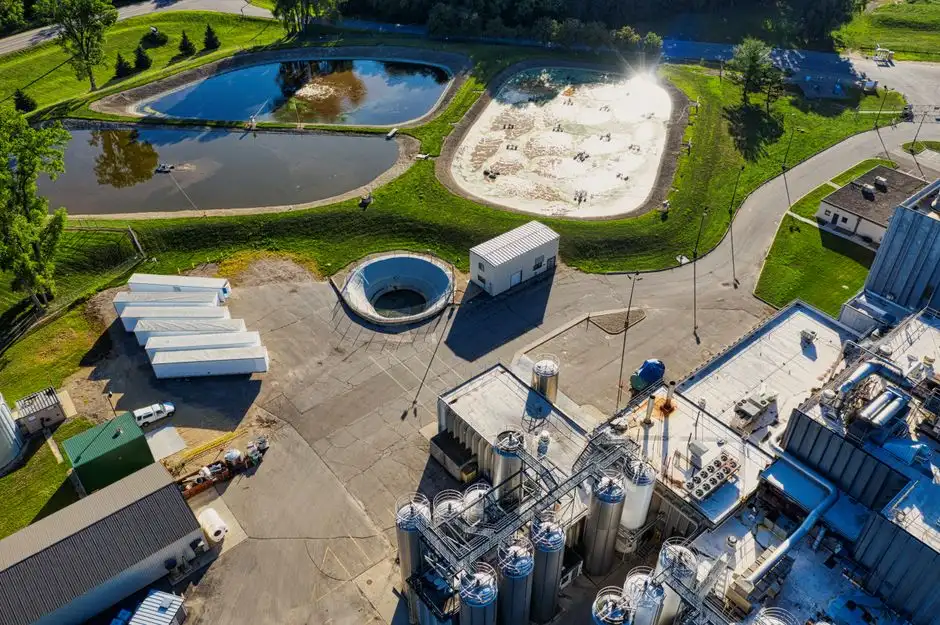
Design the train in this order: segregate streams and dry-clean where practical; collect and equalize; remove oil and solids; adjust pH or add other chemicals where required; apply biological or polishing treatment where the permit and influent profile justify it; then monitor and control the final discharge. Each stage should have a defined pollutant and operating purpose. Adding a biological stage because it appears on an equipment list does not establish that dissolved biodegradable loading warrants it.
Equalization is the baseline control for batch operations because it dampens changes in flow, pH, and concentration before downstream equipment. A 2026 chemical-plant pretreatment guide identifies equalization and PLC-controlled dosing as baseline controls for batch operations. The receiving POTW may also require a slug-load control plan under 40 CFR 403.8(f) for covered industrial users to manage non-routine releases or hydraulic surges. Such a plan ordinarily connects storage, monitoring, and written release procedures; equipment alone is not the complete compliance measure.
Where free oil, FOG, or floatable solids drive the requirement, place dissolved air flotation after equalization. An industrial DAF system for oil, FOG and solids removal can be evaluated against floatable loading and skimming requirements. The cited HydropureWater product information lists a DAF range of 4–300 m³/h across 13 models; that published range is not a recommendation for an EV plant without a site flow and load basis.
Where dissolved biodegradable organics are the issue, compare biological treatment or an MBR integrated wastewater treatment system against the sewer connection’s actual capacity and limits. For pH, use equalization followed by chemical adjustment sized from testing and the permit. A PLC-controlled automatic chemical dosing system should be evaluated on flow-paced control, chemical demand, containment, and operating response—not just tank capacity.
| Process step | Primary function | Decision basis |
|---|---|---|
| Source segregation and dry cleanup | Reduce pollutant and batch-dump loading | Stream map, floor practices, interceptor inspection |
| Collection and equalization | Dampen flow, concentration, and pH variation | Production schedule, batch volume, slug-control provisions |
| DAF or equivalent separation | Remove free oil, FOG, and floatable solids | Oil loading, floatability, skimming and solids-removal needs |
| pH or chemical adjustment | Meet permit conditions and protect downstream processes | Influent testing, chemical demand, local limit |
| Biological or polishing treatment | Remove biodegradable organics or difficult dissolved pollutants | Influent profile and receiving POTW capacity |
| Final monitoring | Verify compliance and trigger corrective action | Permit sampling point, parameters, frequency, reporting |
Select equipment from the hardest limit outward
Start with the most stringent applicable limit and the pollutant expected to control the design. For an EV assembly plant, that could be a local oil-and-grease limit; for a body shop, it may be a narrative interceptor or slug-control requirement; for battery operations, it could be a categorical or local dissolved-metals requirement. The process description alone does not determine the answer.
HydropureWater’s 2026 permit guide describes commonly cited Part 403 values of pH 6–9 S.U., oil and grease 100 mg/L, and TSS 300 mg/L. These are examples, not established Britton limits. They must not be copied into a procurement specification unless the receiving POTW’s current document confirms that they apply.
Categorical status and industrial-user status also affect obligations. The cited definition of a Significant Industrial User includes categorical coverage, an average discharge of at least 25,000 gpd of process wastewater, or a process-waste contribution of at least 5% of the POTW’s dry-weather hydraulic or organic capacity. Confirm the actual status with the control authority rather than inferring it from plant size.
Request bidders to guarantee end-of-pipe performance against the confirmed limit and identify the hydraulic basis, chemical assumptions, sludge or waste handling, controls, redundancy, monitoring interface, and commissioning tests. An equipment schedule that states only tank volume or nominal flow omits the information needed for a defensible purchase. High-efficiency sedimentation equipment may fit solids-separation duties, but its suitability depends on particle settleability, oil content, and the required endpoint.
| Controlling pollutant | First equipment decision | Evidence required |
|---|---|---|
| Oil and grease or FOG | DAF or another separation method with effective oil recovery | Oil characterization, floatable-solids loading, skimming analysis |
| Suspended solids | Clarification or filtration, potentially after oil removal | Settleability, particle distribution, target TSS |
| pH | Equalization plus controlled chemical adjustment | Batch pH range, chemical demand, permit range |
| Biodegradable organics | Biological treatment where justified | BOD/COD profile, biodegradability, POTW capacity |
| Difficult dissolved contaminants | Site-specific biological, precipitation, membrane, or other polishing | Constituent-specific analysis and confirmed limit |
Prove compliance with monitoring, records, and contingency controls
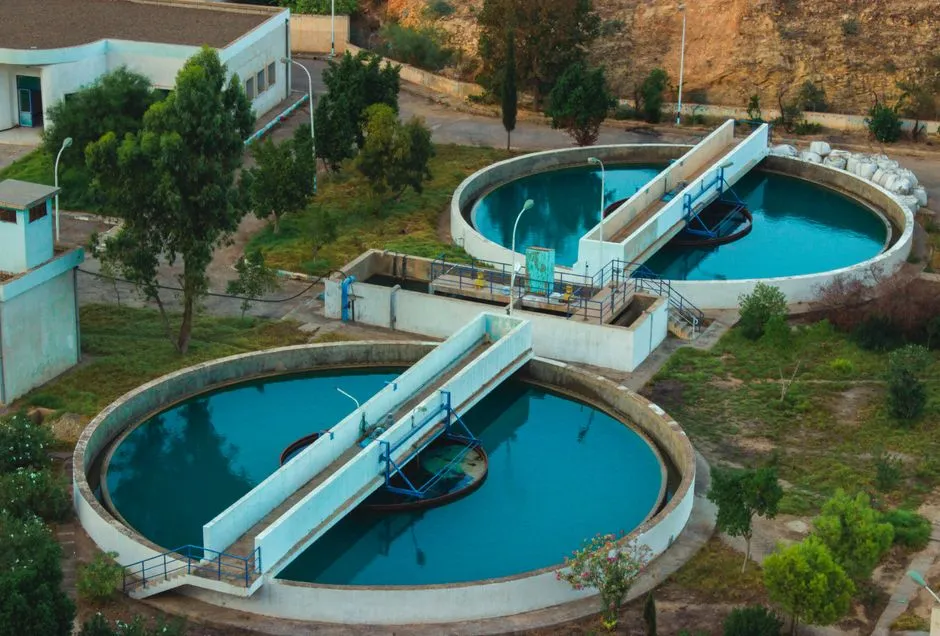
Monitoring must occur at the approved sampling point and cover the parameters, sample types, frequency, and reporting method stated in the industrial user’s permit or control mechanism. A sample taken from a tank that does not represent the permitted discharge point does not demonstrate end-of-pipe compliance.
EPA defines pass-through as a discharge that exits the POTW into waters of the United States and causes a POTW NPDES permit violation. Interference is a discharge that inhibits or disrupts POTW treatment or sludge processes and causes a permit or sludge-rule violation. Either condition can matter even without a numeric local-limit exceedance, so treatment should protect against both hydraulic and pollutant impacts.
Connect automatic controls to the plant’s operating risks. Flow-paced dosing should respond to actual influent demand. High-level alarms and diversion systems should address tank overfill. Routine oil-skimming checks protect downstream performance. A written response should state who isolates the discharge, when the POTW is notified, what corrective action occurs, and when discharge may resume. The operator must know when a limit is approaching, not merely when a violation has already occurred.
Retain influent and effluent results, calibration records, operating logs, bypass reports, chemical-use records, sludge disposition records, and corrective-action documentation. Treat the annual permit review and permit-reopener checks as design triggers as well as administrative events. Reevaluate treatment capacity when production changes, a chemical is substituted, floor-cleaning practices change, or the POTW revises local limits. See DAF versus clarifier for petroleum-contaminated wastewater for the process distinctions that should be reconsidered when the influent changes.
A procurement checklist for a Britton-area project
A complete bid package should begin with the current POTW permit, local-limit table, control mechanism, and sampling requirements—not a city name. Add the process descriptions, stream map, flow records, influent analyses, chemical inventory, production forecast, interceptor information, and proposed sewer connection. Equipment sizing should be traceable to those inputs.
Require each bidder to identify the controlling parameter, unit-process sequence, expected end-of-pipe results, design-flow basis, operating labor, chemical consumption, sludge or waste handling, controls, electrical requirements, containment, redundancy, commissioning method, and permit-compliance contingencies. Ask for performance guarantees tied to the confirmed limit. Requesting tank volume and price alone does not establish that the equipment can comply at the permitted discharge point.
Also establish how chemical storage, hazardous-material handling, drainage isolation, maintenance access, and sampling access will be incorporated. The bid should identify any unresolved information that prevents a guarantee, rather than covering it with an assumed concentration or flow. Equipment selection for automotive wastewater treatment should follow the receiving authority, permit, and measured plant conditions, not a generic EV manufacturing label.
| Bid item | Minimum information required | Buyer check |
|---|---|---|
| Regulatory basis | Current permit, local limits, categorical determination | Every proposed number traces to an issued document |
| Design basis | Flow, load, pH, production schedule, influent analyses | Assumptions and missing data are identified |
| Process train | Unit operations, controls, residuals, bypass restrictions | Each operation addresses a defined pollutant |
| Performance | End-of-pipe guarantee, test method, commissioning criteria | Guarantee uses the confirmed sampling point |
| Commercial scope | Equipment, installation, labor, chemicals, maintenance, training | No excluded cost is treated as zero |
Frequently Asked Questions
How much should an EV or automotive wastewater treatment system cost?
No defensible price can be assigned from the city name, vehicle type, or treatment-unit count alone. Request a quotation using the identified POTW limits, measured flow and pollutant data, required performance, controls, installation conditions, chemical consumption, and sludge or waste-disposal assumptions. Ask the supplier to state which priced items are excluded and whether the performance guarantee depends on site-provided utilities, equalization capacity, or pretreatment.
Should the plant use DAF or a clarifier?
Choose DAF when free oil, FOG, or floatable solids are principal design drivers and effective oil skimming is required; compare that performance with clarification using actual oil, solids, and settleability data. Clarification may be appropriate when suspended solids dominate and the solids can be removed effectively without leaving a controlling oil fraction. Neither unit is universally superior. Require bidders to define the design loading, removal mechanism, sludge or recovered-oil handling, and end-of-pipe result.
What flow capacity is needed for a plant near Britton?
There is no supported universal hydraulic capacity for an EV or automotive plant. Size the train from production schedules, batch-dump volumes, measured and calculated peak flow, equalization requirements, and the confirmed permit conditions. Obtain flow records and characterize relevant batch streams before selecting tank volume. The published DAF range is only an equipment catalog range, not a plant-sizing conclusion.
How should a buyer evaluate a wastewater treatment supplier?
Evaluate the supplier against the site permit and measured influent, not product claims alone. Request the proposed design basis, comparable references, guaranteed end-of-pipe performance, controls scope, electrical and containment requirements, chemical and sludge assumptions, warranty terms, operator training, commissioning plan, and corrective-action responsibility. Also verify who will support the monitoring interface and how performance deviations will be handled after startup.
Does treatment equipment alone ensure sewer compliance?
No. Treatment equipment does not replace the POTW industrial user discharge permit, approved sampling, monitoring and reporting, operating procedures, or required slug-control measures. Compliance also depends on source control, maintenance, operator response, recordkeeping, and controlling discharges before they reach the sewer connection. Ask the control authority which document governs the actual connection and verify the permit conditions before commissioning.