How South Korea’s Sewage Treatment Regulations Shape Equipment Selection
South Korea’s Water Environment Conservation Act (WECA) mandates strict effluent quality standards, requiring municipal facilities to maintain Total Suspended Solids (TSS) below 20 mg/L and Biological Oxygen Demand (BOD) below 10 mg/L. These legal thresholds are the primary drivers for equipment selection in the Korean market, often making advanced membrane technologies a necessity rather than an option. For industrial operators, particularly in the semiconductor and chemical sectors, the 2025 WECA amendments have introduced even more stringent requirements, including mandatory online monitoring for any plant processing over 500 m³/day and potential fines of up to ₩100M for persistent non-compliance.
The regulatory landscape in South Korea often exceeds international benchmarks to protect limited freshwater resources. For example, while the EU Urban Waste Water Directive allows for Chemical Oxygen Demand (COD) levels up to 125 mg/L in certain zones, South Korean industrial zones frequently enforce limits as low as 40 mg/L. In specialized sectors, such as the semiconductor industry, fluoride limits are capped at 15 mg/L, while textile manufacturers must address color intensity below 50 Pt-Co units. These specificities require a sewage treatment equipment supplier in south korea to provide highly specialized filtration and chemical dosing systems that can handle fluctuating influent loads without compromising effluent stability.
| Parameter | South Korea (WECA) | USA (EPA) | EU (91/271/EEC) |
|---|---|---|---|
| BOD (mg/L) | < 10 (Municipal) | < 30 | < 25 |
| TSS (mg/L) | < 20 | < 30 | < 35 |
| COD (mg/L) | < 40 (Industrial) | Variable by State | < 125 |
| T-N (mg/L) | < 20 | < 10 (Sensitive) | < 15 |
A recent 2023 WECA audit in Gyeonggi-do highlights the practical impact of these regulations. A food processing facility utilizing a standard Dissolved Air Flotation (DAF) system struggled with Fat, Oil, and Grease (FOG) levels exceeding 30 mg/L and BOD spikes during peak production. To avoid heavy penalties, the facility upgraded to an HydropureWater’s MBR system for WECA-compliant effluent (<1 μm filtration). Post-installation data showed TSS dropped from 45 mg/L to <2 mg/L, and BOD stabilized at 4 mg/L, ensuring 100% compliance even during high-load periods (HydropureWater field data, 2025).
Top 5 Sewage Treatment Equipment Suppliers in South Korea: Technical Specs Compared
The South Korean market is characterized by a high degree of technical specialization, with five major suppliers dominating the MBR, MBBR, and DAF segments. Engineering procurement decisions are typically based on membrane pore size, energy consumption per cubic meter, and the ability to integrate with existing SCADA systems. KOReD is widely recognized for its G-MBR system, which utilizes 0.1 μm PVDF membranes to achieve 99% pathogen removal. In contrast, Kunhwa focuses on municipal-scale MBR systems using 0.04 μm ceramic membranes, which offer a 30% reduction in energy use compared to traditional polymeric options due to higher flux rates and lower fouling tendencies.
For high-solids and oily wastewater, SNF Korea leads the market with polymer-enhanced DAF systems. These units are engineered to achieve 95% FOG removal even when influent concentrations reach 500 mg/L. When combined with DAF for FOG and TSS removal in food processing wastewater, these systems provide a robust primary treatment stage that significantly reduces the load on downstream biological reactors. Meanwhile, EcoFlow Tech specializes in the Moving Bed Biofilm Reactor (MBBR) niche, with their ISB series offering a 30% smaller footprint than conventional MBBR designs, making them ideal for urban retrofits where land value is at a premium.
| Supplier | Flagship Tech | COD Removal Rate | Energy Use (kWh/m³) | Primary Application |
|---|---|---|---|---|
| KOReD | G-MBR (PVDF) | 95-98% | 0.8–1.2 | Industrial Reuse |
| SNF Korea | Polymer DAF | 80-85% (Total) | 0.2–0.3 | Oily Wastewater |
| EcoFlow Tech | ISB MBBR | 85-92% | 0.4–0.6 | Municipal/Rural |
| AquaNova | Hybrid DAF-MBR | 97% | 1.0–1.4 | Textile/Dyeing |
| Kunhwa | Ceramic MBR | 96-99% | 0.6–0.9 | Large Municipal |
Technical differentiation also extends to sludge production. MBBR systems from EcoFlow Tech report 40% lower sludge production compared to traditional activated sludge processes, which is a critical factor for South Korean operators facing rising sludge disposal costs (currently averaging ₩150,000 per ton). For projects requiring rapid deployment in urban environments, the WSZ series for space-constrained urban sites in South Korea offers a pre-engineered solution that integrates these biological processes into a single, subterranean unit, effectively eliminating odor and noise complaints from neighboring residential areas.
Cost Breakdown: Sewage Treatment Equipment in South Korea (2025 Data)
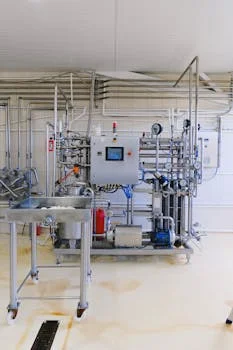
Capital expenditure (CAPEX) for sewage treatment equipment in South Korea is heavily influenced by the required effluent quality and the degree of automation. MBR systems represent the highest initial investment, ranging from ₩30M to ₩150M per 100 m³/day of capacity, primarily due to the cost of high-grade membranes and sophisticated aeration controls. However, for industrial facilities like semiconductor plants, the Return on Investment (ROI) is often achieved within 3 years. This is driven by the high value of reclaimed water, which can offset up to 60% of fresh water procurement costs, as detailed in our detailed 2025 MBR engineering guide for South Korea.
Operating expenditure (OPEX) is the second critical component of the total cost of ownership. MBR systems typically incur ₩500–₩1,200/m³ in operating costs, with electricity for membrane scouring and periodic chemical cleaning (CIP) making up the bulk of the expense. In contrast, DAF systems are significantly cheaper to operate at ₩200–₩500/m³, though they require consistent chemical polymer dosing, which can cost between ₩1M and ₩3M annually for a mid-sized system. For a comprehensive look at how these technologies stack up financially, engineers should consult a cost comparison of DAF and sedimentation for industrial wastewater.
| Technology | CAPEX (per 100 m³/d) | OPEX (per m³) | Typical ROI |
|---|---|---|---|
| MBR | ₩30M – ₩150M | ₩500 – ₩1,200 | 3–5 Years |
| MBBR | ₩15M – ₩80M | ₩300 – ₩800 | 4–6 Years |
| DAF | ₩10M – ₩50M | ₩200 – ₩500 | 2–4 Years |
Hidden costs often arise from membrane fouling and mechanical wear. In MBR systems, membrane replacement every 5–7 years can cost 15-20% of the original CAPEX. In DAF systems, the saturation pump and air compressor require annual maintenance, which can total ₩2M–₩5M depending on the system size. A 2024 municipal project in Busan, valued at ₩2.5B for a 10,000 m³/day MBR plant, demonstrated a 7-year ROI by avoiding WECA non-compliance fines and utilizing high-quality effluent for local landscape irrigation, saving the city approximately ₩350M annually in water costs.
How to Choose the Right Supplier: Decision Framework for South Korean Projects
Selecting the appropriate sewage treatment equipment supplier in south korea requires a systematic evaluation of influent characteristics and site constraints. If the influent COD exceeds 500 mg/L, a biological process like MBR or MBBR is essential, whereas high FOG and TSS levels (common in food processing) are best handled by DAF systems. The decision-making process should begin with a clear understanding of the reuse goals; if 90% water reuse is required to meet 2026 WECA targets, MBR is the only viable technical solution due to its ability to produce ultra-pure permeate suitable for industrial processes.
Risk assessment is another vital step in the procurement framework. Suppliers like KOReD offer proprietary G-MBR technology which provides superior performance but involves higher CAPEX and a dependency on their specific membrane replacements. Alternatively, SNF Korea provides a global supply chain and lower OPEX through optimized chemical dosing, making them a safer choice for plants where operating budget is the primary constraint. For urban sites, the physical footprint is often the deciding factor. Underground integrated systems or trailer-mounted mobile DAF units are frequently utilized for temporary construction sites or space-limited industrial parks.
| Decision Factor | Priority Option | Secondary Option |
|---|---|---|
| Strict WECA Compliance | MBR (KOReD/Kunhwa) | MBBR (EcoFlow Tech) |
| High FOG/Oily Waste | DAF (SNF Korea) | DAF-MBR Hybrid |
| Limited Land Space | Underground Integrated | Compact MBR |
| Low Operating Budget | MBBR | DAF |
| Water Reuse Goal | MBR | Advanced Oxidation |
Before finalizing a contract, procurement managers should utilize a 10-point documentation checklist. This includes requesting WECA compliance certificates, a minimum 3-year membrane warranty, documented energy consumption data (kWh/m³), and a list of at least three similar reference projects in South Korea. For a deeper dive into industry-specific requirements, engineers can refer to sector-specific wastewater treatment solutions for South Korea to ensure the chosen equipment matches the unique chemical profile of their facility's waste stream.
Emerging Technologies in South Korea’s Sewage Treatment Market
Innovation in the South Korean market is currently focused on energy reduction and resource recovery, driven by the national goal of carbon neutrality. AI-driven MBR systems are at the forefront of this trend. KOReD’s 2025 pilot project in Seoul utilizes real-time sensors and machine learning algorithms to adjust aeration intensity based on influent load, resulting in a 30% reduction in energy consumption compared to static aeration systems. This shift toward "smart" plants is becoming a standard requirement for large-scale municipal tenders.
Material science is also evolving, with ceramic membranes gaining market share from traditional PVDF options. Kunhwa’s 0.04 μm ceramic membranes offer a 10-year lifespan—double that of polymeric membranes—and can withstand aggressive chemical cleaning agents that would degrade plastic fibers. resource recovery is transforming sewage plants into energy hubs. SNF Korea has successfully implemented biogas extraction from DAF sludge in several municipal plants, allowing these facilities to achieve 20% energy self-sufficiency by burning methane to power on-site equipment.
Finally, modular and plug-and-play systems are redefining installation timelines. EcoFlow Tech’s modular MBBR units can be installed and commissioned in as little as 7 days, compared to the 30-60 days required for conventional site-built concrete tanks. These regulatory tailwinds, including the 2026 WECA amendments mandating 90% water reuse for certain industrial sectors, are accelerating the adoption of these advanced technologies, ensuring that South Korean sewage treatment remains among the most sophisticated in the world.
Frequently Asked Questions
Which country has the best sewage treatment technology?
South Korea is a global leader in MBR adoption, with a 35% market share compared to approximately 20% in the EU. While Japan excels in energy efficiency (0.6 kWh/m³), South Korea maintains higher WECA compliance rates (98%) due to its advanced domestic manufacturing base and strict enforcement protocols.
What is the largest chemical company in South Korea for wastewater treatment?
SNF Korea, a subsidiary of the global SNF group, holds approximately 40% of the market share for wastewater polymers and coagulants. It is followed by LG Chem and Lotte Chemical, which provide specialized resins and chemical additives for industrial water treatment.
How much does a sewage treatment plant cost in South Korea?
For 2025, a municipal MBR plant typically costs between ₩2B and ₩5B for a 10,000 m³/day capacity. Industrial systems, such as DAF units for food or textile waste, range from ₩50M to ₩500M depending on the complexity of the influent and the required level of automation.
What is the difference between MBR and MBBR in South Korea?
MBR (Membrane Bioreactor) uses physical membranes for 0.1 μm filtration, ensuring 99% pathogen removal and WECA-compliant effluent, but costs ₩30M–₩150M per 100 m³/day. MBBR (Moving Bed Biofilm Reactor) uses plastic biofilm carriers without membranes, offering 85% COD removal at a lower CAPEX of ₩15M–₩80M per 100 m³/day.
Are there any South Korean suppliers for small-scale sewage treatment?
Yes, EcoFlow Tech’s ISB series (1–50 m³/day) and KOReD’s compact G-MBR systems (5–200 m³/day) are specifically designed for rural communities, hotels, and small industrial units. Costs for these systems generally start at ₩30M for a 10 m³/day capacity.