Choose the treatment route from the development brief
Determine whether the development will discharge to public sewerage or require on-site treatment; Biocell Water states that residential developments may need treatment where public sewerage is unavailable, while local regulations may require pretreatment before discharge. Document the current and future housing program, verified wastewater flow, effluent discharge point, receiving environment, and applicable permit conditions. The treatment route should follow that brief rather than precede it.
Use a two-stage screen. First, eliminate any configuration that cannot satisfy the confirmed discharge route, treatment objective, or physical site constraints. Second, compare the remaining biological package plants on footprint, civil works, operating dependencies, expansion strategy, and lifecycle requirements. The development-brief approach to packaged sewage treatment remains relevant for projects in Chiang Mai.
Record available footprint, geology, groundwater conditions, flood exposure, maintenance access, and power reliability. Record also whether landscaping can cover an underground installation without obstructing inspection or removal points. Biocell Water identifies site restrictions and effluent standards as project-specific variables that determine the solution; it does not publish universal setback, construction, or permit figures for Chiang Mai. Obtain those local requirements from the relevant authorities and a project engineer.
| Brief input | Evidence needed before screening equipment | Decision affected |
|---|---|---|
| Development program | Current and phased dwelling units or population; planned expansion | Initial and future treatment capacity |
| Wastewater flow | Verified design flow, peak criteria and wastewater characteristics | Hydraulic and biological loading |
| Discharge route | Public sewer connection, on-site treatment and confirmed pretreatment requirements | Whether decentralized sewage treatment is required |
| Effluent objective | Local discharge requirements and receiving-water information | Process selection and performance guarantee |
| Site and phasing | Footprint, geology, groundwater, flooding, access, power and construction sequence | Buried or containerized configuration |
Design for residential peaks and variable wastewater quality
Residential peak flow and pollutant variability must be explicit design inputs, not allowances added after the equipment has been selected. Biocell Water reports that residential wastewater flow varies considerably during a typical weekday, with peak flow typically occurring in the morning, late afternoon, and evening. Treatment systems must accommodate these significant peaks alongside periods of low flow.
The designer should document the design flow, peak factor or hydraulic profile, equalization arrangement, biological loading basis, and minimum operating level for the selected package. Biocell Water also notes that residential ammonia and COD concentrations can be high, sometimes because of extensive use of disinfectants and cleaning products or the absence of grease traps. The resulting treatment objective depends on the actual wastewater characteristics and confirmed effluent standard.
Do not size the package from average flow alone. Average daily flow can conceal the periods that affect equalization, biological treatment, and collection-system hydraulics. The supplier should state whether the quoted capacity is a daily average, a design peak, or a verified maximum operating condition, and should show how the package handles the low-flow periods that influence biological process stability.
Development phasing also affects the architecture. Biocell Water states that modular systems can be installed in phases as a development grows. A staged arrangement may be preferable where occupancy is uncertain, but the brief should define future capacity, reserved space, connection points, and the operating logic for each phase. Compare packaged sewage treatment options for housing developments with this phasing requirement included in every proposal.
Compare buried A/O and MBR package plants
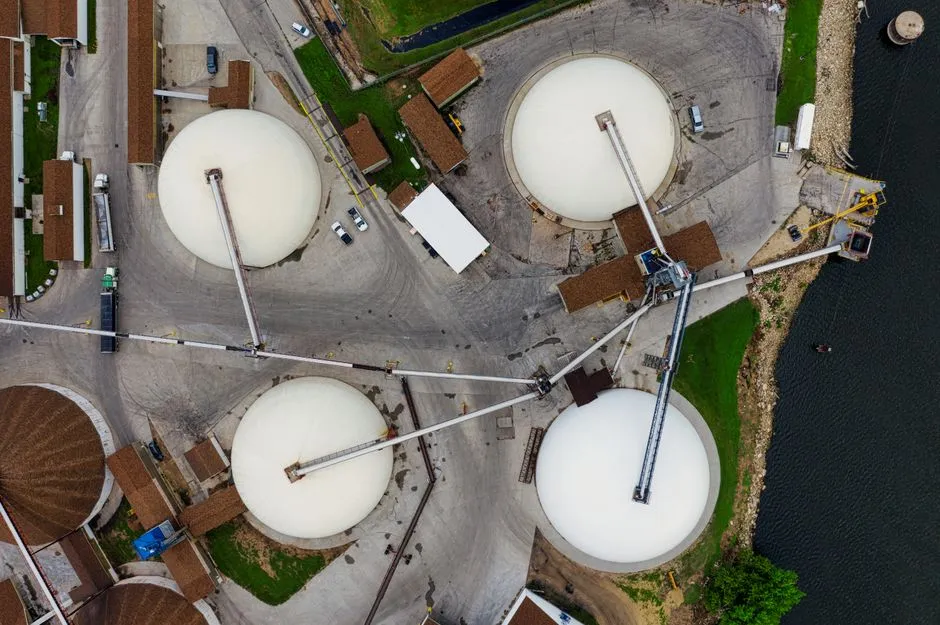
The buried A/O package and the MBR system serve different design priorities: WSZ integrates established biological, settling, and disinfection stages in a buried unit, while MBR combines activated sludge with membrane filtration. Neither should be selected solely because it has the higher published treatment capacity.
HydropureWater’s underground WSZ integrated sewage treatment plant combines anoxic/aerobic biological contact oxidation, sedimentation, and disinfection in one buried unit. Its stated capacity is 1–80 m³/h. The WSZ can be installed below grade with landscaping above or mounted on a trailer for mobile deployment. HydropureWater describes the system as fully automated and requiring no operator, subject to proper commissioning and maintenance.
HydropureWater’s MBR membrane bioreactor package system combines activated sludge treatment with submerged PVDF membrane filtration. Its stated capacity is 10–2,000 m³/day, and the filtration output is specified as near-reuse-quality effluent with less than 1 μm filtration. HydropureWater also states that the MBR system has a 60% smaller footprint than conventional systems. Because that is a product-level claim, check it against the selected configuration, treatment objectives, ancillary equipment, and site layout during engineering design.
Biocell Water states that below-ground residential systems may use MBBR or SBR and require an underground concrete tank. Above-ground containerized systems may use fixed-bed, MBBR, or MBR. This supports a requirement-led comparison: if the confirmed effluent standard, reuse objective, or footprint constraint justifies membrane treatment, MBR becomes a candidate; otherwise, the A/O route may provide a simpler fit.
| Evaluation point | WSZ buried A/O package | MBR package system |
|---|---|---|
| Published configuration | A/O biological contact oxidation, sedimentation and disinfection | Activated sludge with submerged PVDF membrane filtration |
| Published capacity | 1–80 m³/h | 10–2,000 m³/day |
| Installation concept | Buried installation with landscaping above, or trailer mounting for mobile deployment | Containerized package; final layout requires project design |
| Published filtration characteristic | Not specified in the supplied product research | Less than 1 μm filtration; output described as near-reuse quality |
| Key comparison issue | Confirm hydraulic capacity, footprint, civil works and guaranteed effluent performance | Confirm membrane design duty, footprint claim, treatment objective and operating dependencies |
Match the installation to Chiang Mai site conditions
The installation form should follow excavation risk, site access, and serviceability. A buried package is appropriate only where the site can support excavation, a watertight installation, required structural loading, maintenance access, and landscaping over the unit without compromising service clearances. An underground system also adds civil-works interfaces that must be included in the supplier’s responsibility.
Use an above-ground or containerized arrangement where shallow utilities, groundwater, flood exposure, restricted excavation, phased installation, or limited construction access make buried civil works less suitable. Local engineering review must establish the geotechnical, structural, flood, and environmental constraints for the selected layout.
Maintenance access is a functional requirement. The design should allow access to screens, pumps, aeration equipment, membranes, controls, sludge-removal points, and sampling or inspection locations. It should also preserve emergency access, removable-equipment clearances, and space for future expansion. A supplier should not treat the buried installation as inaccessible merely because the main unit is below grade.
Locate the plant to support the sewer collection strategy and limit conveyance or pumping risks. Confirm the applicable local authority, environmental, and site requirements for the chosen arrangement. The supplied research supports researching local regulations, but it provides no Chiang Mai-specific setback, construction, or permit figures; those inputs must be obtained rather than inferred from generic product information. The comparison of containerized and permanent wastewater plants provides the construction and operational distinctions to evaluate.
| Site condition | Preferred screening direction | Required engineering confirmation |
|---|---|---|
| Space available for excavation and landscaping | Screen the buried A/O configuration | Watertightness, structural loading, groundwater, excavation and maintenance access |
| Shallow utilities or constrained excavation | Screen containerized equipment | Civil interface, access route, controls and temporary works |
| Flood or groundwater exposure | Do not assign a preference until reviewed | Local flood, geotechnical and environmental assessment |
| Phased housing delivery | Screen modular or staged deployment | Future footprint, connections, controls and operating phases |
Build a quotation-ready supplier brief
A comparable quotation starts with an identical project brief. Include verified design flows, residential peak-flow criteria, wastewater characteristics, phased capacity, effluent objectives, discharge point, and receiving-water information. Add the confirmed plot constraints, power arrangement, maintenance access, civil-works boundary, and required commissioning services. If a value has not been verified, identify it as an open input rather than allowing each bidder to adopt a different assumption.
Require every bidder to submit a process flow diagram, equipment schedule, control philosophy, utilities demand, performance guarantees, and a clear civil-works interface. The guarantee should be tied to the confirmed duty and relevant local requirements. For the supplier selection and performance-review process used for a packaged MBR sewage treatment plant, the central procurement lesson is to compare equivalent duty and scope, not headline equipment prices.
- Confirm that each quotation covers the same design flow, peak basis, treatment objective, and housing phase.
- Compare the included civil works, installation, sludge handling, controls, utilities, and local commissioning obligations.
- Request startup and training, operating and maintenance procedures, spare-parts recommendations, alarm provisions, and a performance-verification plan.
- Identify operating dependencies, including power, inspections, consumables, sludge removal, sample access, and specialist support.
- Normalize the lifecycle comparison before accepting a commercial offer.
Community Sewer describes a follow-up assessment after twelve weeks to confirm treatment levels and remediate deficiencies. This illustrates the value of specifying when performance will be reviewed and what evidence will be accepted. Do not compare quotations until the bidders confirm equivalent treatment configurations, duties, and civil-work assumptions; otherwise, the apparent price difference may mainly reflect different scope.
Frequently Asked Questions
What size packaged sewage treatment plant does a Chiang Mai housing development need?
Size it from a verified project flow basis that includes average flow, residential peak conditions, wastewater characteristics, and phased occupancy—not a generic per-household allowance. Ask the designer to document the design flow, peak factor or hydraulic profile, equalization approach, biological loading basis, and minimum operating level before matching the plant to the WSZ or MBR capacity ranges.
Is a buried A/O package plant or an MBR system better for a new housing estate?
The better option depends on the confirmed effluent objective, available footprint, civil works, operating dependencies, and lifecycle budget. Use the buried A/O route when its integrated treatment stages satisfy the brief and below-grade installation is practical; use MBR when the required treatment or reuse objective makes membrane filtration justified.
How should developers compare supplier quotations for a packaged sewage plant?
Require every bid to use the same duty, wastewater basis, treatment objective, phasing, and civil-works boundary. Check that process guarantees, utilities, installation, sludge handling, commissioning, training, maintenance, alarms, and performance verification are separately stated before comparing commercial offers.
Can a packaged sewage treatment plant be expanded as more homes are completed?
Yes, if expansion is designed into the initial package. Biocell Water states that modular systems can be installed in phases as developments grow. Require the supplier to identify future capacity, reserved space, connection interfaces, and operating logic rather than assuming that every phase can be added later without civil or process changes.
What information is needed to confirm Chiang Mai discharge compliance?
Obtain the applicable local discharge requirements, discharge point, receiving-water information, permit conditions, site restrictions, and any required pretreatment provisions. The supplied research does not establish Chiang Mai-specific effluent limits or permit lead times, so compliance must be confirmed through local authority and project environmental review.