What Wastewater Approvals Change When Unilever Acquires a Vietnam Plant?
Unilever’s acquisition of a Vietnam plant does not automatically trigger a new wastewater permit. Requirements depend on each outlet’s current authorization, receiving route and post-close operations. The buyer must determine whether the named permittee changes, whether approval must be transferred, modified, reissued or allowed to continue, and whether production, cooling, chemicals, flow, pollutants, treatment, reuse or discharge routing will change. Before closing, Unilever should reconcile every outlet with its governing approval, obtain written regulator instructions and allocate unresolved liabilities through closing conditions, escrow, indemnities or funded capital commitments.
The supplied research establishes no universal Vietnamese change-of-control rule and no site-specific Vietnamese permit, sewer agreement or regulator correspondence for the target plant. A buyer therefore cannot classify the transaction from the acquisition announcement alone. The controlling evidence must be the plant’s issued authorizations, operating records and proposed post-close plan.
Separate four questions for every discharge route:
- Who owns the facility?
- Who operates it?
- Which legal entity holds each wastewater authorization?
- Will the permitted activity continue, expand, cease or change?
Those answers lead to four possible outcomes:
| Regulatory outcome | Triggering facts | Transaction response |
|---|---|---|
| Administrative transfer or notification | Ownership changes, but the operator, authorization, permitted activity, treatment and discharge route remain unchanged. | Complete the required filing, reconcile entities and obtain written confirmation where required. |
| Modification or reclassification | Flow, pollutants, treatment, discharge point or other permit conditions change materially. | Obtain the controlling authority’s determination, approve plans and fund implementation. |
| Continuation subject to agency confirmation | The authorization may remain effective, but its treatment after the change is not established in the supplied evidence. | Make written authority confirmation a closing deliverable or condition. |
| Different or new authorization | The post-close industrial-user status, discharge route or authorized activity requires another instrument. | Do not rely on continued discharge until the required authorization is issued. |
Legal ownership can change without a change in wastewater flow, composition, treatment or discharge point. Conversely, a production expansion, cooling change or chemical substitution can alter the required approval even if the acquisition itself is only a share transfer. The ownership-versus-permitted-activity wastewater test provides a useful decision structure, but the acquired plant’s Vietnamese authorizations and written regulator instructions remain controlling.
Map Every Wastewater Outlet Before Reviewing the Acquisition Agreement
Each wastewater outlet needs its own legal and technical evidence file because a facility-wide permit does not establish authority for every discharge path. Start with the physical drainage system, not the transaction document. Map industrial process wastewater, cooling or blowdown, rinse and cleaning streams, stormwater, sanitary sewage and internal reuse. For each stream, trace it from source through treatment, storage and monitoring points to its final destination.
The receiving route determines which authority and agreement control. Direct environmental discharge, an industrial sewer or central wastewater-treatment system, another authorized treatment route and internal reuse are distinct pathways with different evidence requirements. An industrial sewer pretreatment agreement cannot support a separate direct-discharge claim, while a stormwater authorization cannot be inferred from a process-wastewater permit. The Vietnam plant-acquisition wastewater due-diligence framework explains why each outlet must be reconciled independently.
| Outlet or stream | Governing evidence to reconcile | Permit-status question | Baseline evidence |
|---|---|---|---|
| Process wastewater | Environmental impact assessment records, Vietnam industrial wastewater permit and wastewater discharge authorization. | Which legal entity and authorized outlet does the instrument cover? | Flow and constituent records linked to production and treatment stages. |
| Cooling or blowdown | Authorization, water-use records, chemical inventory and reuse or discharge conditions. | Will cooling demand, chemistry or routing change? | Make-up, evaporation, blowdown, cycles and discharge history. |
| Rinse and cleaning streams | Source-control records, treatment requirements and monitoring plan. | Are segregations and treatment obligations still valid after closing? | Sampling records by stream, not only a plant-wide average. |
| Stormwater | Separate authorization or exemption basis, outfall description and inspection history. | Are all regulated outfalls identified? | Storm events, inspection findings, controls and discharge records. |
| Sanitary sewage | Receiving authority agreement and applicable treatment route. | Does the receiving arrangement cover the post-close entity? | Connection conditions, invoices and correspondence. |
| Internal reuse | Permitted objective, water balance, quality criteria and residual management. | Is reuse authorized or merely an unverified design assumption? | Source, treatment, monitoring and end-use records. |
For each route, identify the named permittee, authorized outlet, limits, monitoring conditions, renewal status, sampling points, bypass provisions and residual-management obligations. Also confirm whether the permittee, property owner, operator and industrial user are the same legal entity. Their roles may not align after closing.
The Vietnam wastewater infrastructure and treatment overview provides market context, not authority for the target plant. Current issued documents and written regulator instructions must control the transaction classification.
Build a Close-Ready Permit and Compliance File

A permit file is not close-ready merely because it contains an application. Request current permits and renewals, environmental impact assessment records, sewer-use or pretreatment agreements, monitoring plans, laboratory results with chain of custody, flow and water-use records, violations, corrective actions, treatment drawings, residual records and authority correspondence. Confirm that the permittee matches the proposed acquisition structure and obtain the authority’s accepted filing where a transfer, modification or reissuance is required.
Do not rely on the seller’s statement that the plant is compliant. Review operating logs, laboratory data, bypass and upset records, maintenance history and site observations. Compare reported results with permit conditions, sampling schedules and treatment operating records. Missing data, unexplained averages and recurring excursions are findings that must be assigned, not averaged away.
The close-ready file should establish:
- which authorization applies to each physical outlet;
- whether an issued instrument, renewal, exemption or written confirmation exists;
- whether the approval covers the post-close entity and operating role;
- whether monitoring and reporting demonstrate sustained compliance;
- which violations, corrective actions, commitments and residual routes remain open; and
- who will retain records, laboratory access, monitoring responsibility and submission calendars immediately after closing.
Check that monitoring personnel, laboratory contracts, records systems and reporting calendars will not depend on seller-controlled email accounts or unarchived systems. Where the transfer remains unresolved, obtain an approved interim operating plan from counsel and the plant’s wastewater lead. The buyer should not treat filing receipt, ownership transfer or closing as proof that continued discharge is authorized.
Screen Production, Cooling and Chemical Changes Against the Permit
A wastewater transaction review must compare the plant before and after closing. The operating plan—not the buyer’s corporate identity—determines whether treatment or permitting work is required. Compare production, cooling demand, potable-water use, chemicals, wastewater generation, average and peak flow, composition, treatment, reuse and final discharge.
For direct discharge, assess whether pollutants, flow, treatment, discharge point or permit conditions will change materially. For industrial-sewer or central-treatment discharge, compare the proposed flow and constituents with sewer conditions and applicable pretreatment requirements. A new sewer connection does not establish that discharge may continue at the proposed rate or composition.
| Proposed change | Screen against | Decision evidence |
|---|---|---|
| Production expansion or shift pattern | Permitted flow, pollutant loading, equalization and receiving-system capacity. | Before-and-after water balance and written authority determination where required. |
| Cooling-system change | Make-up, blowdown, heat, chemicals, reuse objective and sewer or discharge limits. | Documented stream characterization and treatment review. |
| Chemical substitution | Discharge constituents, sewer restrictions, treatment compatibility and surcharge exposure. | Updated chemical inventory, sampling plan and treatment compatibility assessment. |
| Treatment or reuse change | Permit conditions, residual route, reuse criteria and monitoring obligations. | Approved plans, acceptance tests and named implementation owner. |
| Discharge-route change | New authorization, sewer agreement and technical capacity. | Written confirmation that the route is available for the proposed duty. |
Screen production shifts, cooling changes and chemical substitutions for sewer restrictions, surcharges, monitoring changes and treatment impacts. Require a documented change-control decision before implementation. Do not authorize changes to production, cooling, chemicals, treatment or routing while permit status or performance remains uncertain.
Test the Existing Treatment Train Before Selecting Equipment
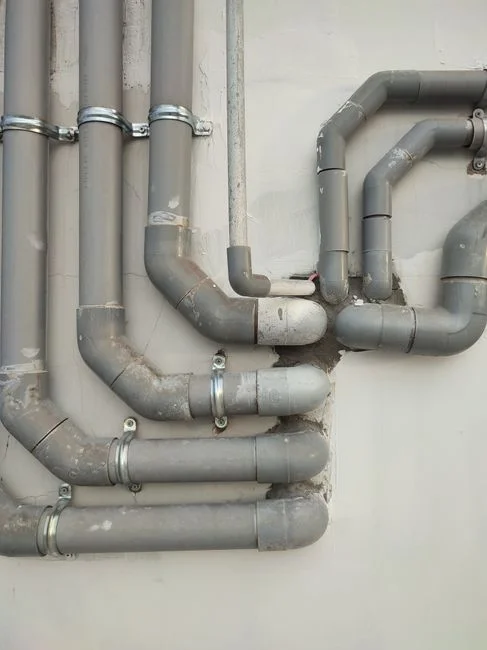
Equipment selection should follow the confirmed treatment gap, not the acquisition date or a generic facility description. Build a water balance covering freshwater make-up, process usage, cooling-tower evaporation and blowdown, wastewater generation, reuse and final discharge. Include startup, shutdown, upset and maintenance flows because these conditions can concentrate pollutants or exceed equalization capacity.
Test the installed train under actual flow, chemistry, proposed production changes and storm conditions. A single acceptable laboratory result does not prove adequacy. Review equalization, biological performance, sludge dewatering, controls, redundancy, monitoring and bypass history. The HydropureWater Texas acquisition guide, published on its 2026 acquisition-analysis page, uses operation above 85% of design capacity as a high-risk screening threshold; it is not a universal Vietnamese standard.
| Technical issue | Evidence to obtain | Equipment implication |
|---|---|---|
| Hydraulic or equalization gap | Average and peak flow, startup, shutdown, upset and maintenance scenarios. | Repair or expand equalization before adding downstream treatment capacity. |
| Oil, grease, solids or colloidal matter | Stream-specific constituent data and confirmed pretreatment objective. | Evaluate an industrial dissolved air flotation system if the data supports that duty. |
| Biological treatment and solids separation | Organic loading, solids production, cleaning, redundancy and reuse criteria. | Evaluate an MBR membrane bioreactor only after those checks. |
| UF feed quality | Feed chemistry, fouling potential, recovery objective and residual route. | Use ultrafiltration pretreatment only after feed verification. |
| RO reuse target | Confirmed quality objective, pretreatment, recovery and concentrate disposal. | Size RO against verified site chemistry, not an assumed recovery rate. |
The supplied 2026 equipment reference lists DAF at 4–300 m³/h across 13 models and MBR at 10–2,000 m³/day. These are catalog ranges, not proof of fit for this plant. The same reference lists UF at 2,000–40,000 L/h with 0.03 μm PVDF membranes and turbidity acceptance up to 300 ppm, while RO states recovery rates up to 95%. Confirm feed chemistry, fouling control, recovery and residual disposition before selection.
Check chemical compatibility where cleaning agents, cooling chemicals or new process streams could inhibit biological treatment, damage membranes or alter sludge handling. Document sludge, concentrate and chemical-waste volumes, authorized destinations, handling responsibility and cost. Replacement is justified only when the existing train cannot meet confirmed permit, sewer, reuse or residual-management objectives.
Convert Wastewater Findings into Closing Protections
Every material wastewater finding needs a transaction disposition, accountable owner, deadline and objective verification test. Classify the finding as a pre-closing repair, committed capital project, closing condition, escrow, indemnity, funded post-closing obligation or accepted residual risk. The protection should match the uncertainty and the party that controls the evidence.
| Finding | Possible protection | Required verification |
|---|---|---|
| Permit transfer, modification or reissuance unresolved | Closing condition, escrow or seller-funded obligation. | Written authority instruction and accepted filing or issued approval. |
| Historical contamination or undocumented discharge | Pre-closing assessment, price adjustment, escrow or indemnity. | Site assessment, remedial scope, cost basis and contractual allocation. |
| Treatment cannot demonstrate required performance | Pre-closing repair, price adjustment or funded capital project. | Commissioning and performance test against confirmed objectives. |
| Residual route, volume or cost unresolved | Closing condition or funded post-closing action. | Authorized destination, handling records, volume basis and cost. |
| Third-party sewer claim or pretreatment noncompliance | Indemnity, escrow or pre-closing correction. | Receiving authority confirmation and corrective-action acceptance. |
| Post-close monitoring obligation | Defined operating covenant with named personnel. | Submission calendar, record location and acceptance test. |
Allocate responsibility separately for permit transfer or modification, corrective action, pre-closing violations, contamination, third-party sewer claims, equipment replacement and post-close performance. Avoid vague milestones such as “substantially compliant.” Accepted transfer, approved plans, completed baseline sampling, commissioning results and validated operating performance are more useful closing evidence.
Investigate historical contamination and undocumented discharge routes. Commission subsurface assessment where prior uses, discharge pathways or site history creates a plausible concern. The HydropureWater Texas acquisition article cites $1.2 million–$3.8 million for groundwater remediation on a two-acre site and recommends a 25% CAPEX contingency for subsurface conditions discovered during construction. These are non-Vietnam-specific screening benchmarks requiring site-specific validation.
The same article reports average administrative penalties of $12,000–$45,000 per Notice of Violation from EPA ECHO 2023. That is a diligence signal, not a Vietnamese liability estimate. Obtain the target plant’s enforcement and corrective-action history before assigning exposure.
Closing Readiness Checklist for the Acquired Vietnam Plant
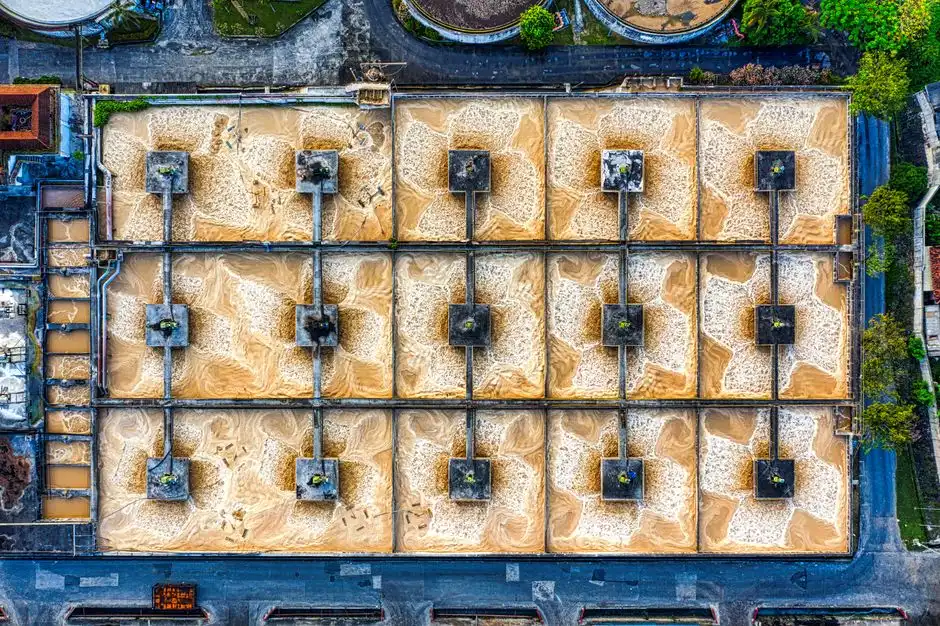
The minimum closing package links each outlet to its authorization, receiving route, operating evidence, technical gap, transaction protection and verification test. A plant is not wastewater-ready because the seller transferred records or because a filing was submitted.
| Closing deliverable | Acceptance test | Owner |
|---|---|---|
| Outlet map and permit index | Every physical outlet is linked to the correct authorization or documented route. | Environmental lead and site wastewater manager. |
| Authority correspondence | Written instructions address transfer, continuation, modification, reissuance or new authorization. | Transaction counsel. |
| Compliance and enforcement file | Available historical records are reviewed and gaps are allocated. | Environmental consultant. |
| Baseline sampling and water balance | Representative methods, chain of custody and production-linked flow records are complete. | Plant engineer and accredited laboratory. |
| Treatment-capacity verification | Representative loading and identified operating scenarios demonstrate required performance. | Treatment engineer. |
| Protection package | Each unresolved matter has an enforceable condition, escrow, indemnity, funded action or accepted risk. | Acquisition lead and legal team. |
Assign every permit condition, technical finding, monitoring obligation and capital deliverable to a named owner with a deadline and verification method. Confirm that the permittee, operator, industrial user, monitoring party and physical outlet remain aligned after closing. Proceed only when permit continuity, historical liabilities, residual routes and treatment performance are documented and financially reconciled. Otherwise, require escrow, indemnity or a closing condition rather than allowing the issue to migrate into post-close integration.
Frequently Asked Questions
Does Unilever’s acquisition automatically require a new Vietnam industrial wastewater permit?
No. The supplied research establishes no universal Vietnamese change-of-control rule. Each permit, wastewater discharge authorization, environmental impact assessment record and industrial sewer pretreatment agreement must be checked against the named entity, outlet and post-close operations. Obtain written instructions from the controlling authority before assuming that an existing authorization may continue.
When would the acquisition require a permit modification or new authorization?
Review is required if production, cooling, chemicals, wastewater flow, pollutant loading, treatment, reuse or discharge routing changes materially. The issuing authority determines whether that change requires modification, reclassification, reissuance or another authorization. A change in legal ownership alone does not establish a substantive change in permitted activity.
What should the buyer request when budgeting treatment and permitting costs?
Request site-specific quotations after obtaining average and peak flows, stream-by-stream composition, permit conditions, residual routes and treatment objectives. The quotations should separate equipment, installation, utilities, chemicals, energy, monitoring, sludge or concentrate disposal, maintenance, bypasses, residual transfer and compliance work. The supplied research contains no defensible price for the acquired plant, so catalog ranges and overseas benchmarks must not be used as its budget.
How should an equipment supplier be selected and sized?
Require a supplier to demonstrate a mass balance based on verified site conditions, treatment objectives, peak-flow strategy, redundancy, monitoring, residual handling, commissioning and acceptance criteria. Catalog capacity alone cannot establish suitability. Evaluate DAF, MBR, UF or RO only against confirmed stream characteristics, the receiving route and the reuse objective.
Can the plant continue operating while permit-transfer status is unresolved?
The buyer should not authorize new production, cooling, chemical, treatment or routing changes while permit status remains uncertain. Continuity depends on the plant’s existing authorization and the controlling authority’s written instructions. If continuation cannot be confirmed, require an approved interim plan and treat unresolved authority as a closing condition or funded seller obligation.