What Changes When Unilever Acquires a German Plant?
When Unilever acquires a plant in Germany, the site must continue to comply with its existing German wastewater permits and applicable environmental, water-abstraction and discharge rules; a change in corporate control does not replace those obligations. Unilever’s Environmental Care Framework Standards apply to all Unilever operations and mandate implementation of the Environmental Policy at every site, while its water requirements include compliance with applicable laws and permits and systems that identify and mitigate effluent risks. Buyers should verify the discharge route, permit and monitoring records, wastewater characterization, pretreatment performance and any permit-transfer, notification or amendment requirements. Unilever also reviews sustainability baselines and targets after a material change such as a significant acquisition.
The acquisition therefore creates two distinct workstreams. The first is legal continuity: whether the existing authorization remains valid after the ownership change and whether the competent authority requires notification, amendment or a new approval. The second is Unilever governance: whether the acquired operation can demonstrate implementation of the Environmental Policy, Environmental Care Framework Standards and site controls without relying on unsupported corporate-level assertions.
Unilever’s Sustainability Statement 2025 states that its policy is to review baseline values, base years and targets when it identifies a material change such as significant acquisitions, disposals, structural changes or assumption updates, applying a 5% review threshold when accurate and reliable data is available. That review does not amend a German permit, establish a sewer-acceptance condition or determine whether a wastewater treatment system is fit for purpose.
The acquisition baseline should therefore test both documentary and operating compliance: who authorized the discharge, what limits apply, how the site monitors them, whether pretreatment remains effective and whether planned production changes could invalidate those assumptions. This approach follows the structure used in an industrial wastewater guide for a plant acquisition and an industrial plant acquisition wastewater due-diligence guide.
Map the Plant's Wastewater Compliance Path
A German plant’s wastewater route must be established before its permits can be assessed, because direct environmental discharge and indirect discharge to a municipal sewage treatment works are controlled through different legal and operational arrangements. Start with a source-to-destination process flow covering process wastewater, wash water, cooling and sanitary streams, treatment units, monitoring points and the final destination. Do not infer the route from the existence of an on-site treatment system: treated water may still be discharged indirectly to a sewer.
| Route to test | Evidence to request | Control focus |
|---|---|---|
| Direct environmental discharge | Current permit and amendments, process flow diagrams, outfall description, monitoring records and authority correspondence | Permit conditions, receiving-water and direct-discharge obligations, monitoring, reporting and emergency provisions |
| Indirect discharge through a municipal sewer | Indirect discharge authorization, sewer contract, pre-treatment controls, sampling records and sewer-operator correspondence | Accepted waste types, prohibited substances, connection conditions, control rights, fees and liability allocation |
| Mixed or seasonal route | Operating logic, diversion valves, flow meters, destination records and emergency operating procedures | Route selection, segregation of incompatible streams, metrology and auditable destination records |
Unilever’s CDP Water Security Questionnaire, published on 25 August 2020, reports that almost 20% of Unilever wastewater was discharged directly to fresh water, around 19% of sites had on-site wastewater treatment, and 81% was sent off-site for further treatment before environmental release. These percentages describe Unilever’s reporting perimeter at that time. They are neither German permit limits nor evidence of the acquired plant’s treatment route or performance.
The acquisition file should identify the competent authority or sewer operator, each discharge point, flow, pollutants, temperature, monitoring locations, sampling frequency, analytical methods, reporting method, record retention and emergency arrangements. For a mixed route, request operating records showing which destination was used and why. Site drawings, utility contracts and permit documents should agree with the physical flow; discrepancies are a due-diligence finding, not an administrative detail.
Unilever's Environmental Requirements for the Acquired Site
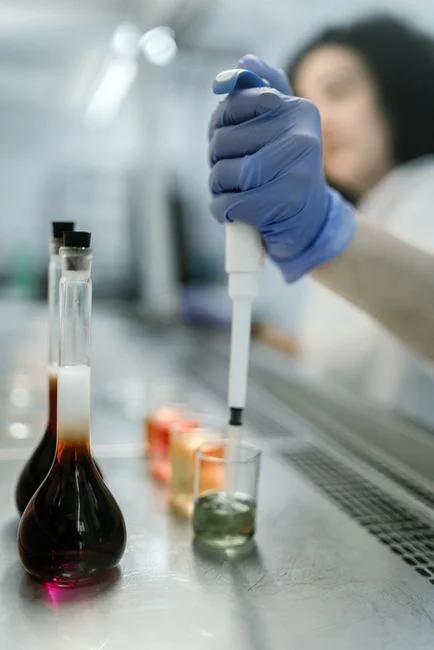
Unilever’s Environmental Care Framework Standards apply to the acquired operation once it becomes a Unilever site, but their role is to establish corporate assurance requirements rather than replace enforceable German conditions. The buyer should verify that the Environmental Policy is implemented through site procedures, assigned responsibilities, training, operating controls, incident reporting and retained evidence. This is the first governance test after a change in ownership.
Unilever’s published nature commitments include water-related requirements covering applicable water-abstraction, use and wastewater-discharge laws and permits, as well as environmental management systems that identify and mitigate water-management and effluent risks. The German diligence team should therefore test whether the site links abstraction records, production and cleaning schedules, chemical use, discharge monitoring, deviations and corrective actions within one management system.
The Unilever CDP Water Security Questionnaire dated 25 August 2020 provides a useful assurance benchmark. It states that discharge volumes were measured for 100% of total manufacturing-operation volumes and that discharge volumes and treatment methods were reported at site level for 100% of manufacturing operations. The acquired site should provide complete records against its own applicable requirements, including treatment method and discharge volume.
Monitoring coverage needs more scrutiny. The same 2020 CDP response states that 63% of manufacturing sites reported discharge-water temperature and that Unilever planned to review all sites. This is historical corporate reporting, not a German monitoring rule. For the acquired plant, the buyer should determine which parameters the permit, sewer operator or corporate procedure requires, where they are measured, who performs the analysis and what happens when a result exceeds the applicable condition.
The assurance review should also ask whether the acquired site’s environmental-management system identifies the actual receiving route and credible failure modes. For example, a site with a treatment plant and a direct outfall needs evidence that the final authorization, rather than the treatment-plant design, defines the discharge obligation. A sewered site needs evidence that its pretreatment performance protects sewer acceptance conditions.
German Permit and Pretreatment Due-Diligence Checklist
A German wastewater permit remains a site-specific legal instrument whose validity after an acquisition must be confirmed. Request the current permit, every amendment, official correspondence, inspection findings, discharge-monitoring reports, non-compliance records and reports of hazardous or accidental discharges. Review the permit against current production, flow, chemical use and treatment performance; a valid authorization can still be inconsistent with the plant as it actually operates.
Confirm in writing with the competent authority, or the relevant sewer operator for indirect discharge, whether the existing authorization remains valid after the change in ownership and whether notification, amendment or a new permit is required. Keep the question specific to the legal entity, site boundary, permit holder, discharge route and proposed operating changes. Do not treat internal corporate alignment as evidence of regulatory continuity.
For an indirect route, obtain the sewer discharge contract and its supporting authorizations. Confirm accepted waste types, prohibited substances, connection conditions, sampling regime, operator control rights, fee exposure and liability allocation. Review process and hazardous-substance inventories for detergents, disinfectants, solvents, oils, sanitizers or other materials that could change industrial wastewater pretreatment performance or sewer acceptance.
The operating package should include the current wastewater characterization, laboratory analyses, flow records, monitoring results, sludge records, chemical-use inventory, incident history and planned production changes. For every relevant parameter, record the legal source, limit, unit, averaging period, monitoring point and verification method.
| Parameter to verify | Required evidence | Acquisition test |
|---|---|---|
| Discharge route | Permit, sewer contract, process drawings and metered operating records | Documents and physical routing agree; direct and indirect routes are not confused |
| Flow and operating envelope | Hourly, daily and monthly flow records; production and cleaning schedules | Existing equipment and authorization cover the verified operating envelope |
| Pollutants and water quality | Representative analyses, laboratory methods and monitoring reports | Results are traceable to verified permit or sewer conditions |
| Temperature | Temperature records, sensor calibration and sampling procedure | Monitoring location, frequency and reporting method are documented |
| Pretreatment controls | Equipment drawings, operating logs, maintenance records and bypass controls | No uncontrolled diversion can release incompatible wastewater |
| Sludge and residuals | Characterization, handling route, destination and disposal records | Residual route is lawful, documented and included in operating cost |
| Incidents and deviations | Accidental-discharge reports, enforcement records and corrective actions | Open findings are assigned and reflected in the risk allocation |
Do not insert a German COD, BOD, TSS, nitrogen or phosphorus limit unless it is contained in the site-specific permit or verified local rules. The requester should not infer an acceptance condition from a generic pretreatment guideline. Equally important, test whether acquisition-related changes to production, process water, energy use or discharge could alter the wastewater profile and invalidate equipment sizing or permit assumptions.
Select the Treatment Response for the Acquired Wastewater
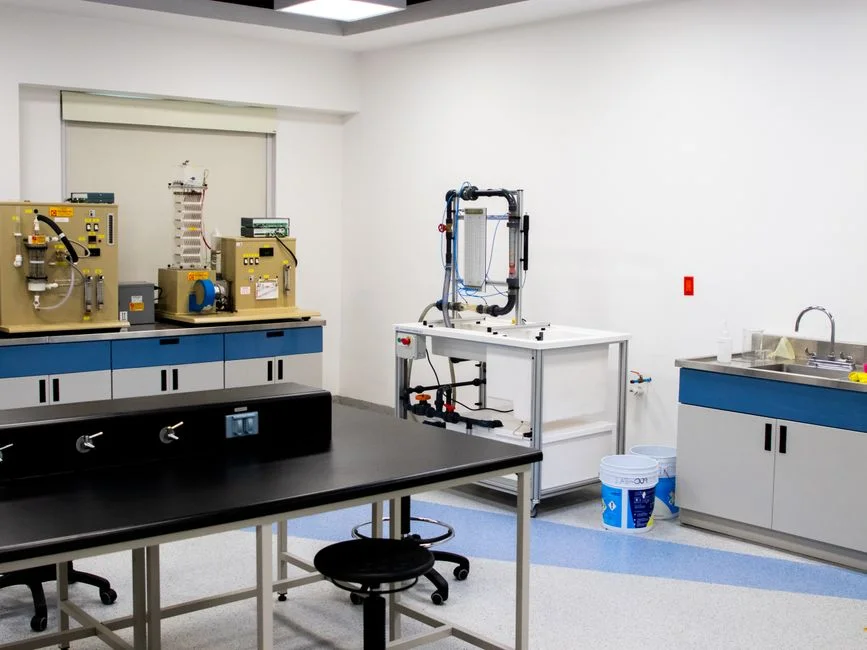
Treatment selection should follow a sequence: confirm the discharge route, characterize the wastewater, establish the verified permit or sewer conditions, and then test whether the installed system is physically capable of meeting them. This sequence prevents an on-site treatment asset from being treated as the compliance destination when the authorized route is indirect discharge, and it prevents packaged equipment from being selected before the wastewater profile is known.
| Decision condition | Engineering response | Evidence required before selection |
|---|---|---|
| Existing pretreatment can meet the verified permit or sewer acceptance conditions | Low-change case: retain the installed train and address operating, monitoring or documentation gaps | Performance tests, maintenance records, calibrated instruments, representative influent and effluent data |
| Oil, grease, fats or settleable solids threaten biological treatment, reuse or sewer acceptance | Retrofit case: assess physical separation before the downstream treatment step | Characterization results, flow profile and acceptance criteria; an industrial DAF system for oil and grease pretreatment is one technology option |
| Verified duty requires biological treatment and high-quality reuse or direct discharge | Retrofit or high-complexity case: assess membrane bioreactor treatment | Verified flow, pollutant loading, reuse targets and site constraints; the MBR wastewater treatment system is specified for 10–2,000 m³/day and filtration below 1 μm |
| Packaged treatment is appropriate for a non-sewage application | Assess a packaged treatment train only after confirming the application | The WSZ series is specified for 1–80 m³/h using A/O biological contact oxidation, sedimentation and disinfection; site duty and standards must still be verified |
| Sludge route or disposal condition is unverified | No final selection until residuals are incorporated into the treatment train | Residual characterization, handling route, destination and disposal records |
The equipment specifications provide selection boundaries, not a site-specific compliance determination. The supplier’s process guarantee should be tied to the acquired plant’s verified permit limits or sewer acceptance criteria, including the guaranteed flow, pollutant loading, operating mode and test protocol. Generic output claims cannot discharge the buyer’s compliance responsibility.
Residual sludge belongs in the acquisition decision. Request characterization, handling route, destination and disposal records before selecting a final treatment train. Depending on the waste characteristics and route, the buyer may also need to assess a plate-and-frame filter press within the complete dewatering and disposal scheme rather than treating it as a stand-alone wastewater solution.
Build the Post-Acquisition Compliance and Capital Plan
The diligence findings should be converted into a phased ownership plan. Classify each item as a closing condition, an immediate corrective action, a post-closing capital item or a monitoring improvement. Permit-continuity uncertainty, unauthorized discharge routes, uncontrolled bypasses and missing permit evidence may require closure before ownership transfers; maintenance deficiencies and monitoring improvements can be scheduled if they do not create immediate compliance exposure.
Establish a site-specific baseline using flow, pollutant, temperature and operating-hour data. Do not convert Unilever’s historical discharge percentages into plant design criteria. The baseline should show seasonal and production-related variation, the normal operating envelope, the current treatment train’s performance and any gap against the verified permit or sewer conditions. It becomes the reference for commissioning, performance testing and post-acquisition review.
Reconcile the installed treatment train with the permit, sewer contract, Unilever Environmental Policy and Environmental Care Framework Standards. The governance package should include operator training, sampling procedures, laboratory quality controls, instrument calibration, alarm response, bypass management, spare-parts planning and a named responsible operator. Incident and corrective-action records should use the same source-to-destination logic as the permit evidence.
Internal reuse should be documented as an actual flow and water balance rather than a sustainability claim. Unilever’s CDP Water Security Questionnaire dated 25 August 2020 estimated that reuse represented about 10% of total wastewater volumes from global manufacturing operations. That figure is corporate historical context, not a target or design assumption for the German plant.
Set a post-acquisition review to test whether the acquisition triggers Unilever’s 5% sustainability-baseline and target-review threshold, or another material change, when accurate and reliable data is available. This governance review is separate from permit compliance, but the two should share verified operating data. The DAF-versus-clarifier treatment comparison and wastewater-plant maintenance guide provide useful engineering context, but the German acquisition plan must remain anchored to site evidence.
Frequently Asked Questions
Does Unilever's acquisition automatically transfer the German plant's existing wastewater permit?
No automatic transfer should be assumed. The buyer must ask the competent authority, or the relevant sewer operator for an indirect discharge authorization, whether the existing approval remains valid after the change in ownership and whether notification, amendment or a new permit is required. The answer must address the permit holder, legal entity, site boundary, discharge route and proposed operating changes.
What treatment system should be selected for the acquired plant?
Selection begins with wastewater characterization and the verified discharge route. The buyer then establishes the permit or sewer acceptance conditions, flow and loading envelope, reuse requirement, residual-sludge route and site constraints. Only after that assessment should the installed train be classified as capable, requiring limited retrofit or requiring a more complex treatment solution.
What should an acquisition buyer request from an equipment supplier?
Request a site-specific process basis stating the applicable permit or sewer conditions, guaranteed duty, treatment train, controls, installation and commissioning scope, operating assumptions and maintenance requirements. The contract should also define test methods, acceptance criteria, data handover, training, spares, warranty boundaries and who remains responsible for permit or sewer compliance. A generic product specification is not enough.
How much does an acquisition-related wastewater retrofit cost?
A defensible cost cannot be calculated from the supplied evidence because the acquired plant’s flow, wastewater quality, discharge route, permit conditions, reuse requirement, residual route and site constraints are not yet known. Before requesting a budget, obtain the current characterization, verified permit or sewer conditions, flow records, treatment drawings, production plans and utility and civil-work constraints. Then require an itemized offer separating equipment, installation, commissioning, controls, sludge handling, monitoring and contingency.
How should the plant report wastewater performance after acquisition?
Establish a site baseline using representative flow, pollutant, temperature and operating-hour data. Define sampling points and frequencies, analytical methods, calculation rules, reporting responsibilities, laboratory quality controls and instrument calibration in controlled procedures. Retain monitoring results, deviations and corrective-action logs, and align each report with the verified German permit or sewer authorization and Unilever’s applicable environmental requirements.