How IFAS Fits a Wood Processing Wastewater Treatment Train
IFAS can be a strong biological-treatment option for wood-processing wastewater when the effluent contains biodegradable organics and the plant can control solids, suspended material, pH, temperature, and toxic or incompatible process inputs. It combines suspended activated sludge with biomass attached to carrier media, increasing biomass, extending effective sludge age, and improving denitrification and shock-load resistance. A 2025 review found industrial IFAS effluent COD of 35.8–892.9 mg/L and NH4+-N of 1.5–37.6 mg/L. These are literature ranges, not guaranteed results for wood processing; site analysis and pilot testing are essential.
IFAS is an attached-growth biological reactor in which carrier-supported biofilm and suspended sludge operate together. The 2025 review in the Journal of Water Process Engineering reports that this biomass combination increases active biomass, prolongs sludge age, selectively enriches dominant bacterial communities, and can improve denitrification and shock-load resistance. That mechanism can suit plants handling biodegradable wood-processing organics and variable production or wash-water flows, provided the reactor receives a sufficiently uniform influent.
IFAS does not replace physical pretreatment. It should follow source control, screening, removal of settleable fiber and grit, equalization, and any necessary pH or temperature correction. It then precedes final solids separation and polishing. Bark, chips, fillers, coatings, free oil, and incompatible chemistry can foul equipment or impair biological access to oxygen and substrate even when the reactor contains healthy carrier media.
The reported effluent ranges cover industrial studies assembled by the August 2025 review; they do not establish performance for pulp and paper effluent, wood panel wastewater, or sawmill wash water. The appropriate use of the evidence is to support process selection, not to set an acceptance value. For related application-specific design work, see IFAS engineering for rubber processing wastewater and IFAS design for ceramic tile wastewater.
Characterize Wastewater by Production Stream
A wood-processing site must characterize each wastewater source separately because pulp and paper production, sawmill operations, panel finishing, coating operations, equipment washing, and sanitary flows can carry different solids, organics, nutrients, and process chemicals. A single composite sample can conceal the load peaks or toxic inputs that determine whether IFAS can be operated reliably.
Build the influent dataset through a representative sampling campaign covering normal production, peak production, shutdown, cleaning, and upset periods. Record flow together with COD, BOD, TSS, suspended-solids character, pH, temperature, total nitrogen, ammonia, phosphorus, conductivity, and color where relevant. Also identify coatings, resins, biocides, wood extracts, and other constituents entering each stream. The supplied research does not provide wood-processing influent limits, so the table below is a data-collection template rather than a set of assumed design values.
| Source or condition | Flow and timing | Required analysis | Design implication |
|---|---|---|---|
| Pulp or paper production | Separate production and save-all streams; record batch events | COD, BOD, TSS, pH, temperature, TN, ammonia, phosphorus | Defines organic and nitrogen loading and equalization duty |
| Sawmill or chip operations | Wash-water flow, production peaks, shutdowns | Flow, TSS, settleable solids, COD, BOD, pH | Identifies fiber-removal and grit-control requirements |
| Panel finishing | Cleaning and coating cycles | Flow, COD, TSS, oil and grease, pH, temperature | May require physical separation or chemical pretreatment |
| Coating operations | Batch dumps and wash-down | Resins, coatings, solvents, surfactants, COD, toxicity indicators | Establishes compatibility and isolation needs |
| Equipment washing | Cleaning frequency and duration | Flow, COD, TSS, pH, temperature, detergents | Defines equalization and shock-response requirements |
| Sanitary flow | Diurnal and shift pattern | Flow, COD, BOD, TSS, TN, ammonia, phosphorus | Establishes baseline hydraulic and nutrient loading |
Exclude bark, chips, fibers, fillers, grit, and other settleable or floating material before biological treatment. Also establish the discharge route and applicable permit before selecting equipment. The supplied studies do not establish jurisdiction-specific wood-processing limits, so the buyer must obtain the governing requirement independently.
Protect the Biological Reactor With Pretreatment

Pretreatment should be assigned from stream characteristics: fibrous material requires solids protection, while oil, coatings, colloids, or pH excursions require removal or correction before IFAS. A universal train adds unnecessary equipment and can create its own residual-handling problem.
- Protect pumps and carriers. Use fine screening to capture rags, fibrous debris, chips, and bark that could plug pumps, damage bio-carrier media, or interfere with downstream solids separation. Evaluate a rotary mechanical bar screen for fibrous wood waste where continuous mechanical screening is justified.
- Control hydraulic and concentration shocks. Equalization should reduce flow, COD, and solids peaks before biological treatment. Aeration and mixing requirements should follow the measured variability and oxygen demand rather than a generic basin assumption.
- Remove contaminants that block mass transfer. Oil, grease, free oil, coating residues, and excessive colloids should be addressed before the reactor. Both suspended and attached biomass need access to biodegradable substrate and oxygen.
- Correct pH and temperature where testing shows a need. The 2025 review confirms that process conditions govern IFAS performance but supplies no wood-processing set points. Determine the operating envelope from site data and confirm it in testing.
- Dose only demonstrated requirements. Automatic chemical dosing may be appropriate for pH control or another demonstrated correction, but no defensible dose can be specified without influent characterization. Consider an automatic chemical dosing system only after the control basis is established.
| Observed problem | Potential pretreatment | Selection question |
|---|---|---|
| Fibers, chips, bark, rags | Fine screening | Will the screen remove the dominant material without excessive headloss or captured-solids handling? |
| Suspended solids, colloids, oily material | DAF where justified | Does DAF pretreatment for wood-processing wastewater remove the identified floatables and solids? |
| pH variability | Validated chemical correction | What control range follows from testing, and what residual is generated? |
| Production and wash-water peaks | Equalization | Does the basin attenuate the measured hydraulic and concentration peaks? |
Select the IFAS Reactor and Carrier Media
The reactor configuration and carrier must be selected as a coupled system; high carrier surface area alone does not establish effective full-scale treatment. The 2025 review identifies large specific surface area, high mechanical strength, rich pore structure, high roughness, and strong durability as the relevant carrier-selection criteria, but those properties must still be matched to mixing, aeration, recovery, and solids separation.
Conventional IFAS arrangements include floating carrier media in a mixed reactor and fixed media in an aerated zone. Floating systems depend on controlled movement and retention; fixed systems depend on fluid distribution and compatible flow through the media bed. Tank geometry, hydraulic behavior, aeration layout, downstream clarification, and retrofit access determine which arrangement is practical.
The August 2025 review identifies limitations in larger conventional carriers: lower mass-transfer efficiency and difficulty achieving complete fluidization. It describes the high-concentration powder carrier bio-fluidized bed, or HPB, as a derivative process rather than a drop-in IFAS upgrade. HPB uses micron-sized powder carriers and reportedly improves mass transfer, biological affinity, and fully fluidized dual-sludge-age behavior. A conventional retrofit should not be based on HPB claims without a separate process design.
Require each supplier to document carrier density, dimensions, shape, mechanical strength, available surface area, mixing behavior, retention method, recovery procedure, cleanability, and reactor compatibility. Ask for evidence of biofilm development without carrier fracture, excessive abrasion, escape, or accumulation in dead zones. Review carrier recovery as an operating feature: the 2025 review associates carrier recycling with process stability, phosphorus removal, and microbial renewal.
| Supplier information | Why it matters | Evidence to request |
|---|---|---|
| Material, dimensions, density and strength | Determines mixing, abrasion risk and effective surface area | Physical properties and durability evidence |
| Surface area, pores and roughness | Influences biofilm attachment and mass transfer | Test data tied to the offered carrier geometry |
| Mixing and fluidization behavior | Controls distribution through the reaction zone | Reactor-specific hydraulic and mixing description |
| Retention and recovery | Limits biomass loss and carrier escape | Screen design, recovery method and loss-management procedure |
| Cleanability and replacement | Determines maintainability and operating cost | Cleaning interval, replacement basis and warranty terms |
| Recycling capability | Supports biofilm renewal and retained phosphorus handling | Operating method and consequences for downstream residuals |
Carrier selection should also respect downstream solids removal. If a membrane is contemplated, the interaction between carrier design and solids capture must be resolved before procurement; MBR sizing for paper machine seal water provides a separate membrane-sizing reference, not a wood-processing IFAS design basis.
Design Aeration, Recirculation, and Solids Separation
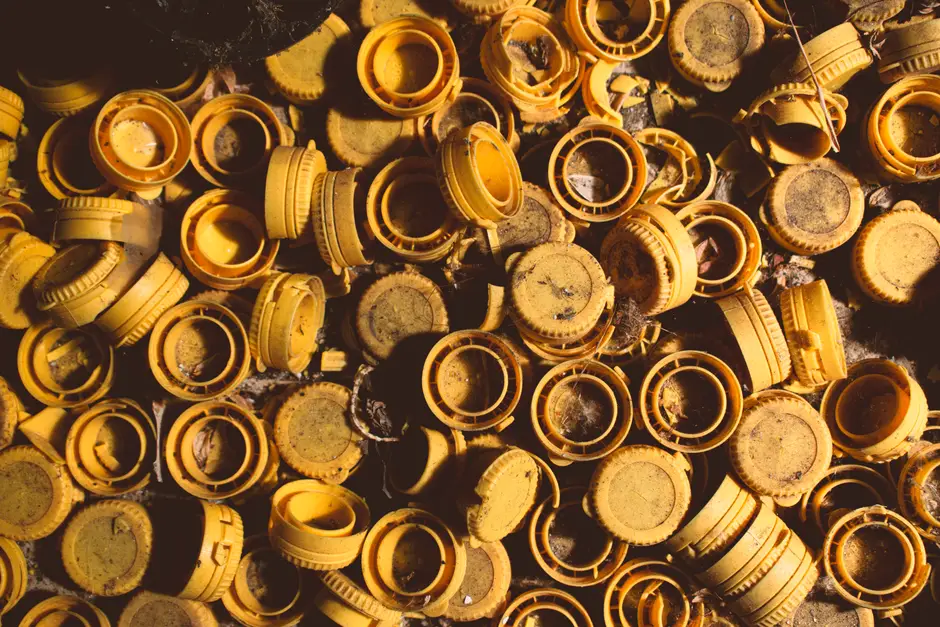
Oxygen and mixing must be sized from the measured organic load, nitrogen objective, water temperature, selected reactor volume, and carrier behavior. Generic IFAS claims do not establish site blower capacity, diffuser depth, air rate, or mixing power.
The mixing system should distribute carriers through the intended reaction zone without excessive collision, abrasion, shear, or accumulation in dead zones. Review internal recirculation, carrier-retention screens, aerated zones, and solids-removal equipment as one hydraulic system. Poor phase separation can release attached biomass as well as suspended solids, undermining the intended biomass inventory.
The 2025 review explains that biofilm thickness creates oxygen and nutrient gradients. The resulting aerobic, anoxic, and anaerobic microenvironments can support diverse microbial communities and multiple denitrification pathways. Whether those pathways improve biological nitrogen removal in a wood-processing stream depends on carbon availability, temperature, mixing conditions, solids age, and the actual DO profile.
Pair IFAS with downstream solids separation according to the discharge or reuse requirement. A lamella clarifier for downstream solids separation may fit where the required solids separation can be met; a membrane process may be needed when the reuse specification requires tighter control. The biological stage should not be treated as the final polishing step.
| Design element | Information required | Commissioning check |
|---|---|---|
| Aeration | Organic load, nitrogen target, temperature, reactor volume | DO response and distribution across the reaction zone |
| Mixing | Carrier density, geometry, hydraulic behavior and tank layout | Carrier circulation, dead zones, abrasion and accumulation |
| Recirculation | Mixing and solids-retention requirements | Internal recycle maintains the intended reaction conditions |
| Carrier retention | Carrier characteristics and flow paths | No uncontrolled escape or excessive biomass loss |
| Solids separation | Effluent TSS and reuse objective | Separated solids and sludge characteristics |
| Polishing | Permit or reuse specification | Final quality measured against the actual requirement |
| Residuals and controls | Sludge, odor, carrier loss and return-sludge strategy | DO, alarms, carrier inspection and sludge-handling operation |
The mechanical scope should also include sludge handling, odor control, carrier-loss inspection, DO control, return-sludge management, alarms, and access for cleanout. An integrated fixed-film activated sludge reactor cannot be procured as an isolated basin if these supporting functions are excluded.
Pilot Testing and Performance Acceptance
A continuous-flow pilot must test the proposed configuration with representative wood-processing wastewater; literature from other sectors can guide measurements and hypotheses but cannot replace site evidence. The 2020 RCAAP/FCT dairy dissertation compared activated sludge, IFAS, and moving-bed biofilm reactor systems in continuous flow. Its value here is methodological: it demonstrates a comparative testing approach, not evidence that any of those systems will meet wood-processing objectives.
Run the pilot across normal, peak, cleaning and shock conditions. Record flow, COD, ammonia, total nitrogen, TSS, DO, pH, temperature, carrier distribution, recovery, biofilm establishment, solids separation, and sludge properties. Include observations of settling, carrier accumulation, biofilm sloughing, odor, and control response. Sampling should be frequent enough to distinguish a stable average from isolated peaks.
Define acceptance against the site’s actual permit and reuse specification. Do not adopt the industrial effluent ranges in the August 2025 review—COD of 35.8–892.9 mg/L and NH4+-N of 1.5–37.6 mg/L—as guaranteed output or universal acceptance criteria. Those values span heterogeneous industrial studies and do not define the wood-processing obligation.
Use pilot results to revise reactor volume, carrier inventory, aeration, recirculation and pretreatment duties before scaling. Record every operating adjustment because a process that only meets its target under carefully controlled pilot conditions has not demonstrated the variability the full-scale plant must absorb. Related equipment selection can be considered alongside the process scope, including treatment valves and filter media, but procurement should follow the validated design basis.
Compare Retrofit, New Build, and Hybrid Treatment Options
The practical choice depends on existing basin geometry, mixing, aeration, solids separation, footprint, residual handling and the required effluent quality. A supplier should compare options on the same wastewater basis rather than quote a generic IFAS package.
| Option | Prefer when | Main engineering checks | Commercial scope to compare |
|---|---|---|---|
| Existing activated-sludge retrofit | Existing volume, mixing and aeration can accommodate carriers without compromising distribution or recovery | Carrier circulation, screen loading, dead zones, oxygen transfer, sludge separation | Civil modifications, screens, blowers, controls, carriers, commissioning |
| New-build IFAS basin | Existing geometry prevents distribution or would require extensive retrofit work | Hydraulics, reactor configuration, carrier retention, foundation, access and future expansion | Civil work, mechanical equipment, electrical and controls, installation and training |
| Hybrid treatment train | IFAS can remove biodegradable organics and nitrogen, but separate solids removal or polishing is needed | DAF, clarification, filtration or membrane compatibility with carrier and sludge | Complete process scope, polishing equipment, residuals and operator requirements |
Compare footprint, carrier inventory, mechanical complexity, operator skill, energy demand, maintenance and residual-handling implications. The supplied research contains no defensible wood-processing IFAS cost figures, so a supplier should provide an installed-scope quotation separated into civil work, blowers, pumps, screens, controls, carriers, commissioning, training and long-term consumables.
Clarification remains part of the comparison: if DAF is being considered for pretreatment or solids removal, distinguish its process duty from that of final clarification. The procurement decision should reflect the complete treatment train rather than an isolated clarification target.
Questions to Ask Before Approving an IFAS Supplier
A technically comparable proposal must expose its sizing basis, evidence and responsibilities before approval. Ask each supplier to state the proposed reactor configuration, carrier type, hydraulic-loading basis, oxygen-transfer basis, carrier-retention method and solids-separation arrangement.
Request case evidence with the wastewater type, flow, loading, treatment objectives, test period and measured results. Generic IFAS references, municipal data, pigment-industry examples and wood-processing evidence should be labeled separately. A 2023 pigment-wastewater case is not a substitute for wood-sector testing, just as the August 2025 review is a mechanism and evidence review rather than a wood-processing design guarantee.
Require a performance guarantee tied to defined influent and operating conditions. Also define FAT, SAT, training, spare parts, troubleshooting support and the operating manual. Clarify carrier replacement, loss, recovery, cleanout, warranty, control-system integration and sludge-disposal responsibilities.
Ask how the supplier will respond when flow, COD, ammonia, pH, temperature, toxicity or solids differ from the design basis. The answer should identify alarms, bypass or segregation provisions, pretreatment actions and recalculation rules rather than promise performance outside those conditions. For operating-cost structure, request a breakdown of the categories that can materially change the ownership cost; the supplied research does not support numerical cost estimates for this application.
Frequently Asked Questions
Can IFAS for wood processing wastewater replace screening, DAF, or clarification?
No. IFAS is a biological treatment stage, not a solids-removal substitute. Screens protect the process from fiber, chips and bark; DAF may be justified for suspended solids, colloids or oily material; and downstream clarification or filtration may be needed to meet the actual discharge or reuse specification. Each unit should be selected from measured stream characteristics.
What data are needed to size an IFAS reactor?
Establish flow, COD, BOD, nitrogen constituents, TSS, pH, temperature, toxicity indicators and production variability first. Then select the carrier properties, reactor configuration, solids age, oxygen-transfer requirement and hydraulic basis. Hydraulic and loading calculations should use representative campaign data rather than one grab sample or a literature effluent range.
How should a buyer compare supplier pricing for IFAS?
Request installed-scope quotations that separate civil work, screens or DAF, reactors, blowers, pumps, controls, carriers, carrier-retention equipment, solids separation, polishing, commissioning, training and long-term consumables. State the wastewater basis, design conditions, guarantee and exclusions beside each price. The supplied research contains no defensible cost figures for a wood-processing IFAS installation, so compare complete scopes rather than isolated equipment prices.
Which evidence should determine supplier selection and compliance risk?
Require site-specific basis-of-design calculations and test data from a comparable continuous-flow pilot. Separate wood-sector evidence from general IFAS references and other industrial case studies. Treat the site permit and reuse specification as the compliance basis: the literature effluent ranges reported in the August 2025 review are context, not acceptance criteria or jurisdiction-specific limits.