Industrial Wastewater Treatment in Manila: 2025 Engineering Guide with Costs, Compliance & Equipment Selection
Manila’s industrial sector generates 15% of the Philippines’ wastewater (WIPO 2023), yet only 30% of factories comply with DENR’s effluent standards under the Clean Water Act of 2004. For industrial applications, dissolved air flotation (DAF) systems achieve 90–98% TSS removal at 50–300 m³/h, while membrane bioreactors (MBRs) deliver near-reuse-quality effluent (<1 mg/L BOD) but typically require 20–30% more energy. This guide provides 2025 technical specifications, cost benchmarks (CAPEX: ₱5–15M per 50 m³/h), and a compliance checklist for Manila-based plants.Why Manila’s Factories Are Failing Wastewater Compliance in 2025
Only 30% of Manila’s industrial facilities currently meet the stringent effluent standards set by the Department of Environment and Natural Resources (DENR) under the Clean Water Act of 2004 (WIPO 2023). DENR Administrative Order 2016-08, which specifically delineates effluent limits for industrial discharges, mandates stringent parameters such as Biochemical Oxygen Demand (BOD) less than 50 mg/L, Chemical Oxygen Demand (COD) below 200 mg/L, and Total Suspended Solids (TSS) under 70 mg/L. Non-compliance carries substantial risks, including daily fines ranging from ₱10,000 to ₱200,000, temporary operational shutdowns, or even the revocation of an Environmental Compliance Certificate (ECC), which is critical for continued operations. Common violations observed in Manila’s industrial sector stem from specific pollutant types inherent to various manufacturing processes. For instance, tanneries frequently exceed limits for heavy metals like chromium, while food processing plants struggle with high levels of Fats, Oils, and Grease (FOG). Textile and chemical facilities often face challenges maintaining appropriate pH levels, leading to acidic or alkaline discharges. A 2023 DENR audit, for example, revealed that 42% of food manufacturers in Cavite, a key industrial hub adjacent to Manila, exceeded FOG limits by 300–500%, highlighting a systemic issue in effectively managing process wastewater. These persistent challenges underscore the urgent need for robust and compliant industrial wastewater treatment in Manila.Industrial Wastewater Treatment Technologies: DAF vs. MBR vs. Chemical Dosing for Manila Plants
| Technology | Primary Application | TSS Removal Efficiency | BOD Removal Efficiency | Energy Consumption (kWh/m³) | Relative Footprint |
|---|---|---|---|---|---|
| DAF (Dissolved Air Flotation) | High FOG, suspended solids (Food, Slaughterhouses) | 90–98% | 30–60% (pre-treatment) | 0.3–0.5 | Medium |
| MBR (Membrane Bioreactor) | High-quality effluent, space-constrained (Urban factories) | >99% | >95% | 0.6–0.9 | Small (60% less than conventional) |
| Chemical Dosing | pH adjustment, heavy metals, coagulation | 70–90% (with sedimentation) | Minimal (primary treatment) | 0.1–0.2 (pumps only) | Small (chemical storage) |
| DAF + MBR (Hybrid) | High-strength, complex industrial effluents | >99% | >98% | 0.8–1.2 | Medium-Small |
2025 Cost Benchmarks for Industrial Wastewater Treatment Plants in Manila
The capital expenditure (CAPEX) for a 50 m³/h industrial wastewater treatment system in Manila ranges from ₱2M for basic chemical dosing to ₱18M for advanced MBR installations in 2025. Understanding these cost benchmarks, alongside operational expenses (OPEX) and hidden costs, is crucial for Manila-based industrial plant managers to make informed procurement decisions. **CAPEX Breakdown (per 50 m³/h system):**- **DAF system:** ₱5–8M. This includes the skid-mounted unit, air saturation tank, recirculation pumps, chemical dosing pumps, and a basic control panel.
- **MBR system:** ₱12–18M. This covers membrane modules, aeration blowers, permeate pumps, membrane cleaning systems, and a sophisticated PLC control system.
- **Chemical dosing system:** ₱2–4M for a basic setup (tanks, pumps, manual control), escalating to ₱6–10M for an automated system integrated with pH/ORP sensors and precise PLC control.
- **DAF:** ₱1.2–1.8M. This primarily covers electricity for pumps and compressors, coagulation/flocculation chemicals, and routine maintenance (e.g., scraper blades, seals).
- **MBR:** ₱2.5–3.5M. Key drivers are electricity for aeration and permeate pumps, membrane cleaning chemicals, and the significant cost of membrane replacement, typically every 5–7 years, which can amount to ₱3–5M.
- **Chemical dosing:** ₱1.5–2.5M. This is predominantly for chemical reagents (e.g., acids, bases, coagulants). Sludge disposal costs are additional, adding ₱500–₱800/m³ of sludge.
- **Avoiding DENR fines:** Daily penalties of ₱10,000–₱200,000 for non-compliance can quickly outweigh treatment costs.
- **Water reuse savings:** Treated industrial wastewater can often be recycled for non-potable uses (e.g., cooling towers, cleaning, irrigation), reducing reliance on fresh water. With potable water in Manila costing ₱150–₱300/m³, water reuse can generate substantial savings.
- **Sludge disposal cost reduction:** Efficient dewatering and reduction of sludge volume can significantly lower local landfill fees, which typically range from ₱2,000–₱4,000/ton in the Philippines.
- **ECC application:** The Environmental Compliance Certificate (ECC) application process with DENR can incur fees of ₱50,000–₱200,000, depending on the project scale and complexity.
- **Sludge hauling permits:** Annual permits for accredited sludge haulers range from ₱10,000–₱30,000.
- **Power backup:** Given Manila’s power reliability issues, a generator rental for a 50 kVA system can cost ₱50,000–₱150,000/month to ensure continuous operation during brownouts.
| Cost Category | DAF System (50 m³/h) | MBR System (50 m³/h) | Chemical Dosing (50 m³/h) |
|---|---|---|---|
| **CAPEX (Initial Investment)** | ₱5–8M | ₱12–18M | ₱2–10M (basic to automated) |
| **Annual OPEX** | ₱1.2–1.8M | ₱2.5–3.5M | ₱1.5–2.5M (chemicals only) |
| **Membrane Replacement (every 5-7 yrs)** | N/A | ₱3–5M | N/A |
| **Sludge Disposal (adds to OPEX)** | ₱500–₱800/m³ (for DAF sludge) | ₱500–₱800/m³ (for MBR sludge) | ₱500–₱800/m³ (for chemical sludge) |
| **ECC Application Fee** | ₱50,000–₱200,000 | ₱50,000–₱200,000 | ₱50,000–₱200,000 |
Step-by-Step Equipment Selection Framework for Manila Factories

- **High FOG/TSS:** For effluents from food processing, meatpacking, or rendering plants, a DAF system for high-efficiency TSS and FOG removal in Manila’s industrial wastewater is typically the most effective primary treatment.
- **Space-Constrained Sites requiring High Effluent Quality:** If your factory is in a dense urban area and requires near-reuse quality effluent, an integrated MBR system for space-constrained Manila factories requiring near-reuse-quality effluent is ideal due to its compact footprint and superior performance.
- **Heavy Metals or pH Imbalance:** For industries like electroplating or chemical manufacturing, chemical dosing systems are crucial for precipitation of heavy metals or precise pH adjustment before further biological treatment.
- **24/7 Service:** Availability of technical support and emergency response.
- **Spare Parts Inventory:** Ensure critical spare parts are readily available in Manila to minimize downtime.
- **DENR-Certified Installers:** Verify that the vendor employs DENR-certified personnel for installation, commissioning, and maintenance to ensure regulatory compliance.
Frequently Asked Questions
What are the primary DENR effluent standards for industrial discharges in Manila? Under DENR Administrative Order 2016-08, industrial discharges in Manila must comply with specific effluent limits to protect water bodies. Key parameters include Biochemical Oxygen Demand (BOD) at less than 50 mg/L, Chemical Oxygen Demand (COD) below 200 mg/L, and Total Suspended Solids (TSS) under 70 mg/L. Additionally, pH must be maintained between 6.0 and 9.0, and specific limits are set for heavy metals, FOG, and other industry-specific pollutants. Non-compliance can result in substantial daily fines and operational disruptions, emphasizing the critical need for robust industrial wastewater treatment in Manila. How does land scarcity in Manila impact wastewater treatment technology choices? Land scarcity in Manila significantly influences the selection of industrial wastewater treatment technologies, favoring compact and efficient systems. Technologies like Membrane Bioreactors (MBRs) are highly advantageous as they require up to 60% less footprint compared to conventional activated sludge systems for the same treatment capacity and effluent quality. While DAF systems also offer a relatively compact design for primary treatment, sprawling lagoon systems or large clarifiers are often impractical due to high land costs (₱50,000–₱150,000/m² in industrial zones). This constraint drives demand for integrated, modular, and vertical treatment solutions. What are the typical sludge disposal costs for industrial wastewater treatment in the Philippines? Sludge disposal represents a significant operational cost for industrial wastewater treatment plants in the Philippines. The cost varies based on the volume, hazardous classification, and local landfill or treatment facility fees. Generally, non-hazardous industrial sludge disposal costs range from ₱2,000–₱4,000 per ton, including hauling and tipping fees. Hazardous sludge, such as that containing heavy metals from electroplating, incurs substantially higher costs due to specialized treatment and disposal requirements. Efficient sludge dewatering technologies, like filter presses or centrifuges, are crucial for reducing sludge volume and, consequently, disposal expenses. Can treated industrial wastewater be reused in Manila, and what are the benefits? Yes, treated industrial wastewater can be effectively reused in Manila, offering substantial environmental and economic benefits. With advanced treatment technologies like MBRs, effluent can achieve near-reuse quality, suitable for non-potable applications such as cooling tower make-up, industrial process water, equipment washing, and irrigation. The primary benefit is reducing reliance on fresh potable water, which in Manila can cost ₱150–₱300/m³. This not only generates significant cost savings but also enhances water security, reduces discharge volumes, and demonstrates environmental responsibility, contributing to a factory's sustainability profile and potentially improving its public image.Related Equipment
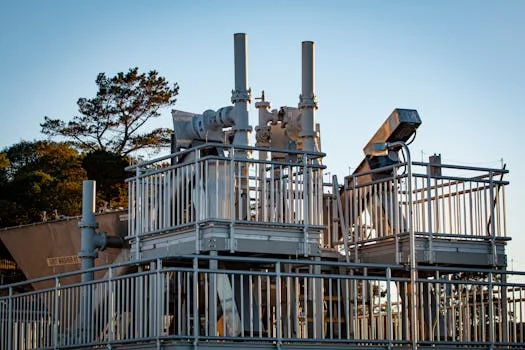
The following HydropureWater products are engineered for the wastewater challenges discussed above:
- DAF system for high-efficiency TSS and FOG removal in Manila’s industrial wastewater — view specifications, capacity range, and technical data
- Integrated MBR system for space-constrained Manila factories requiring near-reuse-quality effluent — view specifications, capacity range, and technical data
- PLC-controlled chemical dosing system for pH adjustment and heavy metal precipitation in industrial wastewater — view specifications, capacity range, and technical data
Need a customized solution? Request a free quote with your specific flow rate and pollutant parameters.