Start with the coffee wastewater, not the screw press
A screw press for coffee processing wastewater design must be based on the sludge produced after upstream solids separation, not selected directly from the raw wastewater flow. The design basis should establish feed flow, suspended-solids concentration, organic load, solids fraction, pH, temperature, and expected variation from representative operating samples. HUBER reports typical Q-PRESS results of 18–25% dry solids and up to 97% sludge-volume reduction, while wet coffee-processing research confirms that wastewater characterization should be based on sampling operating factories. The press then requires pump feeding, polymer conditioning, adjustable compression, filtrate capture, cake discharge, odor control, and automatic control.
Wet coffee processing can generate wastewater that changes with the operating sequence. A single grab sample will not represent pulp removal, washing, bean drying, pulp storage, or batch discharge unless collection is coordinated with those operations. The sizing request should therefore include daily flow records, mass-balance data for the separated solids stream, and samples covering the principal production periods.
The distinction between wastewater treatment and sludge dewatering is fundamental. The screw press separates water from captured solids; it does not remove dissolved organic matter or replace biological or physical treatment of the wet coffee-processing effluent. Solids capture, filtrate return, and the final destination of cake remain separate design decisions.
| Design-basis input | Evidence required | Why it matters |
|---|---|---|
| Raw wastewater flow | Hourly and daily records across production and batch periods | Defines the upstream treatment and solids-capture duty. |
| Separated sludge flow | Measured flow from the actual solids-capture stage | Determines screw-press hydraulic loading. |
| Suspended solids | TSS concentration and suspended-solids mass balance | Determines solids loading and cake-production rate. |
| Wastewater condition | pH, temperature, organic load, and soluble-fraction data | Defines treatment and conditioning requirements. |
| Solids characteristics | Coffee pulp and grounds particle distribution, fibers, grit, plastics, and debris | Protects the press and informs basket selection. |
| Variation | Production, startup, upset, wet-season, and storage data | Sets peak and batch-discharge conditions. |
A useful engineering sequence is:
- Sample and monitor the raw wet coffee-processing effluent.
- Separate the dewaterable solids stream from the wastewater treatment flow.
- Characterize the captured coffee pulp sludge and coffee grounds.
- Condition representative sludge and measure dewaterability.
- Define press feed, filtrate, cake, odor-control, and controls duties.
The coffee-specific evidence is a warning against using generic wastewater assumptions. Sci Forschen’s Effluent Quality of Wet Process Coffee Processing Factories in Coffee Growing Ecological Zones in Burundi studied 19 wet-processing sites in a country with more than 250 coffee-processing factories and measured physicochemical effluent parameters. Its relevance is methodological: characterize wastewater at operating factories rather than infer conditions from laboratory water or another food-processing stream. The study does not establish screw-press capacity for coffee sludge, so that duty still requires site measurements.
For solids capture, a DAF system for coffee wastewater solids capture may be evaluated as part of the upstream train, while soluble pollution remains the responsibility of the wider treatment process. The sizing boundary must be explicit: the screw press receives the conditioned sludge leaving that train, not the full raw wastewater flow.
Build the pretreatment and sludge-conditioning train
A screw press performs reliably only when upstream treatment captures the solids that will later form the filter cake. The pretreatment stage should remove suspended, colloidal, and free oil-and-grease material where present, while preventing grit, fibers, plastics, and excessive debris from entering the press. A DAF system for coffee wastewater solids capture is one equipment option to assess; the final selection must follow characterization rather than a generic flow calculation.
There is useful, but not coffee-specific, performance evidence for this separation step. The OpenAlex-indexed Wageningen thesis Integrated treatment of tapioca processing industrial wastewater based on environmental bio-technology reports that upstream anaerobic UASB flotation pretreatment reduced suspended solids from 450–1,850 mg/L to 148–290 mg/L, equivalent to 67–82% removal. These figures describe tapioca-processing wastewater and must not be presented as demonstrated coffee-plant performance. They nevertheless show why solids capture should be evaluated separately from the press.
Coffee processing adds distinct material-handling concerns. Pulp may contain fibrous material, while coffee grounds may behave differently in particle size, oil content, and compressibility. The solids stream also has to remain pumpable. A press feed that separates, settles locally, or delivers solids in uncontrolled plugs is not a valid design feed even when the average suspended-solids concentration looks suitable.
Specify a conditioning trial on representative sludge. The trial should compare the proposed polymer, pH adjustment, or other chemistry at defined dosages and mixing conditions. Record feed solids, dose, mixing energy, resulting floc structure, filtrate quality, cake dry solids, and throughput. Automatic chemical dosing for sludge conditioning should then reproduce the successful trial condition rather than operate from an unverified nominal dose.
The dosing package needs a defined control interface. Require the supplier to state its dosing basis, feed measurement, mixing arrangement, sequence relative to the screw-press feed pump, loss-of-chemical detection, low- or high-dose alarm response, and manual operating provision. The feed pump should draw from a mixed, pumpable sludge vessel, and the upstream solids-capture equipment should have a defined clean-out point.
| Train element | Minimum basis to request | Acceptance focus |
|---|---|---|
| Solids capture | Representative effluent characterization and measured capture performance | Separated sludge is pumpable; debris and grit are excluded. |
| DAF or alternative pretreatment | Flow, TSS, oil-and-grease, and particle data | Upstream performance is demonstrated without implying coffee-specific UAF evidence. |
| Conditioning | Polymer or chemistry trial on representative sludge | Dose, mixing, filtrate, dry solids, and throughput are recorded. |
| Chemical dosing | Control basis, calibration method, alarms, and operator procedure | Delivered dose is repeatable and traceable to feed conditions. |
| Feed system | Pump curve, available head, suction arrangement, and static lift | Press receives a stable feed without plugging or dilution. |
Size the screw press from hydraulic and solids loading
The correct screw-press feed flow is the flow from the upstream sludge-capture stage, not the raw wastewater flow. Size hydraulic duty from the conditioned sludge entering the machine, then check whether the solids mass rate or batch discharge governs the selected configuration. A vessel-volume comparison cannot establish whether the press can handle peak solids loading.
Calculate suspended-solids mass loading from the measured sludge flow and suspended-solids concentration, with the basis stated explicitly as peak hourly, daily average, or design batch discharge. Because pulp and grounds sludge may be released intermittently, apply the plant’s documented batch factor to the governing discharge condition. Identify the maximum feed rate during startup, upset, wet-season operation, or a concentrated storage discharge. No defensible batch factor is supplied in the research, so the buyer must obtain it from plant records rather than assume one.
Filtrate collection is part of the hydraulic duty. Confirm the expected water-removal rate, available head at the feed-pump inlet, filtrate piping losses, and the destination of the filtrate. If filtrate returns to the treatment process, its suspended-solids concentration and flow must be included in the receiving process load. A pumpable feed can still overload the filtrate system if that balance is omitted.
HUBER’s Q-PRESS information identifies sludge feed rate, flocculant dosing and mixing, screw speed, sludge feed pressure, and pneumatic counterpressure of the discharge cone as operating-control parameters. These should appear in the supplier’s duty definition, control narrative, and acceptance procedure. HUBER also states that pump feeding can dewater thin sludge below 1% solids without prior thickening. That is a manufacturer claim for the Q-PRESS, not evidence of equivalent performance with coffee pulp sludge or coffee grounds; require confirmation using representative conditioned feed.
| Sizing item | Calculation or input | Supplier information required |
|---|---|---|
| Hydraulic feed duty | Conditioned sludge flow from upstream capture | Maximum continuous feed, minimum feed, and feed tolerance. |
| Solids duty | Sludge flow multiplied by measured suspended-solids concentration | Dry-solids throughput and design batch condition. |
| Filtrate duty | Water removed at the selected cake dry-solids target | Filtrate flow, solids content, and collection requirements. |
| Feed pumping | Static lift, friction, pressure demand, and suction conditions | Pump duty, available head, and non-thickening confirmation where offered. |
| Controls | Feed rate, dose, mixing, speed, feed pressure, and counterpressure | Control ranges, interlocks, alarms, and operating sequence. |
Require the RFQ to state whether the offered capacity refers to feed volume, dry-solids throughput, or a combination. A supplier should identify the feed condition behind the duty point and demonstrate that the proposed machine remains within its hydraulic and solids limits during the plant’s governing batch.
Configure compression, cake discharge, and odor control
Screw-press compression is progressive: the auger geometry reduces the available volume within the cylindrical filter basket, expressing free water before the sludge reaches the annular discharge gap and pneumatically adjustable pressure cone. HUBER describes that operating principle for the Q-PRESS. For coffee processing, the basket spacing and open area must be compatible with the measured particle distribution of coffee pulp sludge and coffee grounds; a generic basket selection based only on feed volume leaves the principal risk unresolved.
Require the supplier to explain how the proposed basket accommodates the solids characteristics. The proposal should state the basis for spacing and open area, identify any restrictions on fibrous material, and describe how blinding would be detected and corrected. A representative test should confirm cake release and sustained filtrate flow rather than merely demonstrating a dry surface sample.
Cake handling should be selected as a system, not as an outlet detail. Enclosed discharge may suit sites with limited ventilation, worker-exposure concerns, or strict odor-management requirements. Open handling may be simpler where containment and odor controls are adequate. Both options must be checked against the downstream container or disposal method, the moisture required by that destination, secondary containment, and the risk of washwater carrying odorous solids outside the process area.
HUBER states that the Q-PRESS uses a shaft-mounted scraper for internal cleaning and a stationary spray bar for segment-by-segment external backwashing. For sizes 620.2 and above, HUBER states that dewatering continues during backwashing. These are configuration-specific manufacturer claims and should be verified against the offered model. HUBER also states that split baskets can allow only the upper half to be removed for maintenance, reducing maintenance time and space requirements. The RFQ should show the actual maintenance sequence, access envelope, lifting needs, and cleaning duration.
| Configuration item | Plant input | Supplier commitment |
|---|---|---|
| Filter basket | Representative pulp and grounds particle distribution | Spacing, open area, blinding tendency, and proposed cleaning response. |
| Compression | Target cake dry solids and required throughput | Screw geometry, pressure-cone range, and duty point. |
| Discharge | Container clearance, odor exposure, and downstream destination | Enclosed or open arrangement, containment, and cake-transfer method. |
| Cleaning | Operating hours and expected solids variation | Scraper, backwash sequence, and whether dewatering continues during cleaning. |
| Maintenance | Available floor area, access route, and lifting constraints | Access method, removed components, tools, duration, and safety controls. |
Automate operation around variable coffee production
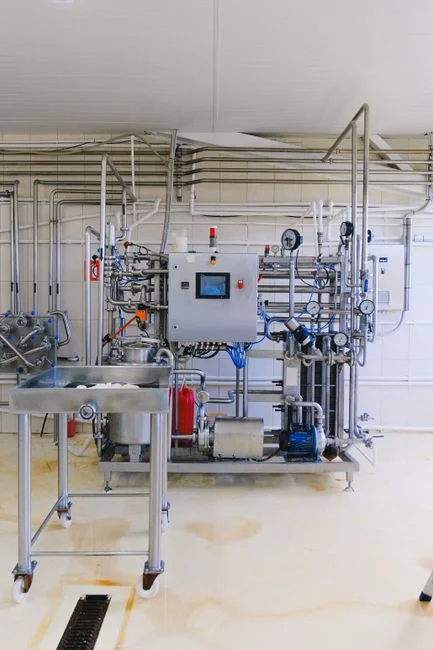
Automatic control is valuable when coffee production changes the solids concentration, feed rate, or batch pattern. HUBER states that the Q-PRESS control loop automatically adjusts to overloading and underloading while permanently monitoring filtration pressure, screw speed, and drive load. This is the appropriate control concept to benchmark, but its implementation must be tested with the coffee plant’s actual conditioned feed.
Build an operating matrix that links measured conditions to machine actions. Screw speed should be adjusted within the supplier’s permitted range to protect the drive; feed and flocculant should be coordinated with suspended-solids loading; and discharge counterpressure should be used to balance cake dryness against throughput. A control system that changes one variable without considering the others is incomplete for variable wet coffee-processing effluent.
Alarms should cover high drive load, high feed pressure, excessive filtrate turbidity, loss of chemical dosing, and abnormal cake discharge. Define the response for each condition: reduce feed, stop feed, change screw speed, switch dose control, trigger a wash, or hold discharge. The final shutdown and cleaning sequence should be included in commissioning documentation, not left to a general control narrative.
For electrical and occupational planning, HUBER reports operation below 1 rpm, noise below 70 dB(A), and 60–80% energy-cost savings compared with centrifuges. These are manufacturer comparisons without a supplied test date, site duty cycle, power tariff, or centrifuge baseline. They should not be entered into a project budget as guaranteed savings. Validate energy use with site-specific power measurements and compare total cost using the same duty and operating schedule.
| Condition or signal | Automatic or operator action | Recorded for review |
|---|---|---|
| High drive load | Reduce or stop feed; adjust permitted speed setpoint. | Load, feed rate, speed, cake condition, and duration. |
| High feed pressure | Check feed pump, blinding, or excess feed; apply defined interlock. | Pressure trend, flux indication, wash status, and recovery time. |
| Loss of chemical dosing | Stop or divert feed according to the approved sequence. | Low-dose alarm, actual delivery, and operator intervention. |
| Excessive filtrate turbidity | Confirm capture condition and suspend unverified cake discharge. | Turbidity, suspended solids, feed condition, and batch reference. |
| Abnormal cake discharge | Adjust counterpressure or stop the batch if release remains unstable. | Counterpressure, feed rate, screw speed, and cake moisture. |
Test performance before accepting the installation
Acceptance should be based on a representative performance test, not a visual cake inspection. HUBER reports typical Q-PRESS results of 18–25% dry solids and up to 97% sludge-volume reduction. Use these as cited benchmark claims, then set project acceptance criteria for the actual feed, conditioning regime, throughput target, and cake destination. The test protocol should identify how influent suspended solids, feed flow, chemical dose, cake dry solids, filtrate suspended solids, and filtrate flow are measured.
Define whether the acceptance run is continuous, intermittent, or both, and make the operating duration and production condition part of the agreed protocol. The test should demonstrate sustained cake discharge, stable filtrate collection, and operation through the required backwashing and alarm sequences. Include filtrate return to the treatment process, because a return line can impose a hydraulic or solids load not captured by the press trial alone.
The handover package should cover startup, shutdown, cleaning, and emergency response. Require wear-part inspection instructions, basket-cleaning procedures, shaft and scraper access, spare-parts availability, and operator training. HUBER states that its Q-PRESS can automate start-up and shutdown and can operate unattended; that does not remove the need to demonstrate the coffee plant’s local controls, emergency access, and operator competency.
Complete an odor and secondary-containment inspection before acceptance. Check cake discharge, drip points, washwater collection, spills, ventilation, and the route to the cake destination. These are site-specific acceptance items because neither the supplied research nor a manufacturer benchmark establishes odor performance for wet coffee-processing sludge.
| Acceptance item | Test or inspection | Acceptance record |
|---|---|---|
| Dewatering | Measure cake dry solids and sludge-volume reduction at the agreed duty. | Instrument readings, feed condition, dose, and calculation method. |
| Hydraulics | Measure feed and filtrate flow during sustained operation. | Flow series, pump status, pressure, and batch duration. |
| Filtrate quality | Measure suspended solids and inspect return impact. | Laboratory result and receiving-process confirmation. |
| Reliability | Exercise cake discharge, backwashing, alarms, shutdown, and cleaning. | Interlock and sequence results, faults raised, and recovery time. |
| Maintainability | Inspect access to basket, shaft, scraper, and wear parts. | Maintenance record, training attendance, and spares schedule. |
| Odor and containment | Inspect cake transfer, drips, washwater, and spill containment. | Punch-list closure and operator sign-off. |
Compare screw press suppliers using engineering criteria
Compare bids at a defined duty point based on measured sludge flow, suspended-solids concentration, variability, and cake destination. The request for quotation should use the same feed basis and data sheet for every supplier. It should also state the required dryness, filtrate destination, operating hours, site constraints, odor controls, and acceptance-test conditions.
Ask each supplier to distinguish demonstrated performance from general product claims. Compare solids capture, dry solids, volume reduction, noise, energy basis, automation, cleaning continuity, maintenance access, and documentation. HUBER’s reported 18–25% dry solids, up to 97% volume reduction, operation below 1 rpm, noise below 70 dB(A), and 60–80% energy-cost savings are benchmark claims, not universal guarantees or coffee-specific test results.
Scope boundaries must be explicit. Require bids to state whether they include upstream solids separation, sludge conditioning, feed pumps, polymer preparation, filtrate handling, cake discharge, odor control, electrical and controls, installation, commissioning, training, and spares. A screw press specification and procurement checklist can then expose omissions before prices are compared.
Evaluate total cost of ownership using site-specific power consumption, polymer consumption, labor, maintenance, downtime, and cake-disposal requirements. No defensible project price appears in the supplied research, so do not infer one from equipment volume or manufacturer savings claims. Request the calculation method behind each budget estimate, including power tariff, operating hours, feed basis, dose assumption, maintenance allowance, and downstream cake cost.
| Decision area | Evidence to request from every bidder | Commercial risk if missing |
|---|---|---|
| Process fit | Duty point, feed basis, dry-solids target, and demonstrated test method | Unverified capacity or unsuitable cake performance. |
| Conditioning | Trial basis, polymer demand, mixing requirements, and dosing control | Variable dewatering and excess chemical use. |
| Hydraulics | Feed pump, available head, filtrate flow, and return impact | Feed instability or treatment-process hydraulic overload. |
| Operation and maintenance | Controls, alarms, cleaning, access, wear parts, spares, and training | Downtime and unsupported operation. |
| Cost | Itemized scope and calculation method for power, polymer, labor, maintenance, and cake handling | Non-comparable bids and understated ownership cost. |
For related food-processing applications, the screw press design for food-processing wastewater provides adjacent process context, while the industrial screw press sizing and conditioning guide covers generic sizing and conditioning considerations. Neither replaces coffee-specific characterization or acceptance testing.
Frequently Asked Questions
How should a screw press be sized for coffee processing wastewater?
Size it from the conditioned sludge leaving the upstream solids-capture stage. Use measured sludge flow and suspended-solids concentration to establish hydraulic and dry-solids duty, then check peak and batch-discharge conditions, filtrate flow, available pump head, and downstream cake handling. Do not select the machine from raw wastewater flow or sludge-vessel volume alone.
Can a screw press handle thin coffee sludge below 1% solids?
Potentially, but the claim requires confirmation. HUBER states that Q-PRESS can use pump feeding for thin sludge below 1% without prior thickening. Ask the supplier to demonstrate that result using representative conditioned coffee sludge at the plant’s required throughput and filtrate quality, with no assumption that the published capability transfers directly to coffee pulp sludge or coffee grounds.
What should a buyer request in a screw press supplier proposal?
Require the feed and solids basis, conditioning trial results, tested cake dry solids and filtrate results, control and alarm scope, cleaning method, maintenance access, utilities demand, installation and commissioning plan, operator training, spares, warranty, and acceptance protocol. Also require scope boundaries for pretreatment, feed pumps, chemical preparation, filtrate handling, cake discharge, odor control, and downstream services.
How much does a screw press for coffee wastewater cost?
The supplied research contains no defensible project price. Request a site-specific budget based on measured feed and solids data, required pretreatment, conditioning, feed pumps, controls, installation, commissioning, filtrate handling, odor control, and cake disposal. Ask the supplier to show the assumptions behind power, polymer, labor, maintenance, and downstream-cost estimates.
Related Equipment
- DAF system for coffee wastewater solids capture — specifications, capacity range, and technical data