Start with the sewer zone and discharge route
For a Paris housing development, the preferred packaged plant depends first on whether the site is legally connected to the communal sewer. If it is, connection is normally the correct solution. If it is outside the assainissement collectif zone, a multi-home A/O, SBR, fixed-film or MBR package may be considered under SPANC review, DTU 64.1 and the applicable NF EN 12566-3 route. Sizing should be based on PE and peak flows, not dwelling count alone. A/O is generally the practical baseline; MBR suits tighter footprint or polishing needs but adds membrane maintenance. The supplier must provide the French technical file, testing evidence, guarantees, O&M plan and proposed discharge route before approval.
The first document request is the applicable communal schéma d’assainissement, together with written confirmation of whether the land is in the assainissement collectif or assainissement non collectif zone. The boundary determines the approval route and cannot be replaced by a supplier’s commercial classification of the system.
Inside the collective zone, the municipal network is operated by the commune, intercommunalité or delegated operator. A packaged treatment plant is therefore not the default where connection is technically and legally available. Outside that zone, identify the relevant SPANC before tendering and request its written service rules, accepted equipment or technologies, permitted discharge options, design requirements and dossier timetable. The French residential wastewater treatment requirements explain that local implementation can differ even within the national ANC framework.
Do not assume that a packaged unit may discharge to a sewer, soakaway, ditch or watercourse. Confirm the route against the SPANC rules, the proposed receiving point and site conditions. An infiltration proposal requires soil-permeability evidence; direct watercourse discharge may be refused locally.
Also keep the development scale distinct from the domestic micro-station market. The French Entree guide describes S4 as a small treatment plant for an individual house, whereas its cited Tricel portfolio includes single-tank products up to 20 PE and multi-tank systems up to 160 PE for collective housing. A multi-home development should be specified and approved as a collective installation, not assembled from unsupported assumptions about a household-sized unit.
Turn the development programme into a design load
Dwelling count is an input, not a hydraulic design. The developer must establish a design PE from the programme and then validate average flow, peak flow and treatment loading with a competent designer before equipment is ordered. Under the rule cited by the French Entree guide, one main room generally equals one PE; a main room is a living or sleeping room with at least 7 m² floor area, at least 2.30 m ceiling height and an opening to outside air.
That room rule provides a screening basis. It does not replace project-specific sizing because occupancy, wastewater contributions, infiltration, peak factors and process loading remain to be established. The French Entree guide explicitly states that professional sizing is required for the particular installation.
The residential influent envelope cited in the 2026 French residential guide is BOD5 200–400 mg/L, TSS 200–350 mg/L and ammonia 20–40 mg/L. The same source gives design targets of BOD5 no more than 25 mg/L, COD no more than 125 mg/L and TSS no more than 35 mg/L under Directive 91/271/EEC. Receiving-water classification and the local permit can require tighter performance, so these figures should be treated as design inputs rather than the complete discharge consent.
| RFQ design input | Information the developer must define | Evidence or issue to request |
|---|---|---|
| Design capacity | Design PE derived from the development programme | Main-room schedule and professional sizing calculation |
| Hydraulic load | Average daily flow, peak daily flow and peak factor | Calculated flow series, with wastewater fractions and sensitivity |
| Influent quality | BOD5, TSS and ammonia basis | Residential envelope or site-specific sampling basis |
| Site interface | Footprint, burial depth, access and groundwater/infiltration assumptions | Survey, geotechnical information and site constraints |
| Utilities | Electrical supply, control requirements and backup arrangements | Single-line diagram and confirmed connection scope |
| Discharge | Intended receiving point and applicable consent | SPANC confirmation, route justification and permit requirements |
| Effluent quality | Permit limits and any receiving-water conditions | Guaranteed values, test method and sampling protocol |
Every bidder should receive the same load schedule: design PE; average and peak daily flow; peak factor; wastewater fractions; groundwater and infiltration assumptions; electrical supply; usable footprint; burial and access constraints; receiving point; and guaranteed discharge parameters. If any of these remain undefined, the bids will not be technically comparable.
Compare A/O, SBR, fixed-film and MBR packages
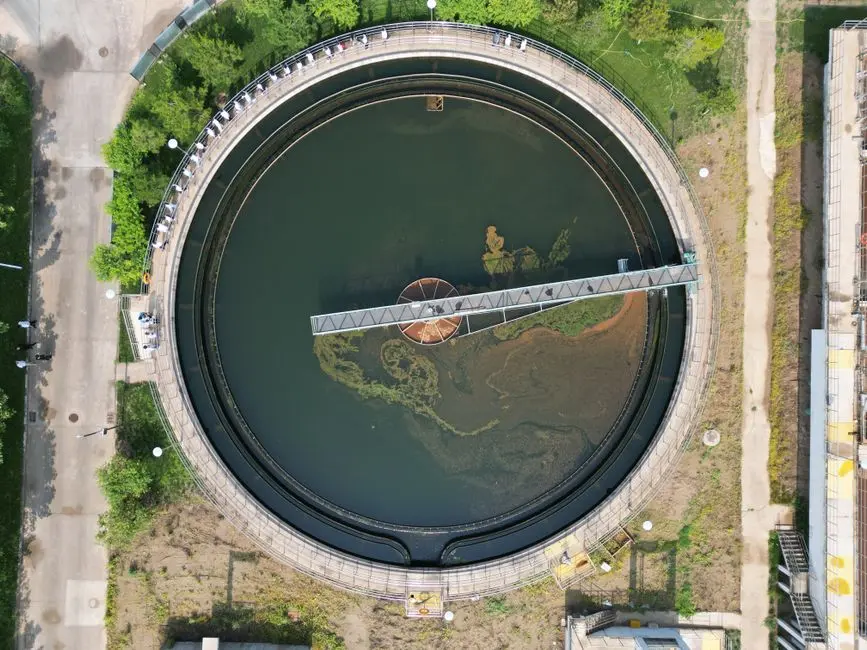
A/O biological contact oxidation is the baseline package arrangement for a multi-home development because it combines anoxic and aerobic biological treatment with sedimentation and disinfection. The 2026 French residential guide describes this process, while the cited WSZ range covers a buried underground A/O package sewage treatment plant from 1 to 80 m³/h. These are supplier-defined capacities; the selected process must still be checked against the project’s design PE, peak hydraulic load and permit.
SBR is an aerobic micro-station option for installations up to 20 PE identified in the French Entree guide. It requires a permanent electrical supply, and the bidder must demonstrate that its fill-and-draw sequence, settling and return-sludge operation remain effective at the development’s load pattern. Fixed-film systems retain biomass on a support. The cited single-tank products cover 1–20 PE and use aeration followed by final settlement; the manufacturer must show how that configuration handles the design peaks.
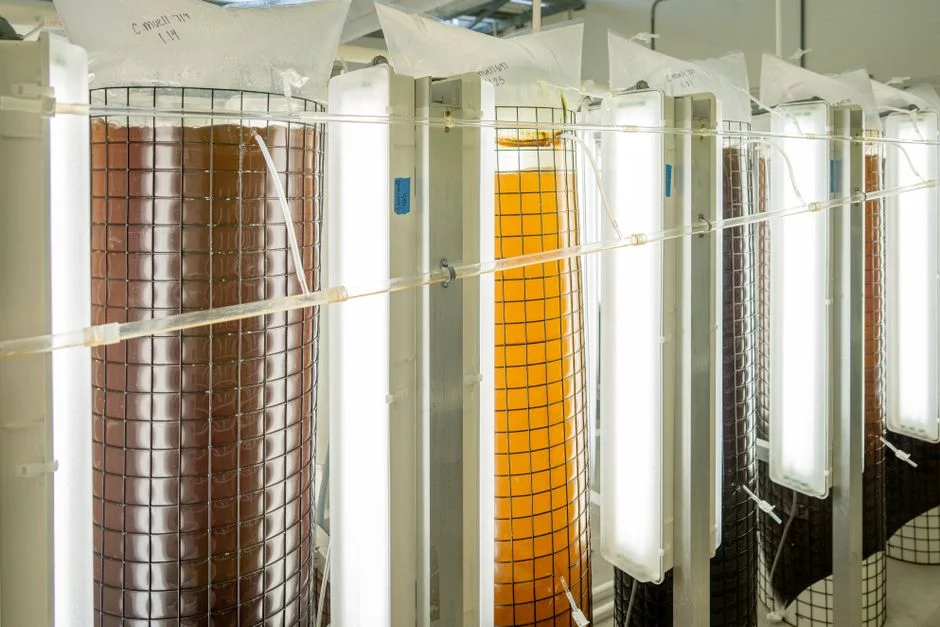
MBR becomes relevant when compact biological separation or high-quality permeate justifies the additional mechanical and service burden. The cited product catalogue specifies submerged PVDF membranes, filtration below 1 μm, a footprint stated to be 60% smaller than conventional systems, and a capacity range of 10–2,000 m³/day. The [packaged MBR wastewater treatment system]( /product/2-mbr-integrated-wastewater-treatment.html) is relevant to that decision, but the catalogue figures are not site guarantees.
| Package | Best fit to test | Main design and operating issue | Evidence to require |
|---|---|---|---|
| A/O | Multi-home baseline where footprint and routine biological treatment are the priorities | Hydraulic peak capacity, sludge handling, aeration, settling and disinfection | Process calculation, BOD5/COD/TSS guarantees and complete O&M schedule |
| SBR | Installations within the cited 1–20 PE micro-station range | Permanent power and performance under the proposed hydraulic sequence | Cycle design, electrical load, control narrative and treatment guarantees |
| Fixed film | Smaller installations where attached biomass is acceptable | Aeration, final settlement, clogging and media access | Media specification, loading calculation, maintenance and replacement plan |
| MBR | Tighter footprint or polishing requirements | Membrane cleaning and replacement, aeration energy and specialist support | PVDF evidence, filtration claim, membrane schedule, life data and service coverage |
Do not assume MBR is cheaper or easier to maintain. Require lifecycle assumptions for membrane cleaning, replacement, aeration, controls and specialist response. Where the receiving water is a bathing or shellfish area, evaluate downstream UV or on-site chlorine dioxide; the 2026 French residential guide reports that this stage may be required to bring E. coli below 100 CFU/100 mL.
Build the French compliance and approval file
Approval risk is reduced when the design and procurement documents are assembled before equipment selection. The project file should contain the étude de filière, current SPANC rules, design calculations, process description, civil works, electrical arrangement, discharge justification and proposed O&M arrangements. The French residential guide identifies DTU 64.1 as the rules for ANC design and installation and states that packaged plants and micro-stations have been referenced against NF EN 12566-3 since 2021.
For imported equipment, require the manufacturer’s certification and complete technical file rather than treating a supplier declaration as approval. According to the 2026 French residential guide, the unit must have valid CE marking, NF EN 12566-3 testing by a notified laboratory and an entry on the official list of authorized equipment before SPANC acceptance. Product evidence does not replace the site-specific SPANC decision.
Build the inspection sequence into the construction programme. The contrôle de conception occurs before excavation. The contrôle de réalisation occurs before backfill and is typically required within 72 hours of SPANC notification. Commissioning is followed by a contrôle de bon fonctionnement. The 2026 French residential guide reports a post-commissioning cadence of every 4 to 8 years, with a 2024 amendment setting a maximum of 6 years in most départements.
Where infiltration is proposed, commission a soil-permeability investigation. The 2026 French residential guide reports a bureau d’études cost of €300–€600 and identifies the test as a way to reduce the risk of a refused dossier and subsequent rework. The [French residential wastewater treatment requirements]( /blog/7782-residential-wastewater-treatment-in-france-2026-engineering-guide.html) provide the applicable framework, but the local SPANC must still issue the site decision.
The tender schedule should place the design dossier, SPANC review and construction hold points ahead of irreversible work. Do not permit excavation or backfill until the relevant control has been completed and recorded.
Compare capital cost, operating burden and delivery risk
The usable 2026 planning benchmark is regional, not a Paris quotation. The 2026 Marseille guide cited in the French residential guide gives €45,000–€90,000 for an installed 50–100 PE A/O package. Use that range only to frame an initial allowance; a Paris tender price requires site-specific civil works, transport, connection work, treatment guarantees and a defined discharge route.
The same Marseille 2026 guide gives adjacent residential benchmarks: €6,000–€9,000 for a fosse septique with épandage, €8,000–€12,000 for a 5–10 EH micro-station, and €7,000–€11,000 for a 5–10 EH compact filter. Their residential scale and installation scope differ from a multi-home package plant, so they are not direct comparators for the development award.
| Cost item | Available 2026 benchmark | Scope and procurement treatment |
|---|---|---|
| Installed 50–100 PE A/O package | €45,000–€90,000 | Marseille 2026 guide; preliminary regional anchor, not a Paris price |
| Fosse septique with épandage | €6,000–€9,000 | Marseille 2026 guide; 5–10 EH residential scope |
| Micro-station | €8,000–€12,000 | Marseille 2026 guide; 5–10 EH residential scope |
| Compact filter | €7,000–€11,000 | Marseille 2026 guide; 5–10 EH residential scope |
| A/O electricity | 0.8–1.4 kWh/m³ treated | 2026 French residential guide; validate against the selected process and tariff |
| Sludge evacuation | Every 12–24 months | 2026 French residential guide; include removal, transport and disposal scope |
| Micro-station maintenance | €150–€300 per year | 2026 French residential guide; residential contract benchmark, not a multi-home O&M price |
Model electricity using 0.8–1.4 kWh per m³ treated, the A/O benchmark reported in the 2026 French residential guide, and require the bidder to replace it with a process-specific calculation. Include sludge evacuation every 12–24 months in the same schedule.
The €150–€300 annual maintenance estimate in the 2026 French residential guide is a micro-station contract benchmark, not a multi-home package-plant O&M price. Request a 10-year total-cost comparison covering civil works, power connection, controls, chemical or disinfection consumables, aeration, sludge removal, inspections, membrane replacement where relevant, spares and operator response time. The [French housing-development package plant comparison]( /blog/12699-packaged-sewage-treatment-plant-for-lyon-housing-2026-guide.html) and [package plant versus conventional treatment]( /blog/152-package-plant-vs-conventional-treatment-plant-which-is-better-for-industrial-wastewater.html) provide useful procurement context, but the commercial model must reflect this Paris development rather than a generic comparison.
Issue a supplier RFQ that produces comparable bids
A defensible RFQ asks for delivered performance, not just a nominal capacity. Each bidder should state its process route; design PE; average and peak flow; treatment guarantees; footprint; burial depth; civil interface; electrical load; noise; odour control; and discharge arrangement. The same load schedule and discharge basis must accompany every bid.
Request the complete French technical dossier, applicable NF EN 12566-3 test evidence, official authorization status, CE documentation, performance guarantees, reference projects and the proposed O&M scope. For imported equipment, identify the manufacturer, notified laboratory and authorization listing, and state which party remains responsible for translating that evidence into the French approval file.
- Issue the sewer-zone confirmation, SPANC service rules, design PE, flow series, influent basis and discharge consent as a common attachment.
- Require each bidder to complete the same exclusions schedule for civil works, power connection, commissioning, training, spares, sludge removal, inspection support and emergency response.
- Require a process description, civil and electrical interfaces, guaranteed effluent values, test method, O&M programme and a signed performance and interface schedule.
- Ask for a priced 10-year operating comparison, including assumptions for energy, chemicals, sludge removal, inspections and membrane replacement where applicable.
- Evaluate the risk of rejection, redesign, delayed construction and non-performance alongside capital and operating cost.
Use a low purchase price as an early screening criterion, not the final award basis. A bid that excludes the power connection, omits civil works or offers an untested treatment route may appear cheaper but carry greater approval and delivery risk.
Frequently Asked Questions
Is A/O or MBR preferable for a Paris housing development?
Neither is universally preferable. Use A/O as the baseline package option where a conventional biological arrangement and normal footprint are acceptable. Consider MBR where compact biological separation or higher-quality permeate is required and the receiving route justifies its additional maintenance burden. For MBR, require evidence covering submerged PVDF membranes, filtration below 1 μm, the stated 60% footprint reduction, membrane cleaning and replacement, aeration energy and specialist service. The 2026 French residential guide identifies downstream disinfection as potentially necessary for bathing or shellfish receiving waters, including UV or on-site chlorine dioxide to bring E. coli below 100 CFU/100 mL.
How should a multi-home package plant be sized?
Apply the main-room-to-PE rule as a screening basis, then obtain professional project-specific sizing. The French Entree guide states that one main room generally equals one PE and defines a main room as a living or sleeping room with at least 7 m², at least 2.30 m ceiling height and an opening to outside air. The final design must also validate average and peak flow, peak factor, treatment loading, infiltration and electrical demand. Require the supplier to reconcile the proposed unit with that design rather than selecting from dwelling count alone.
What is the 2026 planning cost for a packaged plant?
The supplied research does not provide a Paris-specific packaged-plant quotation. The 2026 Marseille guide cited by the French residential guide gives €45,000–€90,000 for an installed 50–100 PE A/O package; use it only as a regional planning anchor. Obtain a Paris quotation with an explicit scope covering the process unit, civil works, electrical connection, controls, commissioning, discharge works, approvals, training, spares and O&M. Also request a 10-year cost comparison rather than converting an installation price into an unsupported Paris estimate.
What documents must an imported supplier provide for French acceptance?
Require valid CE marking, NF EN 12566-3 testing by a notified laboratory, the manufacturer’s technical file and evidence that the equipment appears on the official French list of authorized equipment, according to the 2026 French residential guide. These are product-level requirements. The project still requires a site-specific étude de filière, SPANC design review, construction control and post-commissioning inspection. Confirm the current SPANC service rules before awarding the contract.
How should approval and installation be programmed?
Do not invent a total duration without the SPANC’s dossier timetable and the supplier’s manufacturing and construction programme. The mandatory sequence identified in the 2026 French residential guide is: design control before excavation; realization control before backfill, typically within 72 hours of SPANC notification; and post-commissioning operating control. Ask the SPANC for its current dossier timetable and make each hold point a contractual prerequisite in the construction programme.