What an Effluent Treatment Plant in Mozambique Must Achieve
An effluent treatment plant in Mozambique should be selected from the complete treatment objective: remove the pollutants in the industrial wastewater, meet the applicable discharge requirements, and recover water where reuse is economically and operationally feasible. A typical train may combine screening, DAF or clarification, biological treatment, filtration and disinfection, with sludge handling and advanced polishing added as required. For sugar-mill wastewater, academic research highlights high organic loads across cooling, washing, bagasse and cleaning streams. DAF is suited to suspended solids, oil, grease and colloids, while MBR combines activated sludge with filtration below 1 μm. Final design requires verified flow, pollutant loads, pH, salinity, reuse targets and regulatory review.
An industrial ETP removes contaminants from process wastewater before controlled discharge or reuse. It is not interchangeable with a municipal sewage plant, which primarily treats residential and commercial wastewater, or with a packaged sewage system designed around domestic flows. The dominant process depends on the industrial source: suspended solids, free oil, biodegradable organics, salts, toxic compounds and cleaning chemicals cannot be handled by one universal configuration.
The Sustainability study “Sizing a System for Treating Effluents from the Mozambique Sugar Cane Company” provides a useful local-sector warning. It identifies high organic loads in sugar-mill waste arising from cooling bearings, mills, sugarcane washing, bagasse waste and cleaning products, with potential pollution at several production stages. This supports sector-specific engineering rather than treating sugar-mill effluent as diluted sewage.
Define the destination before selecting equipment: receiving-water discharge, sewer discharge, irrigation, industrial reuse or another reuse application. Zero-liquid-discharge feasibility is a separate question requiring energy, concentrate and residual-solids analysis. The supplied research does not establish a universal numerical Mozambique effluent limit; the final discharge or reuse specification and applicable authority requirements must be confirmed during project design. A comparison with domestic sewage treatment options in Mozambique helps clarify why an industrial design basis must remain source-specific.
Build the Design Basis from the Wastewater
Equipment cannot be sized reliably from a headline flow rate because hydraulic variation and contaminant load can govern pretreatment, biological capacity and solids handling differently. Build the design basis from measured project data before comparing equipment quotations.
Document current and forecast average, peak and minimum flows, together with the production seasons or batch operations that produce them. For sugar and food processing, map cooling, washing, bagasse and cleaning streams before combining them. A composite sample can conceal a concentrated wash stream or dilute the characteristics of another discharge, while equalization may change both flow and load.
| Design-basis item | Information required | Why it changes the ETP |
|---|---|---|
| Hydraulic profile | Average, peak and minimum flow; operating and production pattern | Determines equalization, pretreatment, treatment and transfer capacity |
| Water quality | pH, suspended solids, oil and grease, BOD, COD, nutrients, conductivity or salinity, temperature and sector-specific contaminants | Defines process duties and whether biological treatment or specialized removal is feasible |
| Stream origins | Separate production, cleaning, cooling, wash and sanitary streams | Prevents incompatible or variable waste streams from being treated as one uniform load |
| Treatment objective | Discharge route, sewer, irrigation, industrial reuse or another reuse application | Sets the required effluent or reuse specification and treatment endpoints |
| Site constraints | Footprint, power reliability, operator skill, sludge route, water availability, maintenance access and schedule | Determines whether the selected process can be built and operated sustainably |
Obtain characterization through a sampling plan that covers representative operating conditions rather than a single grab sample. Include the sector-specific contaminants that matter: pesticide and nutrient analysis for some food-processing operations, metals for mining or metal-finishing, and product-specific chemicals for textile, pharmaceutical or chemical plants.
Also define site constraints: available footprint, power quality, operator competence, access for maintenance, chemical storage, sludge-disposal route, water availability and the required commissioning schedule. Chemical dosing may be necessary for pH control, coagulation or nutrient balance; the automatic chemical dosing system should be specified against the required chemicals, control sequence and receiving-water or reuse outcome rather than selected as a standalone package.
The supplied research supports treatment and reuse concepts, but it contains no Mozambique-specific project flow, pollutant or cost dataset. Those inputs must come from project sampling, production records, a regulatory review and commercial analysis. A treatment train that works for a similar factory in another country is only a starting point until its data have been adapted to the actual effluent and site.
Choose a Treatment Train for the Industry
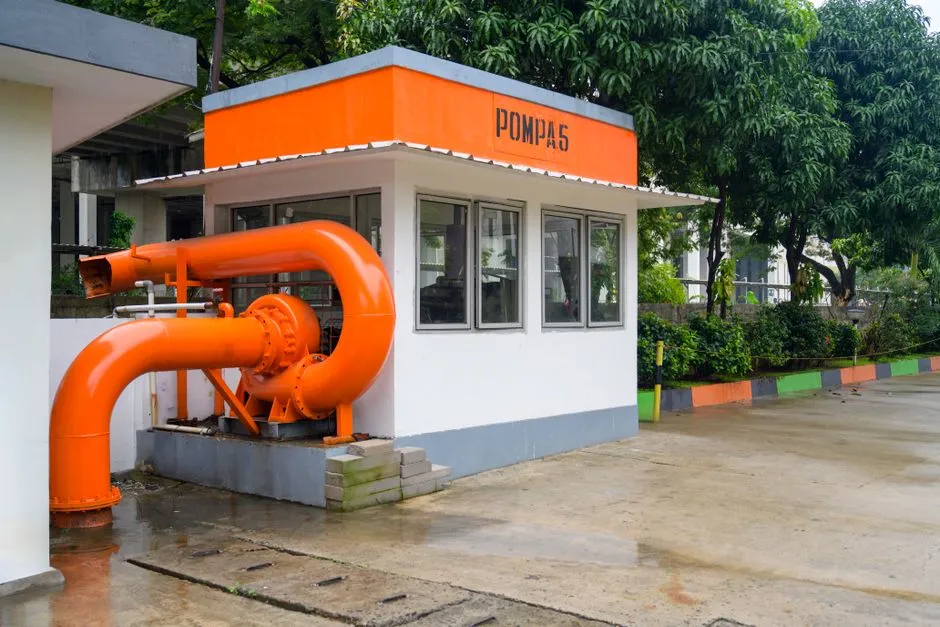
A complete industrial wastewater process design should follow the contaminant pathway from headworks to final effluent and residual solids, rather than assembling isolated products.
- Protect the plant: use a rotary mechanical bar screen where continuous-duty removal of suspended solids, rags, plastics and fibrous debris is required, particularly where such material could damage downstream equipment.
- Remove floating and colloidal material: select DAF where suspended solids, oil, grease, FOG and colloidal matter dominate the pretreatment duty. The industrial DAF system for suspended solids and FOG is described by HydropureWater as spanning 4–300 m³/h across 13 standard models.
- Remove biodegradable organics: use activated sludge or another validated biological process where biodegradable organic load is the principal treatment requirement.
- Separate biological solids: use the integrated MBR wastewater treatment system when biological treatment, membrane separation, reuse preparation and a compact footprint must be combined. HydropureWater states 10–2,000 m³/day capacity, filtration below 1 μm and a 60% smaller footprint than conventional systems.
- Finish and disinfect: add filtration, disinfection or other polishing where the discharge or reuse specification requires it.
- Manage solids: include sludge generation, thickening, stabilization, dewatering and disposal. The plate-frame filter press is one dewatering option to assess against the selected sludge characteristics.
| Process condition | Applicable treatment role | Key design question |
|---|---|---|
| High suspended solids, oil, grease or FOG | DAF pretreatment | What solids and contaminant loads enter the biological stage? |
| Biodegradable organics with separation and reuse priorities | Activated sludge with MBR separation | Can the plant meet the hydraulic and loading basis under the actual operating pattern? |
| High-salinity industrial effluent | Volume reduction and water recovery using multiple-effect evaporation | Are the energy demand, concentrate and residual-solids routes technically and economically viable? |
| Advanced reuse requirement | Filtration, disinfection and potentially membrane polishing | What reuse specification and public-health review apply to the intended application? |
For high-salinity effluent, multiple-effect evaporation may reduce liquid volume and recover water, as stated in the supplied commercial description. It is not automatically ZLD: the feasibility review must define energy supply, scaling or fouling behavior, concentrate handling, final residuals and the destination of all generated solids.
For reclamation, the University of Twente thesis Direct nanofiltration of wastewater treatment plant effluent examined nanofiltration for polishing WWTP effluent to EU WFD standards and producing water suitable for agricultural or direct/indirect potable use. That supports membrane polishing as a reclamation concept, not a universal Mozambique reuse standard.
Decide Between DAF, MBR and Membrane Polishing
DAF, MBR and membrane polishing perform different functions, so the correct comparison is by treatment duty rather than by output label.
| Option | Best-matched duty | Stated capacity or performance | Principal qualification |
|---|---|---|---|
| DAF pretreatment | Suspended solids, oil, grease, FOG and colloidal removal before biological treatment | HydropureWater: 4–300 m³/h across 13 standard models | Confirm solids capture, sludge removal, chemical demand and performance at the design load |
| MBR | Combined biological treatment and membrane separation where reuse and footprint are priorities | HydropureWater: 10–2,000 m³/day; filtration below 1 μm; stated 60% footprint reduction against conventional systems | Membranes, aeration, controls, cleaning and maintenance must be included in the lifecycle assessment |
| Nanofiltration polishing | Polishing already treated effluent for reclamation applications | University of Twente thesis examined polishing to EU WFD standards and suitability for agricultural or direct/indirect potable use | It does not remove the upstream industrial load and does not establish a Mozambique reuse outcome |
| Constructed wetlands | Nature-based polishing or research into micropollutant removal | Wageningen University and Research thesis published 2022-09 addressed micropollutant removal from WWTP effluent | No Mozambique project performance data were established by the supplied source |
DAF is therefore the stronger front-end option where suspended material, oil and colloidal matter dominate. MBR becomes more relevant when biological treatment, membrane separation, reuse preparation and footprint are linked priorities. The stated 60% footprint reduction should not be translated directly into lower lifecycle cost: membrane replacement, aeration, cleaning, energy and operator attention remain part of the MBR duty.
Nanofiltration is generally a polishing step rather than a substitute for upstream industrial-load removal. The University of Twente work is transferable technical evidence because it addresses reclamation of treated effluent, but it does not determine the applicable Mozambican reuse specification. The supplied constructed-wetland thesis is also transferable research: its 2022 focus was micropollutant removal, not demonstrated performance for Mozambique.
Use pilot testing or an equivalent performance demonstration when the wastewater is unusual, variable or intended for high-quality reuse. The test should measure the duty of the proposed unit under representative peak flows and loads, including membrane flux, solids capture, biological response, polishing performance and residue generation where relevant.
Plan Capacity, Costs and Implementation Without Guessing
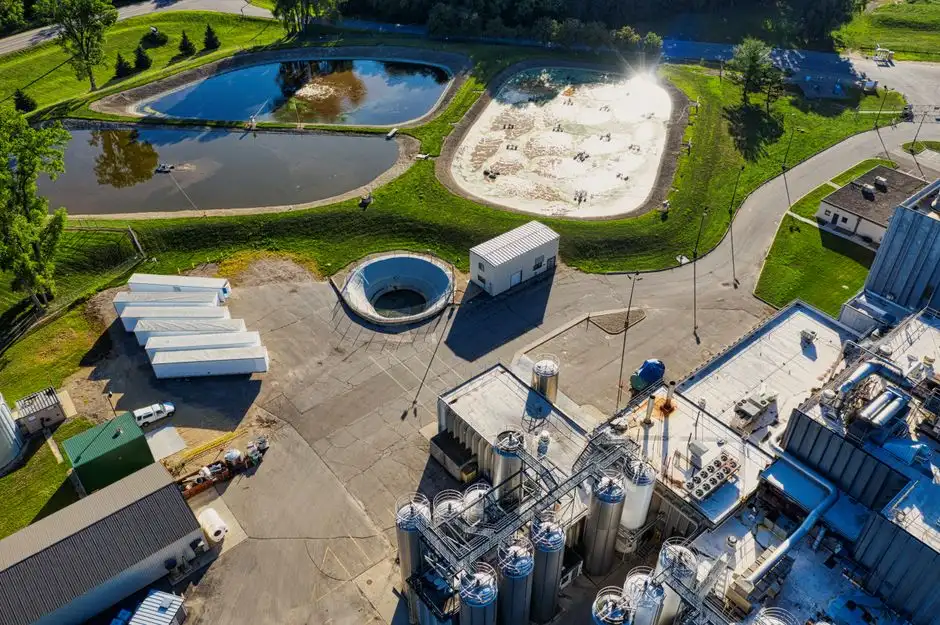
Project capacity and affordability must be derived from the approved design basis; neither a vendor’s maximum catalogue capacity nor a generic national price can substitute for engineering.
Size hydraulic units from measured average and peak flows, then check the operating basis of the selected process against batch discharges, production changes, downtime, bypass conditions and future expansion. A DAF or MBR model may have a published capacity band, but the selected duty still requires equalization, redundancy, transfer capacity and downstream solids handling. The supplied catalogue bands are 4–300 m³/h for DAF and 10–2,000 m³/day for MBR; they are market-screening references, not project sizing conclusions.
Build the budget across the full project scope:
- process equipment, tanks, screens, membranes, pumps and chemical dosing;
- civil works, buildings, drainage and site connections;
- power, standby arrangements, water, steam or other utilities;
- installation, testing, commissioning and operator training;
- initial chemicals, membranes, spares and sludge-disposal provisions;
- monitoring instruments, maintenance, laboratory support and long-term O&M.
| Implementation stage | Required output | Buyer check |
|---|---|---|
| Project definition | Approved design basis and treatment objective | Are flows, loads, destination and reuse target documented? |
| Characterization and process selection | Sampling report, mass and hydraulic balances, selected train | Were peak and variable conditions considered? |
| Detailed design and procurement | Specifications, drawings, battery limits and itemized pricing | Are civil works, utilities, commissioning and O&M visible in the offer? |
| Installation and commissioning | Installation records, hydraulic tests, training and operating procedures | Are responsibilities and acceptance tests assigned? |
| Performance verification | Acceptance results at agreed flow and loading conditions | Are guarantees tied to defined test boundaries? |
Ask each supplier to state its testing boundaries, guarantee conditions, sampling method and performance at the design flow and pollutant loading. Clarify what is excluded and how performance changes outside the guaranteed envelope, including off-design operation.
The implementation sequence should cover site survey, laboratory characterization, process selection, detailed design, procurement, fabrication, installation, hydraulic testing, operator training, commissioning and a performance-verification period. The regional ETP process and sizing guide provides another reference for separating process selection from equipment configuration.
The supplied research contains no Mozambique ETP capital-cost or construction-duration range. Procurement should request itemized quotations against the approved design basis rather than benchmark an undefined “per-day” price.
Select a Supplier for Project Delivery and Long-Term Support
Supplier selection should test whether the supplier can deliver a defined treatment result at the actual site conditions, not whether it offers a complete plant catalogue.
Require a process proposal that references the design basis: wastewater origins, measured loads, hydraulic profile, treatment objective, selected train, residuals and operating assumptions. A generic statement that equipment complies with national or international standards does not demonstrate that the proposed industrial ETP will perform in Mozambique.
| Procurement area | Evidence to request | Why it matters |
|---|---|---|
| Process engineering | Design calculations, flow and load diagram, guarantees and exclusions | Shows that selection follows site data rather than a standard package |
| Delivery scope | Design, supply, installation, commissioning, training, documentation, warranty and support allocation | Prevents gaps between equipment supply and complete plant delivery |
| Testing and acceptance | Factory or site test records, control-system test, site acceptance criteria and commissioning records | Creates objective evidence that the system functions |
| O&M capability | DAF and membrane access arrangements, spare-parts list, consumables, maintenance manuals and response process | Tests long-term operability rather than initial delivery |
| Comparable references | Test data under comparable effluent, flow, load and reuse conditions | Generic case studies and academic studies do not substitute for site-specific validation |
| Local execution | Named responsibilities, local service access, environmental permit support and clear responsibility matrix | Reduces handover and interface risk |
The 2026 supplier page from Vikas Pump specifically advertises testing before dispatch, installation support, technical guidance and after-sales service. Those are useful scope questions for comparable bidders, but the buyer should request the underlying test protocol, commissioning method, warranty terms and local response arrangements rather than relying on the page alone.
Check whether quoted performance comes from comparable effluent conditions. Neither generic industrial references nor university research can establish performance for an uncharacterized factory stream. The Mozambique sugar-company sizing study supports sector engineering for sugar waste; it is not proof that one treatment configuration suits every Mozambican industry. For a broader comparison of biological configurations, see MBR versus conventional activated sludge, then require evidence under the buyer’s own wastewater conditions.
Frequently Asked Questions
How much does an effluent treatment plant in Mozambique cost?
The supplied evidence does not support a reliable Mozambique-wide price range. Cost depends on verified flow, pollutant loads, treatment objectives, reuse targets, civil works, utilities, membrane or evaporation requirements and sludge handling. Request itemized bids with process design, equipment, installation, commissioning, training, utilities, consumables, spares and O&M shown separately.
What is the right ETP capacity for an industrial facility in Mozambique?
Neither a daily average nor a single peak is sufficient by itself. Capacity must link the production pattern, measured hydraulic peaks, contaminant loading, treatment objective and selected process. Ask the supplier to state the design flow, peak-flow provisions, loading basis and operating envelope, then compare those conditions with your own monitoring data.
Should a factory in Mozambique choose DAF, MBR or a conventional biological plant?
Choose DAF as pretreatment when suspended solids, oil, grease, FOG and colloidal loads dominate. Choose MBR when biological treatment, membrane separation, reuse preparation and compact footprint are priorities. Conventional biological treatment remains relevant for biodegradable organic loads where validated performance is sufficient. Verify the choice through representative characterization and, where justified, pilot testing.
How can a supplier prove that the ETP will meet the required effluent and reuse standard?
Require an approved design basis, comparable test data, guarantees tied to stated flow and loading, defined sampling boundaries, site acceptance criteria, commissioning records and a performance test. Also require clarification of guarantees for off-design operation, reagent consumption, membrane cleaning, sludge handling and the consequences of untreated bypass flows.
When should a wastewater project include advanced membranes or constructed wetlands?
Advanced membranes should be considered when the reuse objective requires polishing beyond the main biological and solids-separation process. The University of Twente research supports nanofiltration as a reclamation concept but does not create a Mozambique reuse standard. Constructed wetlands may be investigated for polishing or micropollutant removal; the supplied Wageningen thesis, published 2022-09, provides no Mozambique project performance data. Both options need site-specific feasibility review.