Why Biodiesel Wastewater Is a Distinct Dewatering Problem
Biodiesel plants do not produce generic industrial sludge. Four waste streams dominate: transesterification wash water carrying residual oil and methanol, glycerol-rich bottoms from phase separation, soapstock acidulated or otherwise recovered from the refining step, and spent catalyst fines. Combined, these streams deliver a sludge that is high in COD/BOD, highly variable in solids concentration between campaigns, and chemically aggressive enough to corrode mild steel. Generic "industrial sludge" sizing rules underestimate that variability and ignore how the stream chemistry interacts with mechanical dewatering equipment.
High-shear devices such as decanter centrifuges operate at speeds that fragment the fragile flocs formed in glycerol- and soapstock-rich liquor. A slow-rotating volute screw press running below 1 rpm handles the same floc with markedly less mechanical breakage, which is why low-rpm auger designs are mechanically gentler on these streams. Equally important, polymer selection and flocculation residence time must be tuned to the actual biodiesel waste — the research base for screw presses covers municipal and generic industrial sludge, so biodiesel-specific polymer dose and floc residence numbers must be developed by jar test or pilot on the real stream before procurement commits to a vendor.
How a Screw Press Dewateres Sludge: The Core Mechanism
Polymer-conditioned sludge is pumped into a cylindrical filter basket where a slow-rotating auger conveys it axially. As the auger geometry advances, the internal volume of the basket progressively decreases, mechanically squeezing free water through the basket perforations and out as filtrate (HUBER Q-PRESS design, huber-se.com). The thickened cake is pushed toward the discharge end, where a pneumatically adjustable counter-pressure cone sets the final back-pressure and therefore the cake dryness. Both the ANDRITZ C-Press and the HUBER Q-PRESS use this pneumatic counter-pressure principle rather than a fixed-spring design, and exposing it as a continuous control variable is what allows the operator to push for higher dryness without re-engineering the machine.
Inside the basket, a scraper attached to the screw shaft continuously cleans the inner surface every rotation, which keeps the perforations free of blinding and reduces flocculant consumption. On the outside, a stationary spray bar backwashes the basket segment by segment; for HUBER Q-PRESS sizes 620.2 and above, this backwash is decoupled from the dewatering zone, so the process continues uninterrupted while cleaning is in progress — a clear uptime advantage for a continuous-duty biodiesel plant (HUBER Q-PRESS product page, huber-se.com). The thickening and press zones are washed independently, which limits rewetting of already-pressed cake and protects filtrate quality during transient loads typical of a biodiesel campaign.
Performance Benchmarks: Cake Solids, Throughput, Noise, Energy
The table below consolidates OEM-published operating numbers from ANDRITZ, HUBER, and BDP that can be transcribed into a datasheet request or RFQ. These figures apply to the named OEM units under their test conditions; extrapolating them directly to a biodiesel stream requires jar- or pilot-scale confirmation because the supplied research does not cover biodiesel chemistry specifically.
| Parameter | HUBER Q-PRESS | BDP DSP Screw Press | ANDRITZ C-Press |
|---|---|---|---|
| Discharge cake dry solids | 18–25% DS | 23–30% DS | Not stated in supplied research |
| Sludge volume reduction | Up to 97% in one step | Not stated in supplied research | Not stated in supplied research |
| Screw speed | < 1 rpm | Not stated in supplied research | Slow-rotating, controlled |
| Noise level | < 70 dB(A) | Not stated in supplied research | < 60 dB(A) |
| Throughput envelope | Not stated in supplied research | 200% throughput gain with pre-thickener (Suffern, NY) | 20–1,300 kg DS/h; C12060 model 420–1,300 kg DS/h |
| Feed capacity | Handles < 1% feed solids without prior thickening | Not stated in supplied research | 1–96 m³/h |
| Energy vs. decanter centrifuge | 60–80% lower energy cost | Not stated in supplied research | Not stated in supplied research |
The HUBER Q-PRESS figure of up to 97% volume reduction in a single step is unusual and worth pricing into a CAPEX model, because it can eliminate a dedicated pre-thickener on dilute biodiesel wash water. Conversely, BDP's documented 200% throughput increase after pre-thickening at Suffern, NY shows that a screw press can still benefit from upstream thickening if the wash-water stream is consistently above 1% solids. ANDRITZ publishes the widest published envelope (20–1,300 kg DS/h), and the C12060 model's 420–1,300 kg DS/h range places it in the upper end of the biodiesel mid-scale band (10–500 m³/day wash water).
Sizing a Screw Press for a Biodiesel Plant
Sizing should start from the daily dry-solids target, not the volumetric feed. The basic relation is:
kg DS/h = (daily wet sludge, kg/day × expected cake dryness target, %) / (operating hours per day, h)
Cross-check the resulting figure against the 18–30% cake DS range in the benchmark table; if the cake dryness target you assumed to size the unit is outside that band, the ANDRITZ, HUBER, or BDP data is no longer the right reference and a filter press or a hybrid train should be evaluated instead. Add a 20–30% margin for the variability typical of biodiesel streams, where feed solids, glycerol fraction, and soapstock loading shift between production campaigns and shutdown phases. Do not lock in a single margin as universally correct — the right number depends on how steady the plant's downstream chemistry is, and the engineer should validate this against the plant's own historical wastewater logs.
Then check the hydraulic envelope. The ANDRITZ C-Press accepts 1–96 m³/h of feed, so confirm that both the average and peak wash-water flows fall inside the selected model's published window. If feed solids are below 1%, the HUBER Q-PRESS can dewater without a pre-thickener, which changes both CAPEX and footprint (HUBER Q-PRESS product page). For a 10–500 m³/day biodiesel plant, that often means the difference between a single integrated skid and a multi-vessel thickening + pressing line.
Polymer Conditioning and Operating Parameters for Biodiesel Streams
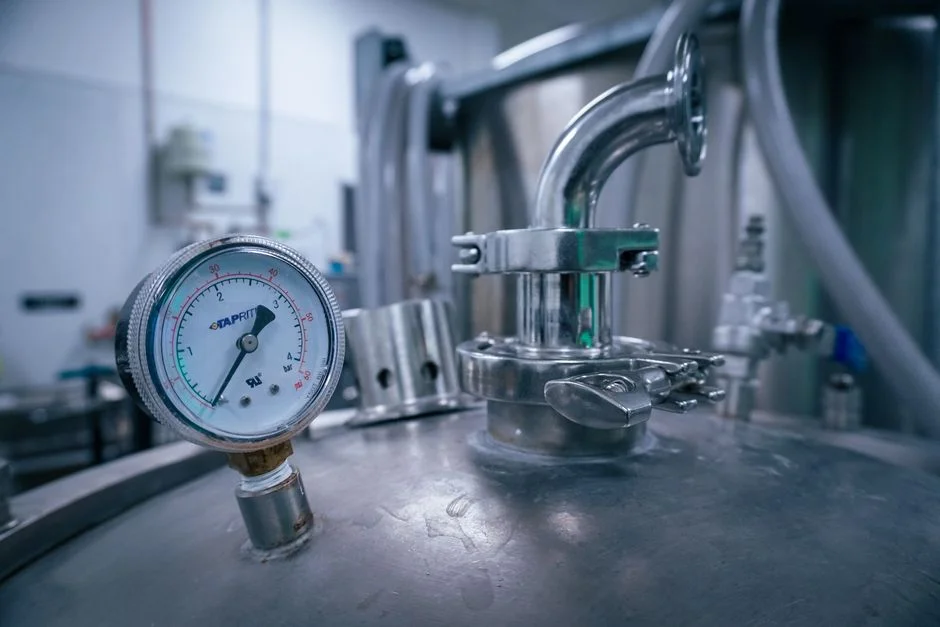
Modern screw presses expose a full set of automated control loops. The HUBER Q-PRESS, for example, continuously adjusts sludge feed rate, flocculant dose and mixing, screw shaft speed, sludge feed pressure, and the pneumatic counter-pressure of the discharge cone (HUBER Q-PRESS product page, huber-se.com). That control surface is what allows the unit to ride out the under- and over-loading transients that come with biodiesel campaigns.
High-glycerol and high-soapstock streams typically need a cationic or dual-polymer scheme; however, the exact dose must be determined by jar testing on the actual wastewater because the supplied research does not provide a numeric polymer dose for biodiesel streams. Treat any vendor-quoted dose as a starting point, not a guarantee. Pneumatic counter-pressure is the primary dryness knob on both ANDRITZ and HUBER designs, and it should be specified as a continuously adjustable control loop rather than a fixed spring setting, so the operator can trade throughput against dryness in real time. For continuous-duty biodiesel plants, the control loop must hold dryness under both over- and under-loading; the HUBER Q-PRESS is explicitly designed for unattended operation around the clock or on a timer, and that is the benchmark to write into the specification.
Maintenance, Materials, and Lifecycle Considerations
All wetted parts on the ANDRITZ C-Press are stainless steel, which is relevant for biodiesel waste streams that can carry chlorides from process water and residual methanol. The basket system uses perforated plates supported by a robust cage with replaceable liners (internal screens) and dedicated tools, so wear parts can be swapped without sending the basket back to the OEM (ANDRITZ C-Press product page, andritz.com). On the HUBER Q-PRESS, filter baskets are optionally available in three axially divided segments, where only the upper half needs to be removed for maintenance and the lower half detaches from the screw shaft via a special mechanism but stays inside the filtrate chamber, eliminating the need for lifting devices in tight biodiesel plant rooms (HUBER Q-PRESS product page).
Modular components and accessible tooling on the ANDRITZ C-Press shorten intervention time, and the HUBER Q-PRESS separates thickening- and press-zone cleaning systems so both zones stay effective. For biodiesel plants in remote regions, require documented spare-parts logistics and remote-diagnostics capability from the shortlist — the ANDRITZ Metris addIQ platform and the HUBER control system both support remote monitoring, performance tracking, and predictive maintenance, which materially reduces mean time to repair when a field engineer is a long drive away.
Screw Press vs. Centrifuge vs. Filter Press for Biodiesel Duty
Procurement will ask why a screw press deserves the budget over a centrifuge or a filter press. The table below puts the OEM-published data side by side; it is the same data that can be used to defend the choice in a capital-approval meeting.
| Criterion | Screw press (HUBER/ANDRITZ/BDP) | Decanter centrifuge | Plate-and-frame filter press |
|---|---|---|---|
| Energy cost vs. centrifuge | 60–80% lower (HUBER Q-PRESS) | Reference baseline | Generally lower than centrifuge, higher than screw press on continuous duty |
| Noise | < 70 dB(A) HUBER; < 60 dB(A) ANDRITZ | High; noise protection typically required | Low during filtration, but high-pressure feed pumps require noise control |
| Screw / bowl speed | < 1 rpm | High-speed bowl | Batch, no continuous rotating element |
| Filtrate quality under transient load | "Hardly reduced" during start-up and shut-down (HUBER Q-PRESS) | Reduces during start-up/shut-down | Variable; depends on feed pump ramp |
| Throughput ceiling (per unit) | Up to 1,300 kg DS/h (ANDRITZ C-Press C12060) | Comparable or higher at the high end | Batch, scalable by adding plates |
| Cake dryness typical | 18–30% DS (HUBER/BDP) | 20–35% DS typical | 30–45% DS typical, higher achievable |
For a mid-scale biodiesel plant, the screw press is the lowest-energy continuous option and produces a cake that is good enough for composting or incineration without the high-pressure feed pumps and batch cycle time of a filter press. The energy argument is direct: the 60–80% lower energy cost versus a decanter centrifuge, per HUBER Q-PRESS documentation, translates into the largest single OPEX line on a continuously operated unit. Plants that need to push above the 1,300 kg DS/h screw-press ceiling should evaluate a filter press or a hybrid train; the supplied research does not document a screw-press throughput above that envelope. For intermittent biodiesel campaigns, the HUBER Q-PRESS claim that start-up and shut-down phases are "hardly reduced" in filtrate and dewatering performance — and that those phases can be automated unattended — is a meaningful advantage over a centrifuge, which typically loses performance during ramp. If a centrifuge is still on the table, the decanter centrifuge field troubleshooting guide covers the failure modes you would inherit.
2026 Supplier Selection Checklist for Biodiesel Buyers
The checklist below is sized for an RFQ scoring matrix. Weight the items according to your plant's risk profile; in remote locations, weight the last two blocks heavier than in a hub-region build.
- Documented biodiesel, oleochemical, or glyceride-industry references. The top OEM product pages do not list these references, so they must be requested during tendering. A vendor that has only municipal references is acceptable as a fallback but should score lower.
- Pneumatic counter-pressure control, not a fixed spring. ANDRITZ C-Press and HUBER Q-PRESS both expose it as a continuously adjustable control loop, which is the published benchmark.
- Automatic control loop on feed, polymer, screw speed, and backpressure. The HUBER Q-PRESS spec is the reference point. Reject any proposal that requires manual trim on more than one of these.
- Stainless wetted parts, replaceable basket liners, segmented baskets. All three are standard on ANDRITZ C-Press and HUBER Q-PRESS at the relevant sizes, and they cut maintenance time and the cost of basket replacement.
- Local service or remote-diagnostics capability. ANDRITZ Metris addIQ or HUBER's control system both qualify; require certified spare-parts supply and a documented response time.
- Score on energy and polymer consumption per kg DS. Both are now standard automated outputs on modern units and both dominate OPEX. Ask for guaranteed numbers, not ranges, with the test conditions attached.
For a hybrid dewatering train or for sites that need a filter press as backup, the HydropureWater plate and frame filter press and the HydropureWater automatic chemical dosing system cover the adjacent equipment classes. For a peer-reviewed look at how a screw press compares on a different chemical oxygen-demand–driven stream, the screw press for winery wastewater comparison guide applies the same engineering logic to a different influent. On the regulatory side, the pharmaceutical wastewater engineering guide is a useful template for compliance documentation even though the chemistry is different.
Frequently Asked Questions
What cake dryness can a screw press realistically deliver on biodiesel wastewater?
Published OEM data puts discharge cake at 18–25% DS for the HUBER Q-PRESS and 23–30% DS for the BDP DSP Screw Press. Biodiesel-specific results will depend on polymer selection and flocculation residence time, both of which must be confirmed by jar or pilot testing because the supplied research does not provide biodiesel-specific numbers.
How much energy does a screw press save compared with a decanter centrifuge?
HUBER Q-PRESS documentation states 60–80% lower energy cost than a decanter centrifuge, driven by the < 1 rpm screw speed and the higher-efficiency electric drives used in modern units. The savings are largest on continuously operated plants where the centrifuge would otherwise run around the clock.
What should I weigh when shortlisting suppliers for a 2026 biodiesel tender?
Score vendors on documented biodiesel or oleochemical references, pneumatic counter-pressure control, segmented baskets, automatic control loops, and remote-diagnostics capability. A vendor with municipal-only references can be considered but should score lower than one with relevant industrial references.
What CAPEX and lead time should I budget for a screw press in 2026?
The supplied research does not provide a 2026 price or lead time for a screw press sized for biodiesel duty. Request a budgetary quote with the sizing worksheet above, confirm the manufacturing slot during tendering, and ask the vendor to break out the price of the polymer dosing skid, the control panel, and the spare-parts package as separate line items so you can compare offers apples to apples.