Why Water Quality Measurement Is a 2026 Procurement Decision
On-line water quality monitoring has moved from a back-of-plant instrument choice to a board-level investment, driven by a global water and wastewater treatment market that market.us sized at USD 322.8 billion in 2024 and forecasts to reach USD 551.4 billion by 2034 at a 5.5% CAGR. The same market.us dataset places services — which explicitly include water quality monitoring, consultancy, and regulatory compliance — at 44.9% of 2024 revenue, the largest single segment of the industry, ahead of any equipment category.
That weighting is the macro case for treating measurement technology as a 2026 specification line, not a discretionary accessory. The demand-side pressure is concrete: the UN projects that over 50% of the global population will live in water-stressed regions by 2030, and the WHO reports that 2.2 billion people still lack safely managed drinking water, with global water demand projected to grow 40% by 2030 (market.us, citing UN and WHO). Buyers who defer measurement upgrades until plant expansion pay for it in compliance exposure and over-aeration; buyers who front-load it position for the regulated, services-led growth described by the data.
The Parameters a Market-Leading Analyzer Must Cover in 2026
The defensible parameter list for any 2026 on-line analyzer includes BOD, COD, TOC, TSS, TKN, ORP, spectral absorption coefficient at 254 nm (UV254 SAC), pH, conductivity, dissolved oxygen, turbidity, toxicity, VOCs, and PAHs, as laid out in the 2005 Springer review by Thomas & Pouet. Continuous on-line or in-situ detection should be the baseline practice for true quality monitoring, especially for emerging pollutants, because sampling followed by laboratory analysis is poorly adapted to process control and hazard prevention. Sample aging alone — the chemical and biological changes that occur between collection and analysis — introduces an error the on-line architecture is designed to eliminate. Toxicity belongs in the parameter set as a distinct on-line class, not as an inferred surrogate, because biological response cannot be reconstructed from individual chemical measurements (Thomas & Pouet 2005). UV254 SAC is the workhorse: a non-parametric, reagent-free, fast measurement that correlates to organic load and serves as the backbone of most modern multi-parameter analyzer packages.
| Parameter class | Specific parameters (per Thomas & Pouet 2005) | Why a 2026 buyer must include it |
|---|---|---|
| Aggregate organics | BOD, COD, TOC, UV254 SAC | Compliance load reporting; SAC is the on-line surrogate for COD/BOD trend |
| Solids and physical | TSS, turbidity, conductivity | Discharge limits and membrane protection (SDI proxy) |
| Nutrients | TKN | EU and US nutrient discharge compliance |
| Redox and gas | ORP, dissolved oxygen | Biological-process control and disinfection verification |
| Conventional chemistry | pH | Process chemistry and discharge limits |
| Specific organics | VOCs, PAHs | Industrial outfall and emerging-pollutant screening |
| Biological effect | Toxicity | Biological response — cannot be inferred from chemistry alone (Thomas & Pouet 2005) |
How Sensor Classes Map to Each Parameter

Thomas & Pouet (2005) group available measurement solutions into three developing classes: optical techniques, biosensors, and software sensors. A market-leading 2026 analyzer should be able to draw on all three, because no single class covers the full parameter list above. Optical techniques — particularly UV-based sensors using UV254 and dual-wavelength UV/UV setups — deliver fast, reagent-free organic-load measurement and are the most mature on-line family. Biosensors provide the biological-response signal (toxicity, BOD equivalents) that purely chemical sensors cannot produce, which is why the Thomas & Pouet framework insists on a distinct biosensor class. Software sensors estimate non-measurable or expensive-to-measure parameters — most often BOD — from combinations of cheaper on-line signals such as UV254, pH, and conductivity. The review is explicit that, against the full list of regulated parameters, only a few are currently measurable with on-line devices; a 2026 specification must accept a hybrid architecture that combines on-line analyzers, laboratory reference methods, and software sensors rather than demanding a single instrument for everything.
| Sensor class | Measurement principle | Parameters it covers well | 2026 specification role |
|---|---|---|---|
| Optical (UV-based) | UV absorbance, UV/UV degradation + detection, SAC at 254 nm | COD surrogate, TOC surrogate, UV254 SAC, UV-transmittance, nitrate (some setups) | Primary on-line organic-load backbone; reagent-free |
| Biosensor | Biological response (microbial, enzymatic, luminescent bacteria) | Toxicity, BOD equivalents | Provides the biological-effect signal chemistry cannot infer (Thomas & Pouet 2005) |
| Software sensor | Algorithmic estimation from correlated on-line signals | BOD, derived KPIs not directly measurable | Fills gaps where on-line hardware is not available; needs validated inputs |
| Conventional electrochemistry | pH electrode, conductivity cell, ORP, DO membrane | pH, conductivity, ORP, dissolved oxygen | Process-chemistry baseline; pairs with the three developing classes above |
2026 Compliance Drivers That Force the Specification
The compliance case is as specific as the sensor case. Market.us, citing the US EPA, reports that the Effluent Limitation Guidelines regulate approximately 40,000 direct-discharge industrial facilities and 129,000 point-source dischargers under the Clean Water Act, with mandated best available treatment technologies — which is the regulatory hook for continuous, auditable measurement rather than periodic grab sampling. The US Clean Water State Revolving Fund has allocated billions of dollars to plant and chemical-system upgrades, so continuous measurement is often a directly fundable line item in a 2026 capex submission. The EU Drinking Water Directive 98/83/EC remains the reference standard for drinking-water parameter lists, including UV254, TOC, conductivity, and toxicity-relevant substances, so any analyzer package exported into EU municipal work must map against that list. Market.us also cites the US Department of Energy figure that water and wastewater treatment accounts for around 3% of total US energy use, which is the operations argument for measurement-driven optimization: trimming aeration and chemical dose against real signals is cheaper than over-treating to cover measurement uncertainty.
Specification Checklist for a 2026 Market-Leading Analyzer
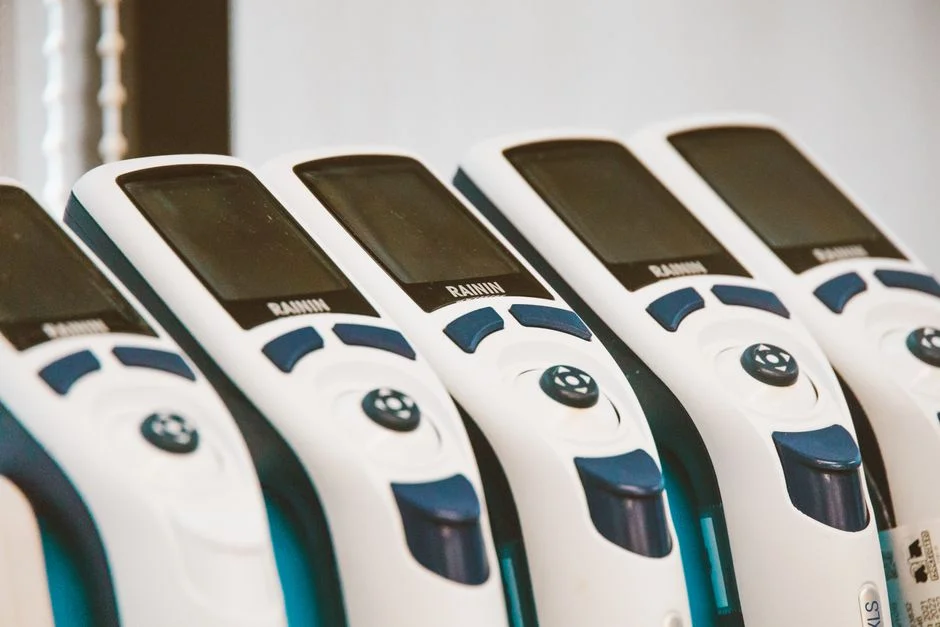
The minimum parameter coverage a 2026 specification must demand, drawn directly from the Thomas & Pouet (2005) taxonomy, is: UV254 SAC as the COD/BOD surrogate, TSS, pH, conductivity, dissolved oxygen, ORP, and a biosensor or toxicity output. The architecture must be on-line and continuous with PLC/SCADA integration, because the EPA Effluent Limitation Guidelines and the EU Drinking Water Directive 98/83/EC both expect reporting against continuous data. PLC/SCADA water analyzer integration closes the loop to the rest of the plant, including PLC-controlled chemical dosing linked to on-line analyzers. Data integrity is non-negotiable: built-in validation routines, drift detection, and reagent-free or low-reagent operation reduce the sample-aging and operator-error risk Thomas & Pouet (2005) identify as the core weakness of laboratory monitoring. The vendor must provide method validation evidence cross-referenced to ISO, CEN, or EPA-approved reference methods under the Thomas & Pouet validation framework, and the lifecycle requirement — a 5–10-year sensor and consumable roadmap, plus a documented cybersecurity posture for IIoT-connected analyzers — protects the 2026 capex from becoming a 2028 retrofit.
Integrating Measurement With Downstream Treatment Equipment
An analyzer that does not drive the treatment train is just a logging instrument. Automatic chemical dosing systems should be PLC-linked to the analyzer so coagulant, flocculant, and pH-adjuster feed rates respond in real time to UV254, pH, and conductivity signals, capturing the energy and chemical savings the market.us dataset attributes to optimized operations. On-line measurement should trigger backwash cycles on multi-media filters, with filters that backwash on analyzer triggers protecting downstream RO membrane elements and reducing SDI excursions. Disinfection systems need continuous ORP, chlorine residual, and UV-transmittance measurement to stay inside EPA and EU Drinking Water Directive limits, and UV sterilizers sized against UV-transmittance measurement are the practical translation of that requirement. MBR and integrated sewage treatment systems use on-line TSS, turbidity, and dissolved-oxygen data to control aeration intensity and membrane cleaning intervals, which is where the DOE's 3% energy figure is recovered in practice. The specification checklist and the treatment-train integration belong in the same RFQ; separating them is the most common reason a 2026 measurement capex underperforms.
Frequently Asked Questions
How should we budget for a 2026 market-leading on-line analyzer package?
Frame the measurement line item against the services segment that market.us places at 44.9% of a USD 322.8 billion 2024 market — measurement sits inside that envelope, not inside the equipment capex bucket. The actionable check is to ask each shortlisted vendor for a fully-installed, five-year cost-of-ownership quote covering sensors, reagents, consumables, validation, and PLC/SCADA integration, then benchmark the relative spread between vendors rather than relying on a single headline number.
How do we choose a supplier for a 2026 multi-parameter on-line analyzer?
Prefer vendors that can bundle optical, biosensor, and software-sensor capability in a single platform, matching the Thomas & Pouet (2005) emerging-class taxonomy, and require documented cross-references to ISO, CEN, or EPA-approved reference methods. The actionable check is to ask for a live demonstration of PLC/SCADA water analyzer integration against the vendor's own SCADA simulator and a written cybersecurity posture statement covering the IIoT-connected analyzer; suppliers that cannot produce both should be deprioritized.
What parameters and scope must a 2026 analyzer package cover to avoid compliance risk?
At minimum: UV254 SAC, TSS, pH, conductivity, dissolved oxygen, ORP, and a biosensor or toxicity output, drawn directly from the Thomas & Pouet (2005) parameter set. Under-sizing to one or two parameters is a common compliance-risk failure mode because missing continuous monitoring on any EPA Effluent Limitation Guidelines-regulated outfall exposes the facility to enforcement under the Clean Water Act, per market.us.
How do we evaluate the technical claims in competing vendor proposals?
Cross-check each vendor's claimed sensor classes against the optical, biosensor, and software-sensor framework from Thomas & Pouet (2005) and require evidence of method validation against an ISO, CEN, or EPA reference method. The actionable check is to ask the vendor to map each claimed measurement onto the matching sensor class and reference method in writing; proposals that cannot do this signal integration or compliance risk before the pilot starts. Previous technical analysis on objective comparison methods for UPW technologies and on UF vs DAF for semiconductor CMP wastewater RO pretreatment demonstrates the level of vendor-by-vendor technical evaluation that an on-line analyzer RFQ should follow.
Related Equipment
- PLC-controlled chemical dosing linked to on-line analyzers — specifications, capacity range, and technical data
- multi-media filters that backwash on analyzer triggers — specifications, capacity range, and technical data
- UV sterilizers sized against UV-transmittance measurement — specifications, capacity range, and technical data