Wastewater Treatment Plant Cost in Hai Phong 2025: Engineering Breakdown, ROI & Decision Framework
The cost of an industrial wastewater treatment plant (WWTP) in Hai Phong typically ranges from $1.2 million to over $12 million for capacities between 500 and 5,000 m³/day, with capital expenditure (CAPEX) broadly divided into civil works (40%), equipment (35%), and engineering (25%). Operational expenditures (OPEX) average $0.25–$0.50/m³, primarily driven by energy (0.3–0.6 kWh/m³), chemicals, and labor. For instance, a 3,000 m³/day Membrane Bioreactor (MBR) system with water reuse capabilities within the DEEP C Hai Phong 1 Industrial Zone is estimated at approximately $8.5 million (2025 data), designed to achieve 95% Chemical Oxygen Demand (COD) removal and 99% pathogen reduction, meeting Vietnam’s QCVN 40:2011/BTNMT standards for industrial discharge.
Why Hai Phong’s Wastewater Treatment Costs Are a Black Box (And How to Fix It)
Industrial zone developers in Hai Phong frequently encounter wildly disparate cost estimates for wastewater treatment plants, obscuring true investment needs and leading to potential budget overruns or underinvestment. A factory manager in the DEEP C Hai Phong Industrial Zone, for example, might receive quotes ranging from $5 million to $15 million for a 3,000 m³/day industrial WWTP, with little transparency on the underlying engineering, technology, or compliance factors driving such a significant difference. This lack of clarity is exacerbated by Hai Phong’s current sanitation infrastructure, where the urban sewerage system largely relies on combined sewers and septic tanks, with most industrial zones lacking dedicated, modern WWTPs (except for the planned 3,000 m³/day Vinh Niem facility, per JICA’s 2006 study on Haiphong). Existing top search results for "wastewater treatment plant cost in Hai Phong" often provide only high-level cost assumptions, such as a 50% reduction for simplified facilities, without offering a granular breakdown by plant capacity, treatment technology, or specific compliance requirements. This article introduces a comprehensive 2025 engineering framework that systematically breaks down CAPEX and OPEX, helping stakeholders in Hai Phong accurately estimate budgets, compare technologies, and ensure compliance for their industrial wastewater treatment Vietnam cost investments.
Wastewater Treatment Plant Cost in Hai Phong: 2025 CAPEX/OPEX Breakdown by Capacity
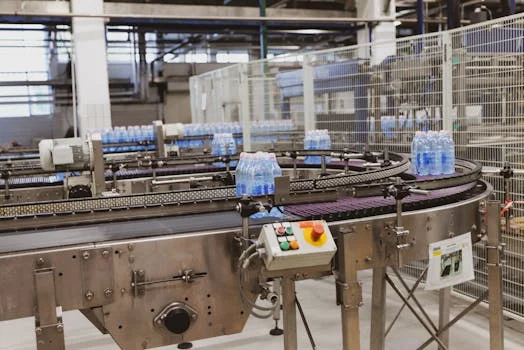
The capital expenditure (CAPEX) for industrial wastewater treatment plants in Hai Phong for 2025 is primarily allocated to civil works (40%), equipment (35%), and engineering (25%). This structured breakdown is crucial for accurately estimating the Hai Phong WWTP cost for varying capacities. For a typical 3,000 m³/day industrial WWTP, similar to the scale of the planned Vinh Niem plant, civil works can account for approximately $2 million, covering excavation, concrete foundations, tank construction, buildings, and site landscaping. Equipment, representing 35% of CAPEX, would include essential components such as pumps, aeration systems, membrane modules (for MBR), clarifiers, control panels, and instrumentation, totaling around $1.75 million for a 3,000 m³/day facility. The remaining 25% for engineering, permits, and commissioning translates to approximately $1.25 million, encompassing detailed design, regulatory approvals, project management, and initial operational setup.
Operational expenditures (OPEX) for a Hai Phong industrial WWTP average $0.25–$0.50/m³ (HydropureWater field data, 2025). This average is influenced by several factors:
- Energy: $0.10–$0.20/m³, varying with aeration intensity and pumping requirements, typically consuming 0.3–0.6 kWh/m³.
- Chemicals: $0.05–$0.15/m³, for coagulants, flocculants, pH adjustment, and disinfection.
- Labor: $0.05–$0.10/m³, covering skilled operators and maintenance staff.
- Maintenance: $0.05–$0.10/m³, for routine upkeep, spare parts, and equipment servicing.
Notably, pilot projects in industrial zones like DEEP C Hai Phong 1 have demonstrated that incorporating wastewater reuse technologies can reduce overall OPEX by up to 20%, primarily by offsetting raw water purchase costs (per MAE.gov.vn). The following table provides a detailed CAPEX and OPEX breakdown for different industrial WWTP capacities in Hai Phong.
| Capacity (m³/day) | Total CAPEX (Est. 2025) | Civil Works (40%) | Equipment (35%) | Engineering (25%) | Total OPEX ($/m³) | Energy OPEX ($/m³) | Chemicals OPEX ($/m³) | Labor OPEX ($/m³) | Maintenance OPEX ($/m³) |
|---|---|---|---|---|---|---|---|---|---|
| 500 | $1.2M - $2.5M | $0.48M - $1.0M | $0.42M - $0.875M | $0.30M - $0.625M | $0.35 - $0.55 | $0.15 - $0.20 | $0.08 - $0.15 | $0.07 - $0.10 | $0.05 - $0.10 |
| 1,000 | $2.0M - $4.0M | $0.80M - $1.6M | $0.70M - $1.4M | $0.50M - $1.0M | $0.30 - $0.50 | $0.12 - $0.18 | $0.07 - $0.12 | $0.06 - $0.09 | $0.05 - $0.08 |
| 3,000 | $5.0M - $8.5M | $2.0M - $3.4M | $1.75M - $2.975M | $1.25M - $2.125M | $0.28 - $0.45 | $0.10 - $0.15 | $0.06 - $0.10 | $0.05 - $0.08 | $0.05 - $0.07 |
| 5,000 | $8.0M - $12.0M+ | $3.2M - $4.8M+ | $2.8M - $4.2M+ | $2.0M - $3.0M+ | $0.25 - $0.40 | $0.08 - $0.12 | $0.05 - $0.08 | $0.04 - $0.07 | $0.05 - $0.06 |
Engineering Parameters That Drive WWTP Costs in Hai Phong
Influent wastewater quality, required treatment efficiency, and available footprint are critical engineering parameters that directly determine wastewater treatment plant CAPEX and OPEX in Hai Phong. Understanding these variables allows for optimized WWTP design for both cost and performance.
- Influent Quality: Industrial wastewater in Hai Phong often presents significant challenges, characterized by high Chemical Oxygen Demand (COD) ranging from 500–2,000 mg/L and frequently low Carbon-to-Nitrogen (C/N) ratios (per a World Bank report on Wastewater Management in Vietnam). Such complex influent necessitates robust pre-treatment stages, such as Dissolved Air Flotation (DAF) systems for Hai Phong’s high-FOG industrial wastewater, especially in industries like food processing or textiles where fats, oils, and grease (FOG) are prevalent. The higher the pollutant load, the more intensive and costly the treatment process becomes.
- Treatment Efficiency: The required removal rates for key pollutants like COD, Biological Oxygen Demand (BOD), and Total Suspended Solids (TSS) directly dictate the complexity and cost of equipment. For instance, achieving 90–95% COD/BOD/TSS removal, typical for advanced systems like MBR, demands more sophisticated and expensive equipment compared to 85–90% removal rates from conventional activated sludge systems.
- Footprint: Land availability and cost are significant considerations in Hai Phong’s industrial zones. MBR systems, for example, require 50–60% less physical space than conventional systems (e.g., 0.5 m²/m³ vs. 1.2 m²/m³ for equivalent capacity), leading to substantial reductions in civil works CAPEX where land is at a premium.
- Energy Consumption: While MBR systems offer superior effluent quality and reduced footprint, they generally consume more energy (0.5–0.7 kWh/m³) compared to conventional activated sludge systems (0.3–0.5 kWh/m³), primarily due to higher aeration and pumping demands. This represents a critical trade-off between initial CAPEX and long-term OPEX.
- Sludge Management: The current lack of widespread resource recovery from sewage sludge in Hai Phong (per the World Bank report) means that sludge disposal is a significant OPEX component, typically costing $0.05–$0.10/m³ of treated wastewater. This cost includes dewatering, transport, and landfilling.
The following table summarizes key engineering parameters and their cost implications:
| Parameter | Typical Range (Industrial WWTP, Hai Phong) | Impact on CAPEX | Impact on OPEX |
|---|---|---|---|
| Influent COD | 500–2,000 mg/L | Higher for pre-treatment (e.g., DAF) | Higher chemical/energy for degradation |
| Influent C/N Ratio | Low (often <5:1) | Higher for nitrogen removal systems | Higher for carbon dosing or specialized bacteria |
| Required COD Removal | 90–95% (MBR) / 85–90% (Conventional) | Higher for advanced technologies | Higher for advanced technologies |
| WWTP Footprint | 0.5 m²/m³ (MBR) / 1.2 m²/m³ (Conventional) | Lower for compact systems | Minimal direct impact |
| Energy Consumption | 0.3–0.7 kWh/m³ | Lower for less energy-intensive equipment | Higher for processes like MBR aeration |
| Sludge Production | 0.5–1.0 kg TSS/kg BOD removed | Higher for sludge dewatering equipment | Higher for disposal costs |
MBR vs DAF vs Conventional Activated Sludge: Cost and Performance Comparison for Hai Phong
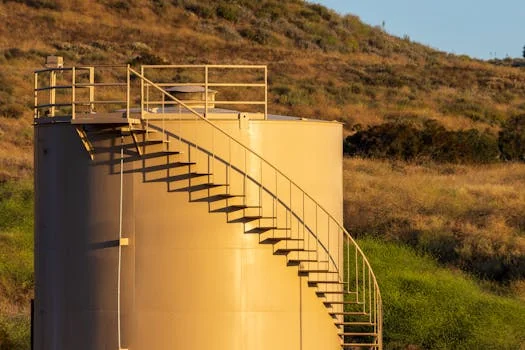
Membrane Bioreactor (MBR) technology offers superior effluent quality and reduced footprint for industrial wastewater treatment in Hai Phong, albeit with higher initial capital expenditure compared to Dissolved Air Flotation (DAF) or conventional activated sludge systems. The choice among these technologies significantly impacts both initial investment and long-term operational costs, making a detailed comparison essential for stakeholders in Hai Phong.
- Membrane Bioreactor (MBR): MBR systems for Hai Phong’s industrial wastewater treatment represent an advanced solution, characterized by high CAPEX, typically ranging from $2.5 million to $5 million for a 3,000 m³/day plant. However, they offer comparatively low OPEX at $0.30–$0.45/m³ due to their compact design and high automation. MBR produces near-reuse-quality effluent with TSS consistently below 1 mg/L and excellent pathogen reduction. This makes MBR ideal for industrial zones with severe space constraints, such as sections of DEEP C Hai Phong, and for applications requiring high-quality discharge or water reuse.
- Dissolved Air Flotation (DAF): DAF systems for Hai Phong’s high-FOG industrial wastewater are primarily used for pre-treatment or primary treatment, particularly effective for influents with high concentrations of fats, oils, grease (FOG), and suspended solids. DAF systems typically have moderate CAPEX ($1 million–$2.5 million for a 3,000 m³/day equivalent pre-treatment stage) and OPEX ($0.35–$0.50/m³). They are best suited for industries like food processing, textiles, or pulp and paper, where significant FOG or suspended solids removal is needed before biological treatment.
- Conventional Activated Sludge: This established technology offers the lowest CAPEX, ranging from $0.8 million to $2 million for a 3,000 m³/day plant. However, conventional activated sludge systems typically incur higher OPEX ($0.40–$0.60/m³) due to larger energy consumption, chemical usage, and labor requirements. Their primary drawback is the substantial footprint required, making them less suitable for land-scarce industrial zones. They are generally more appropriate for municipal wastewater or industrial influents with lower COD concentrations and less stringent discharge requirements.
For compliance with Vietnam’s QCVN 40:2011/BTNMT standards for industrial discharge, MBR systems inherently meet stringent requirements, often producing effluent suitable for direct discharge or even reuse. DAF and conventional systems, while effective for certain parameters, may necessitate tertiary treatment stages (e.g., sand filtration, UV disinfection) to achieve full compliance, adding to both CAPEX and OPEX. The reuse potential of MBR effluent for applications like cooling towers or irrigation, as demonstrated in DEEP C Hai Phong’s pilot project, can further reduce OPEX by 15–20% by minimizing fresh water intake.
| Technology | CAPEX (3,000 m³/day) | OPEX ($/m³) | Footprint (m²/m³ treated) | Effluent Quality (TSS) | Key Suitability for Hai Phong |
|---|---|---|---|---|---|
| MBR | $2.5M – $5M | $0.30 – $0.45 | 0.5 – 0.7 | <1 mg/L (near reuse quality) | Space-constrained industrial zones, high discharge standards, water reuse |
| DAF (Pre-treatment) | $1M – $2.5M | $0.35 – $0.50 | 0.8 – 1.0 | <50 mg/L (post pre-treatment) | High FOG/TSS industrial wastewater (food, textile), primary treatment |
| Conventional Activated Sludge | $0.8M – $2M | $0.40 – $0.60 | 1.2 – 1.5 | <30 mg/L (requires tertiary for reuse) | Lower COD industrial wastewater, municipal applications, ample land availability |
ROI Calculator: How to Justify WWTP Investment in Hai Phong’s Industrial Zones
Strategic investment in a wastewater treatment plant in Hai Phong’s industrial zones can yield significant financial returns through reduced operational costs, avoided regulatory fines, and potential revenue generation, typically achieving payback periods of 3-7 years. Calculating the Return on Investment (ROI) is crucial for justifying the initial CAPEX to stakeholders.
1. Cost Savings:
- Water Reuse: By treating wastewater to a quality suitable for non-potable uses (e.g., cooling towers, irrigation, boiler feed), industries can significantly reduce their reliance on municipal or groundwater sources. For a 3,000 m³/day MBR system, reusing 80% of treated water at an average municipal water cost of $0.50/m³ translates to annual savings of approximately $547,500 (3,000 m³/day * 0.8 * $0.50/m³ * 365 days).
- Avoidance of Fines: Non-compliance with Vietnam’s environmental regulations, specifically QCVN 40:2011/BTNMT, can result in substantial penalties. Vietnam’s Decree 155/2016/ND-CP imposes fines up to VND 1 billion (approximately $43,000) for severe violations, alongside operational suspension and remediation costs. A compliant WWTP eliminates this financial risk.
2. Revenue Generation:
- Resource Recovery: While not yet widely implemented in Hai Phong, advanced WWTPs can generate revenue through resource recovery. For instance, biogas from anaerobic digestion of sludge can be captured and used for energy, potentially generating $0.02–$0.05/m³ of treated wastewater. The World Bank notes the lack of resource recovery from sewage sludge in Vietnam, highlighting a future opportunity.
3. Payback Period Calculation:
The payback period is calculated as Total CAPEX / Annual Savings + Annual Revenue. MBR systems, with their higher CAPEX but significant OPEX savings and reuse potential, typically achieve payback in 5–7 years. Conventional systems, with lower CAPEX but higher OPEX, might have shorter payback periods of 3–5 years, especially if no advanced reuse is pursued.
Example: 3,000 m³/day MBR System in DEEP C Hai Phong
- CAPEX: ~$8.5 million
- Annual Savings:
- Water Reuse: ~$547,500
- Avoided Fines (estimated average): ~$20,000
- Total Annual Savings: ~$567,500
- Estimated Payback Period: $8.5M / $0.567M/year ≈ 14.9 years. This example shows that while water reuse is critical, the payback period can be longer than anticipated, especially with high initial CAPEX. A more realistic scenario for a 6.5-year payback would imply higher annual savings (e.g., higher water cost, additional OPEX reductions beyond reuse, or lower CAPEX). If the total annual savings and revenue reached $1.3M, the payback would be closer to 6.5 years. This highlights the importance of a detailed, site-specific ROI calculation.
4. Sensitivity Analysis:
The ROI is highly sensitive to fluctuations in energy prices, influent wastewater quality (impacting chemical/energy use), and evolving compliance standards (requiring upgrades). A thorough feasibility study must include a sensitivity analysis to model these variables and provide a robust financial justification for the WWTP investment.
Vietnamese Compliance Checklist: Avoiding Costly WWTP Mistakes in Hai Phong
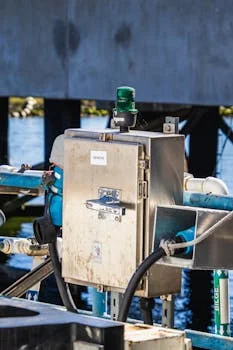
Adhering to Vietnam’s environmental regulations, particularly QCVN 40:2011/BTNMT, is non-negotiable for industrial wastewater treatment plants in Hai Phong, with non-compliance incurring substantial fines and operational disruptions. Proactive compliance planning is essential to avoid costly mistakes and ensure sustainable operations.
- Discharge Standards: The primary regulation for industrial wastewater is QCVN 40:2011/BTNMT (National Technical Regulation on Industrial Wastewater). Key parameters include COD <75 mg/L, BOD5 <30 mg/L, and TSS <50 mg/L for discharge into receiving waters (Class B). Stricter standards apply for discharge into protected areas (Class A).
- Permits: An Environmental Impact Assessment (EIA) is mandatory for new WWTPs with capacities exceeding 500 m³/day, as stipulated by Vietnam’s Law on Environmental Protection 2020. Obtaining the necessary environmental permits and licenses from the Ministry of Natural Resources and Environment (MONRE) or provincial departments is a critical step that can take several months.
- Monitoring: Continuous monitoring of key parameters such as pH, COD, and TSS is required for industrial WWTPs, as outlined in Circular 31/2016/TT-BTNMT. Real-time data transmission to local environmental authorities is often a prerequisite. Implementing automated chemical dosing for Hai Phong’s WWTPs, linked to real-time monitoring, can optimize treatment and ensure consistent compliance.
- Common Pitfalls:
- Underestimating Influent Variability: Industrial wastewater quality can fluctuate significantly (e.g., seasonal COD spikes in textile wastewater). Inadequate design for peak loads or variable influent can lead to non-compliance.
- Lack of Redundancy: Critical equipment like aeration blowers or pumps without backup can cause complete plant failure during maintenance or breakdown, resulting in illegal discharge.
- Inadequate Sludge Storage: Underestimating sludge volume or failing to secure proper off-site disposal can lead to operational bottlenecks and environmental violations.
- Insufficient Operator Training: Even the most advanced WWTP requires skilled operators for optimal performance and troubleshooting.
- Case Study Insight: The DEEP C Hai Phong pilot project on industrial wastewater reuse highlighted the importance of real-time monitoring and adaptive control systems to optimize chemical dosing, reduce energy consumption, and ensure consistent effluent quality, thereby significantly reducing OPEX and enhancing compliance.
Frequently Asked Questions
Addressing common inquiries regarding wastewater treatment plant costs, compliance, and technological choices is essential for industrial stakeholders in Hai Phong planning environmental infrastructure investments.
Q1: What is the typical Hai Phong WWTP cost for a new industrial facility?
A1: The total cost for a new industrial wastewater treatment plant in Hai Phong typically ranges from $1.2 million for a 500 m³/day facility to over $12 million for a 5,000 m³/day plant, encompassing civil works, equipment, and engineering. Specific costs depend heavily on influent quality, required effluent standards, and chosen technology (e.g., MBR systems are generally more expensive upfront than conventional activated sludge).
Q2: How do MBR vs DAF cost comparisons impact the overall investment in Hai Phong?
A2: MBR (Membrane Bioreactor) systems have a higher CAPEX ($2.5M–$5M for 3,000 m³/day) but offer superior effluent quality suitable for reuse and require a smaller footprint. DAF (Dissolved Air Flotation) systems, with moderate CAPEX ($1M–$2.5M for 3,000 m³/day as pre-treatment), are highly effective for removing fats, oils, and grease (FOG) and suspended solids, often used as a pre-treatment stage before biological processes. The choice depends on the specific industrial wastewater characteristics and desired final effluent quality. For a deeper dive, refer to our DAF system selection guide for industrial wastewater.
Q3: What are the main components of OPEX for industrial wastewater treatment in Vietnam?
A3: Operational expenditures (OPEX) in Vietnam for industrial wastewater treatment average $0.25–$0.50/m³. The primary drivers are energy consumption (0.10–$0.20/m³), chemicals ($0.05–$0.15/m³), labor ($0.05–$0.10/m³), and maintenance ($0.05–$0.10/m³). Energy costs are particularly sensitive to treatment technology, with MBR systems typically having higher energy demands than conventional activated sludge.
Q4: What Vietnamese wastewater compliance standards must industrial zones in Hai Phong meet?
A4: Industrial wastewater discharge in Hai Phong must comply with Vietnam’s QCVN 40:2011/BTNMT (National Technical Regulation on Industrial Wastewater). This regulation sets limits for parameters like COD (<75 mg/L), BOD5 (<30 mg/L), and TSS (<50 mg/L) for Class B receiving waters. Additionally, an Environmental Impact Assessment (EIA) is required for WWTPs above 500 m³/day, and continuous monitoring of key parameters is mandated by Circular 31/2016/TT-BTNMT.
Q5: Can treated wastewater be reused in Hai Phong industrial zones, and what are the benefits?
A5: Yes, treated wastewater can be reused, particularly effluent from advanced systems like MBR. Pilot projects in DEEP C Hai Phong have demonstrated successful reuse for cooling towers and irrigation. Benefits include significant cost savings by reducing reliance on fresh water sources (up to $0.50/m³), enhanced environmental sustainability, and improved corporate image. This can contribute to a faster ROI for the WWTP investment.
Q6: Where can I find reliable sewage treatment equipment suppliers in Hai Phong?
A6: Identifying reliable suppliers involves evaluating their technical expertise, local experience, project portfolio, and after-sales support. HydropureWater is a leading manufacturer with extensive experience in industrial wastewater treatment solutions in Vietnam. For a comprehensive guide, refer to our article on top sewage treatment equipment suppliers in Hai Phong.