Why Galvanizing Lines Need a Dedicated Filter Press
Flux, rinse, and pickling tanks on a hot-dip galvanizing line continuously accumulate suspended solids, including zinc salts, iron fines, and process carryover; the industry identifies the filter press that handles the flux tank as a "flux press" or "flux filter press" (metchem.com). Without a dedicated press, operators must drain the flux tank and shovel out solids, which is labor-intensive and generates a high-volume, hazardous waste stream (metchem.com).
A properly plumbed flux filter press removes solids on a continuous duty, keeping tank chemistry stable and avoiding the dump-and-shovel cycle (metchem.com). The same machine handles rinse-water clarification and spent pickle solids, so a single plate and frame filter press typically serves the solids side of the whole wastewater train. Plate-and-frame and chamber presses in the HydropureWater product catalog cover 1–500 m² of filtration area, allowing the same equipment family to scale from a small job shop to a high-throughput continuous line (hydropurewater.com product catalog).
What the Press Actually Receives: Galvanizing Wastewater Chemistry
Galvanizing wastewater consists of a blend of spent pickle liquor, rinse-water overflow, and flux tank liquor. The solids reaching the press are metal hydroxides, sulfates, chlorides, and iron fines rather than a simple CaCO3 surrogate. Because academic plate-frame trials often use CaCO3 to simulate sludge, the 56.00% capture figure from a cotton-cloth trial at 4% w/w feed (Indonesian National Research and Innovation Agency, BRIN) serves as a cloth-comparison baseline, not a performance guarantee on real galvanizing sludge. High-temperature flux liquor adds a material constraint: the press plumbing must be CPVC or higher-grade, as standard PP or PVC is not suitable for the temperature and chloride exposure of a flux tank (metchem.com). A two-stage pH adjustment configuration ahead of the press handles the chemistry economically: gross correction in the first tank and fine-tuning in the second, which provides tighter downstream control and saves reagent (metchem.com). The conditioning hardware is normally a skid-mounted automatic chemical dosing system that bolts in upstream of the press.
Upstream Conditioning Before the Press: pH, Coagulation, Flocculation
The efficiency of the press depends on the chemical conditioning applied to the slurry before it reaches the plates. A two-stage pH adjustment system, with gross correction in the first tank and fine-tuning in the second, is more economical on reagent and time than a single large tank (metchem.com). A chemical dosing station ahead of the press is typically skid-mounted and includes day tanks, mixers, and metering pumps sized for coagulant, flocculant, and pH adjuster duty, with each station designed for the specific treatment target (metchem.com). Tanks can be fitted with level controls, pH probes, and temperature probes, and the control panel can run a manual mode or a fully automated cycle with programmable logic (metchem.com). For a galvanizing duty, this conditioning train usually means lime or NaOH for pH correction, a coagulant (ferric or polyaluminum) to neutralize colloidal charge, and a high-molecular-weight anionic flocculant to build the large, fast-settling floc that the press needs to capture cleanly. HydropureWater's PLC-controlled, skid-mounted automatic chemical dosing systems are specified for this exact upstream role (hydropurewater.com product catalog).
Plate-and-Frame vs Recessed-Chamber vs Membrane Filter Press
Galvanizing plants typically compare three architectures: plate-and-frame, recessed-chamber, and membrane presses. Plate-and-frame filter presses are the workhorse for sludge dewatering, with filtration areas from 1 m² to 500 m² and manual, hydraulic, or fully automatic PLC control (hydropurewater.com product catalog). Membrane filter presses add a flexible membrane that squeezes the cake after the filling cycle, operating at feeding pressure ≤1 MPa and squeezing pressure ≤1.5 MPa on hot-dip galvanizing wastewater (SINO Filtration specification). The membrane squeeze stage typically delivers a drier cake and shorter cycle time than a recessed-chamber press on metal-hydroxide sludges, which lowers hauling costs per ton of cake. Recessed-chamber presses remain a common lower-cost alternative when the cake dryness target is moderate and the feed solids concentration is already in the 3–6% w/w range typical of well-conditioned galvanizing sludge. Cloth material dictates capture efficiency: in a plate-frame trial, cotton cloth achieved 56.00% solids removal on a 4% w/w CaCO3 feed, while drill cloth underperformed on the same feed (BRIN).
| Architecture | Typical duty fit | Filtration pressure | Capture baseline (CaCO3 4% w/w, cotton cloth) | Key trade-off |
|---|---|---|---|---|
| Plate-and-frame | General flux and rinse clarification | Hydraulic, up to feed pump limit | 56.00% (BRIN) | Versatile, lower cost per m² |
| Recessed-chamber | Pre-thickened feed, moderate dryness target | Feed pressure, no separate squeeze | Same cloth dependence as plate-and-frame | Simpler mechanics, wetter cake |
| Membrane | Driest cake, shortest cycle, hauled-disposal optimization | Feed ≤1 MPa; squeeze ≤1.5 MPa (SINO) | Same cloth dependence | Higher capex, lower disposal tonnage |
Sizing the Press for a Galvanizing Duty
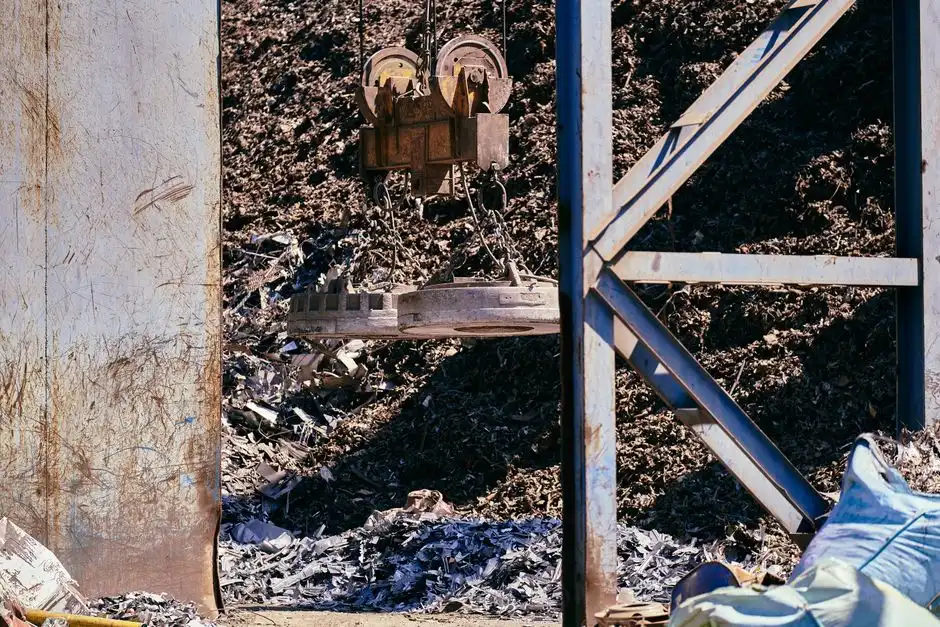
Met-Chem's sizing rule requires that the press process the entire flux tank volume at least twice per day, making the required daily throughput 2 × tank volume (metchem.com). Convert that daily throughput into a required filtration area using the HydropureWater product envelope of 1–500 m²; small job-shop fluxes sit at the low end and continuous high-throughput lines sit at the upper end (hydropurewater.com product catalog). Allow headroom for cake wash and cloth-conditioning cycles, because a press sized exactly to the two-turnover rule will queue cycles during a shift upset. Confirm plate count and chamber volume against the cake thickness expected from the specific sludge, since metal-hydroxide cakes behave differently from the CaCO3 surrogate used in academic plate-frame studies (BRIN). On a continuous line, specify PLC automatic control so the HydropureWater plate and frame filter press runs on a tonnage- or time-based cycle without an operator monitoring each closure (hydropurewater.com product catalog).
Filter Cloth and Plate Material Selection
Cloth choice is a primary design decision; cotton cloth yielded 56.00% solids removal efficiency at 4% w/w feed in a plate-frame trial, while drill cloth underperformed on the same test (BRIN). For real galvanizing sludge, which carries zinc hydroxide, iron hydroxide, and chloride, request a multi-layer polypropylene or polyester cloth with a finer top weave for clarity, supported by a coarser backing for cake release. Plate material should be selected for chloride and pH compatibility; the press frame and hydraulic pack are typically carbon steel with coated plates, but chemical compatibility at the wetted surfaces is essential. Sizing cloth rolls and spares is a routine consumable line item; suppliers who stock a 10–40 inch consumable range allow the plant to maintain the same procurement path for filter elements and housings across the water train. For a side-by-side look at how cloth selection is handled in a different food-industry wastewater context, the filter press for winery wastewater sizing guide covers the same selection logic in a different duty.
Cake Handling, Disposal, and Operating Cost Implications
The filter press decision is primarily a cake-management decision, as the dominant operating cost for a galvanizing sludge press is hauled disposal, not reagent or power. A sludge dumpster on casters with forklift tubes is positioned directly under the press, so cake released during cleaning drops into a movable container that can be pulled to a roll-off hauler (metchem.com). A drier cake from a membrane squeeze cycle at ≤1.5 MPa reduces tonnage hauled to disposal (SINO Filtration specification). Two-stage pH adjustment ahead of the press directly reduces reagent cost by avoiding over-dosing a single large tank (metchem.com). Plan for an enclosed cake area with adequate ventilation; the cake is metal-bearing, and any residual flux will fume if it rewets. For a contrasting duty where cycle time and dryness targets differ, the filter press for distillery wastewater engineering guide shows how the same press architecture is specified for a non-metal sludge.
Pre-Purchase Specification Checklist
Standardizing the RFQ process ensures that vendor quotes are comparable. Confirm required daily throughput = 2 × flux tank volume, per the Met-Chem sizing rule, plus a documented margin (metchem.com). Specify feed solids range (low/high % w/w), peak flow (m³/h), and feed temperature, so vendors can select the right plate material and pump sizing. State target cake moisture as a percentage, not a vague "dry," because this dictates whether a membrane or recessed-chamber press is the right answer. List available utilities—hydraulic pressure, compressed air, control voltage, and PLC standard—so the press integrates with the existing MCC and DCS. Require a documented cloth specification and a recommended spares list at the quote stage; BRIN data indicates that cloth choice impacts capture efficiency by a measurable amount (BRIN).
| Line item | What to write in the RFQ | Why it matters |
|---|---|---|
| Daily throughput | 2 × flux tank volume (m³/day), plus margin (metchem.com) | Sets filtration area in m² |
| Feed envelope | Feed solids % w/w (low/high), peak flow m³/h, feed temperature | Drives plate material and pump sizing |
| Cake target | Target cake moisture as a % (not "dry") | Selects membrane vs recessed-chamber |
| Press envelope | 1–500 m² filtration area range (hydropurewater.com) | Confirms vendor can hit the duty |
| Cloth spec | Multi-layer PP or polyester, top-weave micron rating, backing | Cloth drove 56.00% vs lower capture in the BRIN trial |
| Utilities | Hydraulic pressure, compressed air, control voltage, PLC standard | Integration with existing MCC/DCS |
| Spares | Cloth rolls, gaskets, hydraulic seal kit at quote stage | Avoids commissioning delay |
Frequently Asked Questions
What is a realistic budget range for a galvanizing-line filter press?
The HydropureWater product catalog covers plate-and-frame presses from 1 m² to 500 m² of filtration area (hydropurewater.com product catalog), spanning small job-shop units to continuous-line equipment. Request a quote keyed to your required daily throughput (2 × flux tank volume per Met-Chem, 2026), plate material, and cloth spec rather than asking for a generic price, because the same machine configured for a 6 m² versus a 120 m² duty varies significantly. Ask the vendor to break out the cloth, hydraulic pack, and PLC scope as separate line items to enable like-for-like comparisons.
How do I choose between a membrane press and a recessed-chamber press for a galvanizing duty?
Choose a membrane press when hauled-disposal cost is the dominant operating line and you need the drier cake and shorter cycle that the ≤1.5 MPa squeeze stage delivers (SINO Filtration specification, 2026). Choose a recessed-chamber press when feed solids are already in the 3–6% w/w range after conditioning and the cake dryness target is moderate. In both cases, cloth specification is the variable that moves capture efficiency, so lock the cloth spec at the quote stage rather than after delivery.
How much flux tank volume should the press process per day?
Met-Chem specifies that the press must be sized to process the entire flux tank contents at least twice per day (metchem.com, 2026). Apply a margin above that minimum so a shift upset or a cloth-conditioning cycle does not create a queue. Confirm the figure with your own tank volume and shift pattern before sending the RFQ.