What 'Highest Quality' Actually Means for an Active Ingredients Dosing System
The highest-quality dosing system for an API or formulating-pharmaceutical duty publishes its numbers: declared metering accuracy as a percentage of setpoint across the full operating range, a turn-down ratio that holds at changeover flows, reproducibility under repeated cycling, and a response time that keeps pace with the batch recipe. These four parameters are the audit trail; everything else is configuration. The Environmental Science & Technology study of formulating pharmaceutical industry effluents (DOI 10.1021/acs.est.0c05178) tracked 33 formulated APIs and more than 120 organic contaminants across two months of daily LC-HRMS sampling at two municipal WWTPs, so an under-dosed or slug-dosed batch translates directly into an effluent excursion that the receiving plant cannot absorb silently.
Quality must be defensible to procurement, not only to the process engineer. The BMC Health Services Research study (26(1):1236, 04 Sep 2026) of European healthcare professionals found that environmental criteria are already being written into procurement tenders, and that interviewees expected such criteria to play a larger role in the future. A dosing skid that cannot produce auditable environmental-performance data — batch dose setpoints, actual volumes dispensed, deviation logs, containment-test records — is now a weak tender response even when its pumping hardware is sound. When a PLC-controlled automatic chemical dosing system is specified against these criteria, "highest quality" stops being a brand claim and becomes a documented spec sheet.
Core Engineering Specifications You Should Require
Positive-displacement pumps — diaphragm or peristaltic — are the standard for shear-sensitive or viscous APIs, with wetted materials matched to the API's carrier solvent. Centrifugal pumps give flow range but lose accuracy on viscous or low-flow API duty. Control must be PLC-based with either flow-proportional or pH/ORP-trimmed dosing, and the dosing line needs redundant flow verification (a magmeter is the typical choice; a Coriolis meter is justified where the API is expensive enough that mass-based accountability is required).
Accuracy and turn-down deserve special attention because suppliers typically publish accuracy at nominal flow only. API processes routinely operate at a fraction of nameplate during changeover, cleaning, and small-batch campaigns, and the supplied accuracy figure often collapses at the bottom of the range. Require the supplier to declare repeatability at the minimum expected flow, not only at the design point. On containment, specify secondary drip pans, leak detection wired to the PLC alarm, and isolation valves on the dosing line — the CRC Press chapter on APIs in aquatic organisms (DOI 10.1201/b10598-9) notes that occurrence data for APIs in aquatic organisms and biological-effect thresholds rarely intersect, so source prevention is the defensible posture when the receiving environment is poorly characterised.
| Parameter | Specification to require | Why it matters for API duty |
|---|---|---|
| Pump class | Positive-displacement (diaphragm or peristaltic) | Maintains accuracy on viscous or shear-sensitive APIs |
| Wetted materials | Matched to carrier solvent; 316L SS baseline | Prevents leaching and reaction with the API |
| Control | PLC-based, flow-proportional or pH/ORP-trimmed | Recipe-driven, auditable, and integrates with batch logic |
| Flow verification | Inline magmeter or Coriolis on dosing line | Independent check against pump stroke count |
| Declared accuracy | % of setpoint at minimum expected flow | Realistic performance during changeover and small batches |
| Turn-down ratio | Documented across the operating envelope | Avoids slug-dosing at low rates |
| Containment | Drip pan, leak detection, isolation valves | Limits operator exposure and environmental release |
Material and Sealing Selection for API Compatibility
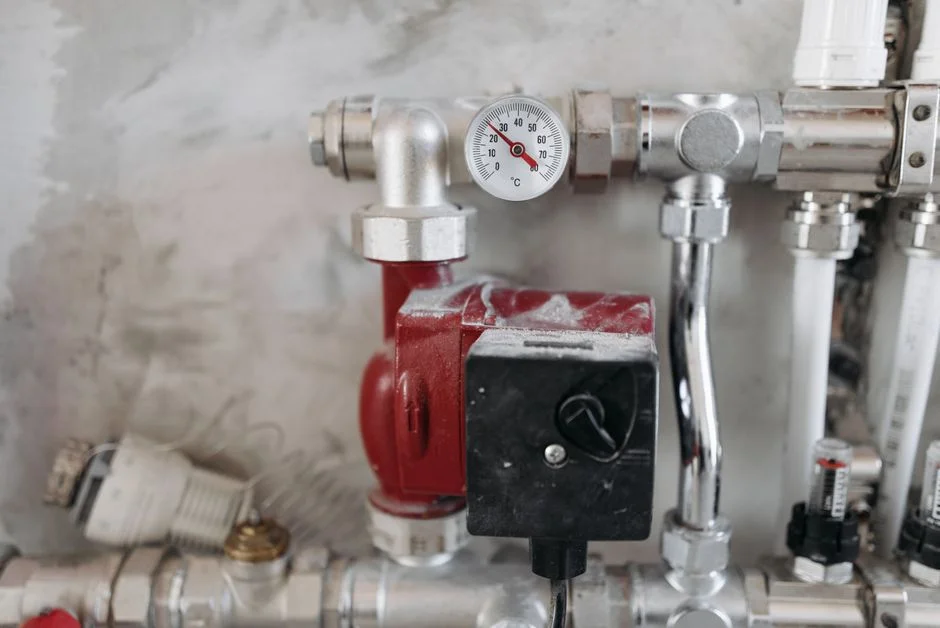
Elastomer and metal selection is where many dosing systems fail: the pump performs to spec on water, then drifts when the carrier solvent, excipient, or trace cleaning agent attacks the diaphragm or seal. Match wetted elastomers to the full carrier list — PTFE and Viton cover most aggressive solvents; EPDM is appropriate for aqueous slurries and many buffer solutions — and require the supplier to provide a compatibility chart signed against your specific API and excipient matrix, not a generic chemical resistance table.
For stainless wetted parts, 316L is the baseline. Where API purity or cleaning validation requires it, specify electropolishing and a documented surface finish (typically Ra ≤ 0.5 µm for high-purity lines). The third failure mode is seal life: a leaking seal on an API line is simultaneously a quality deviation (dose inaccuracy, possible API contamination) and an emission event of the type quantified in the WWTP API study cited above. Require mean-time-between-failure data for diaphragms and static seals at the actual API service conditions, and treat that number as part of the validation package rather than a sales footnote.
Process Integration, Control, and Validation
A dosing skid that performs in the workshop but cannot pass site acceptance is a common audit finding. Demand a documented FAT/SAT protocol, IQ/OQ templates, and GAMP-aligned software documentation before purchase; suppliers who cannot produce these on request are telling you what their commissioning support will look like. Recipe management with a tamper-evident audit trail is the second non-negotiable: each batch must record dose setpoints, actual volumes dispensed, operator overrides, and alarm acknowledgements, all time-stamped and exportable for inspection. This is repeatedly cited in regulatory inspections of API facilities and is the cheapest item to specify and the most expensive to retrofit.
Clean-in-place compatibility and validated rinse cycles complete the integration picture. Residual API in the dosing line between batches is a cross-contamination risk that the quality team will flag during the next product changeover. Specify CIP compatibility of all wetted parts, validated rinse-endpoint testing (typically conductivity or TOC), and a documented transition recipe in the batch controller. A PLC-controlled automatic chemical dosing system that ships with these recipes pre-loaded shortens validation time and reduces operator error. For sites that are also tightening upstream pretreatment, the industrial wastewater RO pretreatment design guide covers the related question of how dosing consistency affects downstream membrane performance, and the flocculant dosing unit troubleshooting guide is a useful reference for the type of deviation data the audit trail should capture.
Supplier Evaluation Framework
Translate the technical spec into a scoring matrix so engineering and purchasing reach the same shortlist. Score each bidder on four axes: documented accuracy data at the minimum expected flow; material and seal compatibility evidence against your specific API and excipient list; the depth of the validation and QA package (FAT/SAT, IQ/OQ templates, GAMP documentation, audit-trail functionality); and lifecycle support including spares availability, calibration service, and emergency response time. Weight environmental and emission documentation heavily — the BMC 2026 study shows environmental criteria are already appearing in healthcare procurement tenders, and the dosing skid is the most controllable emission point in an API process.
Ask for reference installations in API or formulating-pharmaceutical duty. Generic "chemical dosing" references are not equivalent: API-grade validation requires clean-in-place capability, full audit trails, and material traceability that commodity water-treatment dosing does not demand. Reject suppliers who cannot produce a reference list or who offer only municipal-water or general-industrial sites. Build the matrix with weights agreed jointly by engineering, quality, and procurement before the bids arrive, so the eventual decision is mechanical rather than subjective.
| Evaluation axis | What to score | Evidence to request |
|---|---|---|
| Accuracy at minimum flow | Declared % of setpoint at lowest operating rate | Calibration certificate and flow test data |
| Material compatibility | Match to API, carrier, and excipient list | Signed compatibility chart and MTBF for seals |
| Validation package | FAT/SAT, IQ/OQ, GAMP, audit trail | Sample protocols and software documentation |
| Lifecycle support | Spares, calibration, service response | Reference list in API or formulating-pharma duty |
| Environmental evidence | Documented emission control and containment | Containment test records and deviation logs |
Frequently Asked Questions
What accuracy should a pharmaceutical metering pump actually deliver on an API line?
Require the supplier to declare repeatability as a percentage of setpoint at the minimum expected flow for your process, not only at the design point. API processes routinely run at a fraction of nameplate during changeover, and a published accuracy figure that only holds at nominal flow is not a defensible spec. Ask for the test certificate and the conditions under which it was measured, and treat that data as part of the validation package rather than a marketing line.
How do I score API dosing skid suppliers without turning it into a price fight?
Build a weighted matrix before bids arrive, with engineering, quality, and procurement agreeing the weights. Score on documented accuracy at minimum flow, material compatibility against your specific API and excipient list, depth of the validation package, lifecycle support, and the strength of the environmental and emission documentation. The BMC Health Services Research 2026 study (26(1):1236) shows environmental criteria are already entering healthcare procurement, so a bidder who cannot document emission control is a weak shortlist candidate even at a lower price.
Which wetted materials are appropriate for aggressive API carriers?
PTFE and Viton cover most aggressive solvents; EPDM is appropriate for aqueous slurries and many buffer solutions. Use 316L stainless as the baseline for metal wetted parts, and specify electropolishing with a documented surface finish where API purity or cleaning validation requires it. Request a compatibility chart from the supplier signed against your specific API and full excipient list — generic resistance tables are not a substitute.
What validation documents should I require before accepting a dosing skid?
Require a documented FAT/SAT protocol, IQ/OQ templates, and GAMP-aligned software documentation as a condition of purchase. Specify recipe management with a tamper-evident audit trail that records dose setpoints, actual volumes dispensed, operator overrides, and alarm acknowledgements for each batch, all time-stamped and exportable. Validated clean-in-place compatibility and rinse-endpoint testing should be part of the same package, since residual API in the dosing line is a cross-contamination risk for the next batch.