Why Toronto developers are sizing packaged STPs in 2026
Toronto collects and treats residential and industrial wastewater 24 hours a day at four municipal plants, with each facility following preliminary, primary, and secondary biological/physical treatment steps under Ministry of the Environment, Conservation and Parks rules (City of Toronto, toronto.ca). That four-plant system is the regional backbone, but in 2026 the binding constraint on a new housing project is the local trunk-sewer capacity feeding those plants, not the plants themselves. Infrastructure delays on the Black Creek trunk sewer in Toronto are associated with the development of about 63,000 homes, according to reporting that cited the Federation of Canadian Municipalities (Postmedia/Yahoo, 2026). When the trunk is gated, occupancy dates slip and the City will not accept a new connection without a written capacity confirmation from Toronto Water.
The capacity problem is not isolated. More than 11% of Canadian water and wastewater-related infrastructure was in poor or very poor condition in 2022, representing an estimated C$107 billion in replacement value, per the 2025 National Infrastructure Assessment (Postmedia/Yahoo, 2026). Waterloo Region now requires developers to compete for limited wastewater capacity before projects can move ahead, and Airdrie is using roughly 97% of its 2026 water and wastewater allocation from Calgary (Postmedia/Yahoo, 2026). Toronto developers reading those signals should plan for a similar gating mechanism on their trunk.
That is the bucket where a packaged sewage treatment plant earns its place on the drawing: when the City trunk is full, the site servicing window does not align with the project occupancy schedule, or the developer needs a phased build that can come online ahead of a downstream upgrade. For cost planning, Ontario sanitary sewer pipeline construction has averaged about 4.66% per year of inflation on 1981–2014 reference data, with watermain construction at about 5.79% per year (University of Waterloo, 2017), which is useful as a planning escalator when extending older budgets to 2026 spend year.
MECP, Toronto Sewer & Watermain Manual, and City of Toronto design basis
Any packaged plant on a Toronto site must satisfy a three-layer design basis: the City of Toronto Sewer & Watermain Manual for the connection and site servicing, the MECP design guidelines for sanitary sewage systems for the treatment process, and an Ontario Environmental Compliance Approval issued under the Ontario Water Resources Act. The City of Toronto's own four plants operate continuously under MECP oversight, with secondary biological plus physical treatment as the baseline, and biosolids managed as a recognized output of biological treatment (City of Toronto, toronto.ca). A packaged plant is generally acceptable under that framework when it provides primary, secondary biological, and disinfection stages with documented redundancy, so that any single unit can be taken offline for service without breaching the permit envelope.
Two approvals gate the project before commissioning. First, a written capacity confirmation from Toronto Water confirming the receiving trunk has room for the project's peak discharge. Second, an MECP Environmental Compliance Approval for the packaged plant itself if it discharges to a sewer, surface water, or a receiving environment within provincial jurisdiction. Where the packaged plant is sized as a temporary bridge until a downstream upgrade lands, the approval is still required because the discharge is real and ongoing.
Sizing inputs are standard for a residential housing development. The engineer establishes a design population from unit count multiplied by persons-per-unit, then multiplies by the MECP per-capita design flow, applies a residential peaking factor, and adds amenity flows (clubhouse, pool, commercial pads) plus any on-site water reuse demand. The Toronto Sewer & Watermain Manual sets infiltration and exfiltration allowances that must be reflected in the inlet hydraulic load to the packaged plant. Confirm exact per-capita flow values and peaking factors with the latest MECP guideline and the current Toronto Sewer & Watermain Manual at design time, since these values are updated periodically and a quoted number from this article will not replace the current edition.
| Design input | Source / authority | Notes for the engineer |
|---|---|---|
| Per-capita design flow | MECP design guidelines for sanitary sewage systems | Residential default value used; confirm against the current edition at design time |
| Residential peaking factor | MECP / Toronto Sewer & Watermain Manual | Applied to average dry-weather flow for sizing |
| Infiltration / exfiltration | Toronto Sewer & Watermain Manual | Added to inlet hydraulic load to the packaged plant |
| Amenity and reuse flows | Project-specific | Clubhouse, pool, commercial pads, irrigation reuse |
| Effluent quality envelope | MECP ECA + City of Toronto | Mirrors the secondary biological/physical baseline used at the four City plants |
Sizing a packaged STP for a Toronto housing development
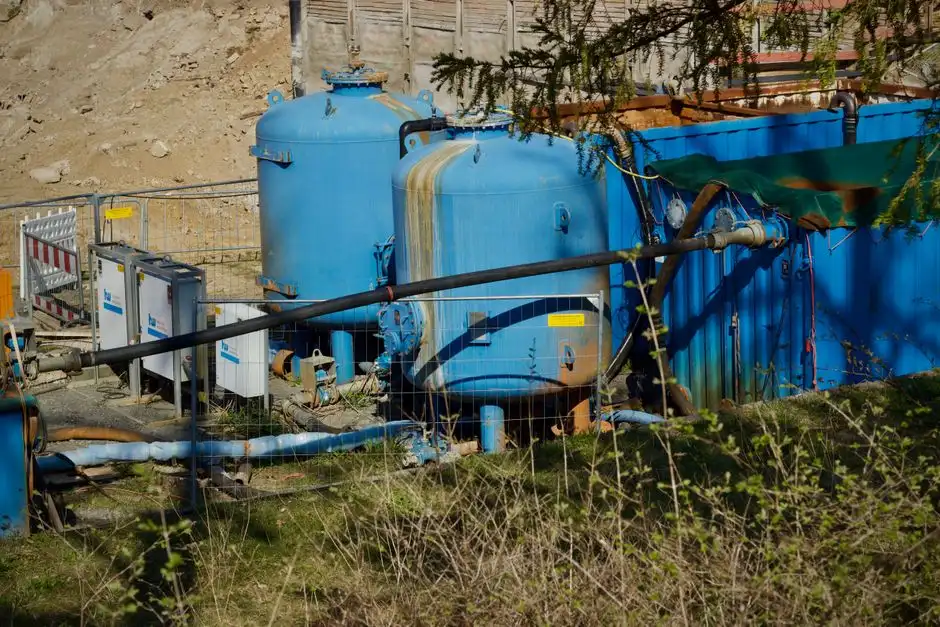
Walk the sizing math in four steps before selecting a unit. Step 1, establish design population: units multiplied by persons-per-unit, then multiplied by the MECP per-capita design flow rate, with the residential peaking factor applied. Step 2, layer in amenity flows from clubhouse, pool, and any commercial pads, plus any on-site water reuse demand that will route back through the plant. Step 3, verify the result against the available packaged unit capacities: buried A/O units (WSZ series) cover about 1 to 80 m³ per hour, integrated MBR units cover 10 to 2,000 m³ per day, and DF-series flat-sheet MBR modules produce about 32 to 135 m³ per day per cassette (HydropureWater catalog). Step 4, round up and select a unit count that gives n+1 redundancy so any single unit can be taken offline for service without breaching the MECP permit conditions.
For a Toronto housing development, the WSZ buried A/O packaged sewage treatment plant typically fits the lower flow bands where discharge is to sewer and footprint is at a premium, while an MBR skid fits where the project is targeting near-reuse effluent or a tighter effluent envelope. Whatever configuration is selected, the upstream sewer must be checked against the Toronto Sewer & Watermain Manual for infiltration and exfiltration so the inlet hydraulic load passed to the packaged plant is realistic rather than optimistic.
| Sizing parameter | Value / source | Use in calculation |
|---|---|---|
| Design population | Units × persons-per-unit | Foundation for average dry-weather flow |
| Per-capita flow | MECP design guideline (current edition) | Average dry-weather flow baseline |
| Peaking factor | MECP / Toronto Sewer & Watermain Manual | Applied to peak hourly flow for hydraulics |
| Amenity + reuse flows | Project-specific | Added to average and peak flow |
| Available unit flow bands | WSZ 1–80 m³/h; MBR 10–2,000 m³/day; DF 32–135 m³/day per cassette (HydropureWater catalog) | Match to peak and redundancy requirement |
| Redundancy | n+1 minimum | Allows one unit offline for service |
WSZ buried A/O versus MBR: which packaged STP fits a Toronto subdivision?
Two packaged configurations dominate residential proposals in the Greater Toronto Area: buried A/O contact oxidation units and integrated MBR systems. The WSZ buried A/O packaged sewage treatment plant combines anoxic and aerobic contact oxidation with sedimentation and disinfection in a single buried unit, runs fully automated without a dedicated operator, and can be installed below grade with landscaping above or trailer-mounted where soil cover is not feasible (HydropureWater catalog). The integrated MBR membrane bioreactor system pairs activated sludge with submerged PVDF membrane filtration, delivers near-reuse-quality effluent at sub-1 µm, and needs roughly 60% less footprint than a conventional activated sludge plant of the same capacity (HydropureWater catalog). The DF-series flat-sheet MBR membrane modules slot into either a packaged skid or a site-built tank and produce about 32 to 135 m³ per day per cassette (HydropureWater catalog).
For Toronto's cold winters, the buried WSZ arrangement benefits from ground-temperature stability and frost protection from soil cover, which keeps the biology active without an external heat source. An MBR needs a heated or insulated envelope, or a partial-burial arrangement with a small building, to maintain biology and protect the membranes in sub-zero conditions. That heat load is a real operating cost and must be carried in the OPEX estimate. For projects targeting on-site water reuse for irrigation or toilet flushing, the MBR's sub-1 µm effluent is the better fit; for discharge-to-sewer or surface-water release with conventional disinfection, the WSZ A/O plant is typically sufficient and lower-cost to operate.
All packaged plants on Toronto sites must still meet the MECP effluent envelope applied to the City's own four plants, where secondary biological plus physical treatment is the baseline (City of Toronto, toronto.ca). A useful procurement rule: specify the WSZ where discharge is to sewer and the developer wants the smallest above-grade footprint, and specify the MBR where reuse is in scope, where winter biology is a concern for an open-tank plant, or where the receiving environment demands tighter TSS and turbidity than secondary clarifier effluent can deliver.
| Decision axis | WSZ buried A/O | Integrated MBR |
|---|---|---|
| Flow band | 1–80 m³/h (HydropureWater catalog) | 10–2,000 m³/day (HydropureWater catalog) |
| Effluent quality | Secondary biological/physical with disinfection | Sub-1 µm, near-reuse quality |
| Footprint | Buried; landscaping-friendly | About 60% smaller than conventional at same capacity (HydropureWater catalog) |
| Operator requirement | Fully automated, no dedicated operator (HydropureWater catalog) | Automated; membrane maintenance and integrity testing required |
| Cold-climate fit (Toronto) | Soil cover provides frost protection and ground-temp stability | Needs heated/insulated envelope or partial burial to protect biology and membranes |
| Reuse suitability | Discharge-to-sewer or surface water with conventional disinfection | Irrigation, toilet flushing, or other on-site reuse |
| Relative OPEX posture | Lower heating load, simpler membrane-free operation | Higher heating and membrane replacement budget |
Permits, approvals and tie-in: working with Toronto Water and MECP
The approval sequence has a defined order and skipping a step costs months. First, confirm City of Toronto trunk-sewer capacity in writing before specifying the plant. For sites in the Black Creek corridor, this is the gating constraint, with the trunk-sewer delay associated with the development of about 63,000 homes (Postmedia/Yahoo, 2026). If the trunk has capacity, the packaged plant can be designed as a temporary bridge to phasing or as a permanent decentralized asset, and the engineer should still plan for a City site servicing review covering storm, sanitary, and water.
If a tie-in is not feasible in the project window, the packaged plant becomes a temporary or permanent decentralized solution, and it still requires an MECP Environmental Compliance Approval under the Ontario Water Resources Act. Plan for biosolids management as part of that approval: the City of Toronto's four plants manage nutrient-rich biosolids as a recognized output of biological treatment (City of Toronto, toronto.ca), and any on-site packaged plant must include a sludge handling and removal plan in the ECA application. A practical tip: submit the ECA application and the City site servicing review in parallel rather than sequentially, because the review comments from one often inform the other.
Cost planning for a packaged STP on a Toronto housing project
Anchor the cost plan on a defensible Canadian benchmark rather than a turnkey number. The Federation of Canadian Municipalities estimated in 2023 that supporting each new home requires an average of about C$107,000 in municipally owned capital assets, including roughly C$39,000 in potable water and wastewater infrastructure (Postmedia/Yahoo, 2026). That figure is a per-home allocation across the whole municipal cost stack, not a packaged-plant line item, so use it as a sanity check on the total water and wastewater budget the project is committing to, not as a price for the STP itself.
When extending older budgets to 2026, apply a sector-specific escalator. Ontario sanitary sewer pipeline construction has averaged about 4.66% per year on 1981–2014 data, and watermain construction about 5.79% per year (University of Waterloo, 2017), which is more representative of the sewer and water cost trajectory than the headline Consumer Price Index. For packaged STP budgeting in Ontario, see the Canadian wastewater treatment plant cost planning for Ontario breakdown, which provides provincial cost data and an ROI framework.
The major cost drivers for a packaged plant are tankage and material of construction, process complexity (A/O versus MBR), the disinfection package, controls and SCADA, sludge handling, and the civil install (excavation, bedding, backfill, tie-in). Indirect cost drivers include MECP engineering review fees, the City of Toronto site servicing review, commissioning, and operator training during the warranty period. Request an itemized CAPEX/OPEX split from suppliers rather than a turnkey lump sum, and ask for a 10- to 20-year parts and media cost envelope to compare bidders properly. For comparison with another Canadian housing market, the packaged STP sizing for Canadian housing developments guide covers a cold-climate Calgary case that shares several design constraints with Toronto.
Frequently Asked Questions
What capacity packaged STP is typically needed for a multi-phase Toronto subdivision?
Capacity is set by design population times MECP per-capita flow, plus amenity flows and a residential peaking factor. For reference flow bands, WSZ buried A/O units cover 1 to 80 m³ per hour, MBR units cover 10 to 2,000 m³ per day, and DF-series MBR cassettes produce 32 to 135 m³ per day each (HydropureWater catalog). Confirm the exact per-capita value and peaking factor with the current MECP guideline and the Toronto Sewer & Watermain Manual at design time, since these inputs drive the unit count and the n+1 redundancy requirement.
How much does a packaged sewage treatment plant cost for a Toronto housing project in 2026?
There is no single published price for a packaged STP in the supplied research. Use the FCM 2023 estimate of roughly C$39,000 in water and wastewater infrastructure per new home (Postmedia/Yahoo, 2026) as a per-home sanity check on the total water and wastewater budget, and apply the University of Waterloo 4.66% per year sanitary-sewer inflation escalator (1981–2014) when extending older budgets. Request an itemized CAPEX/OPEX split plus a 10- to 20-year parts and media cost envelope from each bidder rather than relying on a turnkey number.
How do I choose between a WSZ buried A/O unit and an MBR for a Toronto site?
Choose WSZ when the discharge is to a City sewer and the developer wants the smallest above-grade footprint, lower heating load, and a fully automated unit without a dedicated operator (HydropureWater catalog). Choose MBR when the project targets on-site reuse such as irrigation or toilet flushing, when winter biology is a concern for an open-tank arrangement, or when the receiving environment demands sub-1 µm effluent that a secondary clarifier cannot deliver (HydropureWater catalog). Confirm the effluent envelope with the MECP Environmental Compliance Approval and the Toronto Water capacity letter before locking the configuration.
What is the approval sequence for a packaged STP tied to a Toronto housing development?
Confirm City of Toronto trunk-sewer capacity in writing from Toronto Water before specifying the plant; for Black Creek corridor sites, this letter is the gating constraint tied to roughly 63,000 homes of development (Postmedia/Yahoo, 2026). Submit the MECP Environmental Compliance Approval application under the Ontario Water Resources Act in parallel with the City site servicing review, and include a biosolids handling and removal plan that matches the standard the City of Toronto applies at its four plants (City of Toronto, toronto.ca). Without the capacity letter, the ECA still proceeds but the tie-in timeline will not align with occupancy.
Related Equipment
- integrated MBR membrane bioreactor system — specifications, capacity range, and technical data
- DF-series flat-sheet MBR membrane modules — specifications, capacity range, and technical data