Why Brussels housing needs a packaged STP decision
A packaged sewage treatment plant for a Brussels housing development is a factory-built, factory-tested unit delivered to site for on-site installation, and in Belgium it must respect the same rules that bind Vivaqua's own network. The EIB's 2023-2027 financing for Vivaqua is granted on the condition that the utility "maintain compliance with the Urban Wastewater Treatment Directive 91/271/EC and Water Framework Directive 2000/60/EC" (EIB project 20200636), and a packaged plant whose effluent ultimately reaches the Brussels sewer or a local watercourse inherits the same discharge obligations through its consent.
Brussels has also set the technology ceiling at MBR. When SBGE and VINCI ENVIRONNEMENT upgraded the Brussels South WWTP, they chose GE ZeeWeed 500D ultrafiltration MBR to "meet new discharge limits while fitting within the existing footprint of the plant" and to "help keep the River Senne (Zenne) safe" (Pollution Solutions Online). A developer choosing a process for a new housing scheme is therefore picking against a regional benchmark already validated at city scale, not against a generic European catalogue.
For any new housing project, the decision is binary: connect to Vivaqua's network or run a self-contained packaged plant. The right answer depends on where the site sits, how the development is phased, and how much of the EU 91/271/EC compliance burden the developer is prepared to carry through a discharge consent rather than a sewer connection. Before any supplier meeting, the project team should assemble a fixed input set: site area, number of residential units, design population equivalent, peak factor, available footprint, groundwater depth, discharge point, and planned phasing. Without these numbers, any quotation is a guess.
One further reason the question is Brussels-specific: residential wastewater in this kind of scheme is highly variable, with peak flows in the mornings, late afternoons and evenings, and high ammonia and COD concentrations from cleaning products and the frequent absence of grease traps (Biocell). The peak-to-average ratio, not the average, drives the design of equalisation, aeration and buffer volume, and it tends to be more punishing on dense urban sites than on suburban ones.
When a packaged STP beats a central sewer connection
Biocell puts the trigger bluntly: on-site treatment or pre-treatment is the typical route "where there is no access to public sewerage," or where local regulations demand pre-treatment before discharge (Biocell). In the Brussels context, the Vivaqua connection requirement is the local regulation that activates the question, and a peripheral or phased site is the usual case where the central-sewer answer comes back negative.
The pressure on Vivaqua's central capacity is real and documented. The Brussels South WWTP upgrade was justified by "the need to treat more wastewater and rainwater for the growing population of Brussels" (Pollution Solutions Online), and the plant now handles an average of 66 MLD with peaks of 120 MLD for over 400,000 residents. That is a city-scale benchmark, not a project target, but it tells a developer that downstream capacity is being added precisely because it has been tight.
Modular packaged systems bring a second advantage that a single civil-works central connection cannot match: they can be installed on a phased basis as the development grows (Biocell). For a phased Brussels housing scheme with staged handovers, a packaged plant is sized for phase one and extended module by module; a sewer trench is sized for the final build and paid for in full on day one.
A defensible go/no-go checklist for the central-sewer versus packaged question has four items: (1) Vivaqua connection point availability, depth and connection cost; (2) phasing plan and the earliest handover date; (3) site footprint, excavation depth and groundwater level; (4) discharge destination (Vivaqua sewer, surface water, water reuse) and the consent that goes with it. If any of (1), (3) or (4) blocks the central-sewer route, a packaged plant is the engineered answer, not a compromise. For a developer weighing operational risk, the preventive maintenance framework for any plant is laid out in this preventive maintenance checklist for wastewater plants.
Packaged STP technologies suitable for Brussels housing
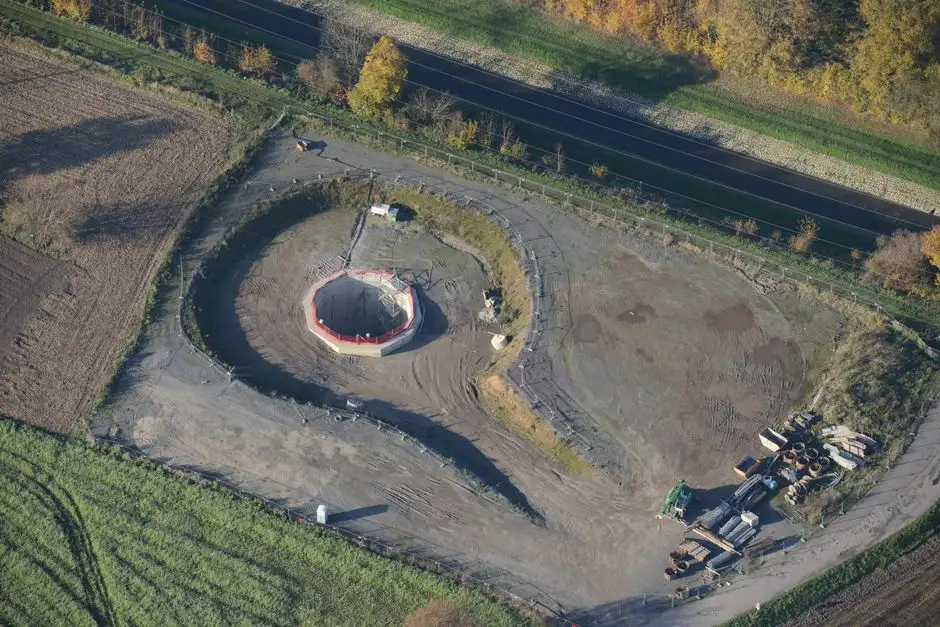
The realistic packaged menu for Brussels housing has four entries: SBR, MBBR, MBR, and containerized plug-and-play. Below-ground SBR and MBBR are "built into a concrete tank with the equipment installed inside" and are suited to projects with limited above-grade visibility and adequate excavation depth (Biocell). Above-ground containerized modules in fixed-bed biological reactor, MBBR or MBR configurations are the typical answer where the developer wants a short installation programme, phased capacity, or temporary cover during phased handovers (Biocell).
MBR is the same process family the Region has already endorsed. The Brussels South WWTP "will install GE's ZeeWeed 500D ultrafiltration membrane bioreactor (MBR) technology to treat one-third of the city's water" (Pollution Solutions Online), and the rationale was tighter discharge limits and Senne protection. A Brussels housing project that needs near-reuse effluent for irrigation, toilet flushing or tight ammonia limits is therefore choosing a process the Region has already validated at city scale.
For residential flows specifically, Biocell's stated range covers "small projects (up to 50 people) to larger projects (up to 5,000 people)" across both above-ground and below-ground offerings (Biocell), and that 50–5,000 people band maps directly onto the typical Brussels housing development size envelope. Inside that band, two project variables decide between SBR, MBBR and MBR in practice: the effluent-quality driver (tight ammonia, low TSS for Senne protection, water reuse) and the footprint constraint of a Brussels courtyard or basement plant room.
Energy is the third lever, and it is often decisive on OPEX. Biocell's patented SBR process "operates in cycles that include rest and settlement periods without electricity," which the supplier states "outperforms the market competition on electricity consumption" (Biocell). For a Brussels housing scheme where the plant runs against a residential service charge, that is a real number to put on the supplier's table. For context on OPEX drivers, the AAO process maintenance cost in 2026 analysis covers the comparable activated-sludge envelope.
Sizing a packaged STP for a Brussels development
City-scale context first. The Brussels South WWTP treats an average of 66 MLD with peaks of 120 MLD for over 400,000 residents (Pollution Solutions Online). That is a benchmark for the Region's largest asset, not a design target for a housing scheme, but it sets the order of magnitude a developer should expect to be quoted against for any large project.
For a residential development, the practical packaged envelope is the Biocell 50–5,000 people range (Biocell). Inside that envelope, the realistic flow band is set by the equipment a Brussels developer will actually be offered: a packaged underground A/O unit such as the WSZ underground integrated sewage treatment plant at 1–80 m³/h, fully automated and rated for below-grade or trailer-mounted deployment, or an above-ground HydropureWater integrated MBR system at 10–2,000 m³/day. The MBR envelope converts to roughly 0.4–83 m³/h, so the two product bands overlap and the choice between them is process- and footprint-driven, not capacity-driven.
Residential flows are not averages. Peak flow rate "typically occurs in the mornings, late afternoon and evenings, when people leave or return from work, school etc." and pollutant concentrations "such as ammonia and COD in residential wastewater can be quite high" because of cleaning products and the absence of grease traps (Biocell). The design must use a peak factor on the average dry-weather flow, not the average itself, when sizing equalisation, aeration and membrane area, and the supplier should be asked to show the peak factor used in the quote.
The minimum sizing input set a developer should hand to a supplier is: design population equivalent, per-capita flow assumption, peak factor, target effluent standard, available footprint, and burial depth. Without those, any flow band the supplier returns is decorative.
Comparing packaged STP options for Brussels housing
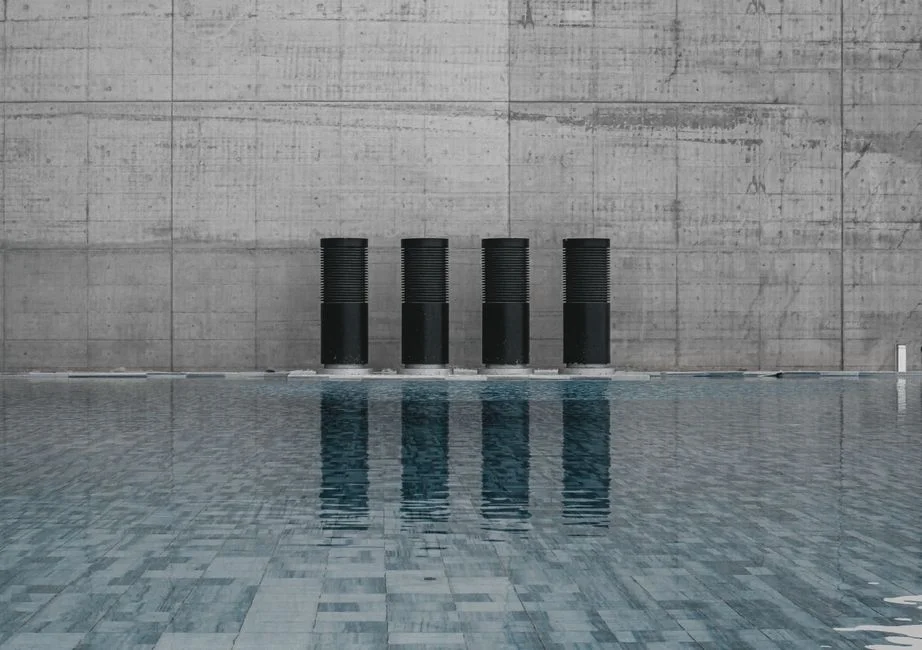
Below-ground SBR or MBBR in a concrete tank is the low-visual-impact option, suited to buried landscaping in a Brussels courtyard setting, at the cost of civil works (Biocell). Above-ground containerized MBR is the plug-and-play option, with no civil tank build, a faster programme, and effluent quality below 1 μm from the membrane stage (Biocell). For mobile or phased schemes the WSZ underground integrated sewage treatment plant at 1–80 m³/h can be trailer-mounted, and the HydropureWater integrated MBR system at 10–2,000 m³/day delivers the MBR envelope in a smaller footprint than conventional activated sludge. Where ultrafiltration membranes are specified, the DF series MBR flat-sheet membrane module is the replaceable element inside that envelope.
| Option | Configuration | Capacity band | Footprint | Programme | Best-fit driver |
|---|---|---|---|---|---|
| Below-ground SBR in concrete tank | Buried, batch cycle, no aeration in rest phase | Up to ~5,000 people (Biocell) | Low above-grade; tank volume drives excavation | Longest (civil tank first) | Low visual impact, low energy OPEX, standard effluent |
| Below-ground MBBR in concrete tank | Buried, attached-growth biofilm carriers | Up to ~5,000 people (Biocell) | Low above-grade; tank volume drives excavation | Longest (civil tank first) | Tight ammonia, smaller tank than SBR at the same load |
| Above-ground containerized MBR | Plug-and-play, membrane separation | 10–2,000 m³/day (~0.4–83 m³/h) per HydropureWater catalog | ~60% smaller than conventional activated sludge per HydropureWater catalog | Shortest (no civil tank) | Near-reuse effluent, water reuse, tight Senne-side discharge |
| WSZ underground A/O package | Buried or trailer-mounted, fully automated, no operator | 1–80 m³/h per HydropureWater catalog | Compact; landscaping above or mobile | Short to medium | Phased or mobile deployment, automation, mid-range effluent |
Decision levers between these options are footprint, programme length, effluent-quality target and whether the plant is permanent or mobile. A Brussels housing project on a tight courtyard with a Senne-side discharge consent will tend to MBR; a phased suburban scheme with a Vivaqua connection downstream will tend to SBR or MBBR. A temporary site office or a phase-one plant will tend to the WSZ envelope on a trailer.
Compliance, operation and maintenance for a Brussels packaged STP
Any Brussels-area wastewater investment, including Vivaqua's, has to stay compliant with EU Urban Wastewater Treatment Directive 91/271/EC and the Water Framework Directive 2000/60/EC, and the EIB's appraisal of Vivaqua is explicitly framed against those two instruments (EIB project 20200636). A packaged STP on a housing development carries the same compliance burden through its discharge consent, and the consent will be written against the same effluent parameters the Brussels South WWTP was upgraded to meet.
The Brussels South WWTP upgrade is the practical precedent. Discharge limits were the trigger, and the technology response was MBR (Pollution Solutions Online). A Brussels housing developer facing tight discharge limits should expect the same direction of travel: consent conditions will push the design towards MBR if the receiving water is the Senne or a Senne tributary, and a defensible bid will show how the proposed plant hits those limits at peak factor, not at average flow.
Operationally, a packaged residential plant must run without a dedicated operator and with very simple maintenance. Biocell's reference design has "no moving part submerged within the wastewater," allows standard maintenance "without emptying the tanks and without the need to enter the tanks," supports GSM alarm dialout, and can be continuously monitored through SCADA (Biocell). Those four features are a defensible scorecard for any Brussels supplier bid: no submerged moving parts, no tank entry for routine service, remote alarm, optional remote monitoring.
Energy is a material OPEX line and a fair supplier question. SBR-based packaged plants with rest and settlement periods that run without electricity are positioned to outperform constant-aeration designs on energy use (Biocell), and that claim should be quantified in kWh per m³ treated for the offered design. Comparable regional projects outside Brussels — for example, the packaged sewage treatment plant for Chittagong housing guide — confirm that the same O&M envelope applies to residential packaged plants in dense urban contexts.
Frequently Asked Questions
Which EU directives bind a packaged STP on a Brussels housing development?
The Urban Wastewater Treatment Directive 91/271/EC and the Water Framework Directive 2000/60/EC, the same two directives the EIB requires Vivaqua to maintain compliance with under its 2023-2027 investment programme (EIB project 20200636). The packaged plant's discharge consent will be written against parameters traceable to those instruments, and the Brussels South WWTP MBR upgrade shows the practical compliance direction for tight limits (Pollution Solutions Online).
Which packaged technology should a Brussels developer shortlist: SBR, MBBR or MBR?
All three are credible, and Biocell offers them in both below-ground concrete-tank and above-ground containerized form across a 50–5,000 people range (Biocell). MBR is the same process family the Region validated at the Brussels South WWTP for tight discharge limits and Senne protection (Pollution Solutions Online), so it is the right answer when the consent or a water-reuse target demands near-reuse effluent. SBR or MBBR is the right answer when the consent allows a standard effluent and the developer wants lower energy OPEX or a buried installation.
How many people can a packaged STP serve on a Brussels housing site, and what capacity should I ask for?
The realistic packaged envelope is 50 to 5,000 people (Biocell), which corresponds to a flow band of roughly 1–80 m³/h for an underground A/O package such as the WSZ series, or 10–2,000 m³/day for an integrated MBR per the HydropureWater product catalog. The supplier will need the design population equivalent, per-capita flow, peak factor, target effluent, footprint and burial depth before any of those numbers can be turned into a defensible bid.
What should a Brussels developer score supplier bids on before signing an order?
A Brussels developer should score each bid on four axes: compliance fit (effluent guarantee against the 91/271/EC and 2000/60/EC parameters the consent will reference), technology fit (SBR, MBBR or MBR with the Region's MBR precedent in mind), envelope fit (capacity band, footprint, burial depth, programme length), and OPEX fit (kWh/m³, no submerged moving parts, remote alarm, SCADA option, no-operator maintenance as per Biocell's reference design). Ask each bidder to quote against the same input set, the same peak factor, and the same effluent standard; bids that diverge on those inputs cannot be compared. No published price benchmark exists in the research for a Brussels housing project, so the buyer must request firm quotations against a shared input pack rather than rely on a typical range.