
Why Marrakech Needs a Locally Tuned Effluent Treatment Plant in 2026
Groundwater depletion across Morocco, with Marrakech's Tensift basin documented as one of the most stressed aquifers in the country, has shifted the design brief for any new Marrakech wastewater treatment installation toward reuse-quality effluent, not just compliance discharge (Hssaisoune et al., Geosciences, 2020, https://doi.org/10.3390/geosciences10020081). Integrated water resources management in Morocco (Kadi & Ziyad, 2018, pp. 143–163) reinforces that bias, and the World Bank–related policy summary by Bekhechi et al. (2017, pp. 1–38) frames urban water-scarcity management as the operational reality a 2026 designer must respond to. The Marrakech tourism and agri-food economy adds a hydraulic-load pattern a generic European spec does not capture: hotel occupancy swings around seasonal peaks, and Friday-prayer loadings on mosque-adjacent commercial districts create sharp diurnal peaks that the equalization and biological stages must explicitly absorb.
For a Marrakech site, an effluent treatment plant (ETP) is therefore the engineered system that takes wastewater from the boundary of an industrial, hotel, hospital, or residential site and delivers an effluent compliant with Official Bulletin n° 5448 of 17 August 2006 (Moroccan Ministry of the Environment), with optional reuse for irrigation, cooling, or toilet flushing. The reuse pathway is the differentiator between a plant that merely discharges and one that offsets a hotel's or hospital's freshwater bill against a documented effluent-grade specification.
Marrakech Influent Reality: What the Local Data Actually Shows
The only published, peer-reviewed Marrakech influent dataset currently available is the ertjournal.org characterization of Mohammed VI University Hospital, sampled every 15 days between October 2022 and January 2023 (Ecological Engineering & Environmental Technology, 2022–2023). That study recorded average COD 750 mg/L, BOD₅ 512.14 mg/L, and TSS 879.86 mg/L — values that the authors explicitly note already exceed the Moroccan recommended discharge standards referenced in Bulletin n° 5448. The same study measured total phosphorus 5.92 mg/L, sulfates 427.97 mg/L, nitrates 7.39 mg/L, and nitrites 0.60 mg/L, the parameter set a designer needs for nutrient balancing and for any reuse-for-irrigation discussion. Fecal coliforms reached 12 × 10⁶ CFU/100 mL, with nosocomial Staphylococcus aureus detected, which makes disinfection a non-negotiable unit operation rather than an optional polish.
The COD/BOD₅ ratio of 1.46 reported in the same study is the single most useful number for selecting biological treatment. A ratio near 1.5 indicates moderate biodegradability — the carbon is amenable to aerobic or anaerobic biology, but not as readily as the 2.0+ ratio typical of strong municipal sewage. Process designs that assume textbook municipal ratios will over-aerate and under-size sludge handling. The earlier Marrakech hospital survey by Ogri et al. (2016, Desalination and Water Treatment, 57(36), 17061–17074) confirms this is a repeated local pattern, not a one-off measurement. The honest limitation is that the Marrakech dataset is hospital-dominated; for industrial sites such as tanneries, olive mills, or textile operations near the city, site-specific sampling is mandatory and the Mohammed VI numbers must not be extrapolated.
| Parameter | Marrakech influent (Mohammed VI UH, 2022–2023) | Design implication |
|---|---|---|
| COD (avg) | 750 mg/L | Sets aeration basin oxygen demand and sludge yield basis |
| BOD₅ (avg) | 512.14 mg/L | Biological stage sizing and F/M ratio target |
| TSS (avg) | 879.86 mg/L | Equalization and primary clarification solids load |
| Total phosphorus | 5.92 mg/L | Nutrient-removal or chemical-precipitation decision |
| Sulfates | 427.97 mg/L | Concrete and pipe corrosion class for headworks |
| Nitrates | 7.39 mg/L | Denitrification stage sizing |
| Nitrites | 0.60 mg/L | Toxicity check for biological stage |
| Fecal coliforms | Up to 12 × 10⁶ CFU/100 mL | Mandatory disinfection log-reduction target |
| COD/BOD₅ | 1.46 | Moderate biodegradability — biology-led design, not physico-chemical |
Process Train Selection: From Screening to Disinfection for a Marrakech ETP

Headworks on a Marrakech plant should start with rotary mechanical bar screening sized for the rag, fiber, and solid content typical of mixed Marrakech sewage, including the tourism-driven diurnal peak. The Mohammed VI dataset's TSS of 879.86 mg/L (2022–2023) confirms that an equalization basin is required, both to buffer peak solids and to dampen the BOD₅ shock of 512.14 mg/L before it hits the biological stage. A Marrakech hotel or hospital retrofit where footprint is constrained is the classic case for an integrated MBR membrane bioreactor system, because MBR delivers near-reuse effluent and tolerates the variable loads that a tourism-driven site produces. Where shock loads dominate and the operator prefers a simpler sludge line, an SBR is the right workhorse, and the ertjournal.org authors explicitly recommend SBR or MBR for this Marrakech profile.
For the tertiary and reuse stage, the Mohammed VI fecal coliform load of 12 × 10⁶ CFU/100 mL rules out any design that omits disinfection, and the pharmaceutical-residue concern noted in the ertjournal.org study justifies budgeting for an advanced oxidation step (ozone, UV/H₂O₂) ahead of final polishing. Sludge handling should be a plate-and-frame filter press sized from the BOD₅-derived yield, with the caveat that the Marrakech number is a basis for design only; site-specific yield testing is required before procurement. The unit operations a designer must verify against Official Bulletin n° 5448 of 17 August 2006 and the ONEP 1999 quantitative and qualitative characterization guide are the organic parameters (COD, BOD₅), solids (TSS), nutrients, and microbiological indicators — the same families present in the Mohammed VI dataset. The full domestic-sewage context for Morocco is covered in the domestic sewage treatment in Morocco 2026 engineering guide.
Compliance Map: Moroccan Discharge and Reuse Limits for a 2026 Marrakech ETP
The legal anchor for any Marrakech discharge compliance file is Official Bulletin n° 5448 of 17 August 2006, issued by the Moroccan Ministry of the Environment, as cited in the ertjournal.org Mohammed VI study. Sampling and laboratory methodology must follow ONEP (1999), Quantitative and qualitative characterization of wastewater / Good practice guide / Laboratory management of water quality, Rabat, 60 pp., with sample preservation and handling per ISO 5667-3. The parameter families the designer must show in the compliance file mirror the families measured in the Marrakech dataset: organics (COD, BOD₅), solids (TSS), nutrients (total phosphorus, nitrates, nitrites), and microbiological indicators (fecal coliforms). Specific numeric limits must be read from the official Bulletin n° 5448 text and inserted into the design basis, not inferred from secondary sources. The reuse-to-irrigation pathway should be cross-checked against the Moroccan water-scarcity literature (Hssaisoune et al., 2020; Kadi, 2018) so the design rationale is documented, and the 2026 industrial rules are mapped in the 2026 industrial effluent discharge guidelines.
| Parameter family | Marrakech influent (Mohammed VI UH, 2022–2023) | Reference document for limit | Buyer action |
|---|---|---|---|
| COD, BOD₅ | 750 / 512.14 mg/L | Bulletin n° 5448 (17 Aug 2006) | Insert numeric limit from official text |
| TSS | 879.86 mg/L | Bulletin n° 5448 (17 Aug 2006) | Insert numeric limit from official text |
| Total phosphorus | 5.92 mg/L | Bulletin n° 5448 (17 Aug 2006) | Confirm if nutrient-removal required for reuse |
| Nitrates / Nitrites | 7.39 / 0.60 mg/L | Bulletin n° 5448 (17 Aug 2006) | Confirm denitrification scope |
| Fecal coliforms | Up to 12 × 10⁶ CFU/100 mL | Bulletin n° 5448 (17 Aug 2006) | Define log-reduction target and disinfectant dose |
| Sampling method | — | ONEP (1999); ISO 5667-3 | Submit method statement with design report |
Buyer's Framework: Packaged, Containerized, or Civil-Built ETP for a Marrakech Site
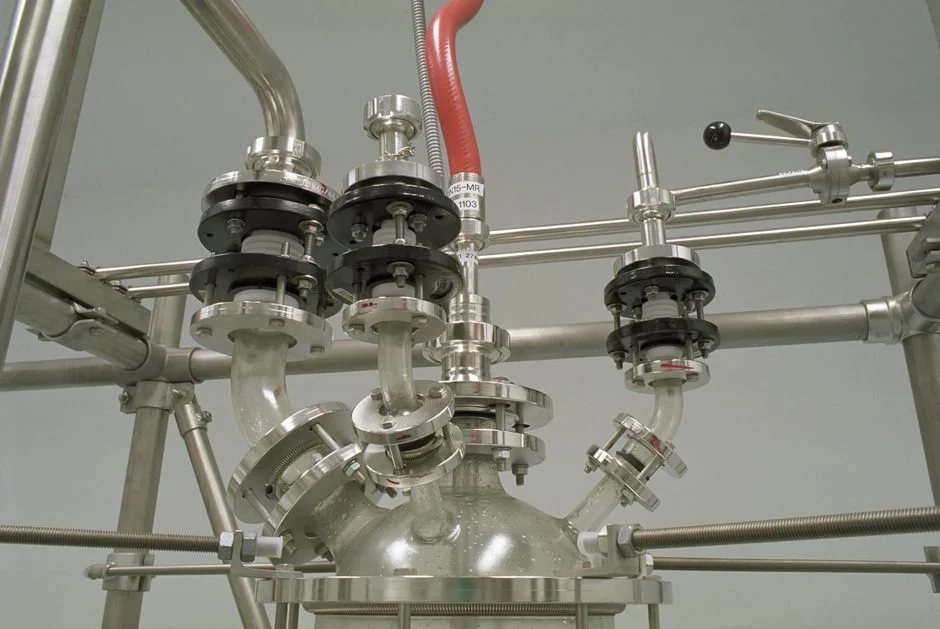
For the 10–2,000 m³/day band that covers most Marrakech hotels, hospitals, residential compounds, and small factories, an MBR-based plant gives near-reuse effluent and a footprint materially smaller than a conventional activated-sludge layout, which matters on dense medina-adjacent sites. An underground packaged sewage treatment plant removes the visual and noise footprint that frequently blocks Marrakech permits, particularly in heritage or tourism zones where surface structures face pushback from local authorities. For fast-track deployments — events, seasonal tourism peaks, temporary industrial camps — a containerized MBR minimizes on-site civil work and shortens the path from purchase to commissioning. Civil-built ETP remains the right answer for Marrakech municipal-scale flows and for tannery, olive-oil, or large textile sites where influent variability, land availability, and long-term operating cost dominate the decision. For hospital-specific flows, a medical and hospital wastewater treatment system configured for the Mohammed VI effluent profile is the obvious starting point.
Cost drivers a buyer must require every Marrakech supplier to itemize, rather than accept as a lump sum, are influent characterization, peak flow factor, disinfection stage, sludge handling, automation level, and certification of instruments against Moroccan standards. A single-line quote that does not break out these items should be treated as incomplete.
| Format | Typical Marrakech flow band | Best fit | Key trade-off |
|---|---|---|---|
| Packaged MBR (above-ground skid) | 10–500 m³/day | Hotel, small hospital, residential compound | Fast install, requires floor area and access |
| Underground packaged plant (WSZ-type) | 1–80 m³/h | Heritage-zone, landscaping-constrained, medina-edge sites | Concealed footprint, higher excavation cost |
| Containerized MBR | 10–200 m³/day | Seasonal tourism peaks, events, temporary industrial camps | Shortest delivery, limited future expansion |
| Civil-built ETP | >500 m³/day | Municipal, tannery, olive-oil, large textile, agri-food clusters | Lowest unit cost at scale, longest lead time |
Sizing a Marrakech ETP: Flow, Load, and the Peak-Factor Trap
The standard textbook peak factor of roughly 1.5× for domestic sewage does not transfer to a Marrakech tourism site, where the daily occupancy curve is driven by hotel check-in/check-out, restaurant service peaks, and the Friday-prayer concentration around mosque districts. A defensible peak factor for a Marrakech hotel should be derived from the actual occupancy profile, not borrowed from a European municipal guideline. The Mohammed VI study population and occupancy pattern is the closest published local reference and should be used as a starting basis (ertjournal.org, 2022–2023). The Marrakech BOD₅ loading of 512.14 mg/L and TSS of 879.86 mg/L are the design basis unless site-specific sampling proves otherwise, and that basis must be documented in the compliance file. Equalization volume should be sized to dampen the diurnal peak, not the daily average, and Marrakech tourism plus Friday load patterns are the controlling case. Where the site will discharge to a municipal sewer, the local authority's pre-treatment envelope must be confirmed before the MBR or SBR sizing is locked, and a dissolved air flotation unit is often the practical answer where the envelope demands low TSS and FOG ahead of the biological stage.
Supplier Shortlist: How to Evaluate an ETP Supplier for Marrakech in 2026
A Marrakech buyer should require documentary evidence of past ETP commissioning in Morocco or comparable North African sites, not just equipment sales. The supplier must offer a process guarantee tied to the numeric limits in Official Bulletin n° 5448 of 17 August 2006, with a clear liquidated-damages clause for non-compliance. The offered MBR membranes, UV or ClO₂ systems, and instrumentation should have a documented spares pipeline accessible in Morocco, because membrane replacement lead time is a recurring Marrakech pain point. The contract should include written factory acceptance test (FAT) and site acceptance test (SAT) protocols, with documentation in Arabic or French for the local authority submission. Finally, cross-check supplier claims against neutral directories and against the Moroccan water-scarcity policy literature (Bekhechi et al., 2017; Hssaisoune et al., 2020) before signing — and use the scalable digital twin providers for water and wastewater 2026 buyer guide to evaluate any supplier proposing a digital-twin layer on top of the plant.
Frequently Asked Questions
What does an effluent treatment plant in Marrakech actually cost in 2026, and what drives the price?
The ertjournal.org and policy sources reviewed here do not publish a 2026 unit price for a Marrakech ETP, so a buyer should not accept a single lump-sum quotation. Request an itemized split of equipment, civil works, instrumentation, disinfection, sludge handling, commissioning, and two years of spares, and benchmark each line against the Mohammed VI University Hospital loading basis (COD 750 mg/L, BOD₅ 512.14 mg/L, TSS 879.86 mg/L, 2022–2023).
How do I shortlist ETP suppliers for a Marrakech project, and what red flags should I exclude?
Require documentary proof of past commissioning in Morocco or comparable North African sites, a process guarantee tied to the numeric limits in Official Bulletin n° 5448 of 17 August 2006, and written FAT/SAT protocols in Arabic or French. Exclude suppliers who offer only equipment sales without a commissioning reference, who cannot name a membrane spares pipeline, or who refuse a liquidated-damages clause for non-compliance.
What flow range can a packaged MBR handle for a Marrakech hotel or hospital?
For a Marrakech hotel or hospital, a packaged MBR is normally proposed in the 10–500 m³/day band; beyond that, a containerized MBR or civil-built ETP becomes the more cost-effective delivery format. The Marrakech-specific design load is the BOD₅ 512.14 mg/L and TSS 879.86 mg/L from the Mohammed VI University Hospital study (2022–2023), which should be the sizing basis unless site-specific sampling proves otherwise.
How long does it take to design, build, and commission an ETP in Marrakech, including import and customs?
None of the reviewed sources publishes a current Marrakech lead-time figure, so a buyer must request a supplier-specific schedule covering design approval, equipment fabrication, shipping, Moroccan customs clearance, on-site civil works, commissioning, and the sampling protocol per ONEP (1999) and ISO 5667-3. Treat any quoted lead time that does not break out customs and SAT separately as incomplete.
Related Equipment
- medical and hospital wastewater treatment system — specifications, capacity range, and technical data