
Why Wood Processing Wastewater Is a Filter-Press Case
Wood plants generate four filter-press-relevant streams, and the choice of duty changes the design. Clarifier underflow from debarking carries bark fines and grit; fibreboard and plywood press liquor carries dissolved and colloidal organics; biological sludge from activated-sludge effluent treatment carries cell biomass; and black liquor (alkaline from kraft, or acidic from sulphite or acid pretreatment) carries dissolved lignin. A filter press is well suited when the feed is already thickened and the goal is a stackable cake or a recovered solid; it is poorly suited when the feed is dilute enough that the press spends its time pumping water.
The published 50–60% dry-solids ceiling for pulp and paper sludge in mechanical dewatering reflects the fibre matrix that cellulose and hemicellulose build around the water, and it is higher than the ~20% dry-solids level associated with conventional mixed sludge (MDPI Processes 2024). Cakes around 80% moisture are common for general sludge, and the engineer must decide which number applies to their stream before sizing the unit. Below about 2% w/w feed solids, mechanical dewatering is rarely economic, and a dissolved air flotation pre-thickener or lamella ahead of the press is the cheaper route to the solids concentration the press requires.
Process Position and Conditioning Upstream of the Press
The press is the last unit in a chain, and the chemistry of that chain decides whether the press can hit its cake-solids target. The published full-scale retrofit conditioned its feed with 20% lime solution plus steam before the press, and bound-water release and odour control were achieved in the same step (MDPI Processes 2024). Lime neutralised sulphides into non-volatile forms at alkaline pH, reducing the hydrogen sulphide risk that wood-line sludges develop when a clarifier goes anaerobic. The dosing rate must be held stable across shifts, and an automatic chemical dosing skid is the practical way to do that without manual drift. The MDPI 2024 retrofit also reported that the lime-plus-steam step added about 12% to the slurry volume sent to the press, which is a real hydraulic number for the mass balance. For a black-liquor-derived lignin duty, the literature reports that an acidic black liquor stream does not require a pH adjustment before filter-press extraction, so the upstream train is simpler than the alkaline kraft case (Journal of Korea TAPPI, Im et al. 2024). Polymer selection and dose belong in the same conditioning envelope; both floc strength and cake permeability feed into the cycle-time calculation on the next page.
Recessed-Plate vs Membrane-Plate Selection
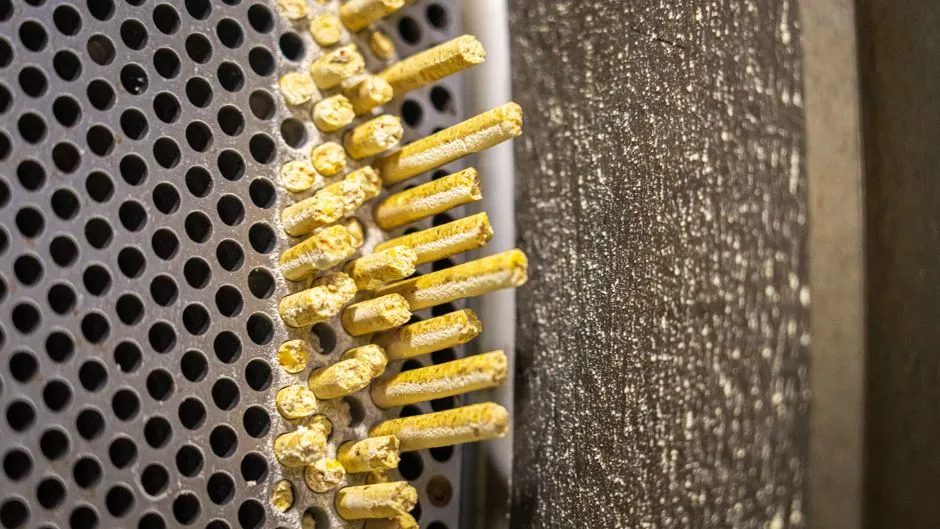
Recessed (chamber) plates and membrane plates solve different problems on wood-fibre sludge. Recessed plates are fed at line pressure, are mechanically simpler, have fewer wearing parts, and suit most mixed wood-line sludges. Membrane plates add a squeeze phase at the end of the cycle using compressed air or water against an elastomeric diaphragm, and that squeeze is the route to the upper end of the 50–60% DS range for fibrous pulp and paper sludge, because it overcomes the bound-water limit that fixed recessed plates leave behind (MDPI Processes 2024). The general operating description of a commercial filter-press series lists both recessed and membrane plate options, confirming the two-mode architecture is standard in the equipment market (Ecologix FP-series description). Cloth choice interacts with plate choice: a plate-frame study on a CaCO3 surrogate reported cotton cloth at 4% w/w feed delivered 56.00% solute removal, outperforming drill cloth (BRIN JTL 218), and the same cloth-grade logic must be re-confirmed in pilot when scaling from a mineral surrogate to wood fibre. The lignin extraction study on acidic black liquor combined filter press and filter-cloth selection as one design decision, and reported that molecular weight and polydispersity of the extracted lignin were consistent with or without a wash step (Journal of Korea TAPPI, Im et al. 2024) — meaning the cloth and the press together controlled product quality.
| Parameter | Recessed (Chamber) Plate | Membrane Plate |
|---|---|---|
| Feed driving force | Line-pressure feed pump only | Line-pressure feed, then diaphragm squeeze |
| Typical cake DS on mixed sludge | ~20–35% DS, common 80% moisture cakes (MDPI Processes 2024) | Upper end of 50–60% DS range for fibrous pulp/paper sludge (MDPI Processes 2024) |
| Mechanical complexity | Lower; fewer wearing parts | Higher; requires compressed air or water squeeze supply |
| Cloth selection sensitivity | High — cloth is the main filter medium | High — same medium, plus squeeze distribution across the diaphragm |
| Capital cost envelope | Lower | Higher, justified by cake dryness and lower haul/disposal mass |
| Best fit on wood-line duty | Mixed wood-line sludges where 35% DS is acceptable | Pulp/paper fibrous sludge and lignin extraction where higher DS or product purity drives the design |
For most wood-line retrofits, the workflow is: pilot the recessed plate first to anchor cycle time and cloth life, then re-pilot with a membrane plate if the cake-solids target sits above 35% DS or the lignin-purity spec demands the squeeze phase. A plate and frame filter press with interchangeable plate sets is the usual way to keep both options open during commissioning.
Sizing the Filter Press: Area, Plates, and Cycle Time
Engineers must collect the following data before sizing: feed solids concentration in % w/w, volumetric flow in m³/h or m³/day, target cake dry solids (35% for general mixed sludge, 50–60% for fibrous pulp and paper sludge per MDPI 2024), target filtrate quality, available shift hours, and the cake disposal route. Plate count and filtration area follow from the dry-solids mass balance — total dry solids per shift divided by cake thickness per cycle divided by cycle time — and published plate-and-frame equipment in the HydropureWater range covers 1 m² to 500 m² of filtration area, which spans pilot to multi-line mill scale (HydropureWater plate and frame filter press catalog). The hydraulic balance must include the 12% volume addition from a lime-plus-steam conditioning step if the upstream train uses that route (MDPI Processes 2024). Cycle time on wood-fibre sludge is dominated by filling and pressing phases; membrane plates shorten the pressing phase but require a compressed-air or water squeeze supply, which becomes its own utility line in the P&ID. The sizing workflow is: (1) confirm feed % w/w from jar tests, (2) decide target DS from the disposal or by-product spec, (3) calculate the dry-solids throughput per shift, (4) select filtration area and plate count from the resulting cake-mass-per-cycle, and (5) iterate on cycle time until the press fits the available shift hours. Pilot confirmation is required at every step that depends on wood-fibre rheology rather than the CaCO3 surrogate used in the plate-frame cloth study (BRIN JTL 218).
Expected Performance, Filtrate Quality, and Operating Cost
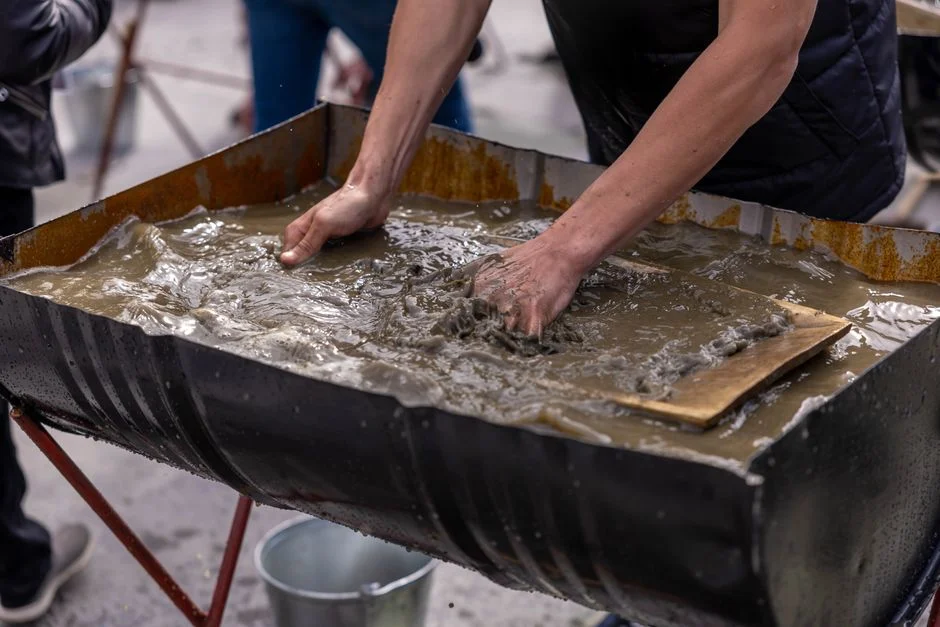
The closest published full-scale retrofit moved cake solids from 19% to 35% and cut annual disposal cost by up to 50%, with a payback period of 1.5 years, and the filtrate met local discharge regulations directly with no further treatment (MDPI Processes 2024). That retrofit was on polymer sludge, not wood fibre, and must be cited as an analogue rather than a wood-line case. For a wood-fibre stream the cake-solids ceiling is higher — up to 50–60% DS is published for pulp and paper sludge in mechanical dewatering (MDPI Processes 2024) — but the engineer must pilot to confirm, because the analogue number depends on the actual fibre and lignin mix. A lignin by-product route is credible on a different axis: a filter press on acidic black liquor delivered 87.2–89.2% lignin purity with consistent molecular weight, indicating commercial-scale potential for a press specified for both disposal and by-product duty (Journal of Korea TAPPI, Im et al. 2024). Filtrate quality in the polymer retrofit was discharge-ready; on a wood-fibre feed the engineer should expect suspended solids to be low but COD to be non-trivial, and should not assume direct discharge without checking local pulp and paper pretreatment compliance guide limits.
When a Filter Press Is the Wrong Choice
Three wood-line scenarios point to a different device. Very dilute feeds below about 2% w/w need a thickener — DAF, lamella, or gravity clarifier — ahead of any press to keep filter area and cycle count economic, and the press should be specified against thickened underflow, not raw clarifier overflow. Highly abrasive bark-fibre or grit-bearing sludges shorten cloth life dramatically; a rotary drum or screw press is often the lower-maintenance option for primary clarification of such streams, and a rotary mechanical bar screen ahead of any dewatering device reduces ragging and grit carry-over. For very high throughputs of low-solids biological sludge, a belt filter press remains a US-EPA-documented duty (US EPA fact sheet EPA 832-F-00-057, September 2000) and may have a lower installed cost than a plate-and-frame press of equivalent hydraulic capacity. None of these cases kill the filter-press option, but each one rebalances the trade-off between capital cost, cake dryness, and maintenance burden. For a related cross-industry comparison, see the filter press design for rendering plant wastewater and filter press design for coffee processing wastewater guides.
Frequently Asked Questions
What is a defensible budget and payback figure for a wood-line filter press retrofit?
The closest published full-scale retrofit reported cake solids moving from 19% to 35%, annual disposal cost savings of up to 50%, and a payback of 1.5 years (MDPI Processes 2024). That case is on polymer sludge and must be cited as an analogue, not a wood-fibre case. For a defensible wood-line number the buyer must request a vendor quotation tied to feed % w/w, target cake DS, and shift hours, because the analogue data does not translate to wood fibre without a site-specific mass balance.
How do I size plate count and filtration area, and what is a realistic lead time?
Engineers must collect the following inputs: feed solids in % w/w, volumetric flow in m³/h or m³/day, target cake DS (35% for mixed sludge, 50–60% for fibrous pulp and paper sludge per MDPI 2024), shift hours, and disposal route. Plate count and filtration area follow from a dry-solids mass balance against cycle time, and the published plate-and-frame range of 1 m² to 500 m² covers pilot to multi-line mill scale (HydropureWater catalog). Lead time depends on plate count, plate type, and PLC scope; a defensible enquiry must ask the vendor to quote lead time against the calculated plate count rather than a generic model number.
Will the filter press hit 50–60% dry solids on a wood-fibre sludge?
Published data on pulp and paper sludge in mechanical dewatering cites a 50–60% DS ceiling (MDPI Processes 2024), but that ceiling depends on the fibre and lignin mix and on whether a membrane plate is used for the final squeeze. The engineer must pilot on the actual wood-line feed at the target cake thickness before committing to a procurement spec.
What compliance and pretreatment risk should I flag for a wood-line filter-press installation?
Filtrate quality from the polymer-sludge retrofit met local discharge regulations without further treatment (MDPI Processes 2024), but a wood-fibre filtrate will carry dissolved COD and colour. The engineer must check the local 40 CFR Part 430 pulp and paper effluent limits and any site-specific pretreatment permit before assuming direct discharge.