What a Sludge Dryer Actually Does in 2026
A sludge dryer is the post-dewatering step that takes mechanically thickened cake — typically 18-25% dry solids from a centrifuge, belt press, or a plate and frame filter press — and drives moisture down to a level where transport, disposal, or reuse becomes economic. The purpose is volume reduction: less mass to haul, lower tipping fees, and a stable product that can be land-applied, incinerated, or sent to energy recovery.
Mechanical dewatering and thermal or solar drying are not interchangeable. Mechanical dewatering uses gravity, pressure, or centrifugal force to separate free water; thermal drying uses heat to remove the bound water that mechanical methods cannot reach. The thermal route is the focus of this comparison.
Two heat-transfer principles dominate the thermal dryer market. Direct dryers pass hot combustion gases or heated air through the sludge. Indirect dryers transfer heat through a heated surface — typically a jacketed vessel, hollow rotor, or hollow paddles — with steam or thermal oil as the heating medium. Indirect designs run with much lower airflow, which simplifies air-emission control and reduces the size of the dust and odor treatment package.
The reason a plant installs any dryer is one or more of four drivers: volume reduction, pathogen stabilization, energy recovery, or transport economics. The correct technology follows from which driver dominates at the site, not from a generic "best dryer" ranking. Polish field work documented in Technical Transactions (2017) notes that solar-dried sludge can be directed to energy recovery as a viable reuse pathway, illustrating that the reuse intent shapes the technology choice as much as the feed sludge does.
Sludge Drying Beds: Low-Cost but Climate-Locked
Sludge drying beds remain the lowest capital baseline in any comparison, but they are climate-locked and land-hungry. The four variants documented by Water & Wastewater are conventional sand and gravel beds, paved beds, vacuum-assisted beds, and solar beds. All rely primarily on drainage and natural evaporation, with mechanical or solar assistance added on top.
The first constraint is climate. In regions with high humidity, frequent rain, or sustained low temperatures, evaporation rates fall and the drying cycle lengthens. Winter operation can effectively halt throughput, forcing the plant to hold wet cake in storage or accept downstream overflow. The second constraint is footprint. Drying beds require large contiguous areas, and the land cost in urban or peri-urban sites often erases the operating-cost advantage. Scaling throughput means acquiring more land and building more beds, which extends project timelines and pushes total cost upward.
The third constraint is labor. Sludge loading, surface cleaning, vegetation and insect control, drainage unblocking, and post-drying cake removal all require manual intervention. Labor cost and labor availability frequently dictate whether a bed-based scheme is viable at all. The fourth constraint is environmental risk: odor release, vector attraction, dust from dried cake, and — most critically — leachate. Because leachate can carry contaminants into soil and groundwater, regulatory frameworks in many jurisdictions prohibit the use of open beds for sludge classified as hazardous or toxic. For those sludges, enclosed mechanical or thermal systems are mandatory.
Used within their limits — non-hazardous municipal sludge, cheap land, dry climate, available labor — beds are still a defensible 2026 choice. Used outside those limits, the disadvantages compound quickly and the plant inherits operational risk that is hard to retire later.
Solar and Greenhouse Drying: Renewable, but Site-Specific
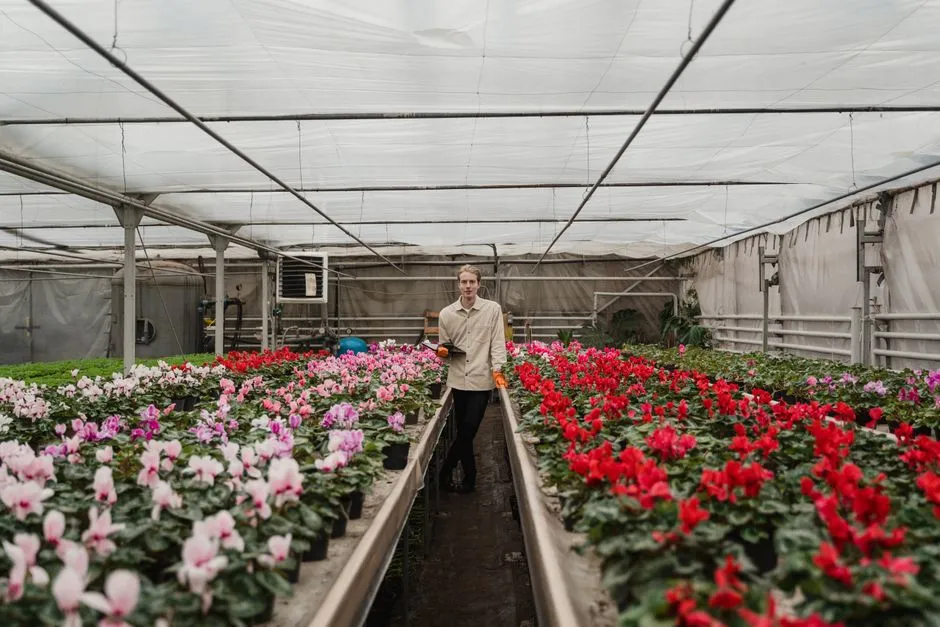
Solar drying uses greenhouse structures or covered basins to capture solar energy and drive evaporation, producing a cake that can reach solids levels suitable for energy recovery. Technical Transactions (2017) reports that over roughly a decade, almost thirty solar or hybrid greenhouse sewage sludge facilities were built in Poland, demonstrating that the technology is proven at municipal scale rather than experimental.
The advantages are real. Operating energy is largely free once the structure is built, the renewable energy narrative is strong for permitting and stakeholder communication, and the output can be routed to combustion, pyrolysis, or co-incineration as a fuel substitute. For a plant whose disposal route is energy recovery and whose climate supports consistent solar gain, solar drying is a serious contender.
The disadvantages are equally real. Capital cost is dominated by the greenhouse structure, covers, liners, mixing and turning equipment, and odor control. Climate dependence remains: a cold, cloudy, or rainy site will see throughput collapse in the same way as open beds. Footprint is large compared with enclosed thermal systems. Operation is not unskilled — turning cycles, moisture monitoring, odor management, and cake removal all require trained staff and consistent execution.
Solar is therefore a fit-for-purpose answer for regions with reliable sun, available land, a labor force that can run a biological-process-style operation, and a disposal route that values a high-solids fuel-grade product. Outside that profile, the same physics that makes solar attractive in one site makes it uneconomic in another.
Indirect Thermal Dryers: Paddle vs Thin Film
Indirect thermal dryers are the workhorses of enclosed sludge drying, and within that family the comparison between paddle (screw) dryers and thin film dryers is the one buyers will be asked about most. Both are conduction dryers that use a heated surface to evaporate water with minimal airflow, typically heated by steam or thermal oil. Both share the advantages LCI Corp attributes to indirect drying: lower airflow, smaller footprint, and simpler operation than many direct dryers.
The mechanical difference drives the operational difference. A paddle dryer uses a heated dual auger to convey sludge through a "thick" sludge layer inside the vessel. Heating the augers themselves is essential — without heated augers the vessel would have to be much larger to expose enough surface area to dry the same mass. The paddle dryer cannot self-clean: additional sludge must be fed to push residual material out, and manual removal is required before service.
A thin film dryer uses a single rotor fitted with blades that spread sludge into a thin film across the heated vessel wall. The rotor itself is not heated; only the wall and the thin film transfer heat. The blade is the wear part, and in thin film designs the blade is bolted on, small, and inexpensive to stock. Annual inspection and replacement is straightforward and does not require special maintenance access.
Maintenance and spare-parts risk are where the buying decision often turns. Per LCI Corp, paddle dryers have two main wear items — the augers and the shaft seals. Augers are expensive to stock and carry long procurement lead times. If an auger fails and no spare is held, the plant may face a long-term alternative disposal route with materially higher cost. Thin film blades, by contrast, are recommended for annual replacement, are inexpensive, and can be held in local stock without straining the spares budget.
| Parameter | Paddle (Screw) Dryer | Thin Film Dryer |
|---|---|---|
| Heat transfer principle | Indirect conduction via heated vessel wall and heated augers | Indirect conduction via heated vessel wall; rotor is not heated |
| Sludge layer handling | Thick layer, auger-heated to expose surface area | Thin film spread by blades for efficient heat transfer |
| Heating medium | Steam or thermal oil (typical) | Steam or thermal oil (typical) |
| Airflow / emissions | Low (indirect) | Low (indirect) |
| Footprint | Compact for throughput | Compact for throughput |
| Main wear parts | Augers and shaft seals | Bolted-on blades |
| Wear-part replacement | Manual sludge removal required; auger replacement is a major service | Annual inspection/replacement; small, low-cost, stockable parts |
| Spare-parts risk | Augers expensive, long lead time; failure can force alternative disposal | Blades inexpensive, short lead time, easy to stock locally |
| Self-cleaning between batches | No — requires manual cleaning after feed-through | Rotor and blade design avoids the manual clean-out step described for paddle |
The buyer takeaway: paddle dryers are robust and tolerate thick, viscous sludge, but they impose a long-term spare-parts and maintenance risk that remote or thin-staffed plants should price in carefully. Thin film dryers trade some thick-sludge tolerance for faster, cheaper, lower-risk maintenance. For most municipal applications, the trade favors thin film once the spare-parts risk is weighed in dollars.
Other Indirect Drying Technologies Worth Naming
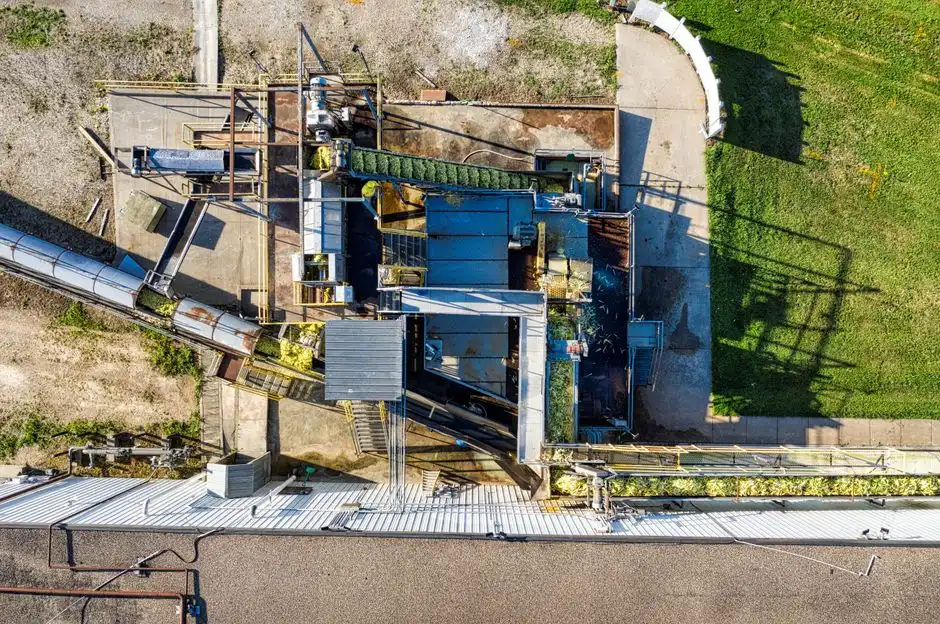
Several other dryer classes appear in vendor proposals and deserve a place in any honest comparison. AMCON's product literature covers most of them.
Drum and double-drum dryers expose dewatered cake directly to a hot air stream inside a rotating drum. AMCON's SP series uses a double-drum structure to increase drying area while keeping the unit compact, targeting sludges with moderate moisture where uniform drying is the priority. Belt dryers spread sludge across a long conveyor while hot air is blown through the bed, suiting high-moisture feeds and large continuous industrial throughputs. Fluidized-bed dryers suspend sludge particles in a stream of hot air or steam, achieving high heat-transfer rates and short residence time — useful where the sludge is granular and the target is fast, uniform moisture removal.
Paddle and disk dryers are sometimes grouped together. Paddle dryers, covered in the previous section, use a heated agitator in a jacketed trough. Disk dryers stack circular heated disks on a central shaft; sludge passes between the disks and is dried by the large heated surface area in a compact envelope. Both are well-suited to highly viscous sludge. Vacuum dryers operate at reduced pressure inside a sealed chamber, allowing drying at low temperatures where heat-sensitive sludge components must be preserved.
For sludges classified as hazardous or toxic, the consistent pattern across academic and vendor sources is to favor enclosed systems — indirect paddle, thin film, disk, or vacuum — over open beds, but the specific classification that triggers the requirement is set by the local regulator and must be confirmed before specification. A "non-hazardous" industrial sludge from a food plant is a very different specification case from a leachate-bearing hazardous waste.
Sludge Dryer Advantages and Disadvantages Compared
The matrix below scores each technology class on the dimensions that actually drive a 2026 procurement decision. Sources cited inline; treat each cell as qualitative guidance, not a price quote.
| Technology | Climate dependence | Footprint | Energy source | Hazardous-sludge suitability | Maintenance burden | Typical reuse pathway |
|---|---|---|---|---|---|---|
| Drying beds (sand, paved, vacuum, solar) | High — humidity, rain, cold all slow throughput (Water & Wastewater) | Largest | Solar / natural evaporation; vacuum beds add power | Not suitable for hazardous/toxic sludge (Water & Wastewater) | High labor: loading, surface cleaning, vegetation/insect control, cake removal | Land application, landfill, or energy recovery where local market accepts |
| Solar / greenhouse drying | High — sun, temperature, season drive output (Technical Transactions, 2017) | Large | Solar (renewable) plus turning and ventilation power | Generally not for hazardous sludge; depends on liner and containment | Moderate: turning cycles, odor management, monitoring | Energy recovery (combustion, pyrolysis feedstock) — Technical Transactions, 2017 |
| Indirect paddle (screw) dryer | Low — enclosed, indoor | Compact for throughput (LCI Corp) | Steam or thermal oil; indirect conduction | Suitable in enclosed configuration; check local classification rules | Higher — augers and shaft seals are wear items; auger lead time is a risk (LCI Corp) | High-solids cake for incineration, cement kiln, or fuel blending |
| Indirect thin film dryer | Low — enclosed, indoor | Compact for throughput (LCI Corp) | Steam or thermal oil; indirect conduction | Suitable in enclosed configuration; check local classification rules | Lower — bolted-on blades, annual replacement, inexpensive to stock (LCI Corp) | High-solids cake for incineration, cement kiln, or fuel blending |
| Belt dryer | Low — enclosed | Long but narrow; layout-driven | Hot air (often gas); can integrate waste heat | Enclosed units can handle many industrial sludges; hazardous duty requires emission review | Moderate: belt cleaning, drive maintenance | Granular or pelletized product for energy recovery or land application |
| Drum / double-drum dryer | Low — enclosed | Compact (AMCON SP series) | Hot air (gas, oil) | Direct hot-air contact requires emission control review for hazardous duty | Moderate: drum surface, drive, seals | Uniform dried cake for fuel or further processing |
| Fluidized-bed dryer | Low — enclosed | Moderate, tall | Hot air or steam | Enclosed; emission control scope must match duty | Moderate: bed plate, air distribution, dust collection | Granular product for energy recovery or fertilizer |
| Disk dryer | Low — enclosed | Compact for viscous feeds | Steam or thermal oil; indirect conduction | Suitable for viscous industrial sludge; classification-dependent | Moderate: disk stack, seals | High-solids cake for energy recovery |
| Vacuum dryer | Low — enclosed | Moderate; batch-oriented | Low-temperature heat; vacuum pump power | Strong containment; favored for heat-sensitive or hazardous duty | Moderate: seals, vacuum system | Preserved composition for specialty reuse or safe disposal |
The structural point the top sources do not make explicitly: the "advantage" of one technology is usually the "disadvantage" of another. Drying beds are cheap to run because they are exposed — and that exposure is exactly what disqualifies them for hazardous sludge. Paddle dryers handle thick sludge robustly because of the heated auger — and that auger is the long-lead-time spare part that drives operational risk. The matrix must be read as a trade-off, not a score.
How to Choose the Right Dryer for Your Application
Four questions separate the candidates for a real site. The answers are usually obvious only in hindsight; mapping them up front prevents costly rework.
What is the sludge? Municipal biosolids, industrial process sludge, and hazardous or toxic sludge are not the same specification case. Water & Wastewater is explicit that drying beds are not suitable for hazardous sludge, which pushes those sites toward enclosed indirect or vacuum systems with appropriate emission control. The sludge's dry solids, organic content, viscosity, and contaminant profile all constrain the technology shortlist before footprint and cost enter the discussion.
What is the site and climate? Indoor or footprint-constrained plants favor indirect thermal dryers. Hot-arid sites with available land can make a credible case for solar. Cold, humid, or rainy sites will see open beds underperform for months of the year, and that performance gap has to be priced into the design.
What is the reuse route? Plants intending to send dried cake to energy recovery — incineration, cement kiln, pyrolysis — want a high-solids, stable product and should focus on indirect paddle, thin film, disk, or solar, with the choice between them driven by sludge rheology and operating-cost targets. Plants land-applying dried cake need to confirm the product meets local biosolids or fertilizer rules regardless of the dryer class.
What does operations and spare parts look like? Thin film blades are inexpensive, stockable, and quick to replace. Paddle augers are expensive, long-lead, and can force an alternative disposal route during a multi-month outage. For a remote plant or a small maintenance team, that difference alone can decide the purchase.
One practical red flag: if a supplier cannot name the heating medium, the wear-part list with lead times, and the dust and odor control package in the first meeting, treat the qualification as incomplete. The technology decision is also a vendor-capability decision, and the second is harder to fix later than the first.
Buyer's Checklist: Questions to Ask Any Sludge Dryer Supplier
The table below is structured as a request-for-quotation template. Copy it into your procurement package; ask every vendor to fill every row with project-specific values. Where the research does not supply a number, do not accept a generic range — ask for the value calculated against your sludge and your site.
| Question to the supplier | Why it matters | What to demand in the answer |
|---|---|---|
| What heating medium is proposed (gas, oil, steam, thermal oil, waste heat) and why? | Drives fuel supply, emissions permitting, and energy cost (AMCON) | Medium, specific energy use per kg water evaporated, and compatibility with existing site utilities such as steam headers or process waste heat |
| What is the full wear-part list, expected service life, and procurement lead time? | Augers and shaft seals on paddle dryers carry long lead times and high cost; thin film blades are inexpensive and stockable (LCI Corp) | Itemized list with part number, expected life in operating hours, lead time in weeks, and unit cost |
| Is the dryer rated for the actual hazardous-substance content of the sludge? | Generic "municipal duty" ratings do not cover industrial or hazardous feeds | Vendor confirmation against your sludge's contaminant profile and the local regulatory classification |
| Guaranteed outlet moisture content and throughput at design feed solids? | Two vendors quoting the same nominal capacity can deliver very different real-world performance | Guaranteed value, turndown range at partial load, and the operating window in which the guarantee holds |
| What dust, odor, and condensate treatment is included? | Indirect dryers run lower airflow but still need controlled exhaust; condensate from indirect heating must be handled | Scope, sizing basis, and whether treatment integrates with existing scrubbers or odor control |
| How does the dryer integrate with existing dewatering? | Throughput, cake consistency, and feed geometry drive upstream and downstream equipment selection | Interface specification with the existing dewatering device, including a plate and frame filter press where applicable, and any buffer storage assumptions |
| What commissioning, pilot testing, and performance validation is offered? | Lab or pilot data on your sludge reduces specification risk | Pilot scope, duration, cost, and whether the results feed into the performance guarantee |
Frequently Asked Questions
What is the main advantage of a sludge dryer?
The main advantage is volume and mass reduction: removing water cuts transport and disposal cost and produces a stable product that can be land-applied, incinerated, or sent to energy recovery. The specific technology is then selected by matching the dryer's principle to the sludge type and the site's climate, footprint, and reuse intent.
Which sludge dryer has the lowest maintenance burden?
Thin film dryers, because the wear parts are bolted-on blades that are small, inexpensive, and easy to stock for annual replacement. Paddle dryers carry higher maintenance and spare-parts risk because augers and shaft seals are the wear items and augers are expensive with long procurement lead times, which can force a long-term alternative disposal route during an outage.
Are sludge drying beds still a good option in 2026?
Yes, but only where land is cheap, climate is favorable, sludge is non-hazardous, and labor is available to run loading, turning, and cake-removal cycles. Outside that profile, enclosed mechanical or thermal drying is preferred because climate, footprint, and environmental constraints outweigh the operating-cost advantage of beds.
How do I size a sludge dryer for an industrial plant?
Match feed solids, hourly throughput, target outlet moisture, available energy source, and hazardous-substance classification to the candidate dryer class, then validate the sizing with pilot or lab testing on the actual sludge. Insist on a vendor throughput guarantee tied to your feed condition rather than a generic curve, and confirm integration points with existing dewatering equipment such as a plate and frame filter press before signing.
What should I ask a sludge dryer supplier before buying?
Ask for the heating medium, specific energy use per kilogram of water removed, the full wear-part list with service life and lead time, hazardous-sludge rating, dust and odor control scope, guaranteed outlet moisture and throughput at design feed solids, and the integration plan with existing dewatering. A supplier that answers all of these against your sludge and your site is qualified; one that offers only generic ranges is not. For a wider procurement framework covering upstream and downstream unit operations, the sludge treatment system buyer's guide provides the surrounding context, and the multiple effect evaporator working principle reference is useful where evaporation duty overlaps with the drying scope.
Related Equipment
- lamella clarifier — specifications, capacity range, and technical data