What packaged plant fits a Córdoba housing development
The package plant most suitable for a housing development in Córdoba, Argentina, is a buried A/O biological contact-oxidation unit in the 1–80 m³/h range. This system aligns with the modular, compact infill typology in central Córdoba, where projects expand from roughly 64 m² to 128 m² per unit across four growth stages. Where the site demands near-reuse effluent or has a footprint constraint, a containerized membrane bioreactor (10–2,000 m³/day) serves as the next step. The choice depends on peak residential flow, ammonia loading from cleaning products, and the local discharge standard set by the Córdoba regulator. A 100–500 home subdivision rarely requires a custom concrete activated-sludge works on day one; a packaged plant sized to peak flow and matched to infill phasing is the lower-risk path.
The default fit is the WSZ underground A/O packaged plant, which allows the buried footprint to function as a landscaped or paved surface after installation. For a 100-home infill in central Córdoba on fragmented parcels—the typology documented in the Holcim Awards Housing Infill in Argentina project, which starts at 64 m² per unit and expands to 128 m² across four development stages (Holcim Foundation)—the WSZ range covers the full hydraulic envelope from a small cluster up to several hundred homes without forcing a change in technology.
The requirement for a containerized membrane bioreactor depends on the discharge standard and available surface area rather than home count alone. Where the Córdoba regulator requires near-reuse effluent, or where the parcel cannot absorb a buried tank plus the required setback, a containerized MBR packaged plant in the 10–2,000 m³/day band is the appropriate selection. Residential wastewater is highly variable, with peak flows occurring in the mornings, late afternoon, and evenings (Biocell Water). This necessitates designing the packaged plant for these peaks rather than the daily mean.
Sizing a packaged plant for a Córdoba housing project
Residential packaged plants in the documented market range from small projects of 50 people to larger works for 5,000 people (Biocell Water). For a 100–500 home Córdoba subdivision with an occupancy of 3–4 people per dwelling, this envelope covers the full project spectrum in people-equivalent (PE) terms. The engineering task involves converting that PE count into a design flow rate and confirming load inputs.
A small Córdoba infill project sits at the lower end of the WSZ 1–80 m³/h band, while a larger, phased subdivision often requires the upper end of the WSZ band or the 10–2,000 m³/day containerized MBR band. This crossover is driven by site footprint, effluent reuse requirements, and discharge class. Because residential flow is variable and pollutant concentrations can be high, the design must be checked against peak rather than average load (Biocell Water).
Developers must confirm local inputs before locking the unit size: average and peak per-capita flow, expected ammonia and COD levels, the presence of grease traps, and the local discharge standard. Ammonia and COD levels are elevated in residential sewage where cleaning-product use is high and grease traps are missing, requiring the biological stage to be sized with a safety margin and paired with preliminary treatment (Biocell Water). Once influent characterization and the discharge class are fixed, request a quotation against a defined flow, ammonia, and COD envelope.
| Homes connected | Indicative PE | Indicative average flow | Likely packaged unit |
|---|---|---|---|
| 20–50 (small infill cluster) | ~50–200 | Lower end of WSZ 1–80 m³/h | WSZ underground A/O |
| 100–200 (mid-size infill) | ~300–800 | Mid WSZ band | WSZ underground A/O |
| 300–500 (subdivision) | ~1,000–2,000 | Upper WSZ band to lower MBR band | WSZ or containerized MBR by site constraint |
Underground A/O vs containerized MBR vs containerized MBBR/SBR
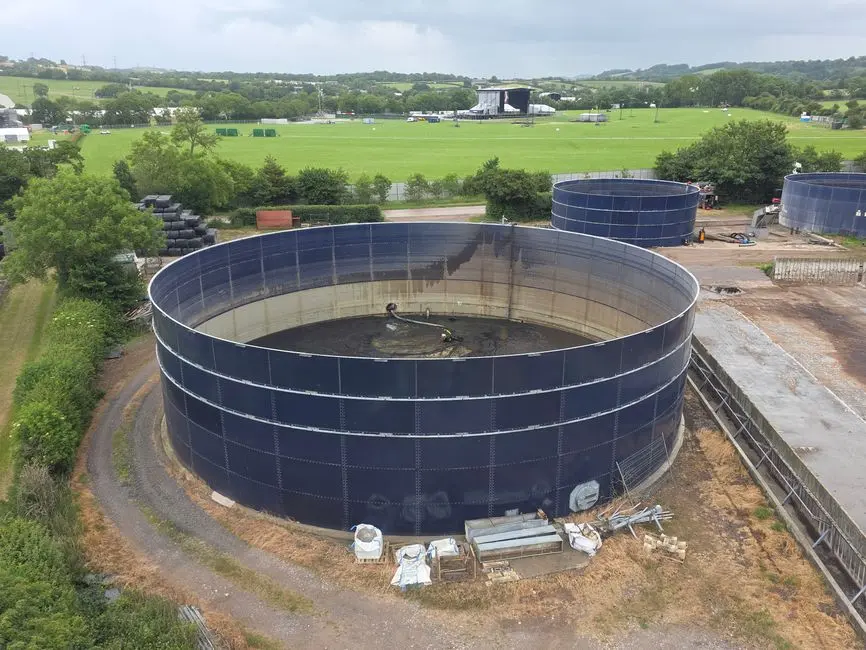
Three packaged configurations fit a 100–500 home Córdoba project, with the decision dictated by effluent standards, footprint, and installation preferences.
The WSZ underground A/O packaged plant covers 1–80 m³/h and is fully automated, making it the standard for residential communities where land is available and a buried installation is preferred. The containerized MBR packaged plant in the 10–2,000 m³/day band, using DF-series 0.1 μm flat-sheet MBR cassettes, delivers near-reuse-quality effluent on a footprint roughly 60% smaller than conventional activated sludge. For moderate effluent standards, containerized MBBR or SBR modules are viable options, with the SBR cycle providing rest and settlement periods without electricity to lower operating costs (Biocell Water). These modular systems allow for phased installation as the development grows, with add-ons such as phosphorus removal or disinfection integrated as needed (Biocell Water).
| Configuration | Capacity band | Installation | Effluent quality | Best fit in Córdoba |
|---|---|---|---|---|
| Underground A/O (WSZ) | 1–80 m³/h | Buried, landscaped above | Conventional secondary | Default for 100–500 home infill where land is available |
| Containerized MBR | 10–2,000 m³/day | Above-ground, modular | Near-reuse, <1 μm | Strict discharge class, reuse, tight footprint |
| Containerized MBBR / SBR | Project-specific | Above-ground, modular | Moderate | Moderate discharge standard, phased growth, lower OPEX |
Matching the packaged plant to Córdoba's residential loading
Residential wastewater in an Argentine housing development is a highly variable flow with significant peaks occurring in the mornings, late afternoon, and evenings (Biocell Water). A packaged plant for Córdoba housing must be sized to these peaks rather than the daily mean, ensuring the hydraulic buffer can absorb the fluctuations.
Ammonia and COD concentrations are often high due to disinfectants, cleaning products, and a lack of grease traps (Biocell Water). The biological stage requires a margin for nitrification, and the upstream works must protect it. A GX-series rotary mechanical bar screen is the standard preliminary-treatment step to remove gross solids. Because grease discharge drives ammonia and COD excursions, headworks selection is critical for compliance.
Compliance, discharge permit, and modular expansion
Residential wastewater discharge is often licensed, and modular systems are designed to support sites operating under these permits (Biocell Water). The Córdoba regulatory frame—provincial ERSEP and municipal ERAS—sits on top of the national regime, and developers should confirm the discharge class before finalizing the unit. The packaged plant must be selected with the discharge permit pathway in mind.
Modular expansion aligns with the Córdoba infill model, which features compact housing prototypes that expand from 64 m² to 128 m² across four stages (Holcim Foundation). Treatment works should grow in tandem with the development, allowing for add-on modules such as phosphorus removal, disinfection, or ammonia removal (Biocell Water). For the disinfection finishing step, a chlorine dioxide generator or a UV disinfection finishing step are common options. The broader effluent compliance framework should be reviewed alongside discharge-class confirmation.
Frequently Asked Questions
What is the default packaged plant for a 100–500 home Córdoba subdivision?
A buried A/O packaged plant in the 1–80 m³/h WSZ range is the default fit for a 100–500 home Córdoba infill where land is available and a buried installation is acceptable (Holcim Foundation, Biocell Water). Step up to a containerized MBR only where the discharge standard requires it, where reuse is planned, or where the footprint is constrained.
How do I size the packaged plant and what inputs do I need to give a supplier?
Start from the people-equivalent count using the 50–5,000 PE residential sizing frame (Biocell Water) and convert to a peak design flow. Suppliers require the following to provide an accurate quote: average and peak per-capita flow, influent ammonia and COD, presence of upstream grease traps, the discharge class set by the Córdoba authority, and the target footprint.
What affects the total cost of a packaged sewage plant for an Argentine housing development?
Cost drivers include the configuration (buried A/O vs containerized MBR vs MBBR/SBR), capacity band, civil-works intensity, headworks and disinfection selection, and whether the unit is phased. Request a quotation against a defined flow, ammonia, COD, and discharge-class envelope to anchor the price to your specific project requirements.
How do I pick a packaged-plant supplier for a Córdoba project and what should I check before signing?
Confirm that the supplier offers a full capacity band (1–80 m³/h WSZ, 10–2,000 m³/day MBR) and that the documentation matches the discharge class set by the Córdoba authority. Ask for a phased supply plan that mirrors the 64 → 128 m² modular infill growth across the four stages of the project, and confirm the lead time for the first module and subsequent add-ons.