What 'Ozone Oxidation System Design Parameters' Actually Covers
Ozone oxidation system design parameters are the set of operating and sizing variables an engineer must fix before specifying equipment: applied ozone dose (mg O3/L), transferred ozone dose, contact time, hydraulic retention time (HRT), reactor pH, temperature, gas feed (air versus 95% O2), mass-transfer device, reactor configuration, off-gas destruct, and polishing step. A full-scale train documented by MDPI in 2025 screened swine wastewater at 1–10 mg/L O3 with 12 min contact time, fed from a 95% O2 corona-discharge generator through 20 µm ceramic diffusers, with reactor pH held near 5.2; a second counter-current Venturi reactor followed for higher mass transfer. For refractory COD, the same study and a 2025 ScienceDirect paper on sauce-flavored liquor wastewater (S5) show that an O3/H2O2 co-oxidation route at pH 8.5 (100 mg/L O3 + 94 mg/L H2O2) lifts COD removal from ~60% to 78.6% while cutting ozone consumption by 28.6%.
The full parameter set spans more than chemistry. Two mechanisms operate in parallel: direct molecular O3 attack on electron-rich organics, and indirect hydroxyl radical (•OH) oxidation from ozone decay. The •OH pathway dominates at higher pH, which is why pH is a design variable, not just a process condition. The same MDPI train (S2) shows pH moving from raw 8.5 to ozone-reactor 5.2 then back to 6.5 after GAC and 7.0 at discharge, while the sauce-flavor study (S5) deliberately holds pH 8.5 to push •OH generation. An engineer who treats pH, dose, contact time, mass-transfer device, gas feed, off-gas treatment, and polishing as independent knobs will not reproduce either of these results at full scale.
Ozone Dose and Contact Time
The MDPI 2025 study (S2) used a five-step dose ladder of 1, 3, 5, 7, and 10 mg/L O3 at a fixed 12 min contact time as the screening design, then carried the lowest dose that met the target into full-scale operation. That ladder is the most defensible starting point a project engineer can put into a process design basis before a bench test on the real matrix. It is also a coupled CT10-style variable: a higher dose in a shorter HRT is not equivalent to a lower dose held longer, because direct molecular O3 competes with •OH and the radical yield changes with residence time.
The dose-to-response data from S2 makes the case quantitatively. After the sand filter (which cuts SS below 0.5 g/L to suppress ozone demand), suspended solids fell from 468 mg/L to 414 mg/L after the first ozone reactor and 304 mg/L after the second. TOC declined more slowly, from 1910 mg/L to 1840 mg/L and then 1810 mg/L, showing that ozone at 1–10 mg/L is oxidising or transforming organics without fully mineralising them at this scale. On trace organics the result was sharper: 99.9% of the originally detected sulfamethazine was removed in the ozone reactors, confirming the dose window is well-chosen for electron-rich sulfonamides.
Two caveats from S2 are worth carrying into the design basis. First, lab dose numbers rarely transfer at full scale because the real matrix carries a much higher ozone demand than the synthetic feed used in most published kinetics work. Second, dose and contact time must be specified together, not as separate items on the datasheet; if contact time is constrained by an existing basin, dose must rise to compensate, and the engineer should record the trade explicitly.
pH, Alkalinity, and the Radical Pathway
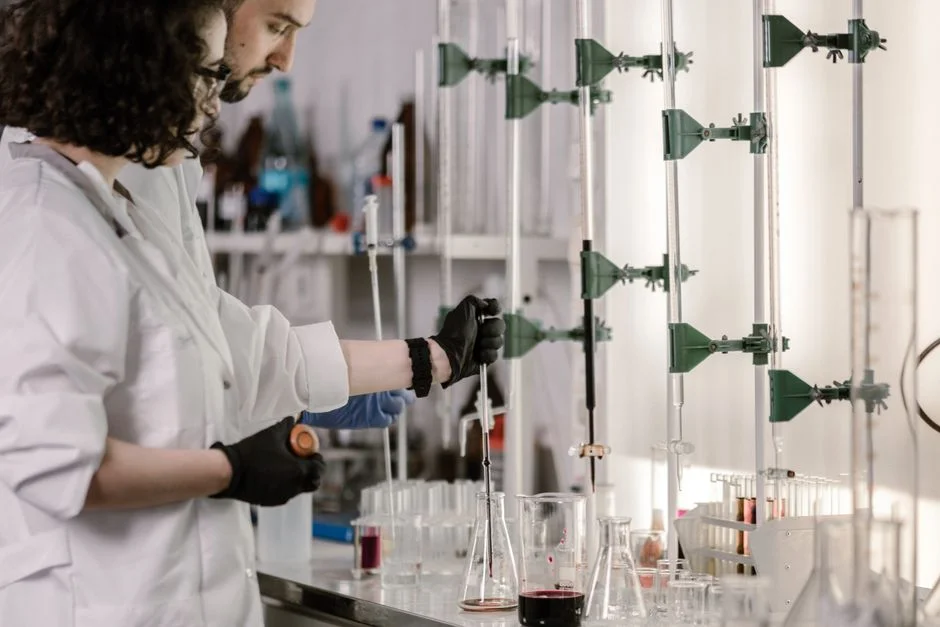
The pH trajectory in the MDPI reference train (S2) is unusually well documented: raw wastewater 8.5 ± 0.1; after coagulation–sedimentation 6.5 ± 0.2; after sand filtration 6.2 ± 0.1; in the first and second ozone reactors 5.2 ± 0.2; after GAC 6.5 ± 0.1; transiently ≈12 in the vacuum deaeration tank; neutralised to 7.0 ± 0.1 with HCl before discharge. That trajectory is a working example of low-pH direct-ozone operation: the reactors run acidic to favour selective molecular O3 attack on electron-rich moieties such as sulfamethazine, then the stream is re-neutralised at the end of the train.
The sauce-flavored liquor study (S5) deliberately inverts that logic and holds pH at 8.5 to drive the •OH radical pathway, reaching 78.6% COD removal at 100 mg/L O3 + 94 mg/L H2O2. Together the two studies support a defensible rule of thumb: low pH favours selective molecular O3 oxidation of colour, odour, and electron-rich micro-pollutants; elevated pH plus H2O2 favours •OH and is the right call for refractory COD and high-TOC industrial streams. The decision is not which mechanism is "better" but which target contaminant the project is sized for.
Alkalinity and bicarbonate are the hidden design input. They scavenge •OH and erode the very benefit an O3/H2O2 scheme is supposed to deliver, so the bench test must include an alkalinity titration on the actual feed, and the design basis must report the result. The pH adjustment chemical (HCl in S2) is itself a reagent line item, not a minor utility.
Mass Transfer, Reactor Geometry, and Gas-Feed Selection
The MDPI full-scale train (S2) is the cleanest worked example of staged mass transfer in the recent literature. Reactor 1 uses 20 µm ceramic diffusers fed from a corona-discharge generator running on 95% O2, producing a fine-bubble blanket that delivers bulk dissolved-ozone to the bulk liquid. Reactor 2 is a counter-current Venturi injector entraining a second ozone stream, used to add mass transfer where the residual ozone demand is still high. The two stages together are the practical answer to the diffuser-versus-Venturi question a procurement manager will ask: diffusers for bulk dissolved-ozone delivery, Venturi for high-demand streams or as a polishing stage downstream of a contact tank.
Gas-feed selection is a duty decision. S2 chose 95% O2 via on-site generation because a higher inlet O3 concentration per kWh cuts generator size for a given dose. Air-fed corona discharge is cheaper on utilities but produces a lower-mass-fraction O3 stream and a larger off-gas volume, so the off-gas destruct unit must be sized up. HydropureWater ozone generators accept either feed, so the engineer should fix the feed-gas decision on the basis of generator kW and off-gas load, not on hardware availability.
Reactor geometry inputs the supplier must be asked to quote include liquid depth, L:D ratio, number of diffusers per m² of floor area, and redundancy on the ozone generator (n+1 versus n+2). S2 does not publish a numeric L:D or diffuser density, and that is the gap a project engineer closes by requesting those line items explicitly in the RFQ rather than leaving them to supplier default.
Consolidated Design-Parameter Table
The table below consolidates the parameter set the rest of this article has walked through. Every numeric cell is anchored in either the MDPI 2025 swine wastewater train (S2) or the ScienceDirect 2025 sauce-flavor study (S5); cells that are framework-only are marked as such so the engineer can substitute their own matrix data without losing the structure.
| Parameter | Typical value or condition | Source | Design note |
|---|---|---|---|
| Applied O3 dose (screening ladder) | 1, 3, 5, 7, 10 mg/L at 12 min contact time | S2 (MDPI 2025) | Use as bench-test starting point; pick the lowest dose that meets the target |
| Contact time (CT) | 12 min in ozone reactors | S2 | Specify dose and contact time together as a coupled design variable |
| Reactor pH (direct O3, electron-rich targets) | 5.2 ± 0.2 | S2 | Favours selective molecular O3 attack; re-neutralise with HCl before discharge |
| Reactor pH (•OH-driven, refractory COD) | 8.5 with O3/H2O2 | S5 (ScienceDirect 2025) | Pair with 100 mg/L O3 + 94 mg/L H2O2 for the •OH pathway |
| Gas feed | 95% O2, on-site generation | S2 | Higher O3 per kWh than air-fed corona discharge; affects off-gas destruct sizing |
| Mass-transfer device | 20 µm ceramic diffusers (R1) + counter-current Venturi (R2) | S2 | Diffusers for bulk delivery, Venturi for high-demand or polishing stage |
| HRT | Coupled to the 12 min contact time above | S2 | HRT must be confirmed against the actual basin volume at full scale |
| Polishing | GAC (working volume 3 m³, empty-bed 0.38 m³) + vacuum deaeration | S2 | GAC removes oxidation by-products and residual DOC; deaeration strips dissolved O3 and NH3 |
| Off-gas treatment | Thermal or catalytic destruct unit | Framework; numeric limit not in S2 | Treat as a mandatory design line item, not an option |
Off-Gas Treatment, Polishing, and Safety Boundaries
Off-gas ozone destruction is a mandatory line item. Residual O3 in the reactor vent is a workplace exposure hazard and an atmospheric emissions concern, so the engineer must size a thermal or catalytic destruct unit on the vent of every reactor, with redundancy on the destruct blower for the case where the destruction bed is being serviced. S2 does not publish a numeric workplace limit; the project engineer should request the local regulatory limit from the procurement document set rather than assume one.
Polishing matters because ozone does not finish the job. In the MDPI train (S2) GAC (working volume 3 m³, empty-bed 0.38 m³) takes out oxidation by-products and residual DOC, and a vacuum deaeration tank strips dissolved O3 and NH3 before discharge; the pH in the deaeration tank rises transiently to about 12 and is neutralised back to 7.0 ± 0.1 with HCl. The polishing block is therefore as much a part of the design basis as the ozone contactor itself.
Two residual-contaminant results from S2 should be quoted to the procurement manager to set realistic discharge expectations. Antibiotic resistance gene abundance fell by approximately 96.8% across the train, but genes such as tet M, sul 1, and sul 2 still persisted, and sulfamethazine showed a notable resurgence to 438.9 µg/L in the final effluent despite 99.9% removal in the ozone reactors. The ozone stage is a strong but not absolute barrier, and the polishing step plus any downstream disinfection must be sized with that rebound in mind.
O3-Only vs O3/H2O2: Choosing the Right Design
The sauce-flavored liquor study (S5) gives the cleanest side-by-side case in the recent literature. Ozone-only operation, even at high dose, delivered only 60% COD removal with low ozone utilisation efficiency and high dosage requirements. Adding H2O2 at the optimum 100 mg/L O3 + 94 mg/L H2O2 at pH 8.5 lifted COD removal to 78.6%, dropped effluent COD to 9 mg/L, and cut ozone consumption by 28.6%; the kinetics fit a second-order model. The cost framing is direct: less O3 to generate, smaller generator, lower kWh, and a polishing step that handles what ozone alone would have left behind.
The decision rule that follows from S2 and S5 is straightforward. O3-only is the right call for colour, odour, and easily-oxidised micro-pollutants where selective molecular attack is enough, and where the matrix already has low alkalinity and low radical scavenging. O3/H2O2 is the right call for refractory COD, high-TOC industrial streams, or any project constrained on ozone-generator kW. Alkalinity and bicarbonate titration on the real feed, called out in the previous section, is the gate that decides which side of that line a given wastewater falls on.
On the hardware interface, O3/H2O2 adds an H2O2 dosing line that must be quoted as part of the skid. A PLC-controlled HydropureWater PLC-controlled chemical dosing skid covers that interface; the engineer should specify dose range, turndown ratio, and ATEX rating for the storage and dosing room in the same RFQ as the ozone generator. The HydropureWater 2026 guide to ozone systems for municipal water treatment covers the generator-side sizing in more detail, and the HydropureWater 2026 guide to multiple effect evaporator design parameters is the natural reference when the wastewater is being concentrated upstream of ozonation.
| Design choice | Operating point | COD removal | Ozone consumption | Indicative fit | Source |
|---|---|---|---|---|---|
| O3-only | High dose, no H2O2, low utilisation efficiency | ~60% | High; baseline for comparison | Colour, odour, easily-oxidised micro-pollutants | S5 |
| O3/H2O2 (AOP) | 100 mg/L O3 + 94 mg/L H2O2, pH 8.5 | 78.6% (effluent COD 9 mg/L) | 28.6% lower than O3-only | Refractory COD, high-TOC industrial streams, kW-constrained sites | S5 |
For a generator spec, the engineer should be ready to hand a supplier the dose window, the contactor volume and configuration, the gas feed (air versus 95% O2), the diffuser type, the off-gas destruct duty, and the polishing block — the same set the MDPI full-scale train (S2) is built around — and then close the gaps on alkalinity, HRT at full scale, and a real-matrix bench test before final purchase. HydropureWater ozone generators (portable, benchtop, and cabinet formats) cover the generator side of that spec.
Frequently Asked Questions
What applied ozone dose and contact time should I specify for a bench test?
Start from the MDPI 2025 (S2) screening ladder of 1, 3, 5, 7, and 10 mg/L O3 at 12 min contact time, run it on the actual matrix rather than a synthetic feed, and pick the lowest dose that meets the COD, colour, or micro-pollutant target. S2 is explicit that lab dose numbers rarely transfer at full scale because the real ozone demand of the wastewater is higher than the synthetic feed used in published kinetics work, so the bench test is a gate, not an optional check.
Which ozone-based configuration should I choose, O3-only or O3/H2O2?
Use the rule grounded in S2 and S5: O3-only is sufficient for colour, odour, and easily-oxidised micro-pollutants on low-alkalinity feeds; O3/H2O2 at pH 8.5 with 100 mg/L O3 + 94 mg/L H2O2 is the right call for refractory COD and high-TOC industrial streams, and where the project is constrained on ozone-generator kW. Alkalinity and bicarbonate should be titrated on the real feed before the decision is locked, because both scavenge •OH and erode the AOP benefit.
What line items must an equipment supplier quote for an industrial ozone system?
Based on the MDPI 2025 full-scale configuration (S2), the supplier must quote applied and transferred O3 dose, generator feed-gas choice (air versus 95% O2), generator redundancy, diffuser type and count (the reference uses 20 µm ceramic diffusers), a counter-current Venturi stage if a second reactor is in scope, reactor L:D and liquid depth, HRT, an off-gas thermal or catalytic destruct unit, and a polishing block sized for the expected residual DOC. If a supplier cannot quote all of these line by line, treat that as a gap to close before purchase, not a default to accept.
What compliance risk should I expect from ozone alone on antibiotic or trace-organic loads?
The MDPI 2025 train (S2) shows ozone is a strong but not absolute barrier: 99.9% of the originally detected sulfamethazine was removed in the ozone reactors, ARG abundance fell by approximately 96.8%, but sulfamethazine rebounded to 438.9 µg/L in the final effluent and resistance genes such as tet M, sul 1, and sul 2 persisted. A defensible design basis therefore treats polishing (GAC plus deaeration) and downstream disinfection as part of the ozone system, not as a separate scope, and the procurement manager should be told the ozone stage is not a standalone compliance guarantee.