Why UPW Piping Longevity Is Now a Fab-Strategic Question
Long-term performance of fab data and UPW distribution piping is a strategic reliability question rather than a simple maintenance task. A single semiconductor fab uses roughly 20–38 million liters of water per day, with best-in-class operators targeting more than 70% recycling—and higher in drought-prone regions—by 2030–2035 (Robeco 2026). UPW loops serve wafer rinsing and cleaning, while reclaimed UPW is reused in cooling towers and wet scrubbers, so any piping that leaches, corrodes, or sheds extractables directly contaminates both product water and reuse streams.
Around 40% of existing fabs and more than 40% of new fabs announced since 2021 sit in areas projected to face high or extremely high water stress by 2030 (Robeco 2026, citing TNFD Feb 2026). Unplanned replacement inside a constrained, water-stressed site creates production and water-license risks, which is why the engineering choices baked into a piping spec carry more weight than they did a decade ago. This shift is reshaping adjacent infrastructure, as covered in the Wastewater Management Solutions for Data Centers: 2026 Engineering Guide.
What 'Long-Term' Actually Means in a UPW Distribution Loop
Long-term service on a fab UPW loop encompasses multi-decade exposure to continuous UPW flow, intermittent hot UPW during sanitization, and periodic reclaimed-water service when the recycling loop shifts. Designers must manage three separate clocks: design life, maintenance windows, and access constraints. The water and wastewater sector has already crossed this threshold: many in-plant pipelines constructed within the last 50 years are nearing the end of their service life, leading owners to replace time-based maintenance with data-driven condition assessment (AMPP). Fabs sit further upstream on the same learning curve, with shorter practical experience but tighter purity and recycling targets. Rehabilitation of piping with protective coatings remains difficult due to limited access and tight construction schedules (AMPP), so any line that cannot be inspected, sampled, or replaced without shutting down a tool or losing recycling capacity requires conservative front-end specifications.
Failure Mechanisms That Decide UPW Piping Service Life
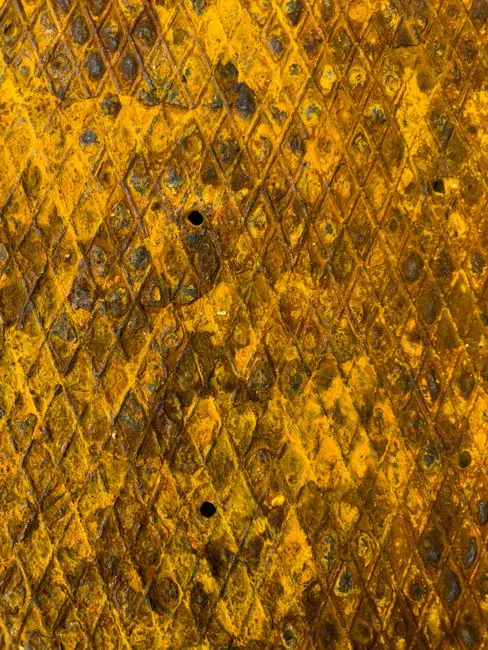
Five distinct mechanisms dictate the service life of UPW distribution piping, and each requires a specific specification lever. First, leaching and extractables: fabs require piping with coatings that do not leach into or corrode ultrapure water streams (Robeco 2026), as any release of TOC, metals, or ions degrades downstream water quality. Second, surface corrosion and roughness: corrosion by-products raise particle counts, create biofilm adhesion sites, and drive pressure loss over years of service. Third, biofilm and microbiological growth: continuous low-TOC UPW combined with recycled UPW in cooling-tower and scrubber loops creates biofilm risk at joints, dead legs, and any roughened surface. Fourth, joint and seal degradation: gaskets, threaded connections, and transition fittings are typically the first components to fail and the hardest to access (AMPP). Fifth, cyclic and thermal fatigue: intermittent sanitization, hot UPW excursions, and reclaimed-water blending create thermal cycling that ages liners and welds faster than steady-state chemistry. Treating these as a checklist rather than a single "corrosion" category allows for a defensible fab specification.
Material and Lining Decision Framework for UPW Service
Specifiers should evaluate four criteria before selecting any material or lining. (1) Is the line primary UPW, reclaimed UPW, or a chemical blend? (2) Will the line see periodic hot sanitization? (3) Is the route accessible for inspection and coupon retrieval? (4) What is the planned fab service life and recycling target? Apply the Robeco 2026 constraint as a hard filter: any material or lining that leaches, sheds particles, or corrodes in UPW should be eliminated regardless of cost. Most fab UPW loops are built around high-purity stainless with controlled surface finish, PVDF, or PFA-lined systems rather than lined carbon steel. Prefer systems that are factory-fabricated, pre-flushed, and pre-passivated to shorten on-site welding and minimize the access-limited coating steps that AMPP identifies as a rehabilitation challenge. Plan condition assessment from day one; data-driven inspection regimes (AMPP) should be specified alongside the pipe. Tie material choice to discharge compliance, because tightening EPA limits on PFAS and other chemical toxins (Robeco 2026) raise the long-run cost of any piping that becomes a contaminant source. Adjacent polishing capacity, including industrial RO systems and EDI polishing systems, only performs to spec when the distribution loop does not recontaminate the stream.
| Service class on the UPW loop | Chemistry and duty | Primary failure modes to design against | Specification emphasis |
|---|---|---|---|
| Virgin UPW distribution to tools | Continuous 18.2 MΩ·cm, intermittent hot UPW for sanitization | Leaching, extractables, surface roughness | Low-leach, high-purity system; pre-passivated; documented baseline extractables survey |
| Reclaimed UPW to cooling towers and scrubbers | Lower-purity, periodic blending with virgin UPW | Biofilm, joint degradation, corrosion by-products | Worst-case chemistry on the loop; accessible sample ports and coupons |
| Hot UPW sanitization lines | Cyclic thermal exposure, sanitant residuals | Thermal fatigue, liner aging, seal failure | Rated for thermal cycling; redundant seals at joints; inspection access |
| Chemical blend or dosing lines into the loop | Aggressive chemistry, low flow | Localized corrosion, joint wear | Material compatible with peak dose chemistry; isolated from UPW header by design |
Operating UPW and Reclaimed UPW on the Same Network
The >70% recycling target (Robeco 2026) forces piping systems to tolerate chemistry beyond virgin UPW standards. Fabs reuse UPW in lower-grade processes such as cooling towers and wet scrubbing of fab exhaust gases (Robeco 2026), meaning the same distribution network sees both UPW and chemically different reclaimed streams, often at different temperatures. Specifying for the worst chemistry on the loop is the conservative path when fabs target >70% recycling by 2030–2035 (Robeco 2026). Document which lines will carry reclaimed water during specific operating modes so future maintenance teams do not treat a reclaimed line as a virgin UPW line during a turnaround, and so condition data is trended against the actual duty the line has seen. Real-time water-quality monitoring at multiple stages feeds directly back into piping condition data; treating monitoring and piping as one asset record helps avoid blind spots when the loop reconfigures. Cooling-tower blowdown handling on adjacent infrastructure is covered in a related case, including the Abobo cooling blowdown case study.
Designing for Condition Assessment, Not Just Installation
Adopt the data-driven condition-assessment approach from the water and wastewater sector rather than time-based replacement (AMPP). Specify access points, sample ports, and inspection coupons at the design stage to overcome the limited access and construction schedules that otherwise force rehabilitation into short outages. Plan a baseline survey at commissioning covering extractables, surface roughness, and joint torque so future trending has a reference point. Bundle piping condition data with UPW and reclaimed-water quality monitoring (Robeco 2026) into a single asset record per line, so a rising TOC or particle trend can be correlated with the specific piping section upstream. This approach distinguishes a piping spec that ages well for 20–30 years from one that requires replacement during a constrained water-stressed shutdown.
Frequently Asked Questions
How long should UPW distribution piping realistically last in a modern fab?
Designers work from the in-plant pipeline experience of the water and wastewater sector, where many lines installed within the last 50 years are nearing the end of their service life (AMPP). Fabs are younger but face harsher purity and recycling duty; therefore, the realistic envelope is multi-decade, and the >70% recycling target (Robeco 2026) makes early failure more expensive by cutting into reuse capacity. Buyers should request a documented service-life assumption per service class and the inspection regime that supports it, rather than relying on a single vendor number.
What is the single biggest specification mistake on fab UPW piping projects?
Selecting a coating or lining that leaches, sheds particles, or corrodes in UPW. Robeco 2026 emphasizes that fabs require special piping with coatings that do not leach into or corrode ultrapure water streams, and that constraint should be enforced as a hard filter before cost or schedule is discussed. Ask suppliers for extractables test data on the actual system, not just the base resin or generic literature.
How does the >70% water-recycling target change piping specification?
It forces the spec to cover the worst chemistry on the loop, not just the cleanest, because the same network will carry both UPW and reclaimed streams (Robeco 2026). Request a duty map showing which lines see reclaimed water, at what temperature, and at what blending ratio during peak recycling, then specify against that envelope.
How do tightening EPA PFAS limits affect piping material choice?
Discharge standards are becoming more stringent on PFAS and other chemical toxins (Robeco 2026), so any piping that becomes a long-term contaminant source carries rising compliance and reputational risk over a 20–30 year service life. Request from the supplier a documented extractables and leachables profile, plus a statement of how the system is expected to age against tightening discharge limits, before finalizing the material selection.