A wastewater treatment plant in Gaziantep costs between €1.2–€4.5 million for municipal projects (1,000–5,000 m³/day) and €0.8–€3.2 million for industrial plants (500–3,000 m³/day), based on 2025 engineering benchmarks. The Karkamış WWTP (1,178 m³/day) was tendered at €2.1 million (MADAD-GZT-W01), while Gaziantep’s existing 222,000 m³/day plant operates at €0.12/m³ OPEX. Funding from EU MADAD Fund, EBRD, and UNDP can cover 40–80% of CAPEX, with ROI periods of 5–12 years depending on reuse applications (e.g., irrigation, industrial process water).
Why Gaziantep’s Wastewater Treatment Costs Are Rising in 2025
Gaziantep’s industrial output surged by 12% year-over-year in 2023, according to TÜİK data, directly correlating with an 18% increase in wastewater volumes since 2020. This rapid industrial expansion, particularly in textiles, food processing, and chemicals, places immense pressure on existing wastewater infrastructure and compliance efforts. For many factory managers and municipal engineers, the rising operational costs and stringent regulatory demands are no longer a distant concern but an immediate financial burden.
Turkey’s updated Water Pollution Control Regulation (2024) now mandates tertiary treatment for all wastewater discharges exceeding 500 m³/day. This crucial update, aimed at aligning with the European Union’s Urban Waste Water Directive, significantly increases the required investment in advanced treatment technologies. Implementing tertiary treatment can add an estimated €0.25–€0.40/m³ to existing operational expenses (OPEX), a cost that many facilities are only now beginning to quantify.
The financial consequences of non-compliance are severe. In 2024, a prominent Gaziantep textile factory faced fines totaling €450,000 for failing to meet discharge standards. This penalty starkly contrasts with the estimated €1.8 million capital expenditure (CAPEX) for a 1,500 m³/day Membrane Bioreactor (MBR) plant, which offers a projected 7-year return on investment (ROI) through compliance and potential water reuse. Such examples underscore the shift from viewing WWTPs as mere compliance burdens to strategic investments.
Gaziantep ranks as the 5th most water-scarce province in Turkey, intensifying the need for sustainable water management. Treated wastewater reuse, for applications such as agricultural irrigation, industrial cooling towers, or process water, presents a viable solution to offset rising costs and mitigate water stress. By turning a waste stream into a valuable resource, businesses and municipalities can transform regulatory compliance into an economic advantage.
Gaziantep Wastewater Treatment Plant Cost Breakdown by Capacity and Technology
The capital expenditure (CAPEX) for a new wastewater treatment plant in Gaziantep ranges from €0.8 million to €4.5 million, heavily dependent on plant capacity and chosen treatment technology. Operational expenditure (OPEX) similarly varies, reflecting energy consumption, chemical usage, labor, and maintenance requirements. Understanding these benchmarks is critical for accurate project budgeting and decision-making.
For municipal projects, a conventional activated sludge plant handling 1,000–5,000 m³/day can range from €1.2 million to €4.5 million CAPEX, with OPEX between €0.12–€0.16/m³. Industrial plants, typically 500–3,000 m³/day, have CAPEX from €0.8 million to €3.2 million. Advanced technologies like MBR systems for Gaziantep’s tertiary treatment and water reuse projects offer superior effluent quality and a smaller footprint but come with higher initial costs and energy demands.
2025 Cost Benchmarks for Gaziantep WWTPs
| Capacity (m³/day) | Technology | CAPEX (€) | OPEX (€/m³) | Footprint (m²) | Compliance Level |
|---|---|---|---|---|---|
| 500 (Industrial) | Conventional AS + Pre-treatment | €0.8M – €1.2M | €0.15 – €0.22 | 150 – 250 | Secondary |
| 1,000 (Municipal/Industrial) | Conventional AS | €1.2M – €1.8M | €0.12 – €0.16 | 300 – 450 | Secondary |
| 1,000 (Municipal/Industrial) | MBR | €1.8M – €2.5M | €0.18 – €0.25 | 150 – 200 | Tertiary (Reuse-ready) |
| 2,000 (Municipal/Industrial) | Conventional AS | €1.9M – €2.4M | €0.12 – €0.16 | 600 – 800 | Secondary |
| 2,000 (Municipal/Industrial) | MBR | €2.8M – €3.5M | €0.18 – €0.25 | 250 – 350 | Tertiary (Reuse-ready) |
| 3,000 (Industrial) | MBR + Pre-treatment | €3.2M – €4.0M | €0.19 – €0.28 | 350 – 500 | Tertiary (Reuse-ready) |
| 5,000 (Municipal) | Conventional AS | €3.8M – €4.5M | €0.12 – €0.16 | 1,200 – 1,500 | Secondary |
Gaziantep’s specific environmental conditions also impact costs. The region’s hard water, typically registering 300–400 mg/L CaCO₃, significantly increases chemical costs for coagulation and flocculation processes by 15–20% compared to the national average. This necessitates careful selection of chemical dosing systems for Gaziantep’s hard water and industrial pollutants to optimize efficiency and minimize expenses.
Industrial wastewater treatment plants, particularly those serving food processing or textile industries, often require specialized pre-treatment units like DAF pre-treatment for Gaziantep’s industrial wastewater (textile, food processing) or advanced screening. These additions can add a further €150,000–€400,000 to the overall CAPEX, depending on the complexity of the influent and desired removal efficiency. For a broader perspective, you can compare Gaziantep’s WWTP costs with Doha’s 2025 benchmarks.
Funding Options for Gaziantep WWTP Projects: Grants, Loans, and Municipal Budgets
Significant financial support for Gaziantep’s wastewater treatment projects is accessible through a combination of international grants, low-interest loans, and limited municipal allocations. Navigating these funding avenues effectively is crucial for project viability, especially given the substantial capital requirements.
Gaziantep WWTP Funding Sources
| Source | Type | Max Coverage | Eligibility | Application Deadline | Notes |
|---|---|---|---|---|---|
| EU MADAD Fund | Grant | 80% of CAPEX | Municipal WWTPs, Syrian refugee impact, tender via İller Bankası | Project-specific | Requires EU partnership, focus on resilience and infrastructure. Karkamış WWTP (MADAD-GZT-W01) funded. |
| EBRD Municipal Resilience Facility | Grant (60%) + Loan (40%) | 100% (60% grant, 40% loan) | Projects >€1 million, municipal entities, strong E&S compliance | Ongoing | Low-interest loan (2.5% over 15 years), supports climate resilience. |
| UNDP Turkey | Grant | Project-specific (up to 100%) | Circular economy, waste-to-resource, sustainable development projects | Project-specific | Funded a €4 million WWTP in Gaziantep (2023) under 'Turning Solid Waste into Resources'. |
| Gaziantep Metropolitan Municipality (GASKİ) Budget | Direct Allocation | Limited (up to €500,000/year) | Small-scale upgrades, maintenance, local community projects | Annual budget cycle | Requires local council approval, often co-finances larger projects. |
The EU MADAD Fund, administered through İller Bankası, is a primary source for municipal wastewater projects in regions affected by the Syrian crisis, offering up to 80% CAPEX coverage. The Karkamış WWTP (1,178 m³/day), tendered at €2.1 million, is a direct example of such funding. The application process typically involves an international tender, requiring detailed feasibility studies, environmental impact assessments (EIA), and comprehensive technical specifications.
For larger projects exceeding €1 million, the European Bank for Reconstruction and Development (EBRD) Municipal Resilience Facility provides a robust financing package, combining a 60% grant with a 40% low-interest loan (2.5% over 15 years). This facility targets municipal entities committed to climate resilience and sustainable infrastructure. Turkey’s industrial wastewater regulations and treatment solutions often benefit from such international support. The United Nations Development Programme (UNDP) Turkey also plays a role, particularly in projects focusing on the circular economy and resource recovery, such as the €4 million wastewater treatment plant funded in Gaziantep in 2023.
While Gaziantep Metropolitan Municipality (GASKİ) has a budget for wastewater infrastructure, it is generally limited to around €500,000 per year for small-scale upgrades or co-financing larger initiatives. Securing GASKİ funds usually requires local council approval and aligns with municipal development plans. Regardless of the source, successful funding applications for EU or EBRD programs demand meticulous documentation, including detailed engineering designs and a clear demonstration of project sustainability and impact.
ROI Calculation for Gaziantep Wastewater Treatment Plants: A Step-by-Step Framework
Calculating the Return on Investment (ROI) for a wastewater treatment plant in Gaziantep reveals substantial long-term savings and revenue generation potential, with payback periods typically ranging from 5 to 12 years. This framework allows municipal engineers and industrial managers to quantify the financial benefits beyond mere compliance, turning a mandated expenditure into a strategic asset.
The ROI calculation involves several key inputs:
- CAPEX: Total initial capital expenditure for design, construction, and installation.
- OPEX: Annual operational costs (energy, chemicals, labor, maintenance).
- Funding Coverage: Percentage of CAPEX covered by grants or low-interest loans.
- Water Tariff: Current cost of fresh water in Gaziantep, approximately €0.85/m³.
- Reuse Savings: Value derived from treated wastewater reuse (e.g., €0.30–€0.50/m³ for irrigation, €0.40–€0.70/m³ for industrial process water, Reverse Osmosis systems for high-purity reuse).
- Fines Avoided: Estimated annual savings from avoiding non-compliance penalties, typically €0.15–€0.30/m³ of discharged wastewater.
For example, a 3,000 m³/day MBR plant with a CAPEX of €3.5 million, receiving 60% EBRD funding, and reusing 30% of its treated effluent for irrigation, could achieve an ROI period of 8 years. This calculation considers annual OPEX, savings from reduced freshwater purchases, and avoided environmental fines.
ROI Scenarios for Gaziantep WWTPs
| Capacity (m³/day) | CAPEX (€) | Annual OPEX (€) | Funding (%) | Annual Savings (Reuse + Fines) (€) | ROI Period (Years) | Net Present Value (NPV at 5% discount) (€) |
|---|---|---|---|---|---|---|
| 1,000 (MBR) | €2,000,000 | €73,000 | 50% | €110,000 | 9.5 | €850,000 |
| 3,000 (MBR) | €3,500,000 | €200,000 | 60% | €350,000 | 8.0 | €2,100,000 |
| 5,000 (Conventional AS) | €4,200,000 | €292,000 | 40% | €480,000 | 10.2 | €2,500,000 |
Gaziantep’s Organize Sanayi Bölgeleri (Industrial Zones) offer a unique opportunity to enhance ROI through pooled resources. Several factories can collaborate on a shared WWTP, reducing individual CAPEX by 25–40% and benefiting from economies of scale in OPEX. incorporating tertiary treatment for water reuse applications, such as for cooling towers or agricultural irrigation, can significantly reduce the ROI period by 2–4 years, directly leveraging the high local water tariffs and scarcity.
Key Engineering Specifications for Gaziantep WWTPs: What You Need to Know
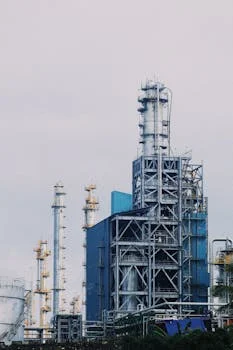
Typical influent characteristics for municipal wastewater in Gaziantep present a moderate to high organic load, with BOD ranging from 250–400 mg/L and COD from 500–800 mg/L. Total Suspended Solids (TSS) are generally between 300–500 mg/L, and pH typically falls within 7.2–8.5. The region's hard water, often with high calcium carbonate (CaCO₃) concentrations, influences chemical dosing requirements and can lead to scaling issues in pipes and equipment, necessitating specific material selections and maintenance protocols. For a comprehensive comparison of treatment plant types, consider reading about package vs. conventional wastewater treatment plants for Gaziantep’s industrial zones.
Design Parameters for Gaziantep WWTPs
| Technology | Hydraulic Retention Time (HRT) | Sludge Retention Time (SRT) | MLSS (mg/L) | F/M Ratio (kg BOD/kg MLSS·day) | Energy Consumption (kWh/m³) |
|---|---|---|---|---|---|
| Conventional Activated Sludge | 8–24 hours | 5–15 days | 2,500–4,000 | 0.2–0.4 | 0.3–0.6 |
| Membrane Bioreactor (MBR) | 4–10 hours | 15–30 days | 8,000–12,000 | 0.05–0.15 | 0.8–1.2 |
| Dissolved Air Flotation (DAF) (Pre-treatment) | 10–30 minutes | N/A | N/A | N/A | 0.1–0.2 (for DAF unit only) |
Gaziantep’s significant textile industry contributes unique pollutants, including high levels of color, chemical oxygen demand (COD), and sometimes heavy metals like chromium (Cr) and copper (Cu). Treating these requires specialized approaches, often incorporating advanced oxidation processes (AOPs) such as ozone or UV/H₂O₂ treatment, which can add €0.08–€0.15/m³ to OPEX. For textile effluents, robust pre-treatment is paramount to protect downstream biological processes.
MBR systems, while requiring approximately 30% more energy compared to conventional activated sludge, offer a compelling advantage by reducing the overall plant footprint by up to 50%. This space efficiency is critical for Gaziantep’s land-constrained industrial zones and urban areas. The compliance targets for treated effluent in Turkey, aligning with the Urban Waste Water Directive 2024, are stringent: BOD typically less than 25 mg/L, COD less than 125 mg/L, and TSS less than 35 mg/L. Achieving these standards, especially for reuse applications, often necessitates tertiary treatment steps like ultrafiltration or reverse osmosis.
Frequently Asked Questions
Common questions regarding Gaziantep's wastewater treatment projects frequently focus on capital and operational costs, available funding mechanisms, and the feasibility of treated water reuse.
Q: How much does a 1,000 m³/day wastewater treatment plant cost in Gaziantep?
A: A 1,000 m³/day wastewater treatment plant in Gaziantep costs approximately €1.2–€1.8 million for a conventional activated sludge system, while an MBR system of the same capacity ranges from €1.8–€2.5 million. These figures include civil works, equipment, and installation. Operational expenses (OPEX) typically fall between €0.12–€0.25/m³, with the higher end reflecting advanced technologies and increased chemical costs due to Gaziantep’s hard water.
Q: What is the cost of 1 KLD ETP plant in Gaziantep?
A: For industrial Effluent Treatment Plants (ETPs) in Gaziantep, the cost per KLD (1 m³/day) typically ranges from €800–€1,500 for capacities between 500–3,000 m³/day. This cost can vary significantly based on the complexity of the industrial wastewater. Specific pre-treatment units like Dissolved Air Flotation (DAF) or advanced screening, often necessary for textile or food processing effluents, can add €150–€400 per KLD. For instance, a 1,000 KLD textile ETP with necessary pre-treatment might cost between €1.2–€1.8 million.
Q: How can I get funding for a wastewater treatment project in Gaziantep?
A: Funding for Gaziantep wastewater treatment projects can be secured through several key sources. The EU MADAD Fund offers up to 80% grant coverage for municipal projects, typically managed through İller Bankası. The EBRD Municipal Resilience Facility provides a blend of 60% grant and 40% low-interest loan for projects exceeding €1 million. Additionally, UNDP Turkey funds circular economy initiatives, including water reuse projects (e.g., a €4 million WWTP in Gaziantep in 2023). Required application documents commonly include a detailed feasibility study, an Environmental Impact Assessment (EIA), comprehensive technical specifications, and municipal approval.
Q: What are the operating costs for Gaziantep’s existing 222,000 m³/day WWTP?
A: Gaziantep’s main 222,000 m³/day wastewater treatment plant operates at an average OPEX of €0.12/m³. This cost breaks down approximately into €0.05/m³ for energy, €0.04/m³ for chemicals (with a 15–20% increase due to the region's hard water compared to the national average), €0.02/m³ for labor, and €0.01/m³ for maintenance and spare parts.
Q: Can treated wastewater be reused in Gaziantep?
A: Yes, tertiary-treated wastewater can be effectively reused in Gaziantep, offering significant economic and environmental benefits. Reuse applications include agricultural irrigation, which can yield savings of €0.30–€0.50/m³ by reducing reliance on fresh water. It can also be used as industrial process water, saving €0.40–€0.70/m³, or for cooling towers, providing savings of €0.20–€0.40/m³. Advanced treatment technologies like MBR and Reverse Osmosis (RO) systems are capable of producing reuse-quality effluent, typically achieving less than 10 mg/L BOD and less than 5 mg/L TSS.