In Sarawak, Malaysia, wastewater treatment plant costs vary widely based on scale and technology. Recent projects highlight this range, from the RM750 million Kuching Centralised Wastewater Management Package 2 (serving 4,000 premises) to combined Miri and Sibu plants costing RM40 million. For industrial or municipal projects, capital expenditures can range from RM500,000 for a 50 m³/day package plant to over RM200 million for large-scale conventional systems. Key cost drivers include treatment capacity (m³/day), technology choice (e.g., MBR vs. activated sludge), specific site conditions, and compliance with Sarawak’s Environmental Quality (Sewage) Regulations 2009. This guide provides 2025 cost benchmarks, engineering specifications, and an ROI calculator to assist in informed project planning.
Why Wastewater Treatment Plant Costs in Sarawak Are Rising in 2025
Sarawak’s 2025 infrastructure budget allocates RM1.2 billion to sewerage projects, reflecting a strategic prioritization of wastewater treatment (Sarawak Public Works Department 2025-2030 Master Plan). This substantial investment is partly driven by rising costs across the construction sector. For instance, the Kuching Centralised Wastewater Management Package 2, valued at RM750 million, reflects an approximate 22% cost increase over the 2020 estimates for similar scope projects, largely attributed to labor shortages and material inflation. This contrasts with the RM615 million cost for Kuching Centralised Wastewater Management Package 1, commissioned in 2017. These increases highlight the dynamic economic environment impacting package wastewater treatment plant in Malaysia projects.
Rural projects in Sarawak face distinct cost challenges due to their decentralized nature. The installation of individual decentralized systems, such as yellow tanks, for rural households can cost approximately RM41,000 per household. This is significantly higher than the RM15,000–RM25,000 per household for centralized sewerage connections in urban areas, as reported by the Sarawak Rural Water Supply Department. The disparity underscores the logistical complexities and infrastructure requirements of extending services to remote communities.
Sarawak’s unique geography also contributes substantially to the overall project budget. Extensive peat soil deposits in regions like Miri and Sibu necessitate specialized foundation treatments and stabilization techniques, adding an estimated 15–30% to civil works costs compared to projects in Peninsular Malaysia. high annual rainfall and the prevalence of remote locations increase the need for robust flood mitigation measures and more costly logistics for equipment transport, directly impacting the Miri wastewater treatment project budget and similar undertakings across the state.
Wastewater Treatment Plant Cost Breakdown: 2025 Sarawak Benchmarks
In Sarawak, typical wastewater treatment plant capital costs range from RM9,000 to RM40,000 per m³/day of treatment capacity, heavily influenced by technology and scale. A detailed breakdown reveals how various components contribute to the overall expenditure for wastewater treatment plant cost in Sarawak Malaysia projects.
| Plant Type & Capacity | Capital Cost (RM/m³/day) | O&M Cost (RM/m³) | Footprint (m²) | Energy Use (kWh/m³) |
|---|---|---|---|---|
| Package Plant (50 m³/day) | RM16,000 - RM30,000 | RM1.80 - RM2.50 | 50 - 80 | 0.8 - 1.2 |
| Package Plant (500 m³/day) | RM9,000 - RM15,000 | RM1.20 - RM1.80 | 200 - 300 | 0.6 - 1.0 |
| Conventional Plant (500 m³/day) | RM15,000 - RM24,000 | RM0.90 - RM1.50 | 800 - 1,200 | 0.5 - 0.8 |
| Conventional Plant (5,000 m³/day) | RM15,000 - RM30,000 | RM0.80 - RM1.20 | 5,000 - 8,000 | 0.4 - 0.6 |
Civil works consistently account for 40–60% of the total project cost in Sarawak. This elevated proportion is primarily due to the need for extensive peat soil stabilization, deep piling, and comprehensive flood mitigation measures. For instance, an estimated RM240 million of the RM750 million allocated for Kuching Centralised Wastewater Management Package 2 was dedicated to civil infrastructure. Equipment costs represent another significant variable. Local manufacturers, such as HydropureWater, can offer 10–20% savings on compact package sewage treatment plants for Sarawak’s urban and rural projects compared to imported European or US systems. However, this may involve trade-offs in advanced automation features or specific material certifications, which procurement managers must evaluate carefully.
Labor costs in Sarawak are generally 30% lower than in Kuala Lumpur, according to the Sarawak Manpower Department's 2024 wage survey. However, skilled operators specializing in advanced technologies like MBR (Membrane Bioreactor) or DAF (Dissolved Air Flotation) systems command a premium, typically 20% higher than general operators. Finally, permitting and compliance processes, essential for adherence to Sarawak DOE wastewater compliance standards, can add RM50,000 to RM500,000 to project costs, depending on the project's size and environmental sensitivity, especially for sites near critical rivers or peat swamps.
Package vs. Conventional Wastewater Treatment Plants: Cost and Performance Comparison
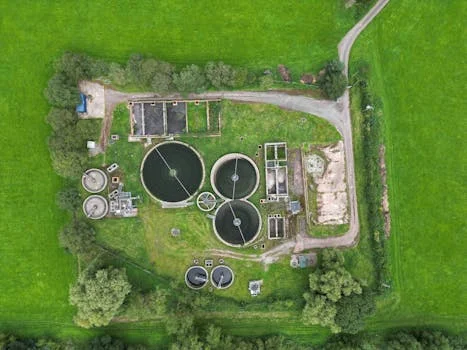
Package wastewater treatment plants typically offer a 30–50% capital cost saving for capacities under 500 m³/day compared to conventional systems in Sarawak. This makes them particularly attractive for decentralized applications or sites with limited space. The choice between a package and conventional plant depends on several factors, including project scale, available footprint, long-term operational costs, and specific effluent quality requirements.
| Feature | Package Plant (e.g., HydropureWater WSZ series) | Conventional Plant |
|---|---|---|
| Capital Cost (RM/m³/day) | RM9,000 - RM30,000 | RM15,000 - RM40,000 |
| Footprint (m²/m³/day) | 1.0 - 1.6 | 2.0 - 3.5 |
| Energy Use (kWh/m³) | 0.6 - 1.2 | 0.4 - 0.8 |
| O&M Cost (RM/m³) | RM1.20 - RM2.50 | RM0.80 - RM1.50 |
| Installation Time (months) | 3 - 6 | 12 - 24 |
| Compliance with Sarawak DOE Standards | Meets A/B (often with advanced modules) | Meets A/B (with tertiary treatment) |
For smaller capacities, such as those required for resorts, industrial facilities, or remote communities, compact package sewage treatment plants for Sarawak’s urban and rural projects, like the HydropureWater WSZ series, present a compelling option due to their rapid deployment and reduced civil works. However, they generally lack the scalability required for large municipal systems, such as Kuching’s 103,076 Population Equivalent (PE) centralized system, which necessitates a conventional approach. For a more detailed comparison, refer to our comparison of package and conventional wastewater treatment plants.
Conventional plants, while having higher initial capital outlays, typically offer lower long-term operational and maintenance (O&M) costs, averaging RM0.80–RM1.50/m³ compared to RM1.20–RM2.50/m³ for package plants. This is often due to economies of scale and less reliance on specialized components. However, conventional systems demand a significantly larger footprint—2 to 3 times that of a package plant—which can be a critical constraint in urban areas of Sarawak, exemplified by Kuching's 10.9-hectare centralized sewerage site. A 2024 Sarawak DOE report highlighted a case study where a 200 m³/day package plant in Miri cost RM1.8 million (RM9,000/m³/day), demonstrating an 18-month payback period through O&M savings compared to an estimated RM4.2 million (RM21,000/m³/day) for a conventional system of similar capacity. Package plants are particularly ideal for rural Sarawak, including longhouses and eco-resorts, due to their ease of installation and minimal operator requirements.
For projects demanding high effluent quality in a compact space, MBR systems for high-efficiency wastewater treatment in Sarawak’s industrial zones offer an advanced package solution, balancing capital cost with superior performance.
Sarawak-Specific Cost Drivers: What Adds (or Saves) Millions
Peat soil foundations, prevalent in areas like Kuching and Miri, can add 15–30% to civil works costs for wastewater treatment plants in Sarawak due to specialized stabilization requirements. Constructing on peat involves either deep piling, at RM150–RM300 per square meter, or extensive soil stabilization techniques costing RM80–RM150 per square meter. For large-scale projects, this translates into significant additional expenditure; for example, an estimated RM120 million of the RM750 million for Kuching Centralised Wastewater Management Package 2 was allocated for ground engineering on peat. This is a critical factor when estimating the sewage treatment plant cost Kuching 2025 projects.
Sarawak’s high annual rainfall, typically ranging from 3,000–4,000 mm per year, necessitates robust stormwater management systems to prevent flooding of treatment facilities. These systems, including retention ponds and upgraded drainage, can add RM50,000–RM500,000 to project costs, with some large-scale plants, like the Sibu facility, requiring up to RM3 million for comprehensive flood mitigation. the geographical dispersion of communities means that remote locations, such as parts of Bintulu and Limbang, face 10–20% higher equipment transport costs. These sites often require on-site power generation solutions, like solar or diesel hybrid systems, which can cost an additional RM200,000–RM1 million.
Compliance with Sarawak DOE’s strict effluent standards, as outlined in the Environmental Quality (Sewage) Regulations 2009, also impacts costs. To achieve discharge limits such as BOD <20 mg/L and TSS <30 mg/L, many projects require advanced tertiary treatment processes. Technologies like MBR systems for high-efficiency wastewater treatment in Sarawak’s industrial zones or DAF systems for food processing and industrial pretreatment in Sarawak can add RM500,000–RM2 million to the overall project budget. While these advanced systems increase upfront costs, they ensure compliance and mitigate the risk of substantial fines. Conversely, strategic local sourcing of construction materials like sand and aggregate can offer 10–15% cost savings, though stringent quality control is essential to avoid issues, as exemplified by a RM1.2 million rework incident at a Miri plant due to substandard concrete.
Funding and Incentives for Wastewater Projects in Sarawak
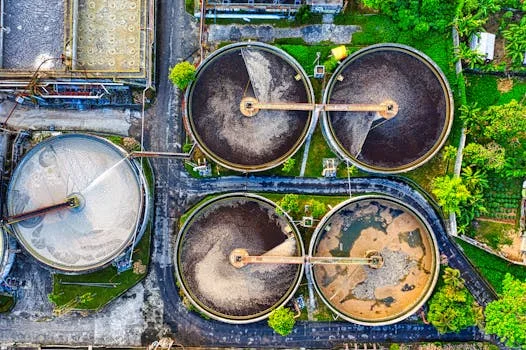
Sarawak’s 2025–2030 Rural Transformation Master Plan has allocated RM200 million specifically for decentralized wastewater systems, offering significant funding opportunities for rural projects. This budget prioritizes the installation of package plants for longhouses and remote communities, aligning with the state’s commitment to improving sanitation across all regions. Municipal planners and engineers should actively explore these grants when planning projects in underserved areas.
Beyond state initiatives, federal grants provide substantial cost-sharing opportunities. The Ministry of Environment and Water (KASA) offers 50–70% cost-sharing for wastewater projects that meet national DOE standards. A notable example is the RM15 million grant secured for Miri’s RM40 million centralized plant, demonstrating the impact of federal support on major infrastructure. Additionally, international funding mechanisms are available; the World Bank’s RM300 million Sarawak Urban Water Supply and Sanitation Project (2023–2028) targets small towns such as Sri Aman and Kapit, focusing on integrated water and sanitation improvements.
To further incentivize investment in sustainable wastewater management, Malaysia offers tax incentives. The Green Technology Tax Incentive (GITA) provides a 100% capital allowance for eligible wastewater treatment equipment, significantly reducing the taxable income for industrial facilities investing in environmental upgrades. Applying for these funding sources typically requires comprehensive documentation, including detailed engineering plans, DOE approval, and an Environmental Impact Assessment (EIA), with application timelines generally ranging from 6 to 12 months. This allows for strategic planning to offset the wastewater treatment plant cost in Sarawak Malaysia.
ROI Calculator: How to Justify Your Wastewater Treatment Investment
Calculating the Return on Investment (ROI) for a wastewater treatment plant involves quantifying capital expenditure, operational costs, and tangible savings to build a robust financial justification. For engineers and procurement managers in Sarawak, a clear ROI analysis is crucial for securing budgets and demonstrating long-term value. The following step-by-step template provides a practical framework:
- Capital Cost: Sum all initial investments (equipment, civil works, installation, permitting).
- Annual O&M Cost: Calculate yearly expenses for energy, chemicals, labor, maintenance, and sludge disposal.
- Annual Savings: Identify monetary benefits such as avoided regulatory fines, reduced water bills (through water reuse for irrigation or non-potable uses), and potential revenue from by-products.
- Payback Period: Calculate the time taken for cumulative annual savings to equal the initial capital cost.
- Net Present Value (NPV) & Internal Rate of Return (IRR): These advanced metrics account for the time value of money, providing a more comprehensive financial assessment over the project's lifespan.
Consider a practical example: a RM5 million package plant for a 200 m³/day food processing facility in Kuching. This facility could achieve a 3-year payback period through RM1.8 million/year in avoided fines for non-compliance with Sarawak DOE effluent standards and an additional RM200,000/year in water reuse savings (Sarawak DOE 2024 case study). This demonstrates a clear financial incentive for industrial wastewater treatment cost Sarawak projects.
| Industry & Plant Type | Capacity (m³/day) | Payback Period (years) | NPV (RM, over 10 years) | IRR (%) |
|---|---|---|---|---|
| Food Processing (Package) | 200 | 2 - 4 | RM3M - RM8M | 15 - 30% |
| Hospital (Package) | 100 | 3 - 5 | RM1.5M - RM4M | 10 - 25% |
| Municipal (Conventional) | 500 | 5 - 8 | RM5M - RM15M | 8 - 20% |
| Industrial (MBR) | 1,000 | 2 - 5 | RM8M - RM25M | 18 - 35% |
Sarawak-specific savings enhance ROI. Water reuse for irrigation can save RM5–RM10/m³ in water purchase costs, while avoiding DOE fines can prevent penalties ranging from RM10,000 to RM500,000 per violation. Beyond tangible savings, incorporating intangible benefits such as enhanced ESG (Environmental, Social, and Governance) compliance, improved public image, and community goodwill can further strengthen the business case for a wastewater treatment investment, especially for long-term municipal or large corporate projects.
Frequently Asked Questions
Q: How much does a small wastewater treatment plant cost in Sarawak?
A: For a 50 m³/day package plant, expect capital costs ranging from RM800,000 to RM1.5 million, including civil works and installation. For example, a 2024 project in Sibu for a WSZ series underground system cost RM1.2 million (RM24,000/m³/day) (HydropureWater case study).
Q: What is the Sarawak Water Grid Master Plan?
A: The Sarawak Water Grid Master Plan is a comprehensive RM12 billion initiative spanning 2020–2035. Its primary goal is to provide centralized sewerage to 90% of urban Sarawak by 2035. The plan includes the development of 12 new wastewater treatment plants, such as the RM750 million Kuching Centralised Wastewater Management Package 2, and the construction of 3,000 km of new sewer networks (Sarawak Public Works Department).
Q: Which country has the best sewage treatment plant?
A: Singapore’s NEWater system is frequently cited as a global benchmark, achieving 99% water reuse through advanced MBR and Reverse Osmosis (RO) technology. However, Sarawak’s centralized systems, like Kuching’s 103,076 PE plant, are recognized as among the most cost-effective in Southeast Asia, with operational and maintenance costs as low as RM0.50/m³ compared to approximately RM1.20/m³ in Singapore (Global Water Intelligence 2024).
Q: How much does a wastewater treatment project cost?
A: Project costs vary significantly by scale and complexity. A small 50 m³/day package plant for a rural clinic might cost RM500,000. A mid-sized municipal plant for 500–2,000 m³/day for a small town could range from RM5 million to RM20 million. Large-scale centralized systems, such as the RM750 million Kuching Centralised Wastewater Management Package 2, can exceed RM100 million. Key variables include the chosen treatment technology, specific site conditions, and compliance requirements.
Q: What are the compliance requirements for wastewater treatment in Sarawak?
A: Sarawak DOE enforces the Environmental Quality (Sewage) Regulations 2009. Key effluent standards include Biochemical Oxygen Demand (BOD) <20 mg/L, Total Suspended Solids (TSS) <30 mg/L, and E. coli <100 CFU/100mL. Industrial facilities may face additional requirements and often need specialized pretreatment, such as DAF systems for food processing, to meet their specific discharge limits (Sarawak DOE 2024 guidelines).