Package Wastewater Treatment Plants for Montana USA: 2025 Technical Guide, Costs & Compliance
Package wastewater treatment plants in Montana must handle cold climates, remote operation, and strict DEQ standards (30 mg/L BOD/TSS). For small communities, systems like LemTec’s LBTP (used in Three Forks) achieve year-round nitrification with insulated covers, while Whitefish’s $20M SBR plant delivers 95%+ removal. Costs range from $1.5M–$5M for 50,000–500,000 GPD capacity, with MBR systems offering the smallest footprint but highest energy use. This guide compares technologies, costs, and compliance steps for Montana projects.
Why Montana’s Climate Demands Specialized Package Wastewater Plants
Montana’s average winter temperatures frequently drop below -10°F, a condition that can freeze conventional wastewater treatment systems lacking adequate insulation or heating. Standard biological processes, particularly nitrification, become severely inhibited at influent temperatures below 50°F (10°C), leading to permit violations for ammonia. For instance, the LemTec™ Biological Treatment Process (LBTP) in Three Forks, Montana, demonstrated 92% nitrification efficiency even with influent temperatures as low as 20°F (-6.7°C) by utilizing insulated covers to retain process heat. many remote industrial sites and small communities across Montana operate with limited on-site personnel, making fully automated systems crucial. Automated package plants, such as the WSZ Series underground package plant for cold climates, can reduce labor costs by up to 70% compared to manually operated conventional plants, according to a 2024 EPA rural water report. Tourist-dependent towns like Whitefish experience significant seasonal flow variations, necessitating systems with high turndown ratios, often 3:1 or greater, to prevent hydraulic overloads or underloading that can lead to permit non-compliance. Fixed-capacity plants are ill-suited for these conditions, risking effluent quality excursions during peak or low flow periods. The Montana Department of Environmental Quality (DEQ) mandates secondary treatment standards of 30 mg/L for both Biochemical Oxygen Demand (BOD) and Total Suspended Solids (TSS). Traditional aerated lagoons, without significant upgrades or advanced processes, typically achieve only 50–70 mg/L BOD/TSS in cold weather, failing to meet these limits, whereas advanced systems like Sequencing Batch Reactors (SBRs) or Membrane Bioreactors (MBRs) consistently achieve 10–20 mg/L.
Package Plant Technologies for Montana: How They Work and What They Cost

Selecting the optimal package wastewater treatment technology for Montana projects requires balancing capital cost, operational expenditure, footprint, energy consumption, and compliance capabilities against the state's unique environmental demands. Aerated lagoons represent the lowest operational and maintenance (O&M) cost option, typically ranging from $0.10–$0.30 per gallon per day (GPD) of treated water. However, they demand the largest footprint, approximately 1 acre for every 50,000 GPD of capacity. The critical advancement for cold climates, demonstrated by systems like the LemTec LBTP, is the integration of insulated modular covers that enable year-round biological activity even in freezing conditions. Sequencing Batch Reactors (SBRs) offer a mid-range capital investment, costing approximately $2.5M–$4M for a 100,000 GPD plant, and consistently achieve over 95% BOD/TSS removal. Whitefish, Montana, successfully implemented a $20M SBR plant capable of treating 1.2 MGD with minimal staffing requirements, showcasing their suitability for communities with variable flows and a need for robust treatment. MBR systems for Montana’s tight-footprint projects carry the highest capital cost, typically $3.5M–$6M for a 100,000 GPD facility. Despite this, MBRs boast the smallest footprint, requiring only about 0.25 acres per 100,000 GPD, and produce near-reuse quality effluent, often achieving less than 1 mg/L TSS. Their energy consumption typically ranges from 0.8–1.2 kWh/m³ (2024 EPA data), primarily due to membrane aeration and permeate pumping. Hybrid systems, combining the cost-effectiveness of lagoons with the high-quality effluent of MBR polishing, present an attractive solution for cold climates. A hypothetical 50,000 GPD hybrid system for a Montana ski resort, for example, might involve an aerated lagoon for primary treatment followed by an MBR for advanced polishing, with an estimated total cost of $1.8M, providing excellent cold-weather performance and a smaller footprint than a standalone lagoon.
| Technology | Typical Capital Cost (100k GPD) | O&M Cost ($/GPD) | Footprint (Acres/100k GPD) | BOD/TSS Removal | Energy Use (kWh/m³) | Cold-Weather Performance |
|---|---|---|---|---|---|---|
| Aerated Lagoon (Insulated) | $2.0M–$3.5M | $0.10–$0.30 | 2.0+ | 70–90% (with covers) | 0.1–0.3 | Good (with covers) |
| Sequencing Batch Reactor (SBR) | $2.5M–$4.0M | $0.40–$0.70 | 0.5–1.0 | 95%+ | 0.4–0.8 | Excellent (heated facility) |
| Membrane Bioreactor (MBR) | $3.5M–$6.0M | $0.60–$1.00 | 0.25–0.5 | 98%+ | 0.8–1.2 | Excellent (heated facility) |
Montana DEQ Permit Requirements: Step-by-Step Compliance Checklist
Meeting Montana Department of Environmental Quality (DEQ) permit requirements is a critical step for any package wastewater treatment plant project. The DEQ mandates secondary treatment standards of 30 mg/L for both BOD and TSS, alongside a fecal coliform limit of 200 CFU/100mL (Montana DEQ Circular DEQ-12). Beyond these foundational parameters, nutrient limits are increasingly stringent, particularly for ammonia nitrogen, which must be less than 1.5 mg/L during winter months and less than 2.0 mg/L in summer. Facilities like the Three Forks LBTP achieve these ammonia limits through carefully designed, insulated cells that maintain optimal biological activity in cold temperatures. Regular monitoring is essential for compliance, requiring daily flow measurements, weekly BOD/TSS samples, and monthly ammonia testing. Automated systems, such as the WSZ Series underground package plant for cold climates, can log this data automatically, streamlining the DEQ reporting process and reducing operator burden. Cold-weather provisions are non-negotiable for plants operating in Montana’s Zone 4/5 climates (per Montana Climate Atlas), necessitating features like insulated covers, heated control buildings, or fully enclosed treatment cells to prevent freezing and maintain biological efficiency. For industrial sites, such as food processing or mining operations, additional pretreatment requirements apply, including FOG (fats, oils, and grease) limits below 100 mg/L and strict heavy metal discharge limits (e.g., arsenic below 0.01 mg/L). Integrating compact medical wastewater systems for Montana clinics, such as HydropureWater’s, also requires adherence to specific discharge parameters for pharmaceutical and chemical waste.
Montana DEQ Compliance Checklist:
- Effluent Standards: Ensure design meets 30 mg/L BOD/TSS and 200 CFU/100mL fecal coliform.
- Nutrient Removal: Confirm capability to meet ammonia limits (<1.5 mg/L winter, <2.0 mg/L summer).
- Cold-Weather Design: Integrate insulation, heating, or covered cells suitable for Montana Zone 4/5 climates.
- Monitoring Protocols: Establish daily flow, weekly BOD/TSS, and monthly ammonia sampling and analysis plans.
- Data Management: Implement automated data logging and reporting systems for DEQ compliance.
- Operator Certification: Ensure plant operations are overseen by appropriately certified wastewater operators.
- Industrial Pretreatment: If applicable, confirm pretreatment steps for FOG (<100 mg/L) and heavy metals (e.g., arsenic <0.01 mg/L).
- Permit Application: Complete and submit all required Montana DEQ permit application forms and engineering plans.
- Public Notice: Adhere to DEQ requirements for public notification of new or modified discharge permits.
- Ongoing Reporting: Plan for regular Discharge Monitoring Reports (DMRs) as specified by the permit.
Cost Breakdown for Montana Package Plants: 2025 Benchmarks and ROI Calculator
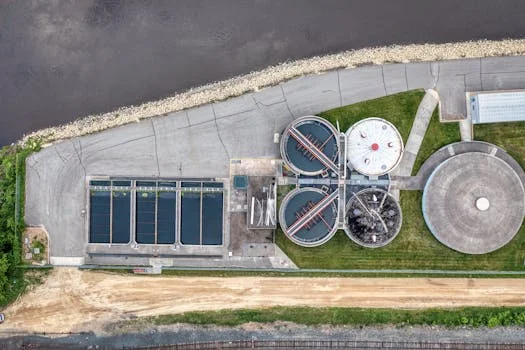
Accurately estimating the budget for a package wastewater treatment plant in Montana requires a detailed understanding of both capital and operational costs, which vary significantly by technology and capacity. For a 50,000 GPD capacity, capital costs typically range from $1.5M–$2.5M for an insulated aerated lagoon system. Scaling up to 100,000 GPD, a Sequencing Batch Reactor (SBR) system generally costs between $3M–$5M, while a Membrane Bioreactor (MBR) system, offering superior effluent quality and a smaller footprint, commands $4M–$6M (based on 2025 Montana contractor data). These figures encompass equipment, civil works, installation, and commissioning. Beyond initial investment, ongoing O&M costs are crucial for long-term financial planning. Lagoons typically have the lowest O&M at $0.10–$0.30/GPD, primarily due to lower energy and labor requirements. SBRs fall in the mid-range at $0.40–$0.70/GPD, while MBRs, with their higher energy demands for membrane aeration and periodic cleaning, range from $0.60–$1.00/GPD. These O&M figures include energy consumption, operator labor, chemical usage, and routine maintenance. Communities in Montana can significantly offset these costs through grant funding. USDA Rural Development grants, for example, can cover 55–75% of project costs for communities with populations under 10,000, making advanced treatment options more accessible. For detailed cost benchmarks from a similar cold-climate region, Alberta, Canada, provides comparable insights. An ROI calculator can help justify the investment by comparing payback periods for different systems and financing structures (e.g., 10-year vs. 20-year loans). For example, a higher capital cost MBR might have a longer payback period but offer reduced O&M due to lower sludge production or less chemical use, alongside the benefit of meeting stricter future regulations without costly upgrades.
2025 Montana Package Plant Cost Benchmarks
| Technology | Capacity (GPD) | Typical Capital Cost (USD) | Estimated O&M Cost ($/GPD) | Primary Cost Drivers |
|---|---|---|---|---|
| Insulated Aerated Lagoon | 50,000 | $1.5M–$2.5M | $0.10–$0.30 | Land acquisition, liners, aeration equipment, covers |
| Sequencing Batch Reactor (SBR) | 100,000 | $3.0M–$5.0M | $0.40–$0.70 | Reactor tanks, blowers, controls, civil works |
| Membrane Bioreactor (MBR) | 100,000 | $4.0M–$6.0M | $0.60–$1.00 | Membrane modules, aeration, pumps, controls, finer screening |
Simplified ROI Calculator Steps:
- Determine Total Project Cost: Sum capital costs and estimated O&M for the first year.
- Estimate Annual Savings/Benefits: Include reduced energy, labor, chemical costs compared to alternative options, or avoided fines from compliance.
- Calculate Simple Payback Period: Divide total capital cost by annual net savings.
- Factor in Financing: Incorporate interest rates and loan terms (e.g., 10-year vs. 20-year) to understand the true cost of ownership over time.
- Consider Future-Proofing: Quantify the value of meeting stricter future regulations without additional capital expenditure, a benefit often associated with MBRs.
Case Studies: How Montana Communities Solved Their Wastewater Challenges
Real-world examples from Montana communities demonstrate the diverse approaches to wastewater treatment and the specific benefits of package plant technologies in challenging environments. The City of Libby, Montana, faced challenges meeting DEQ coliform limits and invested approximately $500,000 in 2011 to upgrade its UV disinfection system. While effective, an integrated package system designed with advanced disinfection could have potentially offered a more holistic solution and reduced long-term operational complexities. In Three Forks, the implementation of the LemTec™ Biological Treatment Process (LBTP) with insulated covers proved instrumental in overcoming severe cold-weather limitations. This system consistently achieved 92% ammonia removal even when ambient temperatures plunged to -20°F, demonstrating its ability to maintain crucial biological processes. Before this upgrade, the plant struggled with nitrification, leading to higher ammonia levels in the effluent; post-LBTP, ammonia consistently met stringent winter discharge limits. Whitefish, a popular tourist destination, addressed its variable flow challenges and increasing capacity needs by constructing a new $20M Sequencing Batch Reactor (SBR) plant, completed in winter 2022. This advanced facility successfully reduced BOD from an influent average of 200 mg/L to a consistent 10 mg/L in the effluent, proving SBRs are ideal for communities experiencing significant seasonal population fluctuations and requiring high-quality effluent. For remote industrial applications, such as a hypothetical mining camp treating 20,000 GPD, a trailer-mounted WSZ Series underground package plant for cold climates could avoid over $1M in sewer line installation costs to connect to a municipal system. These self-contained MBR units provide robust treatment and are rapidly deployable, offering a cost-effective and compliant solution for temporary or isolated operations.
Frequently Asked Questions
What is the cheapest package wastewater treatment plant for Montana?
The cheapest package wastewater treatment plant for Montana is typically an insulated aerated lagoon system. These systems can cost around $1.5M for a 50,000 GPD capacity, but they require a significant land footprint, often 1 acre or more, and may need upgrades to meet strict nutrient limits.
Can package plants handle Montana’s cold winters?
Yes, package plants can effectively handle Montana’s cold winters. This requires specialized designs, including insulated covers for lagoons (like the LBTP in Three Forks), heated buildings for SBR and MBR systems, or hybrid solutions that combine different technologies for cold-climate resilience.
How much does a package plant cost per gallon in Montana?
The capital cost for a package wastewater treatment plant in Montana typically ranges from $3–$10 per gallon per day (GPD) of capacity, depending on the chosen technology (lagoon, SBR, MBR), level of automation, and site-specific conditions. More advanced systems with smaller footprints and higher effluent quality will be at the upper end of this range.
What are Montana DEQ’s requirements for package plants?
Montana DEQ requires package plants to meet secondary treatment standards of 30 mg/L BOD and 30 mg/L TSS. Additionally, facilities must comply with fecal coliform limits (200 CFU/100mL) and increasingly stringent nutrient limits, particularly for ammonia (e.g., <1.5 mg/L in winter).
Do I need an operator for a package plant in Montana?
While fully automated systems like the WSZ Series underground package plant for cold climates can significantly reduce daily operational labor, the Montana DEQ mandates that all wastewater treatment facilities, regardless of automation level, have a certified operator overseeing operations and conducting monthly inspections and reporting.