Hospital Wastewater Treatment in Curitiba: Engineering Specs, Compliance & Cost-Effective Systems 2025
Hospital wastewater in Curitiba requires specialized treatment to meet Brazil’s CONAMA Resolution 430/2011 and local municipal codes, which mandate strict limits for pathogens, pharmaceuticals, and heavy metals. For example, Curitiba’s 2024 wastewater surveillance detected 12 pharmaceutical compounds in hospital effluent, with concentrations up to 500 µg/L for antibiotics like ciprofloxacin. Proven systems like dissolved air flotation (DAF) achieve 95% TSS removal, while membrane bioreactors (MBR) deliver near-reuse-quality effluent (<1 mg/L BOD) in a 60% smaller footprint than conventional systems.
Why Curitiba Hospitals Need Specialized Wastewater Treatment
Curitiba’s municipal monitoring in 2024 identified that hospital effluent contributes a disproportionate load of recalcitrant pharmaceuticals to the public sewer system, including ciprofloxacin at 500 µg/L and acetaminophen at 1,200 µg/L. These concentrations are significantly higher than those found in standard municipal sewage, necessitating dedicated on-site pre-treatment. According to the Curitiba Sanitation Plan 2020-2030, healthcare facilities are categorized as "special contributors," meaning they must ensure their discharge does not compromise the biological integrity of the city's Integrated Sanitary Sewage System (SAI).
Compliance is governed primarily by CONAMA Resolution 430/2011, which dictates that hospital effluent discharged into public networks or water bodies must meet stringent thresholds: Biochemical Oxygen Demand (BOD) must be below 60 mg/L, Chemical Oxygen Demand (COD) below 180 mg/L, and Total Suspended Solids (TSS) below 50 mg/L. Fecal coliforms must be reduced to less than 1,000 MPN/100 mL before any discharge occurs. In Curitiba, local environmental authorities (SMMA) and SANEPAR enforce these standards through unannounced sampling and rigorous auditing of facility maintenance logs.
The financial risk of non-compliance is substantial. In 2023, a mid-sized Curitiba hospital was fined R$ 250,000 after a downstream analysis detected antibiotic concentrations that inhibited the nitrification process at a local municipal treatment plant. Beyond direct fines, hospitals face "environmental recovery" costs and reputational damage. Implementing a robust treatment train is no longer an optional environmental initiative; it is a core operational requirement for facility managers seeking to mitigate legal and financial liabilities in the 2025 regulatory landscape.
Contaminants in Hospital Wastewater: What Curitiba Facilities Must Remove
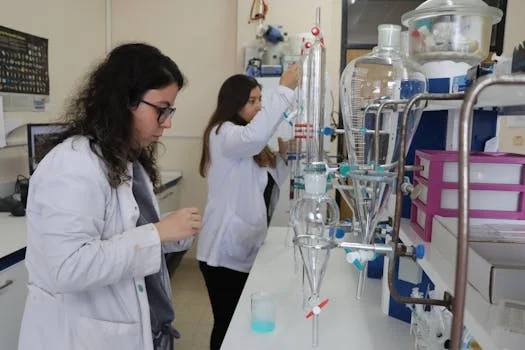
A 2024 HPLC-MS/MS study of Curitiba’s hospital effluent confirmed that standard biological systems are often insufficient to neutralize the complex chemical cocktail found in healthcare drainage. The most prevalent pharmaceuticals detected include antibiotics (ciprofloxacin, amoxicillin), analgesics (acetaminophen), and hormones (estradiol). These compounds are biologically active at extremely low concentrations and contribute to the rise of multi-drug resistant bacteria in Curitiba’s local watersheds, such as the Iguaçu River basin.
Pathogenic risks also remain a high priority for facility engineers. Monitoring data from 2020-2022 indicated that SARS-CoV-2 RNA was detected in 85% of Curitiba hospital wastewater samples, highlighting the potential for effluent to serve as a reservoir for viral fragments. Additionally, heavy metals such as mercury from legacy dental amalgams and silver from X-ray processing frequently exceed CONAMA limits in 30% of tested samples. These metals are toxic to the microbial flocs used in secondary biological treatment, leading to system "upsets" and compliance failures.
Chemical disinfectants used for sterilization, such as chlorhexidine and quaternary ammonium compounds (QACs), present another engineering challenge. These substances have high inhibition thresholds; when concentrations exceed 10-20 mg/L, they can effectively "kill" the biomass in an activated sludge system. Emerging contaminants like microplastics from disposable PPE and gadolinium-based contrast agents from MRI departments have also been identified in Curitiba's wastewater, requiring advanced filtration or oxidation for effective removal.
| Contaminant Category | Common Examples (Curitiba Data) | Typical Concentration | Removal Requirement |
|---|---|---|---|
| Antibiotics | Ciprofloxacin, Amoxicillin | 100 – 500 µg/L | >90% (Advanced Oxidation/MBR) |
| Analgesics | Acetaminophen, Ibuprofen | 500 – 1,200 µg/L | >95% (Biological + Tertiary) |
| Pathogens | SARS-CoV-2, E. coli, Helminths | 10^6 – 10^8 CFU/100mL | Log 4 reduction (Disinfection) |
| Heavy Metals | Mercury (Hg), Silver (Ag) | 0.05 – 0.5 mg/L | Compliance with CONAMA 430 |
| Disinfectants | QACs, Chlorhexidine | 5 – 50 mg/L | Neutralization/Dilution |
Treatment Technologies for Curitiba Hospitals: Engineering Specs & Removal Efficiencies
Selecting the appropriate technology depends on the influent profile and the available footprint within Curitiba’s often-constrained urban hospital sites. For primary solids removal, a high-efficiency DAF system for hospital wastewater pre-treatment is the industry standard. The DAF utilizes micro-bubbles (20-50 microns) to float Fats, Oils, and Grease (FOG) and suspended solids to the surface. This process achieves up to 95% TSS removal and 85% COD reduction, which is critical for protecting downstream sensitive membranes from fouling.
For hospitals targeting high-quality effluent or water reuse, a compact MBR system for hospital wastewater reuse offers the best performance-to-footprint ratio. MBR technology combines biological degradation with membrane filtration (typically 0.03 to 0.4 microns). This eliminates the need for secondary clarifiers, resulting in a 60% smaller footprint than conventional activated sludge plants. Engineering specs for the DF series MBR indicate an ability to maintain high mixed liquor suspended solids (MLSS) concentrations (8,000–12,000 mg/L), allowing for the effective biodegradation of complex pharmaceuticals that traditional systems bypass. You can find a detailed explanation of MBR technology for hospital wastewater to better understand the trans-membrane pressure (TMP) dynamics involved.
Disinfection is the final critical step to meet Curitiba’s microbial standards. Using an on-site ClO₂ generator for hospital wastewater disinfection is superior to traditional chlorination because chlorine dioxide does not produce harmful trihalomethanes (THMs) and remains effective over a wider pH range. ClO₂ generators provide a 99.99% pathogen kill rate, ensuring compliance with both CONAMA 430 and international WHO guidelines. When combined with Anoxic/Oxic (A/O) biological stages, these systems achieve 92% COD removal even at fluctuating influent loads.
| Technology | TSS Removal | BOD/COD Removal | Footprint Requirement | Energy Use (kWh/m³) |
|---|---|---|---|---|
| DAF | 95% | 60-85% (COD) | Medium | 0.2 – 0.5 |
| MBR (DF Series) | >99% | >98% (BOD) | Low (Compact) | 0.8 – 1.5 |
| A/O Biological | 80-90% | 90-92% (COD) | High | 0.4 – 0.7 |
| ClO₂ Disinfection | N/A | N/A (Pathogen Kill) | Very Low | <0.1 |
Compliance Checklist: Meeting Curitiba’s Hospital Wastewater Standards
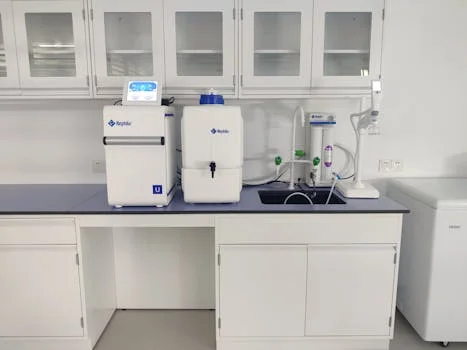
To ensure total compliance with CONAMA 430/2011 and local SMMA regulations, Curitiba facility managers should follow a structured engineering checklist. The process begins with effective screening. Installing a rotary mechanical bar screen is essential to remove large debris, medical plastics, and wipes that can cause mechanical failure in pumps and aerators. The GX series screens, with a gap size of 1-5 mm, provide the necessary protection for high-performance downstream units.
Following screening, primary and secondary treatment stages must be calibrated to the hospital's specific bed count and service mix (e.g., presence of oncology or radiology units). A specialized medical wastewater treatment plant typically integrates an equalization tank to buffer pH swings caused by laundry and laboratory chemicals. Secondary treatment must achieve BOD < 60 mg/L. If the hospital is located in an environmentally sensitive area of Curitiba, tertiary treatment—such as activated carbon or UV—may be required to further reduce pharmaceutical traces.
- Pre-treatment: Mechanical screening (GX series) and oil/water separation.
- Primary Treatment: DAF or sedimentation to reach TSS < 100 mg/L before biological stages.
- Secondary Treatment: Biological oxidation (A/O or MBR) to meet BOD < 60 mg/L and COD < 180 mg/L.
- Tertiary Disinfection: Chlorine dioxide or UV to ensure fecal coliforms < 1,000 MPN/100 mL.
- Sludge Management: Dewatering via plate and frame filter presses to reduce waste volume by 80%.
- Monitoring: Quarterly lab analysis of effluent for heavy metals and specific pharmaceuticals.
- Documentation: Maintain a 5-year log of flow rates, chemical dosing, and disposal certificates for "Manifesto de Transporte de Resíduos" (MTR).
Cost Breakdown: Hospital Wastewater Treatment Systems in Curitiba (2025 Data)
The total investment for a hospital wastewater treatment system in Curitiba is influenced by the required effluent quality and the degree of automation. For a facility treating between 10 and 100 m³/day, CAPEX typically ranges from R$ 500,000 to R$ 2,000,000. Systems utilizing MBR technology represent the higher end of the CAPEX range due to membrane costs but offer significant savings in land value and construction costs. For a broader perspective on regional pricing, facility managers can review how São Paulo hospitals tackle similar wastewater challenges.
Operating expenditures (OPEX) in Curitiba generally fall between R$ 5 and R$ 15 per cubic meter of treated water. This includes electricity (averaging R$ 0.70/kWh for industrial consumers), chemical coagulants/polymers, and specialized labor. DAF systems are particularly cost-effective for pre-treatment, with an OPEX of approximately R$ 3/m³, whereas MBR systems average R$ 10/m³ due to