
What 'Asunción-ready' means for cooling-blowdown treatment
An Asunción-ready cooling-blowdown treatment train handles 1,200–6,000 mg/L TDS blowdown at 4–5 cycles of concentration, anchored by a 10–25 µm side-stream filter, 0.01–0.1 µm ultrafiltration, and brackish-water reverse osmosis at 50–70% local recovery, with mechanical vapor compression only if SEAM refuses concentrate discharge. The capital's annual mean wet-bulb temperature sits around 22–25 °C — materially higher than the 5–10 °C Andean profile used in sea-level or La Paz references — and the wet-bulb penalty, not the air-density penalty, is what compresses cooling-tower approach and pushes blowdown volume. Because Paraguay generates the bulk of its grid electricity from the Itaipu and Yacyretá binational hydro complexes, the reuse-train GWP penalty of roughly 2× the freshwater case documented in Open Engineering (Cartagena Vaca et al., 2026) collapses to a small fraction on this grid, with treatment energy still ~80% of the difference. Makeup water is typically drawn from the Paraguay River basin or shallow municipal supply; ERSSAN and ANA potable-quality benchmarks govern makeup selection even though Andean aquifer-stress concerns do not apply. The regulatory frame is Ley 1614/2000 under SEAM (Secretaría del Ambiente), with discharge governed by Resolución SEAM and potable reuse cross-referenced to Mercosur/GMC resolutions; a Ficha Ambiental and EIA are required for industrial discharges above defined thresholds. The same membrane train topology used in the HydropureWater 2026 La Paz guide applies, but the La Paz altitude-derate lesson is reversed: the wet-bulb penalty, not the air-density penalty, is what compresses approach in Asunción.
Blowdown chemistry and flow baseline for a 10 MW Asunción reference site
A 10 MW Asunción site draws roughly 1,500–3,000 m³/day of makeup; at 4 cycles of concentration, blowdown is 25–30% of makeup per Genesis Water Tech (2026), so the operator is managing 375–900 m³/day of stream. The chemistry, not the volume, sets the train. Blowdown TDS spans 1,200–6,000 mg/L (4–8× makeup) per Genesis Water Tech (2026), driven by calcium, magnesium, bicarbonate alkalinity, silica, and the site's scale-inhibitor / biocide / dispersant program; legacy chromate or high-phosphate chemistry poisons downstream membranes and the SEAM discharge envelope. Suspended solids sit in the 10–50 mg/L band (corrosion products, biofilm fragments, airborne dust) per Genesis Water Tech (2026), which is the design point for side-stream filtration cut and UF flux. Blowdown temperature tracks the cooling-tower return, typically 30–38 °C in Asunción, which lowers RO feed viscosity and helps net driving pressure but does not offset the wet-bulb approach penalty that is the defining local constraint.
| Parameter | Typical Asunción value | Design implication |
|---|---|---|
| Makeup volume (10 MW) | 1,500–3,000 m³/day | Sizes intake and pretreatment |
| Cycles of concentration | 4–5 | Sets blowdown fraction at 20–30% of makeup |
| Blowdown volume | 375–900 m³/day | Sizes membrane and thermal stages |
| Blowdown TDS | 1,200–6,000 mg/L | Sets RO feed osmotic pressure and recovery ceiling |
| Suspended solids | 10–50 mg/L | Drives side-stream filter cut and UF flux |
| Blowdown temperature | 30–38 °C | Reduces RO feed viscosity; net positive for flux |
| Dominant scaling ions | Ca²⁺, Mg²⁺, HCO₃⁻, silica | Limits RO recovery to 50–70% without NF pretreatment |
The 2026 treatment train: side-stream filter → UF → RO, with optional MVC
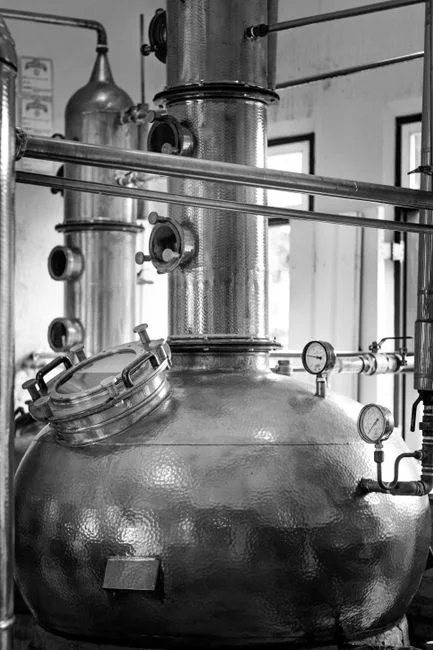
The defensible train for a 5–20 MW Asunción site is a four-stage membrane chain with optional thermal polishing and on-site disinfection. Each stage is sized to do one job well so the next stage is not punished for the previous one's shortfall.
Stage 1 — side-stream filtration. A self-cleaning 10–25 µm screen filter, comparable in role to a multi-media filter sized for continuous service, treats 1–5% of circulation flow. CAPEX lands at $50,000–$200,000 for typical data-center flow rates per Genesis Water Tech (2026), and the job is to drop suspended solids to a level downstream membranes can accept. Without this, the UF membranes foul in weeks instead of months.
Stage 2 — ultrafiltration on the blowdown slipstream. A HydropureWater UF system at 0.01–0.1 µm pore size delivers 90–95% recovery with no chemical coagulant, removes bacteria, biofilm fragments, and colloidal silica, and protects the RO from biofouling — the dominant failure mode in Paraguay River basin water. Backwash with permeate keeps membranes productive; chemical cleans every 1–3 months depending on feed. The UF process flow walkthrough covers the valving and CIP sequence in detail.
Stage 3 — reverse osmosis. An industrial RO system at a conservative 50–70% local recovery (lower than the 75–80% sea-level norm cited in S2) because silica and CaCO₃ scaling push faster at elevated COC; permeate at 10–50 mg/L TDS per Genesis Water Tech (2026) returns to the cooling-tower basin. The 150–400 psi operating band (Genesis Water Tech, 2026) holds at Asunción altitude with no derate, in contrast to the La Paz case. RO and UF membrane elements should be sourced as a single lot so cleaning chemistry is consistent across stages; for pressure-side design specifics, see the breakdown of how industrial RO works.
Stage 4 (optional) — mechanical vapor compression. MVC on the RO concentrate at 95–98% recovery; CAPEX $1–3M for 10–30 kGPD systems and 15–25 kWh/1,000 gal energy at sea level per Genesis Water Tech (2026). At Asunción's low altitude the sea-level number is defensible, but plan a 1–3 month on-site pilot before sizing because feed silica is the wild card.
Disinfection on the reuse stream. A UV sterilizer on the RO permeate line at ~40 mJ/cm² controls Legionella without DBPs, and a chlorine dioxide generator handles biofilm control in the reused loop. Chlorine dioxide is preferred over free chlorine for membrane compatibility.
| Stage | Primary function | Key spec (Asunción) | Energy / chemical |
|---|---|---|---|
| Side-stream filter | Cut suspended solids to UF-acceptable level | 10–25 µm, 1–5% of circulation | Coagulant aid if colloidal load high |
| UF | Remove bacteria, biofilm fragments, colloids | 0.01–0.1 µm, 90–95% recovery | Permeate backwash; CIP every 1–3 months |
| Brackish RO | Dissolved-solids rejection, permeate to tower | 50–70% local recovery, 10–50 mg/L permeate TDS | 150–400 psi; silica-tolerant antiscalant |
| MVC (optional) | Concentrate volume reduction for ZLD | 95–98% recovery on RO concentrate | 15–25 kWh/1,000 gal at sea level |
| Disinfection | Legionella and biofilm control on reuse loop | 40 mJ/cm² UV; 0.1–0.5 ppm ClO₂ | No DBPs; membrane-compatible |
Cost and capacity by site size: a defensible 2026 budget band
For a 5 MW site on roughly 500–1,500 m³/day of makeup (125–450 m³/day of blowdown), the partial-reuse train lands at $0.4–0.9M CAPEX and $1.50–3.00/kgal OPEX per the HydropureWater La Paz 2026 reference. Modular UF and RO skids let the operator phase capacity in 1–2 MW increments as the load fills, which matters when the data hall is built out over 18–24 months. A 10 MW site roughly doubles the train to $0.8–1.6M CAPEX with OPEX in the same per-kgal band because fixed costs dilute across more volume. A 20 MW site is where ZLD becomes a real option: full ZLD (RO + MVC + crystallizer) is $3–8M CAPEX with OPEX of $5–15/kgal per Genesis Water Tech (2026) and 95–99% overall recovery; only justified where SEAM refuses concentrate discharge or freshwater is curtailed seasonally. The automatic chemical dosing system upstream of the side-stream filter keeps coagulant and antiscalant feed steady across all three size bands.
| Site size | Makeup / blowdown (m³/day) | Default train | CAPEX (USD) | OPEX (USD/kgal) |
|---|---|---|---|---|
| 5 MW | 500–1,500 / 125–450 | Side-stream + UF + RO (phased skids) | $0.4–0.9M | $1.50–3.00 |
| 10 MW | 1,500–3,000 / 375–900 | Side-stream + UF + RO, full build | $0.8–1.6M | $1.50–3.00 |
| 20 MW+ | 3,000+ / 900+ | Full ZLD (RO + MVC + crystallizer) | $3–8M | $5–15 |
Decision framework: which train when, in Asunción
The framework is driven by three Asunción-specific risk axes: dry-season freshwater availability on the Paraguay River basin, capacity at the ESSAP/ERSSAN sewer network, and the discharge limits SEAM attaches to the Ficha Ambiental. Discharge compliance only is viable only when the site has a permitted industrial sewer connection with hydraulic headroom and discharge TDS stays below the SEAM/ERSSAN envelope; direct discharge fees of $5–15/kgal in water-stressed regions per Genesis Water Tech (2026) erode the savings within a year, so this is a stopgap, not a strategy. Partial reuse at 60–85% overall recovery is the 2026 default for Asunción; it cuts freshwater demand and discharge volume simultaneously and is the configuration SEAM expects when an industrial operator asks for a multi-year discharge permit. Zero liquid discharge is reserved for sites near sensitive Paraguay River tributaries, near recharge zones of the Patiño or Lambaré aquifers, or where SEAM explicitly refuses concentrate disposal; tie the $3–8M CAPEX to a brine-hauling cost comparison before committing.
Frequently Asked Questions
What wastewater and cooling blowdown treatment does a data center in Asunción, Paraguay need?
A 5–20 MW Asunción site needs a side-stream filter (10–25 µm) followed by ultrafiltration and brackish-water reverse osmosis at 50–70% local recovery, with permeate returned to the cooling tower and concentrate either discharged under Ley 1614/2000 / SEAM permits or sent to MVC if zero liquid discharge is required. Operating at 4 cycles of concentration, blowdown is 25–30% of makeup water with TDS of 1,200–6,000 mg/L per Genesis Water Tech (2026).
Is full ZLD cost-justified for a hyperscale site in Paraguay?
Only at 20 MW and above, or where SEAM explicitly refuses concentrate disposal. Full ZLD (RO + MVC + crystallizer) lands at $3–8M CAPEX with OPEX of $5–15/kgal per Genesis Water Tech (2026) and reaches 95–99% overall water recovery; for sub-20 MW Asunción sites, partial reuse at 60–85% recovery is the higher-value option and frees capital for IT load.
How does Paraguay's Itaipu-hydro grid change the GWP case for reuse?
The reuse-train GWP penalty of roughly 2× the freshwater case documented in Open Engineering (Cartagena Vaca et al., 2026) collapses to a small fraction on the Itaipu/Yacyretá-fed grid, with treatment energy still ~80% of the difference. A cooling system commissioned today and operated through 2050 will spend the majority of its service life under grid conditions where the GWP penalty of reuse is negligible, while freshwater savings accrue at full value.
Do RO and MVC need to be derated for Asunción's climate compared with sea level?
No on the air-density side. The 150–400 psi RO operating band and the 15–25 kWh/1,000 gal MVC figure from Genesis Water Tech (2026) are sea-level references that hold at Asunción's near-sea-level pressure; the local penalty is the wet-bulb approach, not pump or compressor derating. A 1–3 month on-site pilot is still required before sizing MVC because feed silica is the wild card.
Related Equipment
- industrial RO system — specifications, capacity range, and technical data
- UV sterilizer on the RO permeate line — specifications, capacity range, and technical data