Wastewater Treatment Plant Cost in Costa Rica: 2025 Engineering Breakdown & ROI Calculator
In 2025, the cost to build a wastewater treatment plant in Costa Rica ranges from $1.2M for a 500 m³/day package plant to $12M+ for a 20,000 m³/day municipal facility, with CAPEX averaging $2,400–$3,500 per m³/day capacity. Operating costs (OPEX) add $0.15–$0.40 per m³ treated, driven by energy (40% of OPEX), labor, and chemical dosing. Compliance with Costa Rica’s RVRAR standards (e.g., BOD₅<50 mg/L) requires advanced processes like MBR or DAF for industrial effluents, while rural areas may opt for decentralized WSZ-series package plants to avoid $6.2B in centralized infrastructure costs.
Why Costa Rica’s Wastewater Costs Are Rising: Regulatory and Infrastructure Gaps
Costa Rica treats only 15% of its wastewater, significantly lagging behind the 70% OECD average, with 85% discharged untreated into rivers or septic systems (World Bank 2023). This stark reality underscores a critical need for substantial Costa Rica wastewater infrastructure investment to safeguard public health and the environment. The national government has launched a $6.2 billion upgrade plan, which includes the construction of four new wastewater treatment plants, 57 pumping stations, and connecting 159,000 households to centralized systems. However, this ambitious plan primarily targets urban centers, leaving many rural areas, such as Santa Teresa, without access to centralized infrastructure.
Regulatory pressures are intensifying, with the updated RVRAR standards (2024) now mandating effluent quality of BOD₅<50 mg/L and Fecal Coliform<1000 MPN/100mL for all discharges. Non-compliance can result in severe penalties, with fines reaching up to $50,000 (MINAE 2024), pushing industrial facility managers and municipal engineers to urgently evaluate and implement compliant treatment solutions. A significant challenge in rural regions is the "septic tank illusion": approximately 90% of traditional septic systems fail within five years due to factors like shallow leach fields and direct greywater discharge, leading to widespread groundwater contamination (AYA 2024 data).
A poignant example of the nation's infrastructure challenges is Limón City’s $3.6 million wastewater treatment plant project. Although 88% complete and designed to serve 25,000 people, it required emergency funding after Hurricane Otto in 2016 severely damaged outdated municipal systems, highlighting the vulnerability and urgency of modernizing Costa Rica’s wastewater infrastructure.
Wastewater Treatment Plant Cost in Costa Rica: CAPEX Breakdown by Capacity
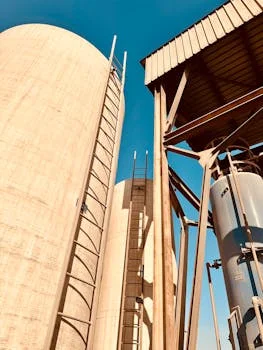
The Capital Expenditure (CAPEX) for municipal wastewater treatment plants in Costa Rica in 2025 typically ranges from $2,400 to $3,500 per m³/day of capacity, with larger facilities benefiting from economies of scale that can reduce per-unit costs by up to 30% for plants exceeding 10,000 m³/day. This municipal WWTP cost per m³/day provides a crucial benchmark for initial project budgeting.
The following table outlines estimated CAPEX for various plant capacities:
| Capacity (m³/day) | Population Equivalent (PE) | Total CAPEX ($M) | Cost per m³/day ($) | Typical Treatment Process |
|---|---|---|---|---|
| 500 | 2,500 | 1.2 – 1.8 | 2,400 – 3,600 | Extended Aeration (WSZ-series) |
| 1,000 | 5,000 | 2.0 – 3.0 | 2,000 – 3,000 | Activated Sludge, SBR |
| 2,500 | 12,500 | 4.5 – 6.5 | 1,800 – 2,600 | Activated Sludge + DAF |
| 5,000 | 25,000 | 8.0 – 12.0 | 1,600 – 2,400 | Activated Sludge + Clarifier + Disinfection |
| 10,000 | 50,000 | 12.0 – 18.0 | 1,200 – 1,800 | Advanced Activated Sludge (e.g., MBR) |
| 20,000 | 100,000 | 18.0 – 28.0 | 900 – 1,400 | Tertiary Treatment (e.g., MBR, UV) |
Industrial wastewater treatment plants, particularly for sectors like food processing or textiles, typically incur 20–40% higher CAPEX compared to municipal facilities. This increase is primarily due to the significantly higher influent loads, with COD values ranging from 550–1,200 mg/L compared to approximately 300 mg/L for municipal sewage. For instance, a 1,000 m³/day system for a dairy plant requiring Dissolved Air Flotation (DAF) and Membrane Bioreactor (MBR) technology could cost around $1.8 million.
Beyond direct construction, land costs are a significant factor, adding $50–$200/m² in densely populated urban areas like San José, although these costs become negligible in many rural zones, such as Santa Teresa. Permitting costs, which include environmental impact assessments (EIA) and approvals from MINAE, typically range from $20,000 to $100,000 and can involve timelines of 6 to 12 months, requiring careful project planning.
Operating Costs (OPEX) and Hidden Expenses: What the $3.6M Price Tag Doesn’t Show
Operating costs (OPEX) for Costa Rican wastewater treatment plants typically range from $0.15 to $0.40 per m³ of treated water, with energy consumption representing the largest component, accounting for approximately 40% of total OPEX (AYA 2024). Understanding these long-term cost drivers is crucial for avoiding budget overruns and ensuring the sustainable operation of any facility, especially when considering industrial wastewater treatment Costa Rica regulations.
Here is a breakdown of typical OPEX categories:
| Cost Category | Municipal WWTP ($/m³) | Industrial WWTP ($/m³) | Notes |
|---|---|---|---|
| Energy | 0.06 – 0.12 | 0.08 – 0.15 | Higher for MBR systems due to aeration and pumping. |
| Chemicals | 0.03 – 0.07 | 0.05 – 0.10 | Includes PAC, chlorine dioxide, polymers; varies by influent quality. |
| Labor | 0.02 – 0.06 | 0.03 – 0.08 | Typically 1 operator per 5,000 m³/day for municipal, more for complex industrial. |
| Maintenance | 0.04 – 0.06 | 0.05 – 0.07 | Includes routine checks, equipment repair, membrane replacement (every 5–8 years for MBR). |
| Total OPEX (range) | 0.15 – 0.31 | 0.21 – 0.40 |
Beyond these direct operational costs, several hidden expenses can significantly impact the long-term financial viability of a plant. Sludge disposal, for instance, can cost between $50 and $150 per ton, depending on local regulations and disposal methods. Emergency repairs, often unforeseen, can be substantial, as demonstrated by a $200,000 cost incurred for a failed clarifier in Liberia in 2023.
For rural applications, WSZ-series package plants can offer a compelling advantage by reducing OPEX by up to 30% through advanced automation and smaller footprints. These systems require less frequent operator intervention, but still necessitate trained local personnel for routine checks and maintenance, ensuring consistent performance and compliance. For industrial applications requiring robust solids removal, DAF systems for high-TSS industrial effluents are critical components that add to both CAPEX and OPEX, but are essential for effective treatment.
Centralized vs. Decentralized: Which System Fits Your Project?
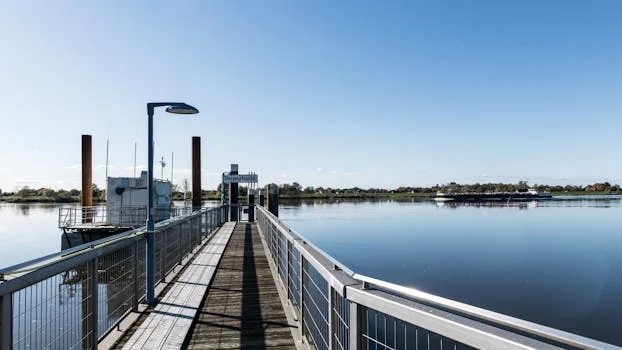
Centralized wastewater treatment plants, such as Limón’s $3.6 million facility, are generally the most cost-effective solution for dense urban areas serving populations greater than 50,000 Population Equivalents (PE). However, their implementation requires substantial investment in extensive sewer networks, which can easily add $10 million or more to the overall project cost (AYA 2024), making them unsuitable for many developing regions. This makes the choice between centralized and decentralized systems a critical decision in project planning.
Decentralized package plants, like the HydropureWater WSZ-series, are ideal for rural areas, remote communities, or industrial sites that lack existing sewer infrastructure. These systems offer distinct advantages:
- Lower CAPEX: A 500 m³/day WSZ-series package plant might cost $1.2 million, significantly less than the $8 million for a centralized equivalent, not including the additional $10 million+ for sewer lines.
- Faster Deployment: Decentralized systems can be installed and commissioned within 6–12 months, compared to the 3–5 years typically required for large-scale centralized projects.
- No Sewer Infrastructure Costs: By treating wastewater at or near the source, package plants eliminate the need for costly and disruptive sewer line construction, offering a viable septic tank alternatives Costa Rica.
The following table provides a comparative overview:
| Criteria | Centralized WWTP | Decentralized Package Plant (e.g., WSZ series) |
|---|---|---|
| CAPEX | High ($8M+ for 5,000 m³/day + $10M+ sewers) | Moderate ($1.2M for 500 m³/day, no sewers) |
| OPEX | Moderate to High (economies of scale, but high energy for pumping) | Low to Moderate (automated, smaller footprint, less pumping) |
| Footprint | Large (requires significant land for treatment facility) | Small (can be underground or integrated, minimal land) |
| Compliance | Excellent (advanced processes, continuous monitoring) | Excellent (MBR technology, consistent effluent quality for RVRAR) |
| Scalability | Difficult and expensive to expand once built | Modular; easy to add units as demand grows |
Consider the community of Santa Teresa, with a population of approximately 4,500 people. Instead of a single $12 million centralized plant requiring 15 km of new sewers, a more pragmatic approach could involve deploying three WSZ-500 underground integrated sewage treatment plants, costing a total of approximately $3.6 million. This modular approach provides flexibility, reduces initial investment, and minimizes environmental impact during construction. For more advanced treatment requirements, MBR integrated wastewater treatment systems offer superior effluent quality suitable for reuse.
Compliance Made Practical: Meeting Costa Rica’s RVRAR Standards
Meeting Costa Rica’s RVRAR effluent standards 2024 is a non-negotiable requirement for any wastewater discharge, and understanding these parameters is crucial for successful project design. The updated regulations mandate that treated effluent must meet stringent quality criteria: BOD₅<50 mg/L, COD<150 mg/L, TSS<50 mg/L, and Fecal Coliform<1000 MPN/100mL for general discharge. For applications involving water reuse, the Fecal Coliform limit is even stricter, requiring <105 MPN/100mL.
The selection of an appropriate treatment process hinges on the influent quality and the required BOD₅ removal efficiency Costa Rica mandates. Here’s a guide to influent vs. effluent quality and corresponding process selections:
| Industry Type | Typical Influent Quality (BOD₅/COD/TSS) | Required Effluent Quality (BOD₅/COD/TSS) | Required Removal Rate (BOD₅) | Recommended Treatment Process |
|---|---|---|---|---|
| Municipal Sewage | 250/500/250 mg/L | <50/<150/<50 mg/L | ~80% | Activated Sludge + DAF (for TSS <50 mg/L) |
| Food Processing (Dairy) | 1,200/2,500/600 mg/L | <50/<150/<50 mg/L | ~96% | DAF + MBR (for high COD & FOG removal) |
| Textile Industry | 800/1,800/350 mg/L | <50/<150/<50 mg/L | ~94% | Coagulation/Flocculation + DAF + MBR |
| Rural Community (Decentralized) | 200/400/200 mg/L | <50/<150/<50 mg/L | ~75% | WSZ package plants (minimal operator input) |
For municipal sewage, a combination of activated sludge and DAF systems is often selected to achieve TSS below 50 mg/L. Industrial effluents with high Fats, Oils, and Grease (FOG) or high COD loads frequently require advanced solutions like DAF followed by MBR technology to meet the stringent COD<150 mg/L limit. In rural areas, WSZ package plants are designed to achieve BOD₅<50 mg/L with minimal operator input, making them suitable for remote locations.
Disinfection is the final critical step. Chlorine dioxide disinfection for municipal reuse is a common choice for its effectiveness against a broad spectrum of pathogens, while ozone systems are preferred for specialized applications such as hospital wastewater treatment due to their powerful oxidative properties and minimal residual byproducts.
ROI Calculator: When Does a Wastewater Treatment Plant Pay Off?
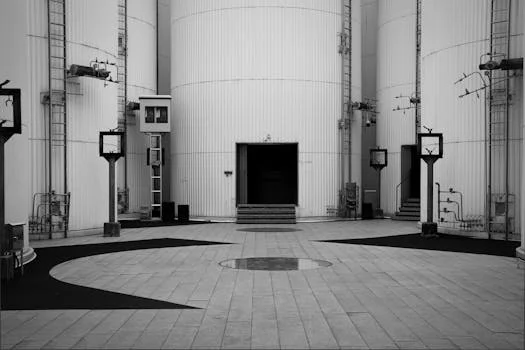
Investing in a wastewater treatment plant in Costa Rica is not just a compliance expense; it's a strategic investment with tangible Return on Investment (ROI) drivers. For project managers and infrastructure investors, understanding when a wastewater treatment plant pays off is key to justifying initial wastewater treatment plant financing Costa Rica. Key ROI drivers include:
- Avoided Fines: Non-compliance with RVRAR standards can result in significant fines, potentially up to $50,000 per year (MINAE 2024), which are directly offset by a compliant system.
- Water Reuse Savings: Treated effluent can be repurposed for industrial process water, irrigation, or toilet flushing, leading to substantial savings. This can range from $0.50 to $1.50 per m³ for industrial applications, reducing reliance on potable water sources.
- Government Grants and Incentives: Rural projects, especially those addressing public health or environmental concerns, may qualify for government grants covering up to 30% of CAPEX, as seen in initiatives targeting areas like Santa Teresa.
Here are ROI scenarios for different project types, illustrating the package sewage treatment plant ROI:
| Project Type | CAPEX ($M) | Annual OPEX ($M) | Annual Savings ($M) | Payback Period (Years) |
|---|---|---|---|---|
| Municipal (5,000 m³/day) | 8.0 | 0.75 | 0.25 (avoided fines) | 32.0 (Long-term public good, not purely financial) |
| Industrial (1,000 m³/day, high COD) | 1.8 | 0.12 | 0.25 (fines) + 0.18 (water reuse) = 0.43 | 4.5 |
| Rural Community (500 m³/day WSZ) | 1.2 (after 30% grant) | 0.06 | 0.05 (fines) + 0.03 (water reuse) = 0.08 | 15.0 |
For example, a 1,000 m³/day industrial plant treating high-COD wastewater (e.g., 1,200 mg/L) can achieve a payback period of approximately 4.5 years. This is driven by an estimated $250,000 per year in avoided non-compliance fines and an additional $180,000 per year from reusing treated water for process operations. Beyond direct savings, financing options such as BANDESAL loans (often at competitive 5% interest rates for environmental projects) and carbon credits for energy-efficient systems (e.g., MBR technology) can further enhance the financial attractiveness and accelerate the payback period for wastewater treatment investments in Costa Rica.
Frequently Asked Questions
Q: What are the primary drivers of wastewater treatment plant costs in Costa Rica?
A: The primary cost drivers are CAPEX for civil works and equipment, which averages $2,400–$3,500 per m³/day capacity, and OPEX, particularly energy (40% of costs), chemicals, and labor, totaling $0.15–$0.40 per m³ treated. Regulatory compliance with RVRAR standards also dictates the required technology, impacting costs.
Q: How do Costa Rica’s RVRAR standards affect technology selection?
A: RVRAR standards, such as BOD₅<50 mg/L and Fecal Coliform<1000 MPN/100mL, necessitate advanced treatment processes. For municipal wastewater, activated sludge with DAF is common. Industrial effluents with high organic loads often require DAF coupled with MBR systems to achieve compliance, while rural areas can utilize WSZ-series package plants.
Q: Is it more cost-effective to build a centralized or decentralized WWTP in Costa Rica?
A: Centralized WWTPs are cost-effective for dense urban areas (>50,000 PE) but require substantial investment in sewer networks. Decentralized package plants (e.g., WSZ-series) are more cost-effective for rural areas or smaller communities due to lower CAPEX ($1.2M for 500 m³/day) and no sewer infrastructure costs, offering faster deployment and scalability.
Q: What are the main ROI benefits of investing in a wastewater treatment plant in Costa Rica?
A: Key ROI benefits include avoiding up to $50,000 annually in non-compliance fines, generating $0.50–$1.50/m³ in savings through water reuse, and potentially securing government grants for up to 30% of CAPEX for rural projects. Industrial plants, in particular, can achieve payback periods as short as 4.5 years through these combined savings.