Scotland's municipal sewage treatment plants, including the 300 million L/day Seafield Wastewater Treatment Works (WwTW) in Edinburgh, serve over 1 million people under Scottish Water's oversight. These facilities must comply with EU Urban Waste Water Directive 91/271/EEC and Scotland's stricter 2025-2030 environmental targets, driving demand for advanced equipment like MBR systems (99% pathogen removal) and DAF units (95%+ TSS reduction). Upgrading a 50,000 PE plant costs £12-18M, with operational savings of 20-30% achievable through automation and energy-efficient technologies.
Scotland's Municipal Wastewater Infrastructure: Scale and Challenges
Scotland's municipal wastewater system manages significant daily volumes, with Seafield Wastewater Treatment Works (WwTW) in Edinburgh alone processing 300 million litres per day (Scottish Water, Top 1, 3, 4), serving approximately 1 million people. Typical influent characteristics for a Scottish municipal plant generally align with UK averages, presenting Biochemical Oxygen Demand (BOD) ranging from 200-300 mg/L, Total Suspended Solids (TSS) between 250-350 mg/L, and ammonia concentrations around 20-50 mg/L. These parameters dictate the treatment intensity required to meet discharge consents.
Scottish Water operates a network of 1,837 wastewater treatment works across Scotland (Scottish Water 2023 Annual Report), yet only about 50% of these facilities are publicly mapped (Top 2), indicating a significant portion of smaller, unlisted plants. The five largest municipal wastewater treatment works by population equivalent (PE) and daily capacity are critical to the nation's infrastructure:
| WwTW Name | Location | Approximate PE | Primary Treatment | Secondary Treatment |
|---|---|---|---|---|
| Seafield WwTW | Edinburgh | ~1,000,000 | Primary Sedimentation | Activated Sludge |
| Shieldhall WwTW | Glasgow | ~800,000 | Primary Sedimentation | MBR, Activated Sludge |
| Nigg WwTW | Aberdeen | ~300,000 | Primary Sedimentation | Activated Sludge |
| Dalmuir WwTW | Clydebank | ~250,000 | Primary Sedimentation | Activated Sludge |
| Meadowhead WwTW | Perth | ~150,000 | Primary Sedimentation | Activated Sludge |
Key challenges for Scottish Water wastewater treatment works include aging infrastructure, with an estimated 40% of plants exceeding 30 years of age, necessitating substantial investment in upgrades. Climate resilience is another pressing concern, as Scotland's wet climate (1,500-3,000 mm/year rainfall) contributes to frequent stormwater overflows and can dilute influent quality, impacting treatment efficiency. Coastal plants, such as Seafield, also face increased flooding risks. stringent nutrient removal upgrades are required to meet ambitious 2025-2030 environmental targets, pushing the demand for advanced treatment technologies.
Regulatory Compliance: EU and Scottish Standards for Municipal Plants
Municipal wastewater treatment in Scotland operates under a robust regulatory framework, primarily driven by the EU Urban Waste Water Directive 91/271/EEC, which the UK retained post-Brexit, and stricter national commitments. This directive mandates secondary treatment for all agglomerations with a population equivalent (PE) greater than 2,000. For agglomerations exceeding 10,000 PE discharging into designated sensitive areas, tertiary treatment, including nutrient removal, is compulsory. Scotland's sensitive areas include significant water bodies such as Loch Lomond, the Firth of Clyde, and various coastal waters, all requiring enhanced protection against eutrophication.
Scotland's own regulatory ambitions, outlined in the 2025-2030 River Basin Management Plan, introduce even more stringent phosphorus and nitrogen limits. For discharges into sensitive areas, the target for total phosphorus is a demanding 0.5 mg/L, and for total nitrogen, 10 mg/L. These targets represent a significant tightening compared to current Scottish Water discharge consents, where, for instance, Seafield WwTW currently operates with a phosphorus limit of approximately 1 mg/L, highlighting the need for widespread upgrades across the network.
The Scottish Environment Protection Agency (SEPA) is responsible for enforcing these standards. Their 2023 Water and Sewerage Services Report indicated that 12% of Scottish Water's WwTWs failed to meet their compliance requirements. Common violations cited include elevated levels of ammonia, Biochemical Oxygen Demand (BOD), and frequent stormwater overflows, particularly exacerbated by Scotland's high rainfall. While Brexit granted the UK the autonomy to diverge from EU standards, the Scottish Government has reaffirmed its commitment to maintaining alignment with, and often exceeding, EU environmental protection levels (Scottish Government 2024 statement), ensuring a continued drive for high-quality wastewater treatment.
| Parameter | EU Urban Waste Water Directive 91/271/EEC (Minimum) | Scottish Water Discharge Consents (Typical) | Scotland's 2025-2030 Targets (Sensitive Areas) |
|---|---|---|---|
| BOD₅ | 25 mg/L | 5-10 mg/L | 5 mg/L |
| TSS | 35 mg/L | 10-20 mg/L | 10 mg/L |
| Ammonia (NH₃-N) | N/A (secondary) | 5-10 mg/L | 1-5 mg/L |
| Total Phosphorus (P) | N/A (tertiary for sensitive areas) | 1-2 mg/L | 0.5 mg/L |
| Total Nitrogen (N) | N/A (tertiary for sensitive areas) | 15-20 mg/L | 10 mg/L |
Treatment Technologies Compared: MBR vs. Conventional Activated Sludge vs. DAF for Scottish Conditions

Selecting the optimal wastewater treatment technology for a municipal plant in Scotland requires careful consideration of influent quality, desired effluent standards, land availability, and operational costs. The three predominant technologies are Conventional Activated Sludge (CAS), Membrane Bioreactors (MBR), and Dissolved Air Flotation (DAF), each offering distinct advantages.
Conventional Activated Sludge (CAS) remains the most common secondary treatment method in Scotland, employed in approximately 70% of plants. This biological process utilizes aerated tanks where microorganisms break down organic matter, followed by clarification in secondary settlement tanks. CAS plants typically require a significant footprint, estimated at 1.5-2 m² per population equivalent (PE). Energy consumption for aeration generally falls within 0.3-0.5 kWh/m³ of treated water. Effluent quality from CAS typically meets standard secondary treatment requirements, with BOD below 25 mg/L and TSS below 30 mg/L. However, CAS systems often struggle to achieve the stringent nutrient removal targets (e.g., for phosphorus and nitrogen) now required in sensitive areas without extensive tertiary upgrades.
Membrane Bioreactor (MBR) systems represent an advanced alternative, gaining traction in Scotland with approximately 15% of plants, including a significant portion of the Shieldhall WwTW, incorporating MBR technology. In an MBR, a membrane filtration step replaces conventional secondary clarifiers, providing a physical barrier that retains biomass and produces exceptionally high-quality effluent. MBRs require a much smaller footprint (0.5-1 m²/PE), making them ideal for urban areas or constrained sites. While MBR systems for municipal sewage treatment in Scotland typically have higher energy consumption (0.6-0.8 kWh/m³), primarily due to membrane aeration and permeate pumping, they deliver superior effluent quality: BOD consistently below 5 mg/L, TSS below 2 mg/L, and over 99% pathogen removal. This high-quality effluent is often suitable for water reuse applications. The capital expenditure (CAPEX) for MBR systems is generally 20-30% higher than CAS, but operational benefits like reduced sludge volume and improved effluent quality often offset this over the lifecycle. For a technical deep dive on MBR systems for municipal applications, further resources are available.
Dissolved Air Flotation (DAF) systems are primarily used for primary treatment or tertiary polishing. DAF works by dissolving air under pressure into wastewater, then releasing it at atmospheric pressure, creating fine bubbles that attach to suspended solids, fats, oils, and greases (FOG), causing them to float to the surface for removal. DAF units for primary treatment in Scottish municipal plants offer a compact footprint (0.2-0.5 m²/PE) and are highly efficient, achieving 95%+ TSS removal and 60-80% BOD removal. They are particularly well-suited for plants receiving influent with high FOG loads or industrial contributions, such as from food processing facilities. DAF can also be deployed as a tertiary polishing step to enhance effluent quality, especially for TSS and phosphorus removal after biological treatment. A comparison of DAF and IAF for municipal wastewater treatment provides further insights.
| Feature | Conventional Activated Sludge (CAS) | Membrane Bioreactor (MBR) | Dissolved Air Flotation (DAF) |
|---|---|---|---|
| Primary Application | Secondary Treatment | Secondary/Tertiary Treatment | Primary Treatment / Tertiary Polishing |
| Footprint (m²/PE) | 1.5 - 2.0 | 0.5 - 1.0 | 0.2 - 0.5 (for primary) |
| Energy Use (kWh/m³) | 0.3 - 0.5 | 0.6 - 0.8 | 0.05 - 0.15 |
| Effluent BOD (mg/L) | <25 | <5 | 60-80% removal (primary) |
| Effluent TSS (mg/L) | <30 | <2 | 95%+ removal (primary) |
| Pathogen Removal | Moderate | >99% | Low (physical removal only) |
| Nutrient Removal | Limited (requires tertiary) | Good (biological) | Limited (chemical for P) |
| CAPEX (Relative) | Baseline | +20-30% | Moderate (per flow) |
| OPEX (Relative) | Moderate | Moderate-High | Low-Moderate |
Cost Benchmarks for Municipal Sewage Treatment Plants in Scotland
Understanding the financial implications of developing or upgrading municipal sewage treatment plants in Scotland is crucial for engineers, procurement managers, and municipal decision-makers. Capital expenditure (CAPEX) for new plants and operational expenditure (OPEX) are influenced by plant size, technology choice, and specific site conditions.
For a new municipal sewage treatment plant designed to serve a population equivalent (PE) of 50,000, typical CAPEX ranges from £12-18M, based on Scottish Water's 2023 data. This investment broadly breaks down into several key components: civil works, including earthworks, concrete structures, and buildings, account for approximately 40%; mechanical and electrical equipment, such as pumps, blowers, and mixers, represents about 30%; process equipment, encompassing core treatment technologies like aeration systems or membranes, makes up 20%; and automation and control systems, vital for efficient operation, contribute the remaining 10%.
Upgrade costs vary significantly depending on the scope. Implementing tertiary treatment for nutrient removal, particularly to meet the stricter 2025-2030 limits, typically costs £2-5M. An MBR retrofit for an existing plant, offering enhanced effluent quality and a smaller footprint, can range from £1-3M. Investments in such upgrades often demonstrate a return on investment (ROI) within 5-10 years, primarily through avoided compliance penalties and operational savings from increased efficiency.
Operational expenditure (OPEX) for wastewater treatment in Scotland averages £0.20-0.40 per cubic meter treated. A typical breakdown of these costs reveals that energy consumption, primarily for aeration, accounts for approximately 30%; chemical usage, including coagulants and disinfectants, represents 20%; labor costs for operations and maintenance are around 25%; routine maintenance and spare parts contribute 15%; and sludge disposal, a significant cost driver, makes up the final 10%. Opportunities for OPEX reduction exist through energy-saving measures such as aeration optimization, the integration of variable-speed drives for pumps, and advanced process control. For a detailed perspective on cost benchmarks for municipal wastewater treatment plants, including ROI calculators, further resources are available.
| Cost Category | Typical Percentage of CAPEX (New 50,000 PE Plant) | Typical Percentage of OPEX (£0.20-0.40/m³) |
|---|---|---|
| Civil Works | 40% | N/A |
| Mechanical & Electrical | 30% | N/A |
| Process Equipment | 20% | N/A |
| Automation & Control | 10% | N/A |
| Energy | N/A | 30% |
| Chemicals | N/A | 20% |
| Labor | N/A | 25% |
| Maintenance | N/A | 15% |
| Sludge Disposal | N/A | 10% |
Specific equipment costs provide further detail. Dissolved Air Flotation (DAF) systems can range from £50-150k for units handling 10-100 m³/h. MBR systems are a more significant investment, typically £200-500k for capacities of 50-200 m³/day. Chemical dosing systems, essential for precise chemical addition in various treatment stages, generally cost £20-50k. Funding sources for these investments include the Scottish Government's Water Environment Fund, SEPA grants for nutrient removal projects, and EU Horizon Europe for innovative technologies, which can significantly alleviate the financial burden on municipalities.
Equipment Selection Guide for Scottish Municipal Plants
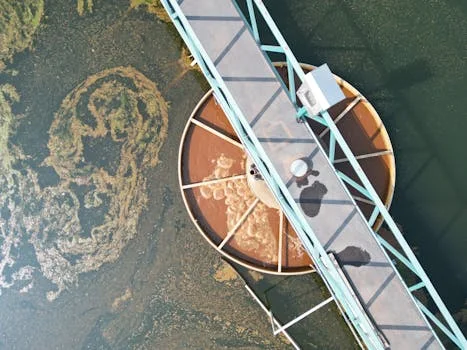
Effective equipment selection is paramount for municipal sewage treatment plants in Scotland, ensuring compliance, operational efficiency, and resilience against environmental challenges. HydropureWater offers a range of solutions tailored to these specific needs.
- Screening: At the headworks, rotary mechanical bar screens, such as the GX Series, are essential for removing large debris and solids from the influent, typically achieving 80-90% debris removal. For municipal influent, bar spacing of 3-6 mm is generally recommended to prevent fouling downstream and protect pumps.
- Primary Treatment: For plants with high levels of fats, oils, and greases (FOG) or significant industrial contributions, DAF units for primary treatment in Scottish municipal plants are highly effective. These systems can be sized from 4 to 300 m³/h and achieve over 95% TSS removal, significantly reducing the load on subsequent biological stages.
- Secondary Treatment: For facilities requiring a compact footprint or aiming for water reuse, MBR systems (WSZ or DF Series) are an excellent choice. These systems utilize membranes with pore sizes typically around 0.1 μm, ensuring high-quality effluent. Effective operation relies on robust membrane cleaning protocols, including both chemical cleaning and air scouring to prevent fouling.
- Tertiary Treatment: To meet stringent disinfection requirements, particularly for discharges into sensitive receiving waters, chlorine dioxide generators are widely used. Dosing rates of 1-3 mg/L ClO₂ are common, ensuring compliance with relevant directives, including aspects of the EU Drinking Water Directive 98/83/EC where applicable for water reuse.
- Sludge Dewatering: Managing sludge effectively is critical. Plate and frame filter presses are a common and reliable solution, capable of producing dewatered sludge with 20-30% dry solids content. These can be specified with filtration areas ranging from 1 to 500 m², depending on sludge volume. While centrifuges offer higher throughput, they typically involve higher capital expenditure but can reduce operational labor.
Case Study: Upgrading a 20,000 PE Plant in the Scottish Highlands
An aging Conventional Activated Sludge (CAS) plant, operational for over 30 years and serving a 20,000 population equivalent (PE) in the Scottish Highlands, faced persistent challenges in meeting its discharge consent for ammonia. Influent characteristics typically showed BOD of 250 mg/L, TSS of 300 mg/L, and ammonia concentrations peaking at 30 mg/L, while the SEPA target for ammonia was a strict 5 mg/L, with the plant consistently discharging at 12 mg/L.
The chosen solution involved an MBR retrofit using the DF Series membrane bioreactor module, integrated with a chemical dosing system for enhanced phosphorus removal (using poly-aluminium chloride, PAC). The plant's existing aeration tanks were repurposed to house the MBR modules, significantly reducing the required footprint. The process flow was optimized to ensure efficient biological nutrient removal (BNR) within the MBR tank. A sophisticated PLC-controlled automation system was installed to manage aeration, membrane flux, and chemical dosing, including an automated clean-in-place (CIP) system for membrane maintenance, featuring periodic chemical washes and continuous air scouring.
The upgrade yielded transformative results. Effluent quality consistently achieved BOD levels below 5 mg/L, TSS below 2 mg/L, and ammonia concentrations plummeting to below 1 mg/L, well within SEPA's stringent limits. Operational efficiency also saw substantial improvements: optimized aeration, a key component of MBR systems, led to a 30% reduction in energy consumption compared to the previous CAS system. the MBR's superior solids retention and enhanced biological activity resulted in improved sludge characteristics, leading to a 90% reduction in overall sludge volume after dewatering, significantly cutting disposal costs.
The total capital expenditure for this comprehensive upgrade was £3.2M. Post-upgrade, the operational expenditure (OPEX) reduced from £0.25/m³ to £0.18/m³ treated, primarily due to energy savings and reduced sludge disposal costs. The estimated return on investment (ROI) for this project was calculated at 7 years, driven by avoidance of compliance penalties and sustained operational savings. Key lessons learned from this project included the critical importance of pilot testing MBR vs. CAS performance under local conditions, comprehensive operator training on membrane maintenance protocols, and robust contingency planning for managing stormwater overflows, a common challenge in Scotland's wet climate.
Frequently Asked Questions
Here are answers to common questions about municipal sewage treatment plants in Scotland:
Q: What are the key differences between MBR and conventional activated sludge for Scottish municipal plants?
A: MBR systems offer superior effluent quality (BOD <5 mg/L vs. <25 mg/L for CAS) and a smaller footprint (0.5-1 m²/PE vs. 1.5-2 m²/PE), but require higher CAPEX (20-30% more) and energy use (0.6-0.8 kWh/m³ vs. 0.3-0.5 kWh/m³). MBR is ideal for sensitive areas (e.g., Loch Lomond) or reuse applications, while CAS remains cost-effective for larger plants with ample land (e.g., Seafield WwTW).
Q: How much does it cost to upgrade a municipal sewage treatment plant in Scotland to meet 2025 nutrient limits?
A: Upgrading a 50,000 PE plant for phosphorus removal (0.5 mg/L limit) costs £2-5M, depending on technology (chemical dosing vs. biological removal). For nitrogen removal (10 mg/L limit), costs range from £3-7M. Scottish Water's 2023 data shows an average payback period of 6-8 years via compliance avoidance and operational savings.
Q: What are the most common compliance violations for Scottish municipal plants, and how can they be avoided?
A: SEPA's 2023 report identifies ammonia (35% of violations), BOD (25%), and stormwater overflows (20%) as the top issues. Solutions include aeration optimization (for ammonia), DAF systems (for BOD/TSS), and real-time monitoring (for overflows). Regular maintenance of screening and disinfection equipment (e.g., chlorine dioxide generators) is critical.
Q: What funding is available for municipal sewage treatment upgrades in Scotland?
A: Scottish Government's Water Environment Fund provides grants for nutrient removal and stormwater management. SEPA offers low-interest loans for compliance upgrades, and EU Horizon Europe funds innovative technologies (e.g., energy-positive plants). Municipalities can also apply for Scottish Water's Capital Investment Program (£500M allocated for 2025-2030).
Q: How does Scotland's wet climate affect municipal wastewater treatment?
A: Scotland's high rainfall (1,500-3,000 mm/year) dilutes influent but increases stormwater overflows, which accounted for 20% of SEPA's 2023 violations. Solutions include real-time monitoring, separate sewer systems, and DAF units for high-flow conditions. Coastal plants (e.g., Seafield WwTW) also face salinity challenges, requiring corrosion-resistant equipment (e.g., stainless steel DAF systems).
Related Equipment
- MBR systems for municipal sewage treatment in Scotland — view specifications, capacity range, and technical data
- DAF units for primary treatment in Scottish municipal plants — view specifications, capacity range, and technical data
- chlorine dioxide generators for tertiary disinfection in Scotland — view specifications, capacity range, and technical data
Need a customized solution? Request a free quote with your specific flow rate and pollutant parameters.