Hospital wastewater treatment in Hat Yai requires systems capable of handling high pathogen loads, pharmaceutical residues, and variable flow rates—especially post-flood. Thailand's Public Health Ministry mandates effluent standards of <30 mg/L BOD, <50 mg/L COD, and <100 CFU/100mL fecal coliforms (per Notification No. 42 B.E. 2562). Advanced systems like MBR (99.9% pathogen removal) and chlorine dioxide disinfection (5-log reduction) are increasingly adopted to meet these standards, with costs ranging from ฿2.5M to ฿12M depending on capacity (50–500 m³/day) and technology choice.
Why Hospital Wastewater Treatment in Hat Yai is Critical Post-Flood
Floodwaters at Hat Yai Hospital in early 2025 severely disrupted onsite wastewater treatment infrastructure, forcing the Ministry of Public Health to establish seven 50-bed field hospitals to maintain patient care. Floodwaters inundating hospital basements or ground-level treatment plants have a twofold operational impact: biological treatment stages are "washed out" by hydraulic surges, and untreated effluent containing infectious agents is dispersed into the urban environment. Hospital wastewater contains pathogens such as E. coli and Salmonella, along with pharmaceutical residues (antibiotics, hormones) and heavy metals like mercury and lead at concentrations 10 to 100 times higher than domestic waste (WHO 2023 data).
The climate of southern Thailand, particularly the flood-prone Songkhla basin, creates a high-risk environment for waterborne disease transmission. Historical data from the 2017 Hat Yai floods indicated a 40% increase in waterborne diseases in the weeks following the recession of floodwaters, largely attributed to the overflow of decentralized treatment systems. For long-term resilience, Hat Yai hospitals must transition to robust, enclosed systems like MBR membrane bioreactor systems for hospital wastewater that can withstand high-flow events and maintain strict pathogen barriers even when local municipal systems are overwhelmed.
Current municipal treatment in Hat Yai relies on waste stabilization ponds and constructed wetlands. While effective for general urban runoff, these systems lack the specificity required to neutralize pharmaceutical active compounds (PhACs) or multi-drug resistant bacteria (MDRB). Consequently, the burden of treatment falls on the hospital facility manager to ensure that the "point of origin" effluent meets national standards before discharge into the municipal grid or local waterways.
Thailand’s Hospital Wastewater Regulations: What Hat Yai Hospitals Must Comply With
Thailand’s Notification No. 42 B.E. 2562 (2019) establishes the primary legal framework for hospital effluent, categorizing medical facilities by size and service type to determine specific discharge limits. For hospitals in Hat Yai, compliance is not merely a federal requirement but is also monitored by the Hat Yai Municipality, which enforces local standards regarding residual chlorine levels and heavy metal concentrations. Failure to meet these standards can result in fines reaching ฿1M and potential operational shutdowns under the Enhancement and Conservation of National Environmental Quality Act B.E. 2535.
The permitting process for a new or upgraded wastewater system in Hat Yai involves submitting detailed engineering reports and, for larger facilities, an Environmental Impact Assessment (EIA). These documents must demonstrate the system's ability to handle peak loads during the monsoon season. The following table outlines the mandatory effluent standards for hospitals (Category A and B) under current Thai law:
| Parameter | Standard (Notification No. 42 B.E. 2562) | Hat Yai Municipal Expectation |
|---|---|---|
| Biochemical Oxygen Demand (BOD) | < 30 mg/L | < 20 mg/L (Recommended) |
| Chemical Oxygen Demand (COD) | < 50 mg/L | < 50 mg/L |
| Total Suspended Solids (TSS) | < 30 mg/L | < 30 mg/L |
| Fecal Coliform Bacteria | < 100 CFU/100mL | < 50 CFU/100mL |
| pH Level | 5.5 – 9.0 | 6.5 – 8.5 |
| Residual Chlorine | Not specified (Federal) | 0.5 – 1.0 mg/L |
| Mercury (Hg) | < 0.005 mg/L | < 0.005 mg/L |
To ensure ongoing compliance, facility managers must maintain an operational log and conduct weekly sampling of influent and effluent. In Hat Yai, the Municipality often references flow charts that include waste stabilization ponds; however, for modern hospitals, this is typically replaced by compact hospital wastewater treatment systems that offer higher reliability in a smaller footprint. Documentation of these processes is essential during annual health and safety audits conducted by the Provincial Public Health Office (PPHO).
Hospital Wastewater Treatment Technologies: MBR vs DAF vs Chlorine Dioxide for Hat Yai
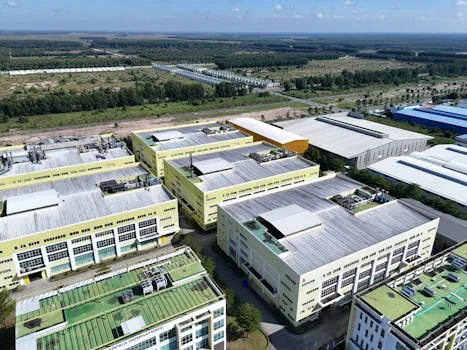
Membrane Bioreactor (MBR) technology is the most effective solution for Hat Yai hospitals requiring high-quality effluent for potential water reuse or discharge into sensitive local canals. By combining the biological treatment of activated sludge with a physical ultrafiltration barrier (typically 0.1 μm pore size), MBR systems achieve 99.9% pathogen removal and 95% COD reduction. While these systems are ideal for space-constrained urban hospitals, they require a commitment to membrane maintenance, including chemical cleaning every 3 to 6 months to prevent fouling. Understanding how MBR systems achieve 99.9% pathogen removal is critical for engineers evaluating the trade-off between footprint and operational complexity.
Dissolved Air Flotation (DAF) serves a different purpose, primarily targeting the removal of total suspended solids (TSS) and fats, oils, and grease (FOG). Using micro-bubbles (40–60 μm), DAF systems for high-efficiency TSS and FOG removal are highly effective for pre-treating waste from surgical wards and hospital kitchens. However, DAF alone is insufficient for meeting Thailand's microbial standards, as it does not target dissolved pharmaceuticals or pathogens. When choosing between DAF and IAF for hospital wastewater, DAF is generally preferred for its ability to handle the specific gravity of medical waste solids.
Chlorine Dioxide (ClO₂) disinfection has emerged as the preferred alternative to traditional liquid chlorine in Thai hospitals. Unlike chlorine, ClO₂ does not produce carcinogenic trihalomethanes (THMs) and remains effective across a wider pH range. It provides a 5-log reduction of bacteria and viruses, making it highly effective against the high pathogen loads found in medical effluent. For a comprehensive disinfection strategy, chlorine dioxide disinfection for hospital effluent requires on-site generation to ensure the stability and potency of the oxidant.
| Metric | MBR (Membrane Bioreactor) | DAF (Dissolved Air Flotation) | Chlorine Dioxide (ClO₂) |
|---|---|---|---|
| Pathogen Removal | 99.9% (Physical + Bio) | 20–40% (Physical only) | 99.999% (Chemical) |
| Footprint | Very Small | Medium | Small (Generator only) |
| Sludge Production | Low | High | None |
| Energy Consumption | High (Aeration + Pumps) | Moderate | Low |
| Primary Use Case | Complete Treatment | Pre-treatment (TSS/FOG) | Final Disinfection |
Cost Breakdown: Hospital Wastewater Treatment Systems in Hat Yai (2025)
Capital expenditures (CAPEX) for hospital wastewater treatment systems in Hat Yai range from ฿2.5M for a basic 50 m³/day DAF-based system to over ฿12M for a 500 m³/day high-performance MBR installation. These costs are influenced by the degree of automation, the quality of filtration membranes, and the integration of advanced disinfection units. In the context of hospital wastewater treatment solutions in Southeast Asia, Thailand's costs are slightly higher due to stricter compliance standards and the need for flood-resilient engineering.
Operational expenditures (OPEX) are a critical consideration for procurement officers. MBR systems typically have the highest OPEX, ranging from ฿30 to ฿85 per cubic meter of treated water, primarily driven by energy for membrane scouring and the eventual cost of membrane replacement every 5 to 7 years. Chlorine dioxide systems have lower energy costs but require a consistent budget for precursor chemicals (sodium chlorite and hydrochloric acid). The following table provides a budgetary estimate for different capacities in Hat Yai:
| Capacity (m³/day) | System Type | Estimated CAPEX (THB) | Estimated OPEX (THB/m³) |
|---|---|---|---|
| 50 | DAF + Disinfection | ฿2.5M – ฿3.5M | ฿20 – ฿35 |
| 100 | MBR Integrated | ฿4.5M – ฿6.0M | ฿40 – ฿60 |
| 250 | MBR + ClO₂ | ฿7.5M – ฿9.5M | ฿35 – ฿55 |
| 500 | Advanced MBR + DAF | ฿10M – ฿12M+ | ฿30 – ฿50 |
The Return on Investment (ROI) for these systems is often calculated through "compliance avoidance"—preventing the heavy fines associated with environmental violations—and the potential for water reuse in cooling towers or landscape irrigation. Payback periods for ClO₂ systems are typically the shortest (3–4 years) due to their low capital entry point, while MBR systems (6–8 years) provide long-term value through superior water quality and reduced land requirements. Financing for Hat Yai hospitals may be available through the Thailand Pollution Control Department’s subsidies for environmental infrastructure upgrades.
Compliance Checklist: How to Ensure Your Hospital Wastewater System Meets Thai Standards

A comprehensive wastewater characterization study is the first mandatory step for Hat Yai hospitals to ensure system design meets influent loading requirements. This study must identify the concentrations of BOD, COD, and specific pathogens during both peak and off-peak hours. Once the baseline is established, facility managers should follow this structured framework to ensure long-term compliance:
- Step 1: Characterization & Loading Analysis: Conduct a 7-day sampling program