
Alabama’s top sewage treatment equipment suppliers offer systems with capacities from 1 to 300 m³/h, achieving 92–97% TSS removal for industrial and municipal applications. This guide compares 5 leading suppliers—including Pump & Process Equipment and KCS Industrial—using technical specs, EPA compliance data, and 2025 cost benchmarks to help buyers select the right system for their project’s flow rate, footprint, and regulatory requirements.
Why Alabama’s Wastewater Regulations Demand High-Performance Equipment
Alabama’s industrial and municipal wastewater discharges are governed by stringent permit limits, with the Alabama Department of Environmental Management (ADEM) enforcing a maximum of 30 mg/L for Total Suspended Solids (TSS) and 25 mg/L for Biochemical Oxygen Demand (BOD) for most facilities. For industrial dischargers, especially those in the food processing sector, strict FOG (Fats, Oils, and Grease) limits of 15 mg/L are enforced to prevent sewer line blockages and protect receiving waters. Facilities failing to meet these EPA NPDES permit limits face significant penalties and operational disruptions.
Common violations in Alabama frequently stem from industries with high organic loads. Poultry processing plants, for instance, typically generate influent with high concentrations, often exceeding 1,200 mg/L BOD and 500 mg/L TSS, making FOG removal efficiency a critical parameter. Textile mills struggle with color and chemical oxygen demand (COD), while metal finishing operations must address heavy metal contaminants. Beyond conventional pollutants, the EPA’s 2023 enforcement focus has intensified on nutrient limits, particularly for facilities discharging into sensitive watersheds like Mobile Bay and the Tennessee River. New permits or renewals often include limits as low as 3 mg/L for Total Nitrogen (TN) and 1 mg/L for Total Phosphorus (TP), as seen in cases like the 2022 Tyson Foods consent decree regarding nutrient discharges.
Alabama’s humid climate and significant temperature swings also affect wastewater treatment equipment performance. High humidity can exacerbate corrosion risks for exposed metal components, while fluctuating temperatures impact biological treatment processes, potentially leading to reduced efficiency in clarifiers or increased energy demands for aeration systems. Designing for these environmental factors is crucial for long-term reliability and cost-effective operation of wastewater treatment equipment in Alabama.
| Parameter | Alabama DEM Permit Limits (Typical Industrial) | Typical Poultry Processing Influent |
|---|---|---|
| Total Suspended Solids (TSS) | < 30 mg/L | ~500 mg/L |
| Biochemical Oxygen Demand (BOD) | < 25 mg/L | ~1,200 mg/L |
| Fats, Oils, and Grease (FOG) | < 15 mg/L | ~1,500 mg/L |
| Total Nitrogen (TN) | < 3 mg/L (sensitive watersheds) | ~80 mg/L |
| Total Phosphorus (TP) | < 1 mg/L (sensitive watersheds) | ~15 mg/L |
Top 5 Sewage Treatment Equipment Suppliers in Alabama: Technical Comparison
Evaluating sewage treatment equipment suppliers in Alabama requires a detailed technical comparison across critical performance, compliance, and service parameters to ensure optimal system selection. While many providers offer general services, discerning the best fit for specific industrial or municipal needs demands quantifiable metrics. The market for sewage treatment equipment suppliers in Alabama USA is diverse, with key players specializing in different technologies and service models.
Key differentiators among Alabama's leading suppliers include specialized technology offerings and extensive service histories. KCS Industrial, for example, is recognized for its robust Atlas Copco DAF systems, which consistently achieve 95% FOG removal efficiency, making them ideal for high-FOG industrial applications. Pump & Process Equipment boasts over 33 years of service history in Alabama, providing a wide range of pumping and process solutions with deep regional expertise. Lakeside Equipment is known for its durable screw pumps, particularly effective in high-solids applications common in municipal wastewater treatment. Valicor specializes in industrial wastewater treatment services, often integrating various equipment types, while Legacy Wastewater focuses on package plant solutions for smaller communities and decentralized sites.
Certifications are paramount for ensuring equipment quality and regulatory compliance. Buyers should prioritize suppliers whose equipment carries NSF/ANSI 61 certification for components in contact with drinking water, UL 508A for industrial control panels, and, where applicable, Alabama DEM pre-approval for package plants. These certifications provide assurance of reliability, safety, and adherence to established standards, reducing risks associated with project delays and non-compliance.
| Parameter | Pump & Process Equipment | KCS Industrial | Lakeside Equipment | Valicor | Legacy Wastewater |
|---|---|---|---|---|---|
| Flow Rate Range (m³/h) | 5 - 250 | 10 - 300 | 20 - 500 | Varies (service-based) | 1 - 50 |
| TSS Removal (%) | 90-95% | 92-97% | 85-92% | Varies by solution | 88-93% |
| FOG Removal (%) | 85-90% | 90-95% (Atlas Copco DAF) | N/A (focus on solids) | 90%+ (specialized) | 75-85% |
| Key Certifications | UL 508A, Manufacturer specific | UL 508A, Manufacturer specific | ISO 9001 | ISO 14001, OHSAS 18001 | NSF/ANSI 40, ADEM pre-approval for some models |
| Primary Service Area | AL, NW FL, GA | AL, MS, FL Panhandle | National (local reps) | National (local branches) | AL, GA, TN |
| Typical Lead Time (weeks) | 10-16 | 12-20 | 14-24 | Varies by project | 8-14 |
| Warranty (equipment) | 1-2 years | 1-2 years | 1-3 years | Varies by component | 1-2 years |
| Remote Monitoring | Optional | Standard for DAF | Optional | Integrated | Optional |
| Mobile Options | Limited | Yes (skid-mounted DAF) | No | Yes (containerized) | Limited |
| Compliance Support | Extensive (permitting, reporting) | Strong (process optimization) | Moderate | Comprehensive | Good for package plants |
System Selection Guide: Matching Equipment to Alabama’s Industrial Needs
Selecting the appropriate sewage treatment equipment for industrial and municipal applications in Alabama hinges on a precise alignment of system capabilities with specific influent characteristics, discharge targets, and operational constraints. A structured approach helps facilities identify the most cost-effective and compliant solution. This decision framework begins with three critical questions:
- What is your industry and primary wastewater characteristic?
- For poultry processing or food and beverage, high FOG and BOD loads indicate a need for effective primary treatment like Alabama-compliant DAF systems for FOG and TSS removal followed by aerobic digestion.
- For municipal sewage or general industrial wastewater with moderate organic loads, a robust biological treatment like an MBR or package plant is often suitable.
- For industries with specific pollutants (e.g., heavy metals, dyes), specialized tertiary treatment may be required.
- What is your average and peak flow rate?
- Small facilities or rural communities (<10 m³/h) often benefit from compact solutions like WSZ package plants for Alabama’s rural communities and small industries, which are scalable and offer a smaller footprint.
- Medium-sized facilities (10–100 m³/h) might combine technologies such as a DAF system for primary clarification followed by a conventional activated sludge system and clarifier.
- Large industrial complexes or major municipal plants (>100 m³/h) typically require advanced systems like compact MBR systems for Alabama’s space-constrained municipal plants or custom-engineered treatment plants (ETPs).
- What are your site-specific constraints, including available space and budget?
- For sites with limited space, WSZ package plants can be 50% smaller than conventional systems, and MBR technology reduces footprint by up to 60% compared to traditional secondary treatment, albeit with a typically 20% higher capital expenditure.
- Underground or containerized options address aesthetic concerns and space limitations.
Alabama-specific considerations further refine the selection. Facilities in coastal areas require hurricane-resilient designs, including flood-proof controls and robust anchoring. For northern Alabama, cold-weather performance is critical, necessitating insulated tanks and optimized biological processes to maintain efficiency. Remote monitoring capabilities are invaluable for rural sites, reducing the need for frequent on-site operator visits and ensuring consistent performance, which directly impacts industrial DAF systems and other automated equipment.
Cost Breakdown: Sewage Treatment Equipment in Alabama (2025 Data)
Understanding the total cost of ownership for sewage treatment equipment in Alabama, encompassing both capital expenditure (CAPEX) and operational expenditure (OPEX), is critical for accurate budgeting and investment justification. These costs vary significantly based on system type, capacity, and complexity, with Alabama-specific factors influencing the final figures.
Capital expenditure (CAPEX) for sewage treatment equipment in Alabama includes the cost of the equipment, installation, and associated fees. For instance, a WSZ package plant for a small industrial or municipal application typically ranges from $80,000 to $300,000. A standalone DAF system can cost between $120,000 and $500,000, depending on flow rate and ancillary equipment. More advanced MBR systems, offering superior effluent quality and a smaller footprint, command higher CAPEX, ranging from $250,000 to $1.2 million for medium to large-scale applications. Additionally, buyers must account for Alabama sales tax (currently 9.25% statewide average, with local variations) and permitting fees, which can range from $5,000 to $20,000 for complex industrial wastewater discharge permits from ADEM.
Operational expenditure (OPEX) comprises ongoing costs critical for long-term financial planning. Energy costs are a significant component, with Alabama's average industrial electricity rate around $0.12/kWh. Chemical consumption, particularly for pH adjustment, coagulation, and flocculation in DAF systems, can range from $0.50 to $2.00 per cubic meter of treated wastewater. Labor costs for certified operators in Alabama typically fall between $25 and $40 per hour. Annual maintenance, including parts replacement and preventative service, usually accounts for 2–5% of the initial CAPEX. These factors contribute to the overall wastewater treatment ROI.
An ROI calculator demonstrates the financial benefits of investing in efficient treatment. For industrial facilities like poultry plants, a DAF system can achieve payback periods of 3–5 years, primarily through avoided fines from Alabama DEM penalties, which can range from $10,000 to $50,000 per violation for permit exceedances. Textile plants might see a payback period of 5–7 years, factoring in reduced surcharges for discharging to municipal sewers. the AlabamaSAVES Program offers low-interest loans for water efficiency and other energy-saving projects, while the USDA Rural Development grants can provide significant funding for wastewater infrastructure upgrades in municipalities with populations under 10,000.
| Cost Category | WSZ Package Plant | DAF System | MBR System |
|---|---|---|---|
| CAPEX Range (Equipment + Installation) | $80,000 – $300,000 | $120,000 – $500,000 | $250,000 – $1,200,000 |
| Alabama Sales Tax (avg. 9.25%) | Included in range estimate | Included in range estimate | Included in range estimate |
| Permitting Fees (ADEM) | $5,000 – $10,000 | $10,000 – $20,000 | $10,000 – $20,000 |
| OPEX Benchmarks (per year, illustrative) | |||
| Energy ($0.12/kWh) | $5,000 – $15,000 | $10,000 – $30,000 | $20,000 – $60,000 |
| Chemicals ($0.50–$2.00/m³) | $2,000 – $8,000 | $10,000 – $50,000 | $5,000 – $20,000 |
| Labor ($25–$40/hour) | $15,000 – $30,000 | $20,000 – $40,000 | $25,000 – $50,000 |
| Maintenance (2–5% of CAPEX) | $1,600 – $15,000 | $2,400 – $25,000 | $5,000 – $60,000 |
| Typical Payback Period (based on avoided fines/surcharges) | 4-6 years | 3-5 years (poultry), 5-7 years (textile) | 6-9 years (for high-quality effluent needs) |
Case Study: How an Alabama Poultry Plant Achieved 95% FOG Removal with a DAF System
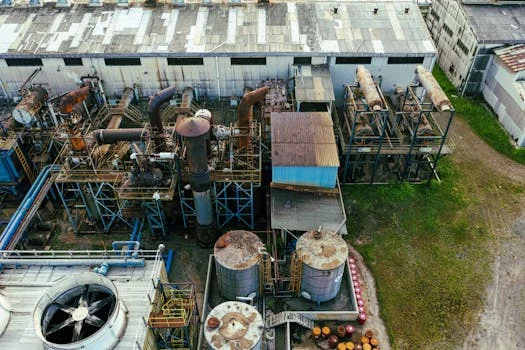
A recent upgrade at a major poultry processing facility in Blountsville, Alabama, demonstrated that implementing a properly engineered Dissolved Air Flotation (DAF) system can achieve FOG removal efficiencies exceeding 95% and ensure consistent compliance with stringent ADEM discharge limits. This facility, part of Tyson Foods, faced persistent challenges meeting its permit limits for FOG and TSS due to the high organic load inherent in poultry processing wastewater.
Prior to the upgrade in 2023, the Blountsville plant’s influent consistently showed FOG concentrations up to 1,500 mg/L and TSS levels around 800 mg/L. Their ADEM discharge permit required FOG to be below 15 mg/L and TSS below 30 mg/L. The existing treatment system struggled to handle these fluctuating loads, leading to frequent permit violations and operational inefficiencies.
The solution involved installing a KCS Industrial’s Atlas Copco DAF system with a design flow rate of 30 m³/h. This system was integrated with a precise chemical dosing regime involving pH adjustment and polymer addition to optimize flocculation and air bubble adhesion. The DAF unit effectively separated fats, oils, grease, and suspended solids from the wastewater stream, producing a concentrated sludge for further dewatering.
Within three months of commissioning, the plant achieved remarkable results: 95% FOG removal, 92% TSS removal, and an 85% reduction in BOD. This brought the facility into consistent compliance with its ADEM permit limits, eliminating the risk of costly fines and improving its environmental stewardship. Lessons learned from this project included the critical importance of chemical optimization, which reduced chemical costs by 20% through precise dosing. the DAF system’s remote monitoring capabilities cut operator visits by 50%, a significant advantage for rural Alabama locations, demonstrating the value of advanced automation in FOG removal technologies for Alabama’s poultry and food plants.
Frequently Asked Questions
Addressing common inquiries regarding sewage treatment equipment procurement and operation in Alabama is essential for facilitating informed decision-making and ensuring successful project implementation.
Q: What are the typical lead times for sewage treatment equipment delivery and installation in Alabama?
A: Lead times for sewage treatment equipment supplier in Alabama USA vary by system complexity and supplier. Standard package plants typically have lead times of 8-14 weeks, while custom-engineered DAF or MBR systems can take 12-24 weeks for fabrication and delivery. Installation adds another 2-8 weeks, depending on site readiness and scope.
Q: How long does it take to obtain an ADEM wastewater discharge permit for a new industrial facility?
A: Obtaining an ADEM wastewater discharge permit for a new industrial facility in Alabama typically takes 6–12 months. This timeline includes application submission, technical review, public notice period, and final issuance. Facilities must ensure their proposed treatment system meets all EPA NPDES permit limits and ADEM regulations before applying.
Q: What are the primary factors influencing the operational costs of a wastewater treatment plant in Alabama?
A: The main factors influencing operational costs are energy consumption (averaging $0.12/kWh in Alabama), chemical usage (ranging from $0.50–$2.00/m³ for some processes), labor for operators ($25–$40/hour), and routine maintenance (2–5% of CAPEX annually). Sludge disposal costs also significantly impact overall wastewater treatment ROI.
Q: Are there any state or federal funding programs available for wastewater treatment upgrades in Alabama?
A: Yes, several programs can assist with funding. The AlabamaSAVES Program offers low-interest loans for water efficiency and energy improvement projects. Additionally, the USDA Rural Development provides grants and loans for wastewater infrastructure in rural municipalities with populations under 10,000, which can significantly reduce the package sewage treatment cost for small communities.


