Hospital Wastewater Treatment in Rwanda: Systems, Compliance & Cost-Effective Solutions
Hospital wastewater in Rwanda poses significant risks: studies from Byumba Hospital show effluent contamination levels of 25% COD, 19.49% chromium, and 30% zinc in receiving streams (UNILAK-ERL 2021). To meet Rwanda’s EPA and WHO-aligned discharge standards, hospitals must deploy systems capable of 90%+ COD removal and 99% pathogen kill. MBR, DAF, and chlorine dioxide generators are the most viable solutions, each with trade-offs in footprint, energy use, and pharmaceutical removal efficiency. This guide compares these technologies, provides a compliance checklist, and breaks down costs for turnkey systems in Rwanda’s market.
Why Hospital Wastewater Treatment is Critical for Rwanda’s Public Health
The discharge of untreated medical effluent into Rwandan water bodies is a primary driver of environmental degradation and public health crises. A 2021 study by the University of Lay Adventists of Kigali (UNILAK-ERL) focusing on Byumba Hospital revealed that untreated effluent led to heavy metal contamination in the Ruhashya and Rwiminsi streams, with zinc and chromium levels significantly exceeding safe ecological thresholds. Specifically, the data showed 19.49% chromium and 30% zinc contamination in receiving waters, which directly impacts downstream communities relying on these sources for irrigation and domestic use.
Beyond heavy metals, the presence of pharmaceutical residues is a growing concern. A University of Rwanda (UR) study in 2023 detected high concentrations of antibiotics, analgesics, and personal care products in hospital discharge. These substances are not removed by traditional septic tanks or basic sedimentation. When these residues enter the Nyabarongo River or Lake Kivu basins, they contribute to the development of antimicrobial resistance (AMR), making standard medical treatments less effective for the general population. The ecotoxicological effects on aquatic life in these basins further threaten Rwanda's biodiversity and fisheries.
The urgency is compounded by Rwanda’s specific water scarcity context. According to World Bank data (2022), approximately 60% of the rural population lacks access to safely managed water. This high level of reliance on surface water and shallow wells means that hospital-borne pathogens—including those causing cholera and typhoid—can spread rapidly if wastewater is not strictly managed. For hospital administrators, implementing robust hospital wastewater treatment in Rwanda is not just a regulatory hurdle but a critical intervention in the national health infrastructure.
Rwanda’s Hospital Wastewater Discharge Standards: A Compliance Checklist
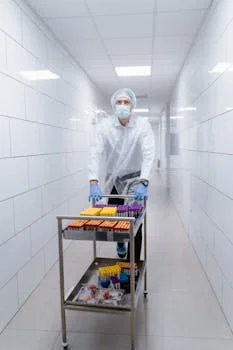
The Rwanda Environment Management Authority (REMA) and the Rwanda Food and Drugs Authority (RFDA) enforce discharge limits that align with WHO Guidelines for Drinking-water Quality and the EU Urban Waste Water Directive 91/271/EEC. For hospitals, the primary focus is on Chemical Oxygen Demand (COD), Biological Oxygen Demand (BOD), and the elimination of specific pathogens. Currently, many facilities operate with untreated effluent reaching COD levels of 500+ mg/L, creating a massive compliance gap when compared to the national limit of 125 mg/L.
| Parameter | Rwanda EPA Standard (Hospital) | Typical Untreated Effluent (Byumba Data) | Compliance Gap |
|---|---|---|---|
| COD (Chemical Oxygen Demand) | <125 mg/L | 500 - 850 mg/L | 75 - 85% Reduction Needed |
| BOD (Biochemical Oxygen Demand) | <25 mg/L | 250 - 400 mg/L | 90%+ Reduction Needed |
| TSS (Total Suspended Solids) | <35 mg/L | 200 - 350 mg/L | 82 - 90% Reduction Needed |
| Fecal Coliform | <1,000 CFU/100mL | 10^6 - 10^8 CFU/100mL | 99.9% Kill Needed |
| Chromium (Cr) | <0.1 mg/L | 0.5 - 1.2 mg/L | 80%+ Removal Needed |
| Zinc (Zn) | <2.0 mg/L | 5.0 - 8.0 mg/L | 60%+ Removal Needed |
Failure to meet these standards carries severe consequences. Under the 2023 REMA guidelines, hospitals found in violation can face administrative fines up to 5,000,000 RWF, immediate operational shutdowns for high-risk contamination, and significant reputational damage. To ensure compliance, procurement managers should utilize a hospital wastewater compliance checklist that includes: verifying the existence of a valid Environmental Impact Assessment (EIA), ensuring monthly laboratory testing of effluent, and maintaining a digital log of system performance parameters.
3 Hospital Wastewater Treatment Technologies Compared for Rwanda’s Needs
Selecting the appropriate technology depends on the hospital's location, available space, and the specific nature of its medical services (e.g., surgical centers vs. general clinics). For Rwandan facilities, three technologies stand out as the most reliable for meeting EPA standards.
Membrane Bioreactor (MBR): This technology combines biological treatment with 0.1 μm ultrafiltration. MBR systems for hospital wastewater in Rwanda are ideal for urban facilities like the Kigali Teaching Hospital (CHUK) where space is limited. MBRs achieve 95% COD removal and 99.9% pathogen kill, often eliminating the need for secondary clarification. While energy-intensive (0.8–1.2 kWh/m³), the high-quality effluent is suitable for non-potable reuse in hospital gardens or cooling systems. Membrane replacement typically occurs every 5–7 years depending on maintenance.
Dissolved Air Flotation (DAF): DAF systems are highly effective at removing fats, oils, and greases (FOG) as well as total suspended solids. By using micro-bubble technology, DAF systems for high-solid hospital wastewater achieve 92–97% efficiency in solids removal. This is particularly useful for district hospitals like Butaro, where effluent may have high organic loading. DAF has a lower energy footprint (0.3–0.5 kWh/m³) compared to MBR but is less effective at removing dissolved pharmaceutical residues unless paired with advanced oxidation.
Chlorine Dioxide (ClO₂) Generators: For many rural clinics, disinfection is the primary compliance priority. On-site chlorine dioxide disinfection for hospitals provides a 99%+ pathogen kill rate. Unlike liquid bleach, ClO₂ does not produce harmful trihalomethanes (THMs) and is generated on-site, removing the logistical risk of transporting hazardous chemicals over Rwanda's mountainous terrain. It is often used as a final polishing step in hybrid systems.
| Technology | COD Removal | Footprint | Energy Use | Best For |
|---|---|---|---|---|
| MBR | 95% - 98% | Very Compact | High (0.8-1.2 kWh/m³) | Urban hospitals, pharmaceutical removal |
| DAF | 70% - 85% | Medium | Low (0.3-0.5 kWh/m³) | High-solids effluent, pre-treatment |
| ClO₂ Generator | <10% | Small | Very Low | Disinfection, rural clinics |
How to Select the Right System for Your Rwandan Hospital: A Decision Framework
Choosing a system requires a balancing act between capital expenditure (CAPEX) and long-term operational costs (OPEX). Administrators should follow this five-step decision framework to ensure the selected technology is sustainable for their specific institution.
- Assess Effluent Volume and Profile: Begin by measuring daily peak flows. Use the Byumba Hospital data (COD 500+ mg/L) as a baseline if local data is unavailable. High-strength waste requires pre-treatment like screening or DAF before entering an MBR.
- Determine Space Constraints: Urban hospitals in Kigali often lack the land for large lagoons or expansive activated sludge plants. In these cases, integrated MBR systems are the only viable choice due to their vertical stackability and small footprint.
- Evaluate Budget Trade-offs: A lower CAPEX system like a basic septic tank with ClO₂ disinfection may seem attractive but often fails to meet COD limits, leading to fines. Investing in an MBR system may have a higher initial cost but reduces the risk of REMA penalties and allows for water reuse.
- Check Local Support: Maintenance is the most common point of failure. Ensure your supplier has Rwandan distributors or service partners capable of providing replacement membranes, sensors, and chemical reagents. HydropureWater systems are designed for modular maintenance to simplify this process.
- Pilot Testing: For large-scale installations (over 100 m³/day), a 3-month pilot trial is recommended. This helps calibrate chemical dosing and biological aeration to the specific "cocktail" of medical waste produced by the hospital.
A typical decision tree for Rwandan hospitals: If space is <100m² and COD must be <125mg/L, select MBR. If space is available and the primary goal is solids removal from a kitchen/laundry-heavy stream, select DAF. For all systems, ClO₂ should be the final disinfection stage to ensure pathogen compliance.
Cost Breakdown: Hospital Wastewater Treatment Systems in Rwanda (2025)
Budgeting for a detailed guide to MBR systems in Rwanda requires looking at both the turnkey installation and the price per cubic meter of treated water. Costs in the Rwandan market are influenced by import logistics and the availability of skilled electrical contractors for installation.
| System Type | Estimated CAPEX (USD) | OPEX ($/m³ Treated) | Key Cost Drivers |
|---|---|---|---|
| MBR (10–100 m³/day) | $50,000 – $200,000 | $0.50 – $1.20 | Electricity, Membrane cleaning |
| DAF (20–300 m³/day) | $30,000 – $150,000 | $0.20 – $0.60 | Flocculants, Sludge disposal |
| ClO₂ Generator | $15,000 – $80,000 | $0.10 – $0.30 | Precursor chemicals (Salt/Acid) |
The Return on Investment (ROI) is primarily realized through the avoidance of REMA fines and the reduction in water procurement costs. For example, a 50 m³/day MBR system costing $75,000 can save a hospital approximately 5,000,000 RWF per year in potential fines. If the treated water is reused for flushing toilets or laundry, the hospital can reduce its utility bill by up to 40%, leading to a total system payback period of 3.5 to 5 years. For sludge management, hospitals should also evaluate sludge dewatering options for hospital wastewater to reduce the volume of waste transported to landfills.
Funding is often available through the Rwanda Green Fund (FONERWA), which provides grants and low-interest loans for projects that improve water quality and climate resilience. Additionally, World Bank WASH programs frequently partner with district hospitals to subsidize the installation of compliant turnkey systems.
Case Study: How a Rwandan Hospital Reduced COD by 95% with a Turnkey MBR System
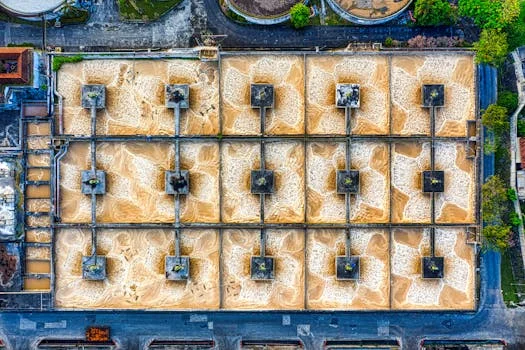
A 200-bed district hospital located in the Huye District faced a critical challenge in 2023. Their existing septic system was overflowing, and local authorities reported COD levels of 450 mg/L and TSS of 300 mg/L in the nearby marshland. The hospital was under threat of a 4,000,000 RWF fine and an operational suspension.
The solution implemented was a HydropureWater MBR systems for hospital wastewater in Rwanda with a capacity of 50 m³/day. The system included an automated bar screen for pre-treatment to remove medical plastics and textiles, followed by the MBR unit and a final ClO₂ disinfection stage. Within the first month of operation, the facility achieved a COD of <25 mg/L (a 95% reduction) and TSS of <10 mg/L. Most importantly, fecal coliform counts were reduced by 99.9%, bringing the hospital into full compliance with Rwanda EPA standards.
A key lesson from this installation was the necessity of operator training. HydropureWater provided a two-week on-site training program for the hospital’s technical staff, focusing on quarterly chemical cleaning of the membranes and sensor calibration. This proactive maintenance approach has ensured the system remains operational with zero downtime since its commissioning.
Frequently Asked Questions
Q: What are the most common contaminants in Rwandan hospital wastewater?
A: Based on UNILAK-ERL and UR studies, the primary contaminants are high COD (500+ mg/L), heavy metals like chromium (0.5 mg/L) and zinc (2+ mg/L), and pharmaceutical residues including antibiotics and analgesics which contribute to antimicrobial resistance.
Q: How does Rwanda’s hospital wastewater discharge standard compare to Kenya or Uganda?
A: Rwanda’s standards are relatively strict. The Rwanda COD limit of <125 mg/L is more stringent than Kenya’s (<250 mg/L) but is closely aligned with Uganda’s (<100 mg/L). All three nations are increasingly harmonizing their standards with WHO environmental health guidelines.
Q: Can small clinics in Rwanda use the same systems as large hospitals?
A: Yes, but the technology is scaled down. For small clinics with flows under 10 m³/day, compact MBR units or simple chlorine dioxide generators are the most cost-effective way to ensure disinfection and organic removal without requiring a full-time wastewater engineer on site.
Q: What maintenance is required for hospital wastewater treatment systems in Rwanda?
A: MBR systems require monthly membrane inspections and quarterly chemical cleaning. DAF systems need weekly skimming of the flotation tank and monthly checks on chemical dosing pumps. Chlorine dioxide generators require daily salt/precursor refills and quarterly sensor calibration.
Q: Are there government subsidies for hospital wastewater treatment in Rwanda?
A: Yes, FONERWA (Rwanda Green Fund) offers various funding instruments that can cover up to 70% of the cost for compliant wastewater systems. Hospitals must typically submit a technical proposal and a REMA-approved Environmental Impact Assessment to qualify.