What Is a Skid Mounted Treatment Plant?
A skid mounted treatment plant vs alternatives like containerized units, MBR systems, or traditional stick-built plants offers faster deployment—typically 6–8 weeks vs 6+ months—with up to 60% smaller footprint and 30% lower CAPEX. Factory-tested skids achieve plug-and-play installation, making them ideal for industrial sites needing rapid, scalable wastewater solutions.
A skid mounted treatment plant is a pre-engineered, structural frame—typically constructed from high-grade carbon steel or stainless steel—that integrates all necessary pumps, controls, tanks, and process equipment into a single, transportable module. Unlike traditional systems where components are shipped individually, a skid system is fully assembled, wired, and hydro-tested offsite in a controlled factory environment. This approach eliminates the common field assembly delays that plague industrial projects, where weather, labor shortages, or site-specific construction errors can derail a commissioning timeline (HydropureWater field data, 2025).
For industrial procurement managers, the primary value of a skid system lies in its readiness. It arrives at the facility ready for immediate connection to power, influent/effluent piping, and utilities. This is critical in high-stakes sectors like food processing, pharmaceuticals, and textile manufacturing, where production uptime is directly tied to wastewater compliance. HydropureWater’s skid-mounted systems are engineered with integrated PLC-controlled automation, ensuring that the system maintains steady-state operation with minimal manual intervention. These units are designed to meet rigorous international standards, including ISO 14001 environmental management protocols and the EU Wastewater Directive 91/271/EEC, providing a high level of regulatory assurance for EPC consultants and plant engineers.
Technical credibility is established through the "plug-and-play" nature of the equipment. By centralizing the footprint on a rigid structural base, the system minimizes vibration, simplifies maintenance access, and allows for a "factory-controlled" quality level that is nearly impossible to replicate with on-site construction.
How Skid Systems Compare to Containerized Treatment Units
The choice often boils down to a skid mounted treatment plant vs containerized units in the modular wastewater market. Containerized systems utilize standard ISO shipping containers (20ft or 40ft) to house the treatment equipment. This provides an inherent advantage in extreme climates or remote locations where the container serves as both the transport vessel and the protective building. However, this protection comes at the cost of design flexibility. The fixed dimensions of a shipping container limit internal layout options and can make future upgrades or component replacements physically difficult.
Skid systems, conversely, offer superior design flexibility. Because they are not confined by the walls of a container, engineers can optimize the layout for maintenance access and process efficiency. While a containerized unit might require cutting through steel walls or removing doors to replace a large pump or membrane module, a skid system allows 360-degree access to all components. Containerized units typically cost 15–25% more than open-skid counterparts due to the structural modifications, insulation, and HVAC systems required to make the container habitable for the equipment (HydropureWater 2025 cost analysis). For many industrial plants, a compact underground skid-mounted sewage treatment unit is often the preferred choice when the equipment is being housed within an existing building or a sheltered area.
| Feature | Skid Mounted System | Containerized System |
|---|---|---|
| Mobility | High (requires flatbed) | Very High (standard ISO shipping) |
| Protection | Requires indoor or sheltered site | Self-contained, weatherproof |
| CAPEX | Baseline Cost | 15–25% Higher than Skid |
| Maintenance Access | Excellent (360-degree access) | Restricted (limited by container walls) |
| Expansion | Easy "Plug-and-Grow" | Difficult (limited by physical shell) |
Skid vs Traditional Stick-Built Plants
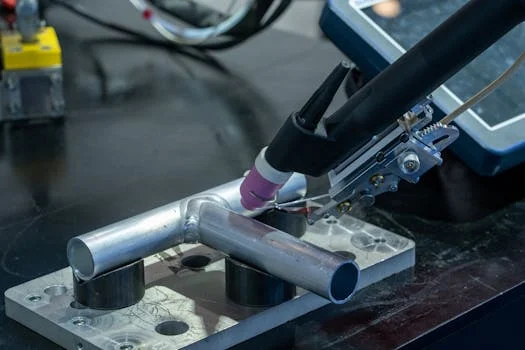
The most significant shift in industrial wastewater procurement over the last decade has been the transition from traditional stick-built plants to modular skid systems. Stick-built plants—where concrete basins are poured and equipment is installed piece-by-piece on-site—require 6–12 months of active construction. This timeline is subject to high labor costs, specialized supervision, and the inherent risks of site-based errors. A common scenario in industrial retrofits involves a project being delayed by months because a concrete clarifier failed a leak test or a field-welded pipe didn't meet pressure specs.
Skid systems effectively de-risk the project by cutting installation time by 70%. What takes 6 months on-site can be completed in 8–10 weeks at the factory. Because the assembly happens in a controlled environment, error rates are significantly lower. For an EPC consultant, this predictability is invaluable for maintaining project milestones. While stick-built plants offer a high degree of customization for massive municipal flows, they often lead to budget overruns in the industrial sector where agility is paramount. A detailed analysis of prefabricated vs traditional wastewater plants shows that for flows under 5,000 m³/day, the skid-mounted approach wins on almost every financial and performance metric.
Quality control is the "silent" benefit of the skid. Every weld, electrical connection, and sensor calibration is verified before the unit leaves the factory. This factory acceptance testing (FAT) ensures that when the unit arrives, the "commissioning" phase is a matter of days, not weeks of troubleshooting field-wired components.
Skid vs MBR and DAF Integrated Systems
Engineers must differentiate between the mounting format (skid) and the treatment process (MBR or DAF). A "skid" is the delivery method, while Membrane Bioreactor (MBR) and Dissolved Air Flotation (DAF) are the technologies used to treat the water. In modern industrial applications, these are often combined. For instance, a high-efficiency MBR system on skid for reuse-quality effluent integrates biological treatment with ultrafiltration membranes to produce water suitable for boiler feed or cooling towers.
MBR systems, such as HydropureWater’s DF series, deliver effluent with less than 1 μm filtration, providing a 60% smaller footprint than traditional activated sludge systems. When mounted on a skid, the MBR becomes a highly dense, high-performance tool for sites with limited real estate. On the other hand, DAF systems are the gold standard for removing 90–95% of fats, oils, and grease (FOG) and total suspended solids (TSS). In food and beverage applications, a DAF-on-skid is often used as a pretreatment step before an MBR or municipal discharge.
The choice between an integrated skid-mounted process and a stand-alone package plant depends on the wastewater's strength. For high-strength industrial waste, a DAF-on-skid may outperform a basic package plant by removing the heavy solids load that would otherwise overwhelm a biological system. Many advanced facilities now employ a multi-skid approach: one skid for DAF pretreatment and a second for MBR polishing.
| Technology | Primary Removal Target | Effluent Quality | Footprint Efficiency |
|---|---|---|---|
| Skid-Mounted MBR | BOD, COD, Bacteria | Ultra-clean (Reuse ready) | Highest (60% smaller) |
| Skid-Mounted DAF | FOG, TSS, Heavy Solids | Pre-treatment quality | High (Vertical design) |
| Standard Package STP | Domestic-strength BOD | Discharge quality | Moderate |
For more specialized removal needs, procurement managers should also consider the role of DAF machines for heavy solids separation, which can be integrated into a modular skid train to handle fluctuating influent loads common in industrial batch processing.
Cost, Footprint, and Scalability Comparison
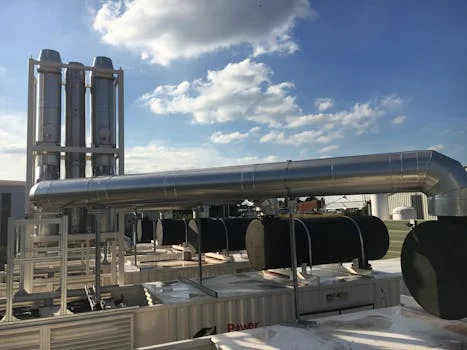
Data is the most persuasive tool when justifying CAPEX to stakeholders. Based on 2025 B2B market data, skid systems typically range from $180 to $250 per m³/day of treatment capacity. In contrast, traditional stick-built plants often exceed $300 to $400 per m³/day once on-site labor, civil works, and engineering overhead are factored in. This represents a significant capital saving that can be redirected toward higher-quality process equipment or automation. You can find more real-world CAPEX and ROI data for modular systems to support your budgetary planning.
Footprint efficiency is another area where skids dominate. By utilizing vertical space and compact component arrangements, skid plants use 30–50% less land area than conventional systems. For an MBR-on-skid, this space saving can reach up to 60%. This is particularly valuable for existing industrial sites where expansion space is non-existent. The scalability of modular skids allows for a "plug-and-grow" strategy. Instead of building a massive plant for a 10-year projected flow, a company can install one skid today and add a second unit in parallel as production increases, effectively deferring capital expenditure.
Operating costs (OPEX) are also optimized through modularity. For example, skid-mounted chemical dosing systems often achieve 20% lower chemical consumption compared to manual or loosely integrated systems. This is due to the precise PLC optimization and shorter pipe runs inherent in a skid design, which reduce chemical lag and dosing errors.
| Metric | Skid-Mounted | Stick-Built | Containerized |
|---|---|---|---|
| CAPEX ($/m³/day) | $180 – $250 | $300 – $400+ | $220 – $310 |
| Installation Time | 8–10 Weeks | 6–12 Months | 6–8 Weeks |
| Footprint Savings | 30–50% | Baseline | 20–40% |
| Scalability | Excellent | Poor (requires redesign) | Moderate |
Decision Framework: Which System Fits Your Needs?
Choosing the right system requires a weighted evaluation of your site's specific constraints. If your primary driver is speed of deployment and limited space, the skid-mounted system is the clear winner. If the application is for a remote mining site in an Arctic or desert environment, the containerized unit’s built-in shelter justifies its higher cost. Stick-built plants remain a viable option only for very large-scale municipal or industrial facilities processing over 5,000 m³/day where the economy of scale of massive concrete tanks finally outweighs the modular speed advantage.
For industrial reuse—where the goal is to recover up to 95% of process water—the most effective configuration is often a skid-mounted MBR paired with a Reverse Osmosis (RO) skid. This modular train provides the highest level of reliability and effluent quality. When selecting your membrane components, consulting a technical specs and selection guide for MBR modules is essential to ensure the membrane chemistry matches your specific wastewater contaminants.