A package wastewater treatment plant in Spain typically handles 1–200 m³/day, with MBR and A/O systems dominating due to Spain’s push for water reuse in agriculture. For example, 50m³/day containerized MBR units are actively deployed in rural areas where 30% of homes lack municipal sewer access, meeting RD 1620/2007 reuse standards. These decentralized systems offer a strategic alternative to centralized infrastructure, providing rapid deployment and compliance with stringent European Union environmental mandates.
Why Spain Needs Package Wastewater Treatment Plants
Approximately 30% of Spanish households, particularly in rural regions like Andalusia and Castilla-La Mancha, operate without connection to municipal sewer networks. This infrastructure gap necessitates decentralized solutions that can be deployed without the prohibitive costs of extensive piping networks. In these provinces, the geographical dispersion of small communities makes traditional centralized treatment economically unviable, leading to a rising demand for prefabricated, modular units that can be installed locally.
Spain currently recycles 22% of its treated wastewater—the highest rate in the European Union—primarily to support agricultural irrigation in water-stressed regions. This drive for circularity is codified in RD 1620/2007, which establishes the legal framework for the reuse of treated water. As drought conditions intensify across the Iberian Peninsula, package plants equipped with advanced filtration are becoming essential for agribusinesses in Almería and Murcia to maintain crop yields while adhering to strict groundwater protection laws.
Seasonal tourism in coastal regions, such as Alicante and the Costa del Sol, presents a unique hydraulic challenge where wastewater loads can quadruple during the summer months. Conventional fixed-capacity plants often struggle with these fluctuations, leading to discharge non-compliance. Modular package plants provide the necessary flexibility; operators can scale treatment capacity by adding units in parallel or utilizing trailer-mounted systems to handle peak loads. These systems are typically designed for a flow range of 5–100 m³/day, targeting a BOD (Biochemical Oxygen Demand) reduction of over 90% and keeping Total Suspended Solids (TSS) below 30 mg/L to meet discharge permits.
The transition toward decentralized models is further supported by the EU Urban Waste Water Directive 91/271/EEC. Small municipalities and industrial sites are under increasing pressure to treat effluent to secondary or tertiary levels before discharge. A international case study on decentralized wastewater solutions demonstrates how similar geographic and regulatory pressures have successfully shifted the market toward containerized, "plug-and-play" technology.
Top Technologies for Package Plants in Spanish Applications
Membrane Bioreactor (MBR) technology provides filtration levels below 1 μm, making it the primary choice for meeting Spanish water reuse standards in agricultural hubs. By combining biological treatment with membrane separation, a compact MBR membrane bioreactor system for reuse-quality effluent produces water with TSS levels below 5 mg/L and COD (Chemical Oxygen Demand) under 50 mg/L. This high-quality permeate is frequently used for the irrigation of vineyards and olive groves in regions like El Ejido, where traditional secondary treatment is insufficient for unrestricted irrigation under RD 1620/2007.
Anoxic/Aerobic (A/O) systems are cost-effective for residential communities and small villages where water reuse is not the primary goal. These biological systems achieve 90–95% efficiency in nitrogen removal and BOD reduction. A/O plants are favored for lower operational complexity and energy use compared to MBR systems. In many Spanish rural developments, these units are installed as a fully automated underground package sewage treatment plant, minimizing noise and odor while preserving landscape aesthetics.
Dissolved Air Flotation (DAF) systems manage high concentrations of Fats, Oils, and Grease (FOG) and suspended solids in industrial sectors, particularly food processing and olive oil production in Murcia. DAF units serve as pre-treatment before biological processing, handling influent with TSS levels exceeding 500 mg/L. Containerized and trailer-mounted versions allow rapid deployment at temporary sites such as construction camps or seasonal festivals where permanent infrastructure is not feasible.
| Technology Type | Ideal Spanish Application | Effluent Quality (BOD/TSS) | Main Advantage |
|---|---|---|---|
| MBR (Membrane Bioreactor) | Agribusiness, Crop Irrigation | <5 mg/L / <5 mg/L | Highest purity; meets RD 1620/2007 reuse |
| A/O (Anoxic/Aerobic) | Rural Villages, Small Hotels | <20 mg/L / <30 mg/L | Low energy; automated "set and forget" |
| DAF (Dissolved Air Flotation) | Food Processing, Murcia Ag-Ind | Pre-treatment focus | Removes 95%+ FOG and heavy solids |
| SBR (Sequencing Batch Reactor) | Seasonal Tourism (Alicante) | <25 mg/L / <35 mg/L | Handles highly variable flow rates |
Technical Specifications Comparison by Technology
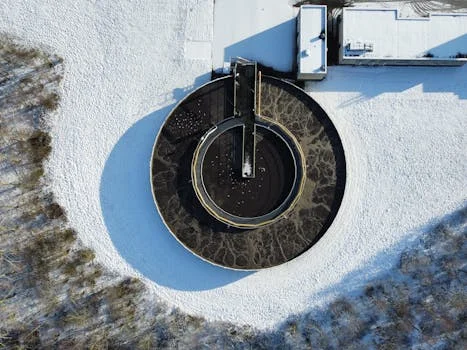
MBR package systems require 60% less space than conventional activated sludge plants and consume 1.2–1.8 kWh/m³. Their compact design is critical for sites with limited land or high real estate costs. Typically housed in standard 20ft or 40ft ISO containers, these units are easily transported to remote mountain or coastal locations. Automation enables remote monitoring via PLC systems, reducing reliance on on-site personnel (HydropureWater field data, 2025).
The WSZ series of A/O package plants supports flows from 1 to 80 m³/h. Constructed from carbon steel with heavy-duty epoxy coatings or glass-reinforced plastic (GRP), these systems resist corrosion in Spain’s coastal environments. Their ability to be buried saves surface area, a key benefit for boutique hotels and rural tourism properties that prioritize natural aesthetics. They operate with high stability and require minimal chemical input compared to industrial-grade DAF systems.
Spanish effluent standards are governed by national and EU regulations. For unrestricted irrigation, RD 1620/2007 requires fecal coliform levels below 1,000 CFU/100mL and TSS under 35 mg/L. Package plants must be sized and configured to meet these microbiological and physical requirements. DAF systems, though non-biological, are specified by hydraulic loading rates (typically 4–300 m³/h) and can remove 92–97% of TSS and FOG when used with appropriate chemical flocculants.
| Parameter | MBR System (Containerized) | A/O Plant (WSZ Series) | DAF Unit (Industrial) |
|---|---|---|---|
| Capacity Range | 10 – 2,000 m³/day | 1 – 1,500 m³/day | 4 – 300 m³/h |
| Footprint | Very Compact (ISO Container) | Moderate (Buried/Surface) | Compact (Skid-mounted) |
| Energy Use | 1.2 – 1.8 kWh/m³ | 0.6 – 1.0 kWh/m³ | Variable (Pump dependent) |
| Automation | Full PLC / Remote Access | Full PLC / Automatic | Manual to Semi-Auto |
| Sludge Yield | Low (Long SRT) | Moderate | High (Chemical sludge) |
Cost, Installation, and Supplier Evaluation in Spain
The capital cost for a 50 m³/day containerized MBR plant ranges from €180,000 to €250,000 FOB, with an additional 30% typically needed for shipping, customs, and local logistics in Spain. While MBR systems require higher initial investment than A/O systems, the return on investment often comes from eliminating irrigation water procurement costs. A detailed cost breakdown by capacity and technology shows that for Spanish SMEs, total cost of ownership must include membrane replacement every 5–7 years, averaging around €15,000 for a 50 m³/day unit.
Prefabricated package plants have significantly shorter installation timelines than traditional civil works. A modular unit can be commissioned within 2–4 weeks of arrival, whereas a site-built concrete plant usually takes 6–12 months for design, permitting, and construction. For Spanish project managers, this speed is crucial for meeting regulatory deadlines or preparing for peak tourism seasons. Prefabricated units also minimize construction delays and site disruption, which benefits ongoing industrial operations.
CE marking is mandatory for suppliers in the Spanish market to ensure compliance with European safety and environmental standards. Procurement officers should prioritize vendors with demonstrated knowledge of EU Directive 91/271/EEC and RD 1620/2007. After-sales support is critical; access to local technicians or partners in Spain for emergency maintenance and spare parts—such as blowers, pumps, and membranes—ensures long-term reliability. A/O systems generally offer 30% lower energy operating costs than MBR, which may be preferable for projects without economic incentives for water reuse.
| Cost/Timeline Factor | Package MBR (50 m³/day) | Package A/O (50 m³/day) | Conventional Civil Plant |
|---|---|---|---|
| Estimated CAPEX | €180k – €250k | €120k – €170k | €400k+ (Variable) |
| Installation Time | 2 – 4 Weeks | 3 – 5 Weeks | 6 – 12 Months |
| Maintenance Needs | High (Membrane cleaning) | Low (Basic mechanical) | High (Staff intensive) |
| Operational Life | 15 – 20 Years | 20+ Years | 30+ Years |
Frequently Asked Questions
What is the typical lifespan of a package wastewater treatment plant in Spain?
With a rigorous maintenance schedule, these plants last 15–20 years. The structural tanks (steel or GRP) have long lifespans, while mechanical components like pumps and blowers may need replacement every 5–10 years. MBR membranes specifically require replacement every 5–7 years depending on influent quality.
Can package plants handle seasonal tourism spikes in regions like Ibiza or Alicante?
Yes.