A pressure flotation system manufacturer specializes in dissolved air flotation (DAF) units that remove suspended solids, FOG, and colloidal matter from industrial wastewater. HydropureWater’s DAF line offers 4–300 m³/h capacity with 90–97% TSS and FOG removal using micro-bubble technology, proven in food, textile, and petrochemical applications.
What Is a Pressure Flotation System in Wastewater Treatment?
A pressure flotation system in industrial wastewater treatment utilizes the physical principle of Henry’s Law to separate solids from liquid phases. This process involves dissolving air into wastewater under high pressure and then releasing that pressure in a flotation tank, causing the air to come out of solution in the form of millions of micro-bubbles.
The term "pressure flotation" specifically refers to the method of air dissolution. Unlike vacuum flotation, which operates by subjecting the entire wastewater flow to a vacuum to draw out bubbles, a modern dissolved air flotation system pressurizes a portion of the clarified effluent (recycle flow) to approximately 2.5 to 4 bar. When this pressurized liquid is reintroduced into the main flotation chamber through a specialized release valve, the sudden drop to atmospheric pressure generates bubbles ranging from 20 to 50 μm in diameter. These micro-bubbles are significantly smaller than those produced by mechanical aeration, providing a much higher surface area-to-volume ratio for particle attachment.
The core components of a high-performance system include the pressurized saturator (air-dissolving tank), the pressure release system, the main flotation tank, a mechanical surface skimmer, and a sludge collection hopper. Industrial plant engineers must distinguish these wastewater-specific systems from "float collars" or "casing flotation" used in well construction, as the mechanical design and hydraulic requirements are entirely different. An industrial DAF unit is engineered for continuous flow, precise chemical integration, and targeted removal of specific pollutants like Total Suspended Solids (TSS) and Fats, Oils, and Grease (FOG).
How DAF Systems Remove Oil, Grease & Suspended Solids
The removal efficiency of a dissolved air flotation system is determined by the Stokes’ Law modification for buoyant particles, where the rise rate of a bubble-floc aggregate is significantly higher than the settling rate of the particle alone.
This process begins with chemical conditioning. Most industrial effluents contain stable colloidal suspensions that will not naturally aggregate. By integrating an automated DAF system with a chemical dosing manifold, coagulants such as ferric chloride or aluminum sulfate are added to neutralize particle charges. Subsequently, flocculants (typically high-molecular-weight polyacrylamides) are introduced to bridge these neutralized particles into larger, stable "flocs." The micro bubble flotation process then targets these flocs, with bubbles becoming entrapped within the floc structure or attaching to hydrophobic surfaces.
Key performance metrics for this removal mechanism include:
- TSS Removal Efficiency: Well-designed systems typically achieve 90–97% removal of suspended solids.
- FOG Removal: For food processing and metalworking, removal rates of 90–95% are standard, provided the pH is adjusted to break emulsions.
- Retention Time: Industrial DAF units usually require a residence time of 20 to 30 minutes, which is significantly faster than the 2 to 4 hours required for gravity clarifiers.
- Flotation Velocity: The rise rate of the bubble-particle aggregate typically ranges from 5 to 15 meters per hour, depending on the air-to-solids ratio.
The efficiency of the TSS removal equipment is also dependent on the stability of the "sludge blanket" formed at the surface. A mechanical skimmer must remove this thickened sludge (typically 3–5% solids) without re-incorporating particles back into the clarified "whitewater" below.
Industrial Applications of Pressure Flotation Systems
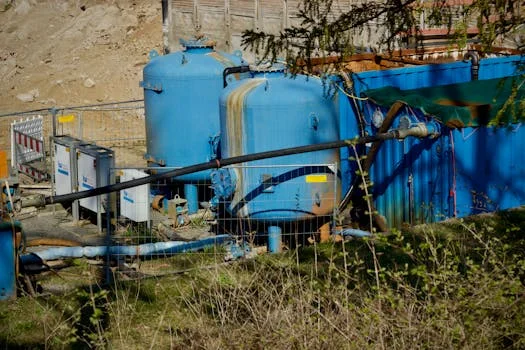
Industrial DAF systems are capable of removing over 95% of fats, oils, and grease (FOG) from slaughterhouse and dairy effluents when operated at a specific air-to-solids ratio. This high efficiency makes them the primary choice for pre-treatment in sectors where high organic loads would otherwise overwhelm municipal sewer systems or downstream biological treatment plants. In the food and beverage industry, DAF units are essential for treating wastewater from meat processing, vegetable oil refining, and dairy production, where FOG concentrations often exceed 500 mg/L.
In the pulp and paper industry, a wastewater flotation tank is used for "whitewater" recovery. By removing fine fibers and fillers from the process water, mills can recycle the water back into the production line, significantly reducing freshwater consumption and recovering valuable raw materials. Similarly, in the textile industry, DAF systems are deployed after dye hydrolysis to remove hydrolyzed dyes and suspended solids, often achieving 85–90% color reduction when paired with specific decolorizing agents.
The metalworking and petrochemical sectors utilize DAF as a critical oil water separation system. For oily wastewater containing emulsified coolants or refinery slop oil, the pressure flotation method is superior to API separators because it can capture smaller oil droplets that would otherwise remain in suspension.
Key Technical Specifications for DAF System Selection
Technical selection for DAF systems is predicated on the hydraulic loading rate, which typically ranges from 5 to 10 cubic meters per square meter per hour for most industrial applications. When evaluating a high-efficiency DAF system, engineers must look beyond simple flow rates and analyze the air-to-solids (A/S) ratio. The A/S ratio, usually maintained between 0.01 and 0.03 by weight, ensures there are enough micro-bubbles to float the specific concentration of solids present in the influent.
Construction materials are another critical spec. For aggressive industrial wastewater, such as those found in chemical plants or high-salinity food processing, 304 or 316 stainless steel is mandatory to prevent corrosion. Automation is equally vital; modern units feature PLC-controlled variable frequency drives (VFDs) for the recycle pump and skimmer, allowing the system to adapt to fluctuating influent loads in real-time.
| Parameter | DAF-50 (Example Model) | DAF-100 (Example Model) | DAF-300 (Large Scale) |
|---|---|---|---|
| Flow Capacity | 50 m³/h | 100 m³/h | 300 m³/h |
| Effective Surface Area | 8.5 m² | 16.0 m² | 48.0 m² |
| Saturator Pressure | 0.3–0.5 MPa | 0.3–0.5 MPa | 0.4–0.6 MPa |
| Total Power | 5.5 kW | 11.0 kW | 32.0 kW |
| Main Material | SS304 / SS316 | SS304 / SS316 | SS304 / Epoxy Coated CS |
| Bubble Size | 20–50 μm | 20–50 μm | 20–50 μm |
Comparison of Leading DAF System Manufacturers
Differentiating between pressure flotation system manufacturers involves analyzing the saturation efficiency of the air-dissolving system, which typically accounts for 70% of the total energy consumption of the unit. Procurement managers should distinguish between three primary types of manufacturers: high-capacity modular specialists, high-specification engineering firms, and standard industrial equipment suppliers.
Standard industrial manufacturers focus on robust, proven designs with a wide range of models (often 10+ standard sizes) to fit most food and textile applications. These systems are characterized by their ease of maintenance and availability of spare parts. High-specification engineering firms, often based in Europe or North America, focus on proprietary inlet designs that minimize turbulence, allowing for higher hydraulic loading rates in a smaller footprint.
| Manufacturer Category | Typical Flow Range | Core Strength | Automation Level |
|---|---|---|---|
| Standard Industrial (e.g., HydropureWater) | 4–300 m³/h | Cost-to-performance ratio; modularity | Full PLC / Remote Monitoring |
| High-Spec Engineering | Up to 500+ m³/h | Advanced fluid dynamics; low footprint | Advanced SCADA Integration |
| Regional Fabricators | 10–50 m³/h | Local support; low CAPEX | Manual / Basic Relay |
When selecting a manufacturer, verify their focus on wastewater and look for suppliers who provide a comprehensive 12-step DAF maintenance protocol for maximum uptime.
Frequently Asked Questions
What is the difference between DAF and sedimentation?
DAF uses micro-bubbles to float particles to the surface, whereas sedimentation relies on gravity to settle particles to the bottom. DAF is much faster and more effective for light solids, oils, and greases that do not settle well.
Can a DAF system replace biological treatment?
No. DAF is a physical-chemical pre-treatment step. It removes suspended solids and insoluble organics, but it cannot remove dissolved sugars or salts.
How much space does a DAF system require?
DAF systems are very compact. A unit capable of treating 50 m³/h typically has a footprint of approximately 3m x 2m.
Is chemical dosing always required?
In most industrial cases, yes. Coagulants and flocculants are necessary to aggregate small particles into flocs that bubbles can easily attach to.
How do I maintain the micro-bubble quality?
Consistent bubble quality requires maintaining the saturator pressure between 3 and 5 bar and ensuring the release nozzles are not clogged. Following best practices for micro bubble flotation systems is recommended for optimal performance.