Why Biodiesel Wastewater Breaks Conventional Treatment
Biodiesel wastewater (BWW) is a fundamentally hostile influent to a conventional activated sludge process. The published hybrid MBBR + AOP study treated an influent at approximately 1000 mg/L TOC and 3500 mg/L COD — values that already sit at the upper edge of biological treatability, but the real damage comes from the co-contaminants: FOG 500–2000 mg/L, residual methanol 0.1–1% w/w, free glycerol 0.5–2%, and pH swings of 2–11 driven by catalyst wash water and acid esterification streams (Top 5 abstract, 2022; characterization data per Top 1, 2013).
Activated sludge loses 30–50% of its treatment capacity when fed this matrix. FOG coats flocs and prevents mass transfer, residual methanol at concentrations above 0.3% w/w shifts the food-to-microorganism ratio and starves methanol-adapted consortia, and the COD/N ratio exceeding 100:1 suppresses nitrification because heterotrophs outcompete nitrifiers for dissolved oxygen. The discharge envelope the plant must hit — CONAMA 430/2011 in Brazil sets COD ≤ 200 mg/L (or 75% removal) and FOG ≤ 50 mg/L for direct release, while EU Industrial Emissions Directive 2010/75/EU requires total nitrogen < 15 mg/L and COD < 250 mg/L for most BWW-derived effluents — is not achievable with ASP alone on this influent.
A moving bed biofilm reactor (MBBR) decouples biomass retention from hydraulic retention. The biofilm shelter lets heterotrophs and nitrifiers coexist on the same carrier, handles FOG residues 3–5× better than suspended growth, and absorbs the shock loads that come with batch esterification campaigns. That structural advantage is the reason the 2026 design blueprint centers on MBBR rather than an upgraded aeration tank.
Biodiesel Wastewater Influent Characterization (2026 Benchmarks)
Before sizing a single reactor, the engineer needs a defensible influent envelope. The table below consolidates the 2026 BWW characterization range used for MBBR + AOP bids, blending the hybrid study influent (Top 5, 2022), CONAMA 430/2011 compliance targets, and standard transesterification process data (Top 4, conversion efficiency 96.5% with Candida antarctica lipase at 5% w/w, 50 °C, 24 h).
| Parameter | Typical Range | Unit | Source / Comment |
|---|---|---|---|
| COD | 3000–5000 | mg/L | Top 5 hybrid MBBR + AOP study (3500 mg/L midpoint) |
| BOD5 | 1800–3200 | mg/L | BOD/COD ratio 0.55–0.65 typical for ester-rich streams |
| TOC | 800–1200 | mg/L | Top 5 study; tracks COD at TOC/COD ≈ 0.28 |
| TSS | 400–1500 | mg/L | Catalyst fines, glycerol soap solids |
| FOG | 500–2000 | mg/L | Top 1 washing-water characterization |
| Total nitrogen | 40–120 | mg/L | Low; COD/N ratio > 30:1 |
| NH3-N | 15–60 | mg/L | Reflects catalyst carryover |
| Total phosphorus | 5–30 | mg/L | Phosphoric acid neutralization residue |
| pH | 2–11 | — | Equalization required to 6.5–7.5 |
| Temperature | 25–55 | °C | Cool to < 38 °C before biology |
| Residual methanol | 0.1–1.0 | % w/w | Driven by transesterification molar ratio |
| Free glycerol | 0.5–2.0 | % w/w | 96.5% conversion leaves 0.5–1.5% per Top 4 |
One pre-treatment option that is gaining traction in 2026 bids is enzymatic FOG hydrolysis using lipase-producing consortia isolated from the same wastewater — the Top 1 study (Apr 2013) demonstrated direct FOG removal from biodiesel washing water, and a 6–12 h lipase contactor before DAF can cut FOG loading by 30–50%, reducing the DAF chemical demand downstream. The cost premium is real but defensible when the plant sits on a tight FOG discharge cap.
Process Flow: Equalization → DAF → MBBR → AOP Polishing
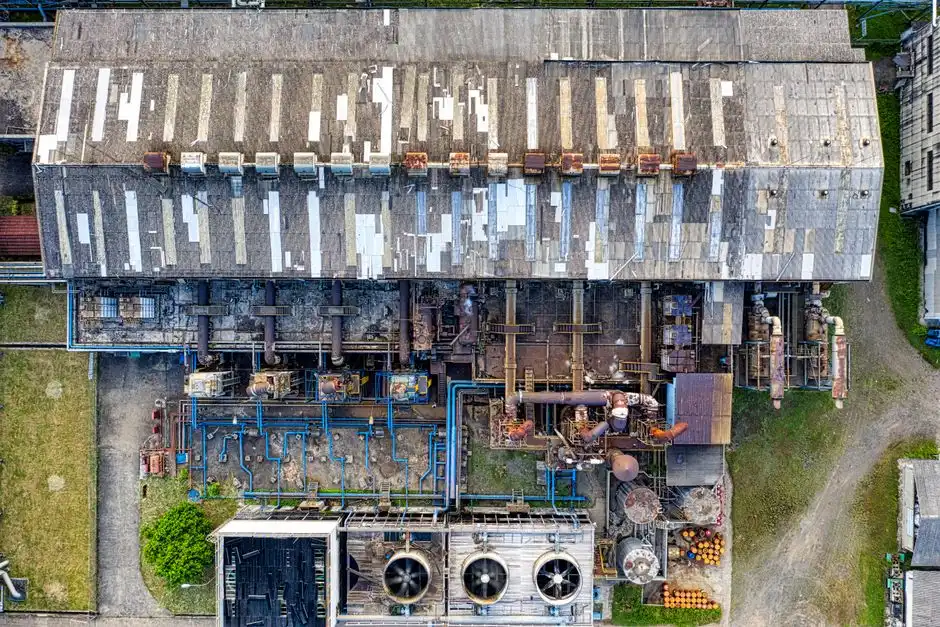
The end-to-end train for a 2026 BWW plant runs in five unit operations, each with hard operating ranges the engineer can lift into a P&ID.
- Equalization tank. 8–24 h HRT with mechanical or jet mixing, NaOH/H2SO4 trim to pH 6.5–7.5, and a HydropureWater automatic chemical dosing skid on the pH control loop. This stage also drops temperature from 45–55 °C to < 38 °C using a plate cooler; biology above 40 °C loses nitrification.
- Dissolved air flotation (DAF). Micro-bubble skimming at 4–300 m³/h, recycle ratio 20–40%, polyaluminum chloride coagulant 50–150 mg/L plus anionic flocculant 2–5 mg/L. A properly sized HydropureWater dissolved air flotation unit removes 60–90% of FOG and 70–85% of TSS, which is what keeps the downstream biofilm from being smothered.
- Two-stage MBBR. Stage 1 is heterotrophic, DO 2.5–3.5 mg/L, targeting 70–85% COD removal. Stage 2 is nitrification + residual organics polishing, DO 3.0–4.0 mg/L, pushing NH3-N to < 10 mg/L and COD toward 400–600 mg/L.
- Advanced oxidation polishing. Ozone alone, O3/H2O2, or ozone-Fenton attacks the recalcitrant fraction that MBBR cannot break. Ozone dose runs 0.5–2.0 kg O3 per kg COD removed, with H2O2 at a 1:1 to 2:1 molar ratio to ozone if the peroxone route is selected.
- Tertiary polish. Sand filter, granular activated carbon, or — for water reuse — a thin-film composite RO. This step also strips residual color and any trace FOG that survives AOP.
The sequence is non-negotiable in 2026: putting MBBR before DAF guarantees FOG-coated carriers within a week; putting AOP before MBBR wastes oxidant on the 70% of COD that biology handles for $0.10/m³ instead of $0.50/m³.
MBBR Design Parameters for Biodiesel Wastewater
The numbers below are the ones an EPC engineer plugs directly into a hydraulic and biological model — no further derivation required.
| Parameter | Design Value | Unit | Notes |
|---|---|---|---|
| Media material | Virgin HDPE | — | Density 0.94–0.97 g/cm³; PU for FOG-heavy streams |
| Specific surface area | 500–1200 | m²/m³ | Higher surface area = lower required reactor volume |
| Filling fraction | 30–50 | % v/v | BWW runs 30–40% (avoid carrier-carrier shielding) |
| Reactor depth | 3–6 | m | Deeper = smaller footprint, higher blower head |
| H:D aspect ratio | 1.5:1 to 2.5:1 | — | Drives complete mixing without dead zones |
| Screen slot opening | 0.25–0.5 × media thickness | mm | Retains media; field-trimmed after FAT |
| Aeration rate | 6–10 | m³ air/m³ reactor·h | Coarse-bubble diffusers; provides mixing + O2 |
| DO setpoint | 2.0–4.0 | mg/L | Stage 1: 2.5–3.5; Stage 2: 3.0–4.0 |
| HRT Stage 1 (heterotrophic) | 6–10 | h | Drives 70–85% COD removal |
| HRT Stage 2 (nitrification) | 10–24 | h | Drives NH3-N < 10 mg/L |
| Total train HRT | 16–34 | h | Sum of both stages |
| Operating temperature | 25–35 | °C | < 15 °C cuts nitrification 30–50% |
| Biofilm diffusion factor | 0.5 | — | Per Top 2 (2002) simulation study |
| Excess sludge yield | 0.15–0.25 | kg TSS/kg COD removed | Sloughed biofilm, no recycle line |
Three design notes the spec sheet will not give you. First, MBBR does not need sludge recirculation — the biofilm is fixed — but excess sloughing produces a waste activated sludge that still has to be dewatered; budget a sludge handling line sized for 0.15–0.25 kg TSS per kg COD removed. Second, coarse-bubble diffusers are mandatory for BWW: fine-bubble units foul inside two weeks from residual FOG carryover even after DAF. Third, the diffusion reduction factor of 0.5 inside the biofilm (Top 2, 2002) is the right input for any ASM-based simulation — using 1.0 overstates substrate flux by a factor of two and undersizes the reactor.
Pilot-Scale Performance: From 3500 mg/L COD to <200 mg/L
The only published multistage route on real BWW is the hybrid MBBR + AOP study (Top 5, 2022), which fed 1000 mg/L TOC and 3500 mg/L COD through a biofilm train and an advanced oxidation polishing step. Extrapolating the stepwise removal to a 2026 design envelope gives the engineer a defensible performance narrative for the bid.
Stepwise removal: DAF strips 60–85% of FOG and 70–85% of TSS, dropping the feed to roughly 2500–3000 mg/L COD and < 300 mg/L FOG. MBBR Stage 1 (heterotrophic) removes 70–85% of the remaining COD, leaving 400–900 mg/L. MBBR Stage 2 (nitrification + polishing) drops COD to 250–500 mg/L and NH3-N to < 10 mg/L. O3/H2O2 or ozone-Fenton polishes residual COD by 40–70%, finalizing the effluent at 150–250 mg/L COD and 60–100 mg/L TOC. That is > 92% overall COD removal and compliant with EU IED 2010/75/EU and CONAMA 430/2011 for direct discharge; adding sand filter + GAC pushes it to RO feed quality for reuse.
The Top 5 study also reported a stable bacterial community under saline and FOG stress, dominated by Proteobacteria and Bacteroidetes with measurable nitrifier activity. That is the line of evidence to put in front of a procurement committee that will ask whether the biofilm can survive a transesterification batch spike: yes, because the consortia that win in a FOG-loaded MBBR are the same ones the study sequenced.
MBBR vs MBBR + AOP vs MBR: 2026 Decision Matrix
Procurement will ask why not MBR. The answer is a matrix, not a slogan.
| Criterion | MBBR alone | MBBR + AOP | MBR (HydropureWater MBR) |
|---|---|---|---|
| COD removal | 70–85% | 90–95% | 95–98% |
| Effluent COD | 500–1000 mg/L | 150–250 mg/L | < 100 mg/L |
| NH3-N | < 10 mg/L (2-stage) | < 10 mg/L | < 1 mg/L |
| Footprint (100 m³/d) | 25–40 m² | 35–55 m² | 20–30 m² |
| CAPEX index | 1.0× (baseline) | 1.4–1.7× | 1.8–2.2× |
| OPEX index | 1.0× | 1.3–1.6× (oxidant) | 1.4–1.8× (membrane replacement) |
| Media/membrane replacement | HDPE 8–12 yr | HDPE 8–12 yr | Membrane 3–5 yr |
| FOG tolerance | High (after DAF) | High | Medium (fouling risk) |
| Reuse suitability | Discharge only | Discharge + RO feed | Direct reuse |
Decision rule for 2026 bids: if BWW FOG > 800 mg/L or COD > 4000 mg/L, the MBBR + AOP configuration is the right default — biology takes the bulk, ozone takes the recalcitrant tail, and the plant hits discharge limits while leaving an RO polish as an upgrade path. If the project is reuse-driven and the upstream DAF guarantees FOG < 500 mg/L, a HydropureWater MBR membrane bioreactor collapses two stages into one. If the budget is tight and only discharge compliance is required, a standalone MBBR followed by a sand filter remains the lowest CAPEX option and will pass the FAT on most BWW profiles.
2026 CAPEX and OPEX for a 100 m³/day BWW Plant
The cost envelope below is sized for a 100 m³/d BWW duty and is consistent with the 2026 industrial wastewater treatment market benchmarks (per the 2026 industrial wastewater treatment market trends overview).
| Item | CAPEX (USD) | OPEX (USD/m³ treated) |
|---|---|---|
| Equalization + pH trim | $30,000–$60,000 | $0.02–$0.04 (acid/caustic) |
| DAF unit + skimmer | $50,000–$90,000 | $0.03–$0.05 (coagulant + polymer) |
| MBBR reactor + HDPE media | $80,000–$180,000 | Media top-up (8–12 yr amortized) $0.01–$0.02 |
| AOP skid (O3 or O3/H2O2) | $70,000–$200,000 | $0.10–$0.25 (ozone + peroxide) |
| Instrumentation + PLC | $30,000–$80,000 | $0.02–$0.04 |
| Installation (~25% of equipment) | $60,000–$150,000 | — |
| Aeration energy | — | $0.04–$0.08 |
| Sludge handling + dewatering | — | $0.03–$0.06 |
| Labor + maintenance | — | $0.05–$0.10 |
| Total envelope | $280,000–$720,000 | $0.30–$0.65/m³ |
Energy intensity runs 0.8–1.5 kWh/m³ for MBBR alone and 1.5–2.5 kWh/m³ for the MBBR + ozone configuration, with ozone generation dominating the second figure. Comparable CAPEX envelopes for similar flow classes appear in the parallel MBBR for amino acid fermentation wastewater guide — the difference is the FOG and AOP line items, which BWW adds and amino acid streams do not.
Frequently Asked Questions
What is the typical HRT for MBBR treating biodiesel wastewater? Plan 6–10 h for the heterotrophic stage and 10–24 h for the nitrification stage, totaling 16–34 h across the train. Sizes below 6 h on the first stage risk COD breakthrough on FOG spikes.
Can MBBR alone meet BWW discharge limits? No. Standalone MBBR removes 70–85% of COD, leaving 500–1000 mg/L in the effluent — above the 200–250 mg/L discharge cap under CONAMA 430/2011 and EU IED 2010/75/EU. A polishing step (O3, O3/H2O2, ozone-Fenton, or MBR) is required to hit < 250 mg/L COD.
Why pre-treat with DAF before MBBR? DAF removes 60–90% of FOG and 70–85% of TSS, which is the difference between a biofilm that runs for months and one that fouls in two weeks. It also cuts the COD load on the biology by 15–30%, shrinking the MBBR reactor volume.
What MBBR media filling rate works for BWW? 30–50% virgin HDPE media with a specific surface area of 500–1200 m²/m³ is the 2026 standard. BWW stays at the lower end (30–40%) because the biofilm is thicker than in municipal applications and carrier-carrier shielding becomes a problem above 50%.
How often is MBBR media replaced? HDPE media lasts 8–12 years in BWW service. Mechanical loss through the screens and surface abrasion from the coarse-bubble aeration are the main replacement drivers; chemical degradation is rare because the biofilm protects the polymer from direct UV and oxidant exposure.