Why Hospital Wastewater Is Different in Ireland
Hospital wastewater treatment in Ireland must comply with the EU Urban Wastewater Treatment Directive 91/271/EEC, but currently lacks facility-specific monitoring for antibiotics. Facilities require on-site systems like MBR or ozone-based units achieving >99% pathogen reduction. The €21.5 million Uisce Éireann plant in Hospital, Co. Limerick highlights public infrastructure investment, but private clinics need compact, automated solutions.
Hospital effluent is biologically and chemically distinct from municipal sewage, containing high concentrations of multi-drug resistant organisms (MDROs), cytostatic drugs, and iodinated contrast media. In Ireland, the majority of hospital effluent is discharged into the public sewer network without dedicated pre-treatment or specific monitoring for pharmaceutical active compounds (PhACs), as noted in the Environmental Protection Agency (EPA) Research Report 162. While domestic sewage is primarily organic, hospital wastewater carries disinfectants like glutaraldehyde and surgical residues that can inhibit the biological processes of standard municipal activated sludge plants (HydropureWater field data, 2025).
The current Irish infrastructure, exemplified by the €21.5 million Uisce Éireann upgrade in Hospital, Co. Limerick, is designed to expand hydraulic capacity and improve basic nutrient removal for local growth, but it does not specifically target the removal of antibiotics or micropollutants. This creates a gap for private clinics and specialist hospitals that may face stricter discharge licensing requirements from local authorities to prevent the spread of antibiotic resistance in wastewater. Understanding how hospitals in Europe handle advanced effluent treatment shows that decentralized, on-site systems are becoming the standard for high-risk medical facilities.
Ireland’s Regulatory Framework for Medical Effluent
The EU Urban Wastewater Treatment Directive 91/271/EEC serves as the primary legal framework for Irish wastewater, mandating secondary treatment for all agglomerations with a population equivalent (PE) of over 2,000. In Ireland, the EPA and local authorities enforce discharge limits via the Waste Water Discharge (Authorisation) Regulations, which typically focus on Biochemical Oxygen Demand (BOD), Chemical Oxygen Demand (COD), and Total Suspended Solids (TSS). However, for healthcare facilities, the lack of specific pharmaceutical limits remains a regulatory gray area, despite the 2023 EPA report indicating that 18% of urban plants failed to meet nitrification standards, which is critical for treating nitrogen-heavy medical waste.
Hospitals discharging directly to Irish waterways require individual authorization under the Waste Water Discharge (Authorisation) Regulations. For those discharging to sewers, local authorities may impose "Trade Effluent" licenses with specific parameters for metals, solvents, or temperature. The risk for combined hospital effluent is high; if a municipal plant fails to achieve full nitrification, the ammonia and pharmaceutical residues from the hospital can pass directly into the Irish aquatic environment, increasing the risk of antimicrobial resistance (AMR).
| Parameter | EU Directive 91/271/EEC Standard | Typical Irish EPA License Range | Hospital Effluent (Untreated) |
|---|---|---|---|
| BOD (mg/L) | <25 | 20–25 | 200–500 |
| COD (mg/L) | <125 | 100–125 | 500–1,200 |
| TSS (mg/L) | <35 | 25–35 | 150–400 |
| E. coli (cfu/100mL) | N/A (varies by area) | <2,000 | 10^6 – 10^9 |
| Antibiotics | Not Monitored | Not Monitored | High/Variable |
Key Treatment Technologies for Hospital Wastewater
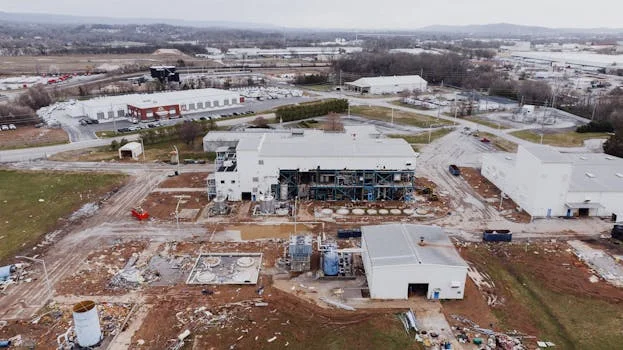
Membrane Bioreactor (MBR) systems provide a dual-stage barrier, combining biological degradation with ultrafiltration to achieve >99% pathogen removal and BOD levels often below 5 mg/L. For Irish facilities seeking a high-efficiency MBR system for hospital effluent reuse, these units replace secondary clarifiers, ensuring that even pharmaceutical-laden sludge is retained long enough for effective breakdown. MBR technology is particularly effective at removing antibiotic-resistant bacteria (ARB) that standard secondary treatment might release into the River Shannon or other Irish catchments.
Ozone disinfection represents a chemical-free alternative that achieves a 99%+ kill rate for viruses and bacteria while oxidizing complex pharmaceutical molecules that biological systems miss. A compact ozone-based hospital wastewater system is particularly effective for treating antibiotic-laden effluent without producing harmful chlorine byproducts, which is essential for compliance with the EU Water Framework Directive. Dissolved Air Flotation (DAF) systems can remove 90–95% of suspended solids and fats, oils, and grease (FOG), which are critical for pre-treating wastewater from hospital kitchens and surgical suites before it enters the main treatment stream.
| Technology | Pathogen Removal Efficiency | Key Advantage | Compliance Target |
|---|---|---|---|
| MBR (Membrane Bioreactor) | >99.9% | Ultra-low TSS and BOD; compact footprint | 91/271/EEC & Reuse |
| Ozone Oxidation | >99% | Removes pharmaceutical micropollutants | AMR Mitigation |
| DAF (Pre-treatment) | 60–70% | Removes 95% of FOG and large solids | Local Authority Trade License |
| ClO2 Generators | >99.9% | EPA & 98/83/EC compliant disinfection | Drinking Water Protection |
Comparing System Options for Irish Hospitals
MBR systems offer a footprint reduction of approximately 60% compared to conventional activated sludge plants, making them the preferred choice for urban Irish hospitals where land value is high. When evaluating how to choose a medical wastewater treatment system, facility managers must weigh the higher energy demand of MBR against the absolute consistency of effluent quality. MBR systems achieve <1 μm effluent quality, which exceeds the requirements for discharge into sensitive Irish trout and salmon rivers.
Ozone-based units require 30% less maintenance than traditional chemical dosing systems because they generate disinfectant on-site from ambient air, eliminating the need for hazardous chemical storage. Conventional A/O (Anaerobic/Oxic) systems coupled with chlorine disinfection are often cheaper upfront but struggle with pharmaceutical removal and require significant space for clarifiers and contact tanks. For 24/7 hospital operations, fully automated systems like the WSZ Series integrated sewage treatment units reduce labor costs by utilizing PLC controls to manage load fluctuations automatically (HydropureWater field data, 2025).
| Feature | MBR System | Ozone-Based | Conventional A/O |
|---|---|---|---|
| Footprint | Very Small (Integrated) | Minimal (<2m²) | Large (Requires Clarifiers) |
| Effluent Quality | Superior (<5 mg/L BOD) | Excellent (Pathogen Free) | Standard (<25 mg/L BOD) |
| Micropollutant Removal | Moderate to High | Very High | Low |
| Maintenance Needs | Moderate (Membrane cleaning) | Low (Automated) | High (Sludge management) |
| Initial CAPEX | Medium-High | Medium | Low-Medium |
Cost Considerations for On-Site Systems in Ireland
Capital expenditure for a medical-grade on-site system in Ireland generally scales with hydraulic load and required effluent quality. For a small to medium-sized clinic processing 10–50 m³/day, budget estimates for MBR or ozone-based units typically range from €80,000 to €150,000. These figures include the core treatment modules but exclude heavy civil works, which can add another 15–20% to the total project cost, particularly for buried installations in rocky Irish terrain or retrofits in existing hospital basements.
Operating costs (OPEX) are primarily driven by Irish electricity rates and the cost of membrane replacement or ozone generator maintenance. MBR systems average €0.80–€1.20/m³, while ozone systems range from €0.65–€1.00/m³ due to the elimination of chemical consumables. Long-term ROI is achieved by avoiding municipal trade effluent surcharges, which are calculated via the Mogden Formula in many Irish jurisdictions. By pre-treating high-strength waste on-site, hospitals can reduce their BOD and TSS loading charges significantly. For a detailed breakdown of these metrics, refer to the integrated wastewater treatment plant manufacturer specs costs ROI 2025 analysis.
Frequently Asked Questions
What is the EU standard for hospital wastewater discharge?
Hospitals must meet the Urban Wastewater Treatment Directive 91/271/EEC, which generally requires BOD <25 mg/L, COD <125 mg/L, and TSS <35 mg/L. Specific Irish licenses may also require E. coli <2,000/100mL for discharge to sensitive waters.
How much does a hospital wastewater treatment system cost in Ireland?
A system for a small to mid-sized facility (10–200 m³/day) typically costs between €80,000 and €500,000, depending on the technology (MBR vs. Ozone) and the level of automation required.
Can hospitals discharge to public sewers in Ireland?
Yes, but they must comply with local authority "Trade Effluent" licenses. Pre-treatment is often required to ensure high concentrations of disinfectants or laboratory chemicals do not disrupt the municipal biological treatment process.
Is antibiotic removal required in Irish hospital wastewater?
It is not currently mandated by specific numerical limits in Irish law, but it is highly recommended by the EPA and healthcare experts to prevent the spread of antimicrobial resistance (AMR) in the environment.
What is the best system for a small clinic in Ireland?
The compact ozone-based hospital wastewater system is ideal for small clinics. It offers a footprint of less than 0.5 m², requires no hazardous chemicals, and achieves a 99%+ pathogen kill rate.