pH Sensor Cost in 2026: What You'll Actually Pay
Industrial pH sensor cost in 2026 spans roughly $45 for a basic laboratory benchtop probe to $4,500 for a heavy-duty differential or 4-20 mA inline transmitter. Mid-range online process pH sensors with 4-20 mA or Modbus output — like the Hamilton EasyFerm Plus PHI Arc 120 — typically run $900–$2,200, while high-temperature CIP/SIP biopharma probes reach $3,000–$4,500. Budget an additional 15–25% annually for calibration buffers, reference electrolyte, and replacement membranes.
Four functional classes cover roughly 90% of B2B purchases. Benchtop lab probes ($45–$250) are glass-bodied, BNC-terminated, and built for intermittent grab-sample work in QA labs. Handheld/portable units ($120–$450) add a waterproof housing, field-replaceable reference, and battery electronics for spot checks around a plant. Inline immersion sensors ($300–$900) install directly into a process pipe or open tank via ½"–1" NPT threads and feed a PLC or controller through a hardwired cable. Inline differential/retractable transmitters ($1,800–$4,500) combine a measurement electrode, a sealed reference, and integrated 4-20 mA or HART electronics in a single immersible housing — the workhorse of hazardous and high-purity service.
Output signal is the single largest price differentiator within those classes. A bare BNC probe that puts out raw millivolts costs a fraction of a 4-20 mA or HART transmitter, because the latter bakes in a preamplifier, signal conditioning, galvanic isolation, and often a display. Published OEM list prices are typically negotiable 10–25% for B2B orders above 5 units, and distributor channels (not catalog list) are where most process plants actually transact.
pH Sensor Price by Type: 2026 Comparison Table
The table below maps each pH sensor class to its 2026 USD price band, output protocol, body material, reference junction, expected service life, and best-fit application. It is the single artifact most procurement engineers will screenshot for their budget justification memo. Biopharma CIP/SIP-rated probes carry a 1.5–3x premium over standard industrial units because the membrane glass, reference chemistry, and seals must survive repeated steam sterilization at 121–135°C without drift.
| Class | 2026 USD Price Band | Output Signal | Body Material | Reference Junction | Service Life | Best-Fit Application |
|---|---|---|---|---|---|---|
| Benchtop lab probe | $45–$250 | BNC (mV) | Glass | Single junction | 12–24 months | QA/QC grab samples, benchtop meters |
| Handheld/portable | $120–$450 | BNC or 4-20 mA | Polymer/glass | Single or double | 12–18 months | Field spot checks, wastewater walkdowns |
| Inline immersion (basic) | $300–$900 | BNC + cable | PVDF or glass | Double junction | 6–12 months | Open tanks, aeration basins, cooling water |
| 4-20 mA process transmitter | $900–$2,200 | 4-20 mA, Modbus RTU, or HART | PVDF, Ryton PPS, PEEK | Double junction, refillable | 12–18 months | General process, chemical dosing control |
| Differential / retractable heavy-duty | $1,800–$4,500 | 4-20 mA + HART or Modbus | Ryton PPS, PEEK, or 316L SS | Differential (sealed) | 18–36 months | Sulfide/ammonia streams, CIP/SIP, WFI, high-purity chemical |
Representative units in the data behind this table: the METTLER TOLEDO InSUS 310 anchors the high-purity/process lab tier with a stainless body and integrated temperature compensation, while the HORIBA Differential pH Sensor with its 1 ½" NPT front-and-back thread and Ryton polyphenylene sulfide (PPS) body is the canonical heavy-duty reference. Hamilton's EasyFerm Plus PHI Arc 120 (DirectIndustry listing) represents the mid-tier 4-20 mA + Modbus process class that most plant buyers end up specifying. Prices shown are 2026 USD ex-works, drawn from OEM list and authorized distributor channels, and exclude installation, cabling, and transmitter head units unless noted.
What Drives pH Sensor Price: 6 Engineering Specs That Move the Cost Needle
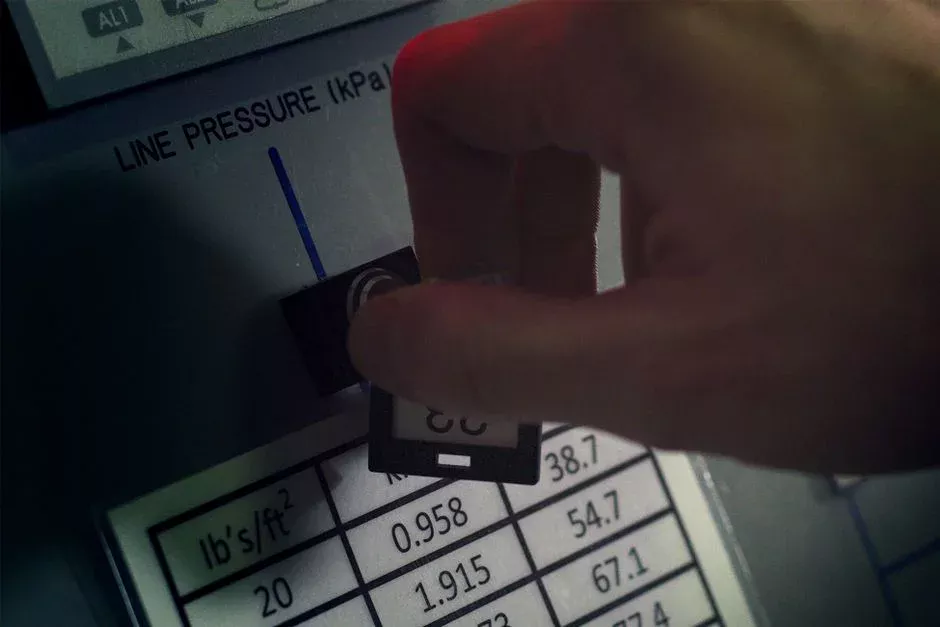
Over-specifying a pH sensor is the most common way a procurement engineer blows their 2026 instrument budget. The six engineering specs below each shift the unit price by a predictable band, and understanding the trade-off prevents buying a $3,500 differential probe for a $400 job.
Reference junction design is the first lever. A single-junction reference (cheapest) uses one porous frit to bridge reference electrolyte and process. A double-junction adds a second frit and a separate inner chamber, blocking silver ion poisoning in sulfide-bearing streams, and adds roughly $80–$200. A true differential design like HORIBA's replaces the single reference with a matched pH-measuring electrode inside a sealed salt bridge, so the reference never contacts the process — this adds $800–$1,500 to the unit cost but resists poisoning from H₂S, NH₃, or high-organic wastewater where standard probes die in weeks.
Body material is the second lever. Glass is cheapest and chemically inert, but mechanically fragile. PVDF handles pH 0–14 and most acids/bases at moderate temperature for the lowest premium. Ryton PPS tolerates pH 0–14, most organic solvents, and continuous service to 100°C — a workhorse for chemical duty. PEEK extends that envelope to roughly 140°C and is the default for CIP/SIP. 316L stainless with a PEEK reference adds mechanical robustness for high-pressure retractable installations.
Output protocol steps the price in roughly $200–$500 increments: BNC analog (raw mV) at the bottom, then 4-20 mA passive, then 4-20 mA + HART, then Modbus RTU or Foundation Fieldbus for digital-only DCS integration. Each protocol step adds the cost of the digital ASIC, isolation, and certification.
Temperature and pressure rating drives cost through sealing technology. Standard probes are rated 0–80°C and below 6 bar. High-temp/CIP ratings to 121–140°C and 10 bar require special glass formulations and double-sealed references, adding $300–$800. Retractable hot-tap assemblies rated above 10 bar add another $400–$900 in mechanical hardware.
Integrated preamplifier vs remote transmitter: a preamp inside the sensor head adds $150–$400 but dramatically reduces noise pickup on cable runs longer than 5–10 m, which matters whenever the sensor is mounted more than a few meters from the analyzer. Auto-cleaning compatibility (ultrasonic or chemical spray-ball retrofit) adds $600–$1,500 to system cost but, as detailed in our industrial wastewater operating cost breakdown, it routinely extends unattended service intervals from weeks to months in biological wastewater applications.
Total Cost of Ownership: Calibration, Consumables, and Replacement
Sticker price is roughly half the story. A plant that buys 10 inline pH sensors at $900 each has spent $9,000, but the three-year TCO on those same probes typically lands between $18,000 and $25,000 once calibration buffers, electrolyte, replacement membranes, and field labor are tallied. The table below itemizes the cost components a procurement engineer should require the vendor to disclose before signing a PO.
| Cost Component | Annual Range (USD) | 3-Year Total | Notes |
|---|---|---|---|
| NIST-traceable pH 4 / 7 / 10 buffers | $80–$150 | $240–$450 | 2–3 point calibration cadence; 500 mL bottles |
| Reference electrolyte (refillable probes) | $40–$120 | $120–$360 | Top-up quarterly; KCl or specific ion formulations |
| Membrane glass / full probe replacement | $200–$600 | $400–$1,800 | 12–18 months in clean water, 4–8 months in abrasive or high-temp service |
| Field calibration labor | $90–$360 | $270–$1,080 | 15–30 min/probe/month at industrial maintenance rates |
| Auto-clean retrofit amortization | $200–$500 | $600–$1,500 | Payback 6–12 months in biological wastewater |
A representative 3-year TCO for a single $1,200 inline process pH sensor, including $400/yr in consumables and $150/yr in calibration labor, lands near $2,100. In contrast, the $3,500 heavy-duty differential probe with $250/yr consumables and only annual calibration drives 3-year TCO to roughly $4,400 — but it survives sulfide streams that kill a $900 probe in eight months, so the higher CAPEX is often the lower TCO. Where pH drives a chemical feed setpoint, the sensor output is typically wired into an automatic chemical dosing system; selecting a sensor with a noisy or drifting signal costs more in overdosed reagent than the price difference between sensor tiers.
Matching pH Sensor to Application: A 2026 Selection Framework
Translate the cost data into a buying decision with the framework below. The right sensor class is set by the process environment, not by the most expensive option on the quote sheet.
Municipal and industrial wastewater aeration basins: a basic inline immersion sensor with PVDF body, double junction, and 4-20 mA output in the $450–$900 range is the standard fit. The probe lives in a relatively clean mixed liquor, calibration is monthly, and double-junction construction prevents sulfide poisoning from digester return streams.
Chemical and petrochemical process streams: a differential sensor with Ryton PPS body (HORIBA-class design) at $1,800–$3,500 is justified by poison resistance. Solvents, amines, and high-ionic-strength streams will consume a conventional probe in 3–6 months; a differential unit routinely lasts 18–36 months in the same service.
Food, dairy, and brewery CIP loops: a high-temperature 4-20 mA sensor with PEEK body, $1,400–$2,800, paired with an auto-clean spray-ball, is the right answer. PEEK handles 140°C caustic and acid cleaning cycles, and 4-20 mA feeds a CIP conductivity controller directly.
Pharmaceutical Water for Injection (WFI) and biopharma: a sanitary tri-clamp differential sensor at $3,000–$4,500 with USP-compliant traceability documentation is the floor for compliance. Steam-sterilizable, electropolished 316L wetted parts, and a sealed reference are non-negotiable for FDA-auditable service.
Drinking water and boiler feed: a basic inline sensor with stainless NPT body at $300–$700, single or double junction, covers the application. The stream is clean, the temperature is moderate, and the maintenance crew can handle monthly calibration without a specialist.
Across all five environments, the pH sensor signal typically feeds a chemical dosing controller or a SCADA trend. For plants that already dose acid or caustic for pH correction, the natural downstream integration point is a packaged automatic chemical dosing system that accepts the 4-20 mA or Modbus signal from the selected sensor. If suspended solids or turbidity is also in the scope of the 2026 instrument refresh, see the turbidity sensor supplier buyer's guide for a parallel cost breakdown on that instrument class.
Frequently Asked Questions
How much does an industrial pH sensor cost?
An industrial pH sensor costs $300–$4,500 in 2026 USD depending on class. Inline immersion sensors run $300–$900, 4-20 mA process transmitters $900–$2,200, and heavy-duty differential or CIP-rated probes $1,800–$4,500. Benchtop lab probes start at $45 and handheld units at $120 (per DirectIndustry and HORIBA 2026 listings).
Why are differential pH sensors more expensive?
Differential pH sensors cost $800–$1,500 more than double-junction designs because they use a matched pH electrode inside a sealed salt bridge, so the reference electrolyte never contacts the process. That architecture resists poisoning from sulfide, ammonia, and high-organic wastewater where standard probes fail in weeks (per HORIBA differential design spec).
How often should a pH sensor be calibrated?
Calibrate a process pH sensor monthly using NIST-traceable pH 4, 7, and 10 buffers in a 2–3 point sequence. High-purity or biopharma service typically requires weekly verification; dirty wastewater with auto-clean can extend the interval to quarterly without drifting out of ±0.1 pH.
What is the lifespan of an industrial pH probe?
An industrial pH probe lasts 12–18 months in clean water service and 4–8 months in abrasive or high-temperature wastewater. Sealed differential probes extend service life to 18–36 months by isolating the reference from poisoning species (per HORIBA published lifetime data).
Are cheap pH sensors accurate enough for wastewater discharge compliance?
A $300–$900 inline immersion pH sensor with monthly calibration delivers ±0.1 pH accuracy, which meets the typical NPDES permit band of pH 6.0–9.0. Compliance depends on calibration discipline and probe cleanliness more than on the OEM brand or unit price (per EPA 40 CFR 133 secondary treatment standards).