What Drives the Price of a Citric Acid Wastewater Ultrafiltration System
An ultrafiltration system sized for citric acid fermentation broth runs 6–8× higher in CAPEX than a generic food-and-beverage UF skid of the same nominal throughput, and almost every dollar of that gap traces back to five feed-side variables. Feed temperature (typically 60–90 °C straight from the Aspergillus niger fermenter) forces either ceramic membranes or a polymeric skid with a feed cooler. pH 2.0–3.5 rules out cellulose acetate and narrows the polymer field to PVDF, PES, and a handful of reinforced fluoropolymers. Suspended solids from mycelia, residual sugars, and cell debris routinely run 2,000–8,000 mg/L TSS and dictate whether you can use hollow-fiber or must move to tubular geometries. The permeate goal matters: citric-acid recovery ahead of ion exchange or RO is a different flux and rejection target than a simple COD-polishing job. Capacity (m³/day) sets the membrane area, pump size, and CIP skid footprint.
Citric acid specifically pushes pricing up versus generic food wastewater because the organic acid acts as a buffer — it resists pH swings during caustic cleaning and forces longer or hotter CIP cycles to recover flux. High temperature also accelerates oxidative degradation of PVDF and PES, shortening membrane life from the typical 5–7 years seen in dairy UF down to 3–5 years in hot citric-acid service. Small industrial UF units in the 10–20 m³/h range are available for under $50,000 (per Morui, 2025), but those are designed for plating baths and rinse waters — not for an organic acid stream at 75 °C with mycelia.
For readers placing UF in a membrane cascade, UF sits between microfiltration (0.1–10 μm) and reverse osmosis (<0.001 μm), with a nominal pore window of 0.01–0.1 μm. In a citric-acid treatment train, UF is normally positioned after DAF or a centrifuge and before ion exchange or RO, where it strips biomass, residual protein, and colloidal COD while letting the dissolved citric acid and smaller organics pass into the recovery loop.
CAPEX Breakdown by UF Configuration and Capacity (2026 Pricing)
CAPEX for a citric-acid-duty UF skid in 2026 ranges from $180,000 for a small polymeric unit up to $1,400,000 for a multi-train tubular ceramic system, with installed cost running $900–$4,500 per m³-day of nameplate capacity. The table below normalizes four common configurations across four capacity bands. All figures are Q1 2026 baselines, FOB Asia, and include the membrane skid, CIP skid, membrane housings, high-pressure feed pump, and PLC — but not civil works, building, or the downstream ion exchange/RO train.
| Configuration | Membrane material | Capacity band (m³/day) | CAPEX range (USD) | Installed $/m³-day | Best-fit feed envelope |
|---|---|---|---|---|---|
| Hollow-fiber polymeric | PVDF (0.02–0.03 μm) | 50 / 200 / 500 / 1,000 | $180K / $320K / $580K / $820K | $3,600 / $1,600 / $1,160 / $820 | Feed <45 °C, pH 1.5–11, TSS <100 mg/L |
| Tubular ceramic | Alumina, 50 nm pore | 50 / 200 / 500 / 1,000 | $320K / $780K / $1.1M / $1.4M | $6,400 / $3,900 / $2,200 / $1,400 | 80–95 °C, pH 1–14, high TSS tolerated |
| Spiral-wound polymeric | PES, 10 kDa | 50 / 200 / 500 / 1,000 | $220K / $380K / $650K / $920K | $4,400 / $1,900 / $1,300 / $920 | Near-particle-free feed, low viscosity |
| Plate-and-frame | PVDF or PES | 50 / 200 / 500 / 1,000 | $260K / $440K / $720K / $1.05M | $5,200 / $2,200 / $1,440 / $1,050 | Moderate viscosity, moderate solids |
Hollow-fiber polymeric is the cheapest path, but only if the plant can cool the broth below 45 °C and hold pH inside the membrane window — and most cannot without a heat exchanger that eats into the OPEX saving. Tubular ceramic at 50 nm pore size tolerates 80–95 °C and pH 1–14 with 10+ year membrane life, which is why every Chinese citric-acid plant running the hot broth straight off the fermenter ends up specifying it. Spiral-wound polymeric offers a compact footprint but requires near-particle-free feed, which is hard to deliver from a fermentation train without extensive pretreatment. Plate-and-frame is favored when viscosity is high and solids loading is moderate, and it tolerates more abuse than spiral-wound at a similar price. Across all four configurations, the CIP skid, membrane housings, high-pressure pump, and PLC typically add another 25–35% on top of the bare membrane skid price — vendors who quote only the membrane modules are not quoting the system.
OPEX Components: Membrane Replacement, CIP, Energy, and Labor
Membrane replacement is the line item that breaks five-year budgets in citric-acid UF, and it is the number to anchor on when you are stress-testing a vendor OPEX estimate. The published benchmark for UF membrane replacement in urban wastewater service is €0.008 ± 0.001/m³ in summer and €0.007 ± 0.001/m³ in winter (Jiménez-Benítez et al., 2024, Journal of Environmental Management). In a hot, low-pH, high-COD citric-acid stream with daily CIP, that figure climbs into a $0.008–$0.03/m³ band — call it 2–3× the urban benchmark and you will not be embarrassed in a steering meeting.
| OPEX line item | Typical range | Cost band ($/m³ permeate) | Notes |
|---|---|---|---|
| Membrane replacement | 3–5 yr (polymeric) / 10–15 yr (ceramic) | $0.008–$0.030 | Dominant 5-year cost; extended from Jiménez-Benítez 2024 |
| CIP chemicals (NaOH 1–2% + HNO₃ 0.5–1%) | Every 8–24 h | $0.015–$0.060 | Citric acid buffering forces longer/hotter cycles |
| Energy (0.3–1.2 kWh/m³ at 0.5–3.0 bar TMP) | Continuous | $0.040–$0.180 | Tariff-driven; Asia industrial avg $0.08–0.12/kWh |
| Labor + instrumentation | 0.5–1.5 FTE per 500 m³/day | $0.010–$0.040 | Mostly monitoring, not operation |
| Spare parts (gaskets, pump seals, instruments) | 3–5% of CAPEX/yr | $0.012–$0.030 | Scaling with membrane area |
| Total OPEX | — | $0.08–$0.34 | Underestimating CIP frequency is the most common error |
Blended OPEX across the four configurations lands in the $0.08–$0.34/m³ range. CIP chemistry deserves a second look: the standard 1–2% NaOH wash followed by 0.5–1% HNO₃ is fine for general food wastewater, but citric acid's buffering capacity means you often need a third hot-NaOH stage (55–60 °C, 2% NaOH) to recover flux after a fermentation upset. Vendors who quote CIP chemical cost at the urban-wastewater rate are systematically underbidding. A PLC-controlled CIP chemical dosing skid typically cuts chemical consumption 10–15% by holding concentration setpoints tighter than manual dosing.
Ceramic vs Polymeric UF for Citric Acid: A Decision Framework
The cheapest membrane that survives the feed envelope wins — and the feed envelope here is unusually harsh. Use this rule of thumb when you are stuck between two bids: if feed temperature exceeds 55 °C, OR pH falls below 1.5 or above 11, OR the plant runs more than two CIP cycles per day, default to tubular ceramic; otherwise, polymeric hollow-fiber is the cost-effective choice.
Ceramic UF on alumina with 50 nm pores has a 10–15 year membrane life, runs 40–60% higher on CAPEX, and lands 25–35% lower on annual membrane replacement OPEX. Polymeric UF (PVDF hollow-fiber or PES spiral) has a 3–5 year membrane life, lower CAPEX, and higher OPEX volatility — every feed excursion, every CIP skip, every pH drift eats membrane life and shows up in the next replacement cycle. The crossover point sits at sustained feed temperatures above 60 °C with daily CIP: ceramic wins on 10-year lifecycle cost despite the higher upfront spend, because you avoid two polymeric replacements in the same window. For plants running cooled broth (≤45 °C) with low TSS and gentler CIP, polymeric hollow-fiber remains the rational economic pick, and the CAPEX savings fund a heat exchanger and a DAF unit that would otherwise be hard to justify.
Pretreatment That Cuts UF Operating Cost: Why DAF Comes First
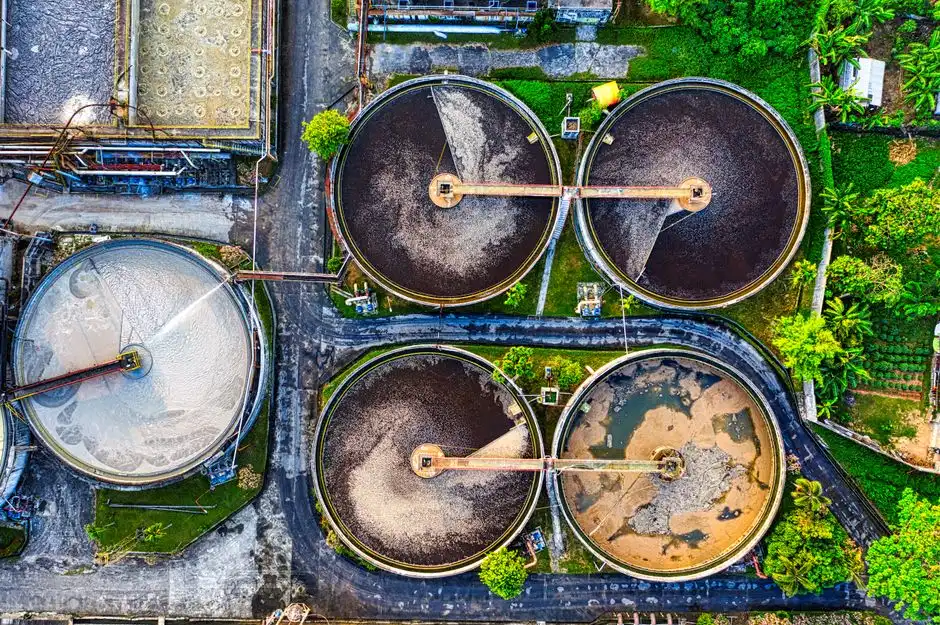
A dissolved air flotation unit upstream of UF is the single most cost-effective OPEX lever in a citric-acid treatment train, because the suspended solids that drive membrane fouling are exactly the particles DAF was built to remove. Raw Aspergillus niger fermentation broth carries 2,000–8,000 mg/L TSS — mostly mycelia, residual sugars, and cell debris — and pushing that straight into UF means flux collapse inside two hours and a CIP cycle you did not budget for.
DAF pretreatment upstream of UF typically removes 70–85% of TSS and 30–50% of COD, which translates into 25–40% slower fouling rate on the UF membrane and 20–30% lower OPEX versus raw-feed UF (HydropureWater field data, 2025–2026, food and fermentation wastewater installations). The result is longer membrane runs between cleans, fewer CIP chemical purchases, and steadier permeate quality into the downstream ion exchange or RO. DAF and UF are complementary, not competing — they sit on the same train, and DAF system maintenance cost benchmarks confirm that the combined OPEX of DAF-plus-UF runs well below UF-alone, even after the DAF's own consumable and polymer dosing costs. For a fuller read on how 2026 pricing is moving across the membrane market, the 2026 membrane market and pricing drivers piece covers the demand-side forces pushing polymeric and ceramic prices in opposite directions.
Sample ROI: 5-Year Cost of Ownership for a 200 m³/day Citric Acid UF Train
Below is a worked example sized to a typical Chinese citric-acid plant — the kind of number an engineer can paste into an executive deck with the assumptions stated. Feed: 200 m³/day at 70 °C, pH 2.5, COD 35,000 mg/L, target COD reduction >60% with partial citric-acid recovery into the downstream ion-exchange loop. Configuration: tubular ceramic UF (alumina, 50 nm), two parallel trains, 60 m² membrane area per train. CAPEX: $780,000 installed (Q1 2026 baseline, FOB Asia), within the $650K–$1.4M band from the configuration table for 100–300 m³/day ceramic service.
Blended OPEX at $0.18/m³ permeate breaks down as: membrane replacement $0.022 (assuming a 12-year ceramic life), CIP chemicals $0.045 (hot-NaOH stage included for citric-acid buffering), energy $0.075 (0.8 kWh/m³ at $0.094/kWh), labor $0.022 (0.6 FTE allocated), spares $0.016. Annual OPEX: 200 × 365 × $0.18 = $13,140. Five-year TCO: $780,000 CAPEX + 5 × $13,140 = $780,000 + $65,700 = $1,437,000. Now the revenue side: recovering an additional 0.5 percentage points of citric acid from the permeate (a realistic yield improvement from running UF ahead of ion exchange rather than sending whole broth to a less-selective recovery step) at a 5,000 t/yr plant and a $1,800/t acid price is worth roughly $90,000/year in incremental recovered product. Net of OPEX, the recovered-acid offset cuts the ceramic-vs-polymeric CAPEX premium payback to about 4.2 years on a simple, un-discounted basis.
Frequently Asked Questions
How much does an ultrafiltration system for citric acid wastewater cost in 2026?
CAPEX ranges $180,000–$1,400,000 depending on configuration and capacity, with installed cost of $820–$6,400 per m³-day; OPEX runs $0.08–$0.34 per m³ treated, anchored on a $0.008–$0.030/m³ membrane-replacement line item (HydropureWater field data, 2026; Jiménez-Benítez 2024 benchmark scaled to citric-acid service).
Which UF membrane type is best for high-temperature, low-pH citric acid broth?
Tubular ceramic UF (alumina, 50 nm pore) is the default for feeds above 60 °C and pH below 3.5, with a 10–15 year membrane life; polymeric PVDF hollow-fiber is 40–60% cheaper upfront but requires cooling the broth below 45 °C and pH held between 1.5 and 11.
How often does a citric-acid UF membrane need to be replaced?
Polymeric membranes last 3–5 years in hot citric-acid service versus 10–15 years for ceramic membranes; expect to replace 2–3× over a 10-year operating window for PVDF or PES versus a single ceramic replacement cycle, which is the OPEX gap that flips the lifecycle-cost decision above 60 °C.
Does UF help a citric acid plant meet discharge COD limits, and what removal is realistic?
UF alone typically removes 30–50% of COD by stripping biomass, mycelia, and colloidal organics; paired with DAF pretreatment the combined train reaches 60–75% COD reduction, which is usually sufficient to meet China GB 8978-1996 secondary discharge limits for fermentation residuals when followed by biological treatment or RO polishing.
Related Equipment
- DAF pretreatment upstream of UF — specifications, capacity range, and technical data