What Is a Cavitation Air Flotation (CAF) System?
A cavitation air flotation (CAF) system utilizes the principle of hydrodynamic cavitation to generate a high density of microbubbles (30–100 μm) without the need for external air compressors or pressure saturation tanks. This physical-chemical separation process is engineered to remove non-emulsified oils, grease, and suspended solids from industrial wastewater streams. Unlike traditional dissolved air flotation (DAF) methods that rely on dissolving air into water under high pressure (typically 4–6 bar), the CAF process generates bubbles mechanically through a high-speed rotating impeller that creates a negative pressure zone. This mechanical approach simplifies the system architecture, significantly reducing the maintenance requirements associated with pressure vessels and complex piping.
The core of the technology lies in the aerator assembly. As the aerator impeller rotates at high speeds—typically ranging from 900 to 1,500 RPM—it creates a vacuum at the impeller's center according to Bernoulli’s principle. This negative pressure draws ambient air down through a central shaft, where it is then sheared into a dense cloud of microbubbles. These bubbles are dispersed evenly throughout the flotation tank, providing a large surface area for the attachment of hydrophobic particles. For engineers, the primary advantage of CAF is its ability to handle high concentrations of fats, oils, and grease (FOG) with lower energy consumption than pressurized systems. It serves as a robust pretreatment stage, protecting downstream biological processes or ultrafiltration membranes from fouling and organic overloading.
How Does a CAF System Work? Step-by-Step Process
The operation of a cavitation air flotation system begins with the introduction of chemically pre-treated wastewater into the flotation chamber, where it encounters a high-speed mechanical aerator. Before entering the CAF unit, wastewater is often treated in an automatic chemical dosing system to facilitate coagulation and flocculation. This process groups smaller particles into larger flocs, which increases the probability of bubble-particle collision and attachment once the water enters the flotation tank.- Aeration and Cavitation: The aerator motor drives a specialized stainless-steel bulk air impeller. As the impeller rotates, it generates a centrifugal force that pushes water outward, creating a low-pressure zone (vacuum) at the intake port. This vacuum draws atmospheric air down the hollow shaft of the aerator.
- Microbubble Generation: Once the air reaches the submerged impeller, the high-velocity shearing action breaks the air stream into microbubbles ranging from 30 to 100 μm in diameter. These bubbles are significantly smaller than those produced by standard diffused air systems, which is critical for effective flotation.
- Bubble-Particle Attachment: The microbubbles are distributed radially throughout the tank. Due to their hydrophobic nature, oil droplets and flocculated solids attach to the surface of the rising microbubbles. This reduces the effective density of the contaminants, causing them to rise toward the water surface at a rate governed by Stokes' Law.
- Scum Formation and Skimming: As the bubbles reach the surface, they form a stable, thickened sludge layer known as "scum." A mechanical skimming system, consisting of a slow-rotating arm or a chain-driven flight, continuously moves this scum into a dedicated sludge trough for disposal or further dewatering.
- Clarified Water Discharge: The treated water, now stripped of the majority of its O&G and TSS content, flows underneath a baffle or through a peripheral outlet. This underflow design ensures that no surface scum escapes with the effluent, providing a consistent water quality for discharge or secondary treatment.
Key Components of a CAF System
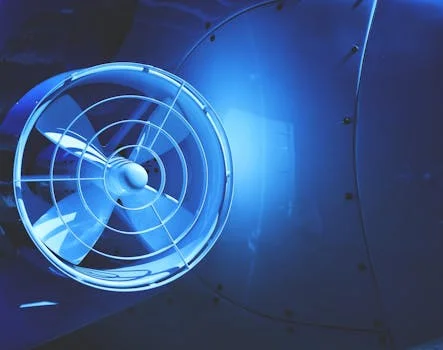
The primary components include:
- Aerator Assembly: This is the "engine" of the CAF system. It consists of a high-efficiency motor, a hollow suction shaft, and a high-speed impeller. The impeller is usually constructed from high-grade stainless steel (SS304 or SS316) to withstand the abrasive and corrosive nature of industrial wastewater.
- Flotation Tank: The tank is designed for optimal hydraulic retention time (HRT). It is typically rectangular and can be manufactured from carbon steel with epoxy coating, stainless steel, or fiberglass-reinforced plastic (FRP). The internal baffles are strategically placed to prevent turbulence and ensure a quiescent zone for flotation.
- Sludge Skimming Mechanism: A motor-driven skimmer removes the floating sludge layer. These are often variable-speed drives, allowing operators to adjust the skimming frequency based on the thickness of the sludge blanket and the influent solids concentration.
- Control System: Most modern CAF units utilize a PLC-based control panel. This allows for automated operation, including aerator start/stop sequences, skimmer speed control, and integration with upstream dosing pumps. It also monitors for motor overloads or mechanical failures, ensuring 24/7 reliability in manufacturing environments.
CAF System Performance Metrics and Technical Specifications
The performance of a CAF system can be evaluated based on its technical specifications.Standard industrial CAF systems achieve oil and grease (O&G) removal efficiencies of 85–95% and total suspended solids (TSS) removal rates between 80% and 92% depending on the influent characteristics. For procurement managers, comparing technical parameters is essential to ensure the equipment meets the specific flow and loading requirements of the facility. The following data represents standard performance metrics for HydropureWater-class cavitation air flotation units.
| Technical Parameter | Specification Range | Unit of Measurement |
|---|---|---|
| Flow Capacity | 4 – 300 | m³/h |
| Bubble Diameter | 30 – 100 | μm |
| Oil & Grease (O&G) Removal | 85 – 95 | % |
| Total Suspended Solids (TSS) Removal | 80 – 92 | % |
| Aerator Power Consumption | 1.5 – 3.0 | kW per unit |
| Impeller Rotation Speed | 900 – 1,500 | RPM |
| Hydraulic Retention Time (HRT) | 15 – 30 | Minutes |
These specifications highlight that CAF is particularly effective for high-volume pretreatment where energy efficiency and low maintenance are prioritized. While DAF may offer slightly higher removal rates for extremely fine or colloidal particles, the CAF system’s simplicity often translates to a lower Total Cost of Ownership (TCO) over a 10-year lifecycle (HydropureWater field data, 2025).
CAF vs DAF: Which Flotation System Should You Choose?
Choosing between CAF and DAF technology depends primarily on the required effluent quality and the nature of the contaminants, as CAF offers a 30-50% smaller footprint and lower energy consumption than DAF for high-FOG applications. While both systems utilize flotation, the method of bubble generation creates distinct operational profiles. DAF systems produce smaller bubbles (10–50 μm) by releasing pressurized air into a lower-pressure environment, which is superior for removing very fine, light solids and colloidal matter. However, this comes at the cost of higher mechanical complexity, including the need for saturation tanks and high-pressure pumps.
In contrast, CAF systems are "plug-and-play" units that are easier to operate for facilities without dedicated wastewater engineers. They are exceptionally well-suited for heavy-duty industrial applications where the primary goal is the removal of bulk oils and grease prior to biological treatment or municipal discharge. When evaluating these technologies, engineers should compare with HydropureWater's high-efficiency DAF systems to determine if the increased clarification of DAF justifies the additional capital and operational expenditure.
| Feature | Cavitation Air Flotation (CAF) | Dissolved Air Flotation (DAF) |
|---|---|---|
| Bubble Generation | Mechanical (Hydrodynamic Cavitation) | Pressure Dissolution (Saturator) |
| Bubble Size | 30–100 μm | 10–50 μm |
| Maintenance Needs | Low (No pressure vessels/compressors) | High (Pumps, nozzles, pressure tanks) |
| Power Efficiency | High (Low energy per m³ treated) | Moderate (High pressure pump demand) |
| Best Use Case | High FOG, bulk solids, pretreatment | Fine solids, algae, tertiary polishing |
| System Complexity | Simple, compact | Complex, larger footprint |
Industrial Applications of CAF Systems
Cavitation air flotation systems are widely used in various industries for wastewater treatment.Industrial applications for cavitation air flotation systems are most prevalent in sectors producing high concentrations of fats, oils, and grease (FOG), such as meat packing, dairy processing, and oil refinery runoff. Because the system does not use nozzles that can clog, it is highly effective in "dirty" wastewater environments where high concentrations of solids would otherwise require constant operator intervention. To maximize performance, these systems are frequently integrated with an automatic chemical dosing system to ensure optimal floc formation before the aeration stage.
- Food & Beverage: In slaughterhouses and dairy plants, CAF removes high loads of proteins and fats. This reduces the Chemical Oxygen Demand (COD) by up to 60%, significantly lowering municipal surcharges.
- Petrochemical and Oil & Gas: CAF is used to treat produced water, tank farm runoff, and oily bilge water. Its ability to separate free and dispersed oil makes it an ideal precursor to membrane filtration.
- Metalworking and Automotive: Used for the separation of spent coolants, cutting oils, and wash water from parts cleaning lines.
- Pulp and Paper: CAF assists in fiber recovery and the removal of "stickies" and inks from recycled paper processing effluent.
- Manufacturing: General wastewater pretreatment for facilities with mixed waste streams containing high levels of suspended solids and lubricants.
For facilities considering these applications, it is helpful to compare with HydropureWater's high-efficiency DAF systems for cases where effluent limits are extremely stringent, such as direct discharge into sensitive water bodies.
Frequently Asked Questions
What is the difference between CAF and DAF systems?
The primary difference is bubble generation. CAF uses a mechanical impeller to draw in air and create bubbles (30–100 μm) via cavitation, while DAF dissolves air into water under high pressure to create finer bubbles (10–50 μm). CAF is simpler and lower maintenance, whereas DAF provides higher clarification efficiency for fine particles.
How much space does a CAF system require?
CAF systems are highly compact. Because they eliminate the need for air compressors, pressure vessels, and recycle pumps, they typically require 30-50% less floor space than a DAF system of equivalent flow capacity.
Can CAF systems handle high oil concentrations?
Yes, CAF