Ion Exchange System vs Reverse Osmosis: Core Difference at a Glance
An ion exchange system vs reverse osmosis decision is a matching problem between feed water chemistry and target contaminant. Ion exchange (IX) is a stoichiometric, target-specific ion swap on resin beads: cation resin exchanges hydrogen or sodium for hardness cations; anion resin exchanges hydroxide for nitrate, sulfate, or heavy metals; mixed-bed polishers push resistivity into the ultrapure range. Reverse osmosis (RO) is a semi-permeable membrane process driven by hydraulic pressure that physically rejects 95–99.5% of dissolved ions, organics above 200 Da, and silica in a single pass. The central rule for engineers: IX selects for a target ion; RO rejects almost everything—and that difference dictates feed-water match, waste stream character, and OPEX structure. Pick IX when you know exactly which ion to remove and the feed TDS sits below ~500 mg/L. Pick RO when the feed is broad-spectrum, contains organics, or exceeds 1,000 mg/L TDS where IX resin capacity collapses into daily regeneration.
How Each Technology Works: Mechanism in 90 Seconds
Ion exchange runs in a batch cycle with four distinct phases: service run (loading resin to breakthrough, typically 8–24 hours depending on inlet loading and flow rate), regeneration with acid (HCl/H₂SO₄) for cation resin or NaCl for softening, a slow rinse to displace regenerant, and a fast rinse to quality—then back to service. Each regeneration consumes a stoichiometric excess of regenerant, typically 150–300% of theoretical, which is why chemical OPEX dominates IX operating cost. RO is continuous: feed is pressurized to 10–30 bar for brackish water or 60–80 bar for seawater and forced through spiral-wound or hollow-fiber membranes, splitting the stream into permeate (product) and concentrate (reject). Recovery is set by valve throttling and energy recovery devices, not by chemical stoichiometry. Because RO is continuous and IX is cyclic, IX plants need larger resin inventories to ride through regeneration, while RO plants need surge tanks, clean-in-place (CIP) skids, and concentrate management infrastructure. This operational difference shapes staffing, automation architecture, and how each technology responds to feed-water spikes on a manufacturing line.
Side-by-Side Engineering Comparison: 12 Parameters That Decide the Project
Twelve operating parameters drive project specification, as detailed in the table below. Numbers reflect industrial brackish-water duty (500–5,000 mg/L feed TDS) drawing on 2026 vendor data and field commissioning experience.
| Parameter | Ion Exchange (IX) | Reverse Osmosis (RO) |
|---|---|---|
| Target contaminant | Single ion class (hardness, nitrate, heavy metals) | Broad-spectrum dissolved solids, organics >200 Da, silica, microbes |
| Removal efficiency | >95% on target ion; near-zero on non-target | 95–99.5% total dissolved solids; >99% microbes and organics |
| Typical feed TDS range (mg/L) | 50–500 (above 1,000, regeneration frequency becomes uneconomic) | 200–10,000 brackish; up to 45,000 seawater with high-pressure membranes |
| Water recovery (%) | 90–95% (rest is regeneration waste) | Up to 95% (per HydropureWater RO product spec); 75–85% typical industrial |
| Energy use (kWh/m³ permeate) | 0.05–0.2 (pumping only) | 0.4–1.5 brackish; 3–6 seawater |
| CAPEX indicator (per m³/day) | $200–$600 (vessels + resin + regeneration skids) | $400–$1,200 (skid-mounted, with CIP and energy recovery) |
| OPEX driver | 65–80% chemical (NaCl, HCl, NaOH); resin replacement 5–10 yr | 60–70% energy; membrane replacement 3–5 yr; antiscalant |
| Chemical consumption | 3–6 kg NaCl per m³ softened; acid/caustic for demineralization | antiscalant mg cip chemicals quarterly |
| Wastewater byproduct | 3–8% of treated flow as brine (regeneration waste) | 5–25% of feed as concentrate, often needing further treatment or crystallization |
| Footprint | Larger resin inventory; vertical vessels; brine neutralization sump | Compact skid; concentrate management and CIP add auxiliary space |
| Startup complexity | Low; bed rinse and commissioning within hours | Moderate; membrane flushing, integrity test, RO ramp-up 24–48 hr |
| Sensitivity to feed variation | High — breakthrough timing shifts with TDS swings | Moderate — recovery is governed by membrane and feed pressure, not stoichiometry |
RO produces a concentrate stream that typically represents 5–25% of feed and must be managed against local discharge limits or sent to a crystallizer; IX produces a smaller-volume but higher-strength brine from regeneration. Concentrate management is now the single largest permitting issue in 2026 industrial RO retrofits, particularly inland sites where zero-liquid-discharge (ZLD) is being mandated.
Cost Reality Check: CAPEX, OPEX, and Lifecycle for Industrial Systems
Capital cost favors IX for low-TDS softening duty. Skid-mounted RO systems for industrial brackish water run $400–$1,200 per m³/day of capacity, while IX vessels plus resin for the same duty run $200–$600. OPEX inverts the picture. RO operating cost is dominated by energy (60–70%) and membrane replacement on a 3–5 year cycle. IX operating cost is dominated by regenerant chemicals (65–80%) and resin replacement on a 5–10 year cycle. For a 50 m³/h softening plant, 2026 lifecycle modeling (HydropureWater engineering estimates) places RO 20-year lifecycle cost within ±15% of IX when concentrate disposal is included, but RO wins decisively when the spec demands silica, TOC, or microbial control that IX cannot deliver. IX regeneration waste is 3–8% of treated flow as brine; RO concentrate is 5–25% of feed—both must be priced into the lifecycle at $0.50–$5 per m³ depending on local sewer surcharges or ZLD requirements. Procurement reviewers should request a 20-year NPV with concentrate disposal line-itemed, not just CAPEX plus first-year OPEX. For facilities evaluating a new industrial reverse osmosis system, the cost conversation should start with feed water analysis, not with a quote sheet.
Which Technology Wins by Application: Pharma, Power, F&B, Metals, Semiconductor
Industrial application requirements dictate the primary technology choice. The table below provides recommendations against the actual water specs each industry must hit.
| Industry / Duty | Recommended Primary | Secondary / Polisher | Why |
|---|---|---|---|
| Pharma / semiconductor (UPW) | RO | Mixed-bed IX + EDI | ASTM D5127 Type I/II: resistivity >18.2 MΩ·cm, TOC <10 ppb; RO removes 99% of load, IX polishes residual ions, EDI avoids chemical regeneration |
| Power — boiler feed makeup | RO | IX (cation + anion) | RO demineralizes makeup; IX polisher handles trace silica slip that fouls turbine blades |
| Power — condensate polishing | IX (mixed-bed) | — | Condensate is already low-TDS (~0.1 mg/L); IX removes iron, copper, silica slip continuously; RO would reject 99% of nearly-pure water and waste energy |
| Food & beverage | RO | IX for demin / decolorization | RO handles sugar concentration, juice clarification, dairy whey; IX handles process-water demineralization and sugar decolorization |
| Metal finishing | IX | RO for rinse recycle | IX recovers nickel, copper, chromium at 99% benchmark (see nickel wastewater treatment by ion exchange); RO closes rinse loops |
| Municipal / residential | RO (broad spec) or IX softener (hardness only) | — | RO for contaminant removal; IX softener for low-cost hardness-only targeting |
| High-purity process water | RO | Multi-media pretreatment filter + IX polish | Multi-media filter drops SDI <3 to protect RO membrane; IX polish hits resistivity target |
The pattern: RO is the bulk demineralizer wherever the feed is dirty or the spec is tight; IX is the polisher, the softener, or the recovery device wherever a single ion dominates the value proposition.
When Hybrid IX + RO Systems Make Sense
Many industrial plants combine both technologies in a staged train to optimize cost and purity. Two configurations dominate industrial practice. RO first, IX second—RO does the bulk demineralization, dropping TDS by 95–99%; downstream IX then polishes residual ions. This cuts IX regeneration frequency by 5–10×, slashing chemical OPEX and brine waste volume proportionally. It is the standard architecture for pharmaceutical UPW and high-pressure boiler makeup. IX first (softener), RO second—IX removes hardness ahead of the RO membrane, preventing calcium carbonate and barium sulfate scaling and lowering RO feed Silt Density Index to <3 (per HydropureWater multi-media filter specification, achieving the SDI window RO membranes require). Without this IX softener, RO recovery must be derated, energy per m³ climbs, and membrane life halves. The hybrid adds CAPEX but reduces OPEX enough that 20-year NPV typically favors it whenever feed hardness exceeds 100 mg/L as CaCO₃. Pretreatment with a multi-media pretreatment filter is the third leg of most industrial trains, sitting upstream of either IX or RO to drop turbidity and SDI.
Decision Framework: How to Choose in 4 Questions
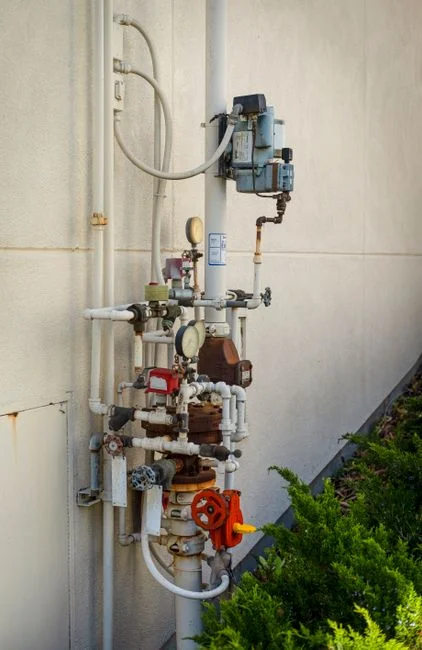
The following four questions provide a systematic path to selecting the correct specification.
- Is your target a single ion (hardness, nitrate, heavy metal) or broad-spectrum demineralization? Single ion and known chemistry → IX. Broad spec, organics, silica, or microbes in the mix → RO.
- What is feed TDS? Below 500 mg/L favors IX on cost. Above 1,000 mg/L forces RO; IX regeneration would run multiple times per shift.
- Do you need silica, organics, or microbial removal? Any of those three → RO is mandatory; IX does not remove them.
- Is chemical handling and brine discharge permitted on site? If no—no acid, no caustic, no regeneration waste—then RO with concentrate management (and possibly ZLD) is the only path. If yes, IX remains an option for single-ion duties and pretreatment.
When the answers split (Q1 says IX, Q3 says RO), specify the hybrid train. For an engineering deep-dive on adjacent biological treatment tradeoffs, the MBR vs MBBR comparison walks through similar decision logic for the biological step upstream of these membrane and resin units.
Frequently Asked Questions
What feed TDS level should drive the choice between IX and RO? Below 500 mg/L feed TDS, ion exchange is typically more economical for single-ion targets. Above 1,000 mg/L feed TDS, RO becomes the only viable option because IX resin capacity collapses and regeneration frequency becomes operationally untenable.
What is the typical water recovery rate for each system? Industrial IX systems achieve 90–95% recovery (the remainder leaves as regeneration waste). RO systems achieve up to 95% recovery on brackish feeds per current product specifications; 75–85% is the more common industrial operating window once concentrate management constraints are applied.
How do CAPEX and OPEX compare for a