Why Nevada Municipal Sewage Treatment Is a Different Engineering Problem
Nevada concentrates roughly 70% of its population in Clark County, so most plant sizing decisions in 2026 still resolve to the Las Vegas Valley and Henderson. That concentration drives a specific set of design drivers that do not appear in a generic US plant spec.
Las Vegas domestic sewage typically carries 600–900 mg/L total dissolved solids (TDS), well above the 500 mg/L benchmark used in most EPA-funded design guidance. High TDS raises conductivity in the aeration tank, suppresses nitrification kinetics, and forces chemical conditioning at the sludge dewatering stage. Diurnal loading is the second Nevada-specific driver: tourist flows in the Las Vegas basin create peak-to-average ratios of 2.5–3.5×, requiring 25–35% equalization volume upstream of the biological stage to prevent washout.
Northern Nevada introduces a third driver. Plants in Elko, Battle Mountain, and Winnemucca receive hauled septage and mining-influenced wastewater with trace metals — arsenic, mercury, and selenium — that accumulate in the sludge. Under NDEP solids permitting, those metals dictate disposal routing and often force 22–28% dry-solids cake production before land application. The final driver is reuse economics: reuse-quality effluent earns discharge credits under the Southern Nevada Water Authority and Colorado River Commission allocation rules, which can offset 15–30% of raw-water cost in the Las Vegas basin (per NDEP Bureau of Water Pollution Control guidance, 2025-09).
NDEP and EPA NPDES Compliance Framework for Nevada Plants
Nevada plants are governed by two layered frameworks: Nevada Administrative Code (NAC) 445A.235–445A.278, enforced by the NDEP Bureau of Water Pollution Control, and the federal NPDES baseline under 40 CFR Part 122, which applies to any municipal plant ≥1 MGD or serving ≥10,000 people. Both must be cited in the 2026 RFP cover sheet or the design review returns within 30 days.
Nevada classifies effluents into three discharge tiers, and the choice cascades into process selection:
| Discharge Class | BOD Limit | TSS Limit | Total Nitrogen | Typical Use |
|---|---|---|---|---|
| Class A | <10 mg/L | <10 mg/L | <5 mg/L | Reuse / golf course / industrial cooling |
| Class B | <30 mg/L | <30 mg/L | <10 mg/L | Restricted irrigation, pasture |
| Class C | <45 mg/L | <45 mg/L | — | Surface water discharge (Truckee, Humboldt, Las Vegas Wash) |
NDEP antidegradation review applies to any plant discharging to Las Vegas Wash, the Truckee River, or the Humboldt River basins, and it tightens limits on BOD, ammonia, and total phosphorus when receiving-water quality is already impaired. Biosolids are regulated separately under 40 CFR Part 503, which governs land application of sewage sludge — a critical pathway in mining-state Nevada where landfill disposal is the default. Two compliance numbers worth pinning in the RFP: Class A reuse requires filtration to ≤2 NTU before UV or chlorine contact, and Class B irrigation requires fecal coliform ≤200 CFU/100 mL (per NAC 445A.245).
Process Selection: MBR vs SBR vs Oxidation Ditch vs MBBR for Nevada
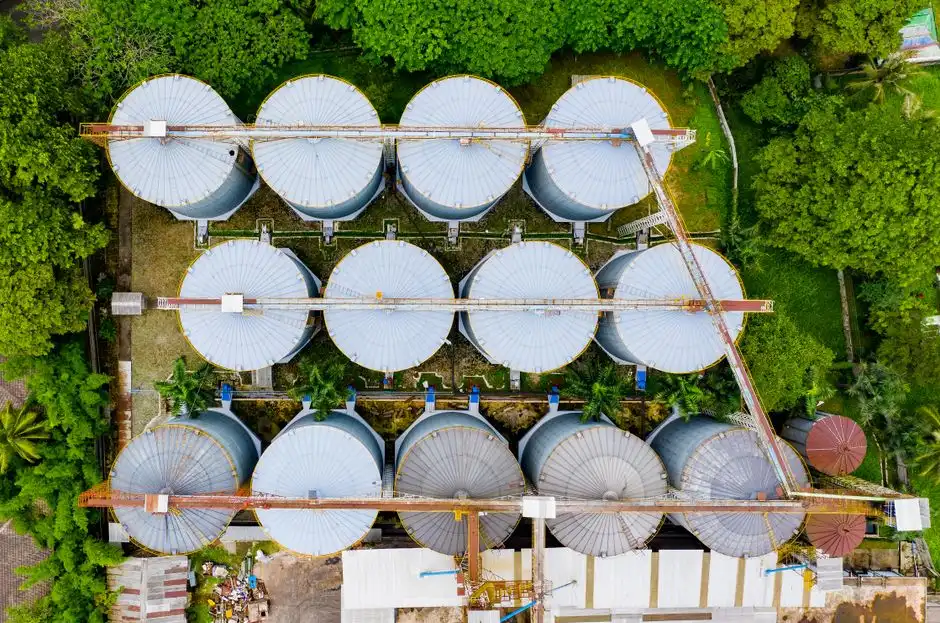
Process selection in Nevada depends on flow size, reuse intent, and available footprint. The table below is the centerpiece of any 2026 spec for a plant between 0.5 and 20 MGD.
| Parameter | MBR | SBR | Oxidation Ditch | MBBR |
|---|---|---|---|---|
| Typical BOD effluent | <5 mg/L | <10 mg/L | <30 mg/L | <20 mg/L |
| Typical TN effluent | <8 mg/L (with post-anoxic) | <8 mg/L (timed anoxic phase) | <10 mg/L | <10 mg/L (with IFAS upgrade) |
| Footprint (m² per MGD) | ~900 | ~1,400 | ~2,200 | ~1,100 |
| CAPEX 1–5 MGD (2026) | $7M–$25M | $4.5M–$9M (best ≤2 MGD) | $6M–$20M | $5M–$15M |
| OPEX per m³ treated | $0.55–$0.85 | $0.35–$0.55 | $0.40–$0.65 | $0.40–$0.60 |
| Operator skill required | High (membrane CIP, SCADA) | Moderate (timed cycles) | Low (mechanical robustness) | Moderate (media management) |
| Best-fit Nevada use case | Las Vegas / Henderson Class A reuse, Colorado River credits | Rural towns <2 MGD, lowest CAPEX | Retrofit of older Clark County plants, mining-region robustness | Seasonal flow swings (Lake Tahoe, Elko county), IFAS retrofits |
MBR combines a submerged PVDF membrane (0.1–0.4 μm pore) with activated sludge and delivers the lowest BOD and TSS of any option, plus the smallest footprint — roughly 60% smaller than conventional activated sludge at the same flow. That footprint reduction is the deciding factor in dense Las Vegas Valley sites where land runs $40–$80 per square foot. MBR membrane bioreactor systems for municipal reuse plants are typically paired with a post-anoxic zone for TN <8 mg/L and a UV or chlorine dioxide polish for Class A reuse.
SBR uses a timed-batch reactor with a decanter and is the lowest-CAPEX option for flows under 2 MGD, which is why it dominates rural Nevada towns. Controls are simple, but the larger footprint and higher OPEX above 3 MGD push most engineers toward oxidation ditch or MBBR at that scale. Oxidation ditch — an extended-aeration loop with brush or disc aerators — is the most mechanically robust option and tolerates the TDS and load swings common in mining-influenced wastewater, making it the default for retrofits in older Clark County plants. MBBR with free-floating PE media biofilm is the modular retrofit option, and the IFAS variant (adding media into an existing CAS basin) is the cheapest way to add nitrification to a 5–10 MGD plant with seasonal tourism loads.
For very small rural flows, WSZ underground packaged sewage treatment plants in the 1–80 m³/h range offer a fully buried, factory-tested alternative that bypasses most of the on-site concrete work.
2026 CAPEX and OPEX Benchmarks for Nevada Sewage Treatment Plants
Capital ranges for Nevada municipal plants scale sharply with flow and discharge class. The table below ties each band to a defensible RFP line item; ranges reflect HydropureWater field data and 2026 RSMeans civil cost indices for the Mountain West region.
| Plant Size | Recommended Process | CAPEX Range (2026) | OPEX per m³ | Notes |
|---|---|---|---|---|
| 0.5–1 MGD | SBR or packaged WSZ | $4.5M–$9M | $0.35–$0.55 | Rural Nevada, Class C discharge |
| 1–5 MGD | MBR or oxidation ditch | $7M–$25M | $0.40–$0.85 | Suburban Clark / Washoe County |
| 5–10 MGD | MBR with full reuse train | $30M–$55M | $0.55–$0.85 | Las Vegas Valley, Class A reuse |
| 10–20 MGD | MBR + UV + cloth filter | $55M–$110M | $0.50–$0.80 | Regional authority, Colorado River credits |
Three Nevada-specific OPEX adders should be carried in the financial model. High-TDS chemical conditioning adds $0.05–$0.12 per m³ above generic US operating costs. Class A reuse UV and chlorine polishing adds $0.03–$0.07 per m³. MBR membrane replacement, scheduled every 7–10 years, runs $0.8M–$1.5M per event for a 5 MGD plant and must be amortized into the lifecycle cost. Nevada's industrial electricity rate sits at 10–12 ¢/kWh (per EIA 2025-11), and aeration energy accounts for 40–55% of total OPEX — a useful lever when comparing diffused-bubble MBR against surface-aerated oxidation ditch designs (see our diffused aeration vs surface aeration comparison for the engineering breakdown).
Equipment Checklist for a Nevada Municipal Plant Spec
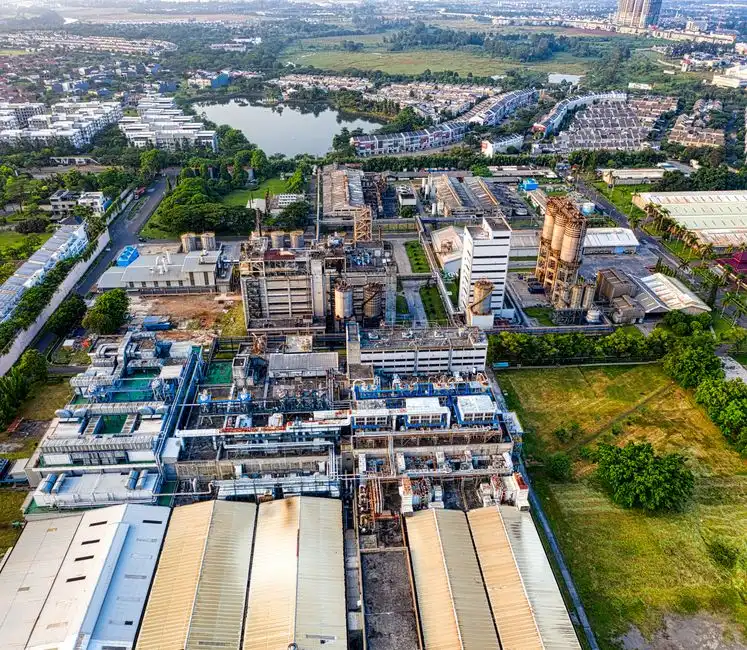
The bill of materials below represents the minimum equipment scope for a 2026 Nevada RFP. Omitting any one item typically returns the design review for re-spec.
- Headworks: GX rotary mechanical bar screens with 1–6 mm aperture and a vortex grit chamber. Required for all Nevada plants above 0.5 MGD per NAC 445A.235.
- Biological stage: MBR membrane modules, SBR decanter, oxidation ditch aerator, or MBBR media — selected per the process train. For MBR, specify DF series PVDF flat sheet membrane modules with a 7–10 year replacement interval and a clean-in-place skid sized at 2–4 L/m² per cycle.
- Pre-treatment for high-FOG or septage-receiving plants: DAF pre-treatment for septage-receiving plants in Elko, Battle Mountain, and other hauled-waste gateways. DAF typically reduces FOG to <50 mg/L upstream of the biological stage.
- Disinfection: Chlorine dioxide generators for Class A reuse plants in Las Vegas and Henderson, or UV for plants where DBPs are a concern. Chlorine gas is increasingly rejected by NDEP for Class A reuse.
- Sludge handling: plate-and-frame filter press for plants under 2 MGD, centrifuge or belt press for larger facilities. Target 22–28% dry solids for land application under 40 CFR Part 503.
For an MBR-versus-MBBR retrofit decision on an existing 3–10 MGD train, the side-by-side engineering case is laid out in MBR vs MBBR: 2026 Engineering Comparison for Industrial Plants.
Frequently Asked Questions
Q1: How much does a 1 MGD municipal sewage treatment plant in Nevada cost in 2026?
CAPEX for a 1 MGD plant runs $7M–$25M depending on process (MBR at the upper end, SBR or oxidation ditch at the lower). NDEP permit review takes 6–9 months from complete application to issued permit, per NDEP Bureau of Water Pollution Control.
Q2: What is the Nevada Class B effluent standard?
Class B effluent under NAC 445A.245 requires BOD <30 mg/L, TSS <3