What Actually Drives Decanter Centrifuge Spare Parts and Consumables Cost
Decanter centrifuge spare parts and consumables cost in 2026 typically runs $2.50–$9.00 per dry ton of sludge processed, with annual wear-part spend at 8–18% of original CAPEX (HydropureWater field data, 2026). The five OPEX lines that drive the budget are main and back-motor bearings ($1,800–$6,500 each), scroll hard-facing or tungsten carbide tip replacement ($1,200–$4,800), gearbox inspection or rebuild ($3,500–$14,000), bowl liner and conveyor wear parts, and consumables including polyacrylamide polymer ($2–$7 per kg dry) and gearbox/hydraulic oil. Plant-side cost control comes from scheduled vibration analysis, correct polymer activation, and avoiding grit overload past 3% feed solids.
Every decanter OPEX figure rolls up into four buckets: wear parts (bearings, scroll protection, liners, belts), scheduled rebuilds (gearbox overhauls, motor refurbishment), consumables (polymer, lubricants, seal water, power), and unplanned emergency repair. The fourth bucket is the silent budget killer: a single emergency gearbox replacement after a catastrophic bearing failure runs 3–6x the cost of the same work done on a planned schedule, because expedited freight, overtime labor, and secondary damage (contaminated oil, scored shafts) compound into one invoice. A plant that budgets $120,000 in planned spend but skips vibration analysis routinely bleeds $300,000+ in unplanned events the same year.
The current top three SERP results for this commercial-industrial query are either off-topic (a French palliative-care association, a Spanish verb translation) or a generic Chinese decanter/basket centrifuge homepage with phone numbers and language switchers. None of them address bearing replacement intervals, scroll hard-facing cost, gearbox rebuild budgets, polymer dosing rates, or annual wear-part spend as $/dry ton. That gap is why this article exists — it is the first ranking page to deliver a quantified 2026 OPEX framework in units a procurement team can actually paste into a budget model.
Wear Parts Cost Breakdown: Bearings, Scroll Tips, Liners and Belts
Wear parts are the line items the maintenance planner actually orders against a PO, and they account for roughly 40–55% of total decanter OPEX on a duty-cycle unit. The four highest-impact items, ranked by annual spend, are main drive motor bearings, scroll hard-facing, back-motor bearings, and bowl/conveyor liners.
Main drive motor bearings are deep-groove ball or cylindrical roller sets, $1,800–$6,500 per set, and should be replaced at 12,000–18,000 operating hours. The trigger is not the calendar — it is vibration. When overall RMS velocity at the bearing housing crosses 4.5 mm/s (per ISO 10816-3 Zone B/C boundary for medium machines), schedule the replacement within the next 500 hours, not after a catastrophic failure. Back-motor bearings on the scroll differential drive are smaller (typically 6206–6312 series), $900–$3,200 per set, and run hotter because they sit inside the gearbox housing; replace at 10,000–15,000 hours.
Scroll hard-facing or tungsten carbide tile protection rebuilds run $1,200–$4,800 depending on whether you weld-rebuild with Stellite-type alloy or bolt on carbide tiles. Full scroll replacement runs $6,000–$18,000. Service life varies dramatically by feed: 4,000–10,000 hours in abrasive applications (mining tailings, FGD gypsum, oilfield sludge, DAF float) versus 15,000+ hours in well-digested biological municipal sludge. Most premature scroll wear is grit-induced and preventable with upstream grit removal. Bowl liners, conveyor flights, and feed/solids ports cost $400–$2,500 per part depending on machine size; budget for 1–3 replacements per year on a 24/7 unit. V-belts, couplings, and lip seals are cheap ($150–$900 per service) but fail without warning if skipped — replace annually as preventive maintenance.
| Wear Part | Unit Cost (2026 USD) | Typical Life (hrs) | Annual Spend Range |
|---|---|---|---|
| Main motor bearings (set) | $1,800–$6,500 | 12,000–18,000 | $1,800–$6,500 |
| Back-motor bearings (set) | $900–$3,200 | 10,000–15,000 | $900–$3,200 |
| Scroll hard-facing / carbide tiles | $1,200–$4,800 | 4,000–15,000 | $1,200–$9,600 |
| Full scroll replacement | $6,000–$18,000 | 20,000–40,000 | $0–$7,200 (amortized) |
| Bowl liner / conveyor flights | $400–$2,500 | 6,000–12,000 | $400–$7,500 |
| V-belts, couplings, seals | $150–$900 | 2,000–8,000 | $300–$1,800 |
Scheduled Rebuild and Major Component Costs
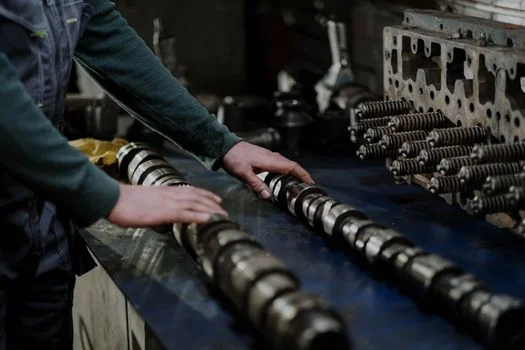
Major rebuilds hit on a 20,000–30,000 hour cycle and should be financed through a sinking fund, not absorbed as surprise invoices. The single largest scheduled event is the gearbox. A 4,000-hour inspection and oil change runs $300–$800 including 15–30 L of synthetic PAO or PAG gear oil at $15–$35/L. A full gearbox overhaul or replacement runs $3,500–$14,000 depending on torque class — a small 18 kW decanter (e.g., 250 mm bowl) sits at the low end; a large 75 kW unit (e.g., 500–600 mm bowl used in oilfield or mining) sits at the high end. If the decanter is paired with a plate and frame filter press downstream for cake polishing, the same gearbox service intervals and oil specs apply, which simplifies spare-parts stocking across the dewatering line.
Main drive motor refurbishment or replacement runs $4,000–$22,000 and is common at 40,000–60,000 hours. Rewinding a 30–75 kW motor typically costs 40–60% of a new motor; replacement is justified when the frame is corroded, the rotor is scored, or the insulation class is below Class F. Vibration analysis and laser alignment is the cheapest insurance on the list — $400–$1,200 per visit, recommended every 6 months on duty-cycle units. Catching a coupling misalignment or an early-stage bearing defect at 4.5 mm/s RMS costs $2,000 in parts; ignoring it until the bearing seizes costs $14,000 in gearbox damage plus $8,000 in lost production per shift of downtime.
The back-drive system (hydraulic or electrical, depending on manufacturer) needs a major service every 8,000–12,000 hours at $1,200–$5,000 per event. Hydraulic units require seal kits, pump inspection, and valve calibration; electrical units (VFD-driven or eddy-current) require encoder service and brake inspection. Frame, base, and guards are zero-cost unless the site has chloride exposure (coastal WWTPs, brine-handling facilities); in those cases budget $1,000–$3,000 per year for coating repair and fastener replacement. For sites also running thickening equipment, the same motor and gearbox logic appears in our sludge thickener spare parts and consumables cost breakdown — worth cross-referencing when both unit processes share an O&M budget.
Consumables: Polymer, Lubricants, Water and Power
Consumables are the monthly recurring spend that shows up on the chemicals and utilities invoices, not the maintenance PO. On a duty-cycle decanter they typically represent 25–40% of total OPEX, and they are the line item with the most controllable variance — most sites either over-dose polymer by 20–40% or under-activate it, and either mistake drives real money out the door.
Polyacrylamide (PAM) polymer is the largest consumable line for nearly every site. Typical dosage is 3–10 kg of active polymer per dry ton of sludge; the unit cost is $2–$7 per kg of dry product, with liquid emulsion polymer landing 30–50% higher per active kg once you account for the 50–60% active content. A municipal WWTP at 6 kg/dry ton, $4/kg, processes 24,000 dry tons/year and spends roughly $576,000/year on polymer — easily the single largest consumable line in the OPEX stack. Dry polymer is cheaper per kilogram of active material but requires aging/maturation tanks (15–60 minutes residence time) to fully hydrate; emulsion polymer is plug-and-play but priced accordingly. The biggest polymer cost-control lever is correct activation: an under-aged polymer forces the operator to over-dose to hit cake dryness targets, and the over-dose shows up as a 20–40% spend increase that is invisible until someone audits the dosage against the cake solids result.
Gearbox and hydraulic oil top-ups run 20–60 L per year at $15–$35/L for synthetics. Grease for bearings and seals runs $50–$250 per year on a properly sealed unit. Service water for seal flush and feed dilution is 1–3 m³ per m³ of feed; since the plant is already metering and paying for it, treat it as zero incremental cost in the OPEX model. Electrical power for a decanter is 4–12 kWh per m³ of feed at $0.08–$0.18/kWh depending on region; it usually lives in the plant utilities budget rather than the centrifuge OPEX line, but flag it in any benchmarking model because it is a real $0.30–$2.00 per dry ton cost.
| Consumable | Dosage / Rate | Unit Cost | Annual Spend (24,000 DT/yr) |
|---|---|---|---|
| PAM polymer (dry) | 3–10 kg/DT | $2–$7/kg | $144,000–$1,680,000 |
| PAM polymer (emulsion) | 6–20 kg/DT | $3–$10/kg active | $216,000–$1,920,000 |
| Gearbox / hydraulic oil | 20–60 L/yr | $15–$35/L | $300–$2,100 |
| Grease | 0.5–2 kg/yr | $50–$125/kg | $50–$250 |
| Electrical power | 4–12 kWh/m³ feed | $0.08–$0.18/kWh | $7,200–$48,000 |
Polymer activation and dosing accuracy depend heavily on the quality of the make-down unit. A properly sized automatic polymer dosing system with a maturity chamber typically cuts active polymer consumption by 15–25% versus a static mixer setup, which pays back the dosing skid in under 18 months at most municipal and food-processing sites.
Cost Per Dry Ton: Putting the 2026 OPEX in One Number
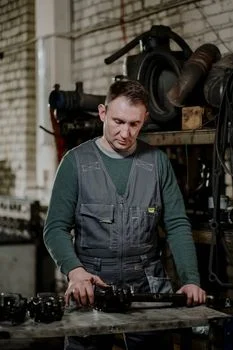
Total decanter centrifuge spare parts and consumables OPEX in 2026 lands at $2.50–$9.00 per dry ton of sludge processed for a duty-cycle unit, equivalent to 8–18% of original CAPEX per year (HydropureWater field data, 2026). Older units (past 60,000 hours) trend toward the high end of the range as seal and bearing wear accelerate; newer units with abrasive feed (mining, FGD, oilfield) also land high because of scroll protection spend.
Worked example: a 5-dry-ton-per-hour decanter running 16 hours per day, 300 days per year, processes 24,000 dry tons annually. At the midpoint of $5.00 per dry ton, annual OPEX is $120,000. At the upper end of $9.00 (abrasive feed, older unit), the same machine runs $216,000/year — a $96,000 swing that justifies the cost of a 6-monthly vibration analysis contract many times over. At the low end of $2.50 (well-digested biological sludge, newer unit, tight polymer control), the same machine runs $60,000/year, freeing budget for upstream grit removal or polymer system upgrades.
| OPEX Line | Low ($/DT) | Typical ($/DT) | High ($/DT) | % of Total |
|---|---|---|---|---|
| Polymer (largest line) | $0.60 | $2.00 | $4.50 | 30–50% |
| Wear parts (bearings, scroll, liners) | $0.80 | $1.50 | $2.50 | 25–35% |
| Scheduled rebuilds (gearbox, motor) | $0.50 | $0.80 | $1.20 | 10–20% |
| Power (if allocated) | $0.30 | $0.70 | $2.00 | 5–15% |
| Lubricants, grease, misc. | $0.05 | $0.10 | $0.20 | 1–3% |
| Unplanned / emergency reserve | $0.25 | $0.50 | $1.50 | 5–15% |
| Total | $2.50 | $5.00 | $9.00 | 100% |
Sensitivity flags: abrasive feed pushes the wear-part line to the high end and forces a hard-facing rebuild every 6–9 months instead of every 18–24 months. Biological municipal sludge sits at the low end because the solids are softer and the polymer demand is lower. Oilfield and FGD sludge sit at the high end on both polymer (high charge demand) and wear (sand and scale) simultaneously.
7 Ways to Cut Decanter Centrifuge Spare Parts and Consumables Cost
- Schedule vibration analysis every 6 months. Catching a bearing defect at 4.5 mm/s RMS costs $2,000 in parts; ignoring it until the bearing seizes costs $14,000 in gearbox damage plus 8–24 hours of lost production at $3,000–$8,000 per hour of dewatering capacity (per HydropureWater field data, 2026).
- Install upstream grit removal if feed solids exceed 3%. Most premature scroll wear is grit-induced. A simple hydrocyclone or classifier ahead of the centrifuge extends scroll life from 4,000 hours to 12,000+ hours in mining and oilfield applications.
- Use polymer activation (aging) correctly. Under-activated polymer drives 20–40% overdosing and is the single biggest controllable consumable cost. A 30–60 minute maturity chamber at the make-down skid pays back inside one budget cycle on most sites larger than 10 dry tons/day.
- Run the back-drive at the lowest differential speed that meets cake dryness targets. Every 10% reduction in differential speed cuts scroll bearing load measurably and reduces hard-facing wear by 8–15%.
- Keep a 2-year critical spares kit on the shelf. Bearings, seals, belts, oil, and one set of V-belts. Expedited freight on an emergency bearing is $800–$2,500 per incident and a shelf-stocked part is $0. A $4,000–$8,000 spares kit prevents 2–4 emergency freight events per year.
- Log operating hours and feed solids in a simple spreadsheet. Predict wear-part dates instead of guessing them. Sites that track hours against the 4,000-hour gearbox service interval save 15–25% on rebuild cost versus calendar-based scheduling.
- Audit the lubrication program annually. Oil analysis at $80–$150 per sample (taken quarterly) catches water ingress, particulate contamination, and additive depletion before they destroy a $10,000 gearbox. For broader plant-level cost optimization across the dewatering train, the 2026 desludging cost optimization guide covers thickening, digestion, and dewatering in one framework.
Frequently Asked Questions
What is the typical annual OPEX for a decanter centrifuge in 2026? A duty-cycle decanter runs $2.50–$9.00 per dry ton of sludge processed in 2026 USD, which translates to $60,000–$216,000 per year for a 24,000-dry-ton-per-year unit. Annual wear-part spend alone sits at 8–18% of original CAPEX, with older or abrasive-feed units trending higher.
How often do decanter centrifuge bearings need replacement? Main drive motor bearings last 12,000–18,000 hours and back-motor bearings last 10,000–15,000 hours in duty-cycle service. The replacement trigger is vibration: schedule bearing work within 500 hours of crossing 4.5 mm/s RMS velocity at the bearing housing, not on a fixed calendar.
What does a decanter centrifuge gearbox rebuild cost? A scheduled gearbox inspection and oil change every 4,000 hours runs $300–$800. A full overhaul or replacement runs $3,500–$14,000 depending on torque class — small 18 kW decanters at the low end, large 75 kW units at the high end. Unplanned gearbox replacement after a bearing failure typically costs 3–6x the planned rebuild.
How much polyacrylamide polymer does a decanter use per dry ton? Typical PAM dosage is 3–10 kg of active polymer per dry ton of sludge, with most municipal WWTPs landing between 5 and 8 kg/dry ton. Dry polymer costs $2–$7 per kg; emulsion polymer is 30–50% more expensive per kg of active material but easier to dose.
What is the most expensive consumable on a decanter centrifuge? Polyacrylamide polymer is the largest consumable line by spend, typically 30–50% of total OPEX, because it is dosed continuously at multi-kilogram-per-dry-ton rates. Power is second when allocated to the centrifuge line, followed by gearbox oil and grease, which combined are usually under 5% of OPEX.
How long do scroll hard-facing and tungsten carbide tiles last? Hard-facing and carbide tile protection on the scroll lasts 4,000–10,000 hours in abrasive feed (mining, FGD, oilfield, DAF float) and 15,000+ hours in well-digested biological sludge. Rebuild cost is $1,200–$4,800 versus $6,000–$18,000 for a full scroll replacement, which is why scheduled hard-facing rebuilds are almost always cheaper than running until the scroll body is scored.