Egypt Industrial Wastewater Discharge Limits 2026
Egypt industrial wastewater discharge limits 2026 still depend on the receiving body: Nile outfalls at BOD 30 mg/L, COD 40 mg/L, TSS 30 mg/L under Law 48/1982 reprints, or sewer entry at BOD 600 mg/L under Decree 44/2000.
Law 48 for the year 1982 regarding the protection of the River Nile and waterways from pollution, Law 4 for the year 1994 for Environment Protection, and Law 93 of 1962 remain the working set, according to the water-resources overview used for this update. No page read for this update shows a 2026 statute that replaces those columns. Fix the receiving body before pumps, tanks, or a membrane stage are sized.
Sewer pretreatment limits and Nile or drain limits are different decision packages. Plants that only pretreat to public-sewer limits (BOD ≤600 mg/L, COD ≤1,100 mg/L) cannot lawfully use those values for a direct Nile release. Most plants we size for Nile-adjacent industry meet the sewer column first, then add polishing only when the permit is a direct environmental discharge.
How the Law 48 1982 River Nile Discharge Permit Works
A law 48 1982 river nile discharge permit is a Ministry of Irrigation licence, not a sewer connection letter. According to the FAOLEX English text of Law No. 48 of 1982, discharge of solid, liquid, or gaseous waste into the Nile, canals, drains, or groundwater without a Ministry of Irrigation licence is forbidden. The Ministry of Health samples licensed outfalls; MWRI can withdraw the licence if results stay off-spec. Wikipedia's water-resources overview adds that the Ministry, beyond running dams and irrigation canals, also monitors water quality.
For a Nile outfall, donor SESA summaries of Law 48/1982 list BOD ≤30 mg/L, COD ≤40 mg/L, and TSS ≤30 mg/L at the discharge point (EIB IWSP 2 SESA, 2019). Drain discharge under the same framework is typically BOD ≤60 mg/L and COD ≤80 mg/L. Plants that only pretreat to public-sewer limits cannot lawfully use those values for a direct Nile release.
Licence files we prepare always carry the sampling-point drawing next to the limit table, because the compliance point is what the Ministry of Health sampler will actually use. A permit pulled on the wrong flange is a failed quarter even when the biology is fine. Ask MWRI in writing which point governs before the first sample is scheduled.
What Decree 44 2000 Sewer Effluent Standards Egypt Require
Decree 44 2000 sewer effluent standards egypt values come from the decree's role as executive regulation of Law 93/1962, cited that way in the EIB IWSP 2 SESA (2019). Industrial sewer discharge under Decree 44/2000 allows much higher organics—BOD ≤600 mg/L and COD ≤1,100 mg/L—because the municipal plant finishes the treatment. TSS to the sewer is ≤800 mg/L.
Temperature for sewer entry is often quoted as ≤40°C in plant briefs; the Decree 44/2000 table reproduced in the EIB IWSP 2 SESA (2019) lists ≤43°C, with pH 6–9.5. Oil and grease must stay ≤100 mg/L to sewers. Food plants draw scrutiny for organic load; textile plants face colour and chromium checks. Most sewer-bound factories we review miss oil and grease before they miss BOD.
Law 93/1962 is the primary statute for liquid waste discharged into public sewers and for sewage infrastructure connections across Egypt. Any industrial or commercial facility must obtain a connection permit before joining the municipal grid. The law prohibits substances that damage sewer structures or upset downstream biological treatment.
Procurement notes sometimes still carry the string 埃及废⽔排放及回⽤相关法规(law 93/1962 & decree 44/2006), next to the English Decree 44/2000 citation. Treat that string as a file label, not as a second numeric set, unless the permit itself cites 2006. We do not size a train from a year we have not read in the licence.
Operators comparing site options should also read the national Egypt Wastewater Discharge Standards: 2026 Industrial Compliance Guide before locking a process train. For numeric tables by receiving body, see Egypt Effluent Compliance Limits and Standards 2026.
What Key Regulations and Emission Limits Apply to Plants?
Key regulations and emission limits for water treatment plants in Egypt split by destination: Law 93/1962 for public sewers, Law 48/1982 for the Nile and drains, and Code 501 for agricultural reuse. Municipal plants discharging to water bodies are commonly designed to BOD ≤25 mg/L and TSS ≤30 mg/L in Egyptian practice summaries used on this page. Industrial sewer discharge under Decree 44/2000 allows much higher organics because the municipal plant finishes the treatment.
| Parameter | Municipal Effluent (Standard) | Industrial (to Public Sewer) | Industrial (to Agricultural Drain) |
|---|---|---|---|
| BOD5 (mg/L) | ≤ 25 | ≤ 600 | ≤ 60 |
| COD (mg/L) | ≤ 80 | ≤ 1,100 | ≤ 100 |
| TSS (mg/L) | ≤ 30 | ≤ 800 | ≤ 50 |
| Oil & Grease (mg/L) | ≤ 5 | ≤ 100 | ≤ 10 |
| Total Dissolved Solids (mg/L) | N/A | ≤ 2,000 | ≤ 2,000 |
| Fecal Coliform (MPN/100mL) | ≤ 1,000 | N/A | ≤ 5,000 |
Earlier plant tables often list industrial drain COD ≤100 mg/L; Law 48/1982 drain summaries in the EIB IWSP 2 SESA (2019) and the World Bank ESSA for Egypt rural sanitation (2015) set COD ≤80 mg/L and BOD ≤60 mg/L for WWTP effluent to drains. Keep the older COD 100 mg/L figure as a conservative internal target only if your MWRI licence text still prints it. Facilities must log effluent daily and file quarterly reports with EEAA when the Environmental Register rules apply.
Egypt EEAA Environmental Register Compliance on Industrial Sites
Law 4/1994, as amended by Law 9/2009, folds wastewater into broader industrial compliance: new projects and major expansions need an EIA, and facilities must keep an Environmental Register open to EEAA inspection. Egypt EEAA environmental register compliance therefore means the owner records how the establishment affects the environment and keeps that file ready for EEAA sampling at any time. Daily effluent logs and quarterly compliance reports are standard practice for permitted industrial dischargers. On most plants we commission, the register fails because the sample point is not the licensed outfall.
Institutional roles are settled. The Egyptian Environmental Affairs Agency is responsible for environmental affairs and the assessment and monitoring of water use, and the Ministry of Water Resources and Irrigation is in charge of water resources management and irrigation, according to the Wikipedia country overview. The same overview records that the Holding Company for Water and Wastewater, founded by decree in 2004, owns the water and sanitation infrastructure and carries financial and technical responsibility for the governorate utilities. Multi-agency files are normal; keep one named owner for both the logbook and the register file.
How Do Wastewater Systems Support Discharge Compliance?
Wastewater systems support discharge compliance when each stage is matched to the licensed receiving body and sampled at the correct compliance point. Sewer-bound plants need FOG and solids control so the connection stays inside Law 93 limits. Nile-bound trains need secondary treatment plus polishing that can hold BOD near 25–30 mg/L and TSS near 30 mg/L under design load, not only at commissioning.
Power-sector and heavy-industry sites along the Nile—including planning cases framed around egyptian legal standards and specifications for treated industrial wastewater discharge to the river nile for beni suef power plant—usually fail audits on oil & grease spikes, missing MWRI licences, or incomplete Environmental Register entries rather than on average BOD alone. Build the monitoring plan into the same package as the unit process list. Most Nile trains we commission hold TSS near 30 mg/L only after the filter, not in the aeration tank.
Code 501 Treated Wastewater Reuse Egypt Rules by Crop Grade
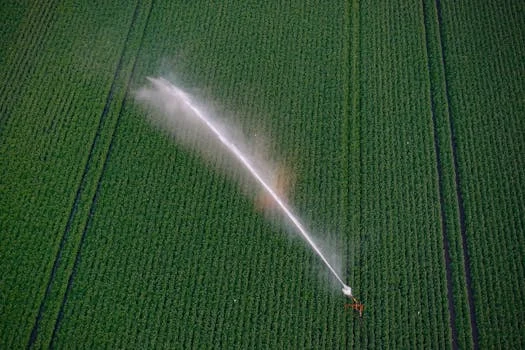
Code 501 treated wastewater reuse egypt rules come from the Egyptian Code for the Use of Treated Municipal Wastewater in Agriculture (Code 501/2015), which grades reclaimed water A–D by treatment level and crop class. Grade A needs tertiary treatment; Grades C and D are typically limited to industrial crops, fodder, or wood trees in controlled settings. Egypt's water-security strategy promotes this reuse for non-potable duties.
The code lineage is documented in the reuse-guidelines literature. According to the IntechOpen review of treatment technologies and water-reuse guidelines, the 501 code in the 2005 version classifies treated wastewater into three categories, whereas four categories were proposed in ECP 501, 2015, based on the treatment level. The same review states that the Egyptian Code generally prohibits the cultivation of raw vegetables, such as cucumber and tomatoes, using treated wastewater.
| Reuse Category | Treatment Requirement | Fecal Coliform (MPN/100mL) | Permitted Applications |
|---|---|---|---|
| Category A | Secondary + Filtration + Disinfection | ≤ 100 | Food crops, parks, green spaces with public access |
| Category B | Secondary + Disinfection | ≤ 1,000 | Crops with edible peels (cooked), fruit trees |
| Category C | Secondary (Biological) | ≤ 5,000 | Industrial crops (cotton), fodder, wood forests |
| Category D | Primary (Sedimentation) | N/A | Non-food wood trees in remote areas |
Older Code 501/2005 summaries still circulate with fecal coliform ≤1,000 MPN/100 mL for higher grades; Code 501/2015 tightens pathogen targets by grade and keeps raw-vegetable irrigation off-limits regardless of treatment level. Industrial cooling reuse often needs turbidity <5 NTU and iron below 0.3 mg/L to protect exchangers. Any reuse scheme still needs MWRI permitting and a public-health safeguard plan.
Reuse volumes keep rising. According to the Wikipedia overview, the share of treated wastewater reached 74% by 2022, and total treatment capacity exceeded 16 million cubic meters per day by 2021. On reuse jobs we refuse a Grade A claim until the crop list is attached to the approval.
Beni Suef Power Plant Wastewater Permit Files on the Nile
A beni suef power plant wastewater permit, where the outfall is the Nile, is an MWRI licence under Law 48/1982 with Ministry of Health sampling. The line egyptian legal standards and specifications for treated industrial wastewater discharge to the river nile for beni suef power plant means that Nile column, not the sewer column of BOD ≤600 mg/L. No public permit file for that plant was among the sources read for this update, so do not invent a permit number or a pass or fail history.
For the main stream, design the compliance point to BOD ≤30 mg/L, COD ≤40 mg/L, and TSS ≤30 mg/L. Cooling-tower blowdown is where we most often see the oil & grease spike, not the sanitary stream. Hold a sample valve on the combined outfall, because a clean internal stream can hide a dirty one. Ask for the signed limit sheet before the bid bond is priced; a generic Nile screenshot is not the permit.
Commonly Used Treatment Technologies in Egypt
Conventional activated sludge remains the dominant municipal secondary process in Egypt, covering over 70% of municipal capacity in sector summaries used here. Extended aeration variants appear on larger works because they buffer organic shocks and cut sludge yield. Reliability against BOD and TSS limits is why utilities keep specifying CAS for drain discharges. The installed base is large: by 2012 Egypt had 375 municipal wastewater plants treating an average of 10.1 million cubic meters per day, per the Wikipedia overview, and Bahr El Baqar added 5 million cubic meters per day in 2021, with the New Delta plant at 7.5 million cubic meters per day in 2023.
In food processing and petrochemicals, DAF systems are the usual primary clarification step. Micro-bubbles float FOG and fine solids so sewer oil & grease stays under 100 mg/L and COD load drops before biology. For compact sites chasing Category A reuse quality, MBR systems replace secondary clarifiers and sand filters with membrane separation and a smaller footprint.
Regulatory Trends and Future Compliance in Egypt

Regulatory practice in Egypt is moving toward continuous monitoring for large emitters in the Nile Delta and along the Suez Canal corridor. By 2026, large-scale industrial dischargers are expected to install continuous water-quality monitoring for flow, pH, and COD with data reported to EEAA systems. Design packages should reserve instrument ports and sample points now, even if the permit is still grab-sample based. The starting baseline was harsher: about 3.5 BCM/year of municipal wastewater was being discharged into the Nile and the sea in 2002, of which only 1.6 BCM/year (about 45%) were treated, per the water-resources overview.
New industrial cities increasingly use centralized effluent treatment plants. Factories pretreat to sewer-entry standards; the CETP finishes biological and tertiary steps. That lowers factory CAPEX but raises the cost of non-compliant slug loads into the shared network. Decree 208/2018, noted in the EIB IWSP 2 SESA (2019), also pushes case-by-case studies when treated wastewater enters a non-fresh body that later reaches fresh water.
Who This Is For and Next Step
This page is for plant engineers, EPC leads, and procurement managers sizing pretreatment or full treatment for Egyptian industrial sites, including Nile-adjacent power and process plants. Look elsewhere if you need Saudi discharge codes or potable reuse design—those are different rule sets. On inquiry packs we send back any train that does not name the receiving body. Selection checklist before inquiry:
- Confirm receiving body: public sewer, agricultural drain, or River Nile.
- Pull the numeric limits from the licence text, not from a generic brochure.
- Match FOG, BOD/COD, and metals removal to the sector waste profile.
- Budget for Environmental Register sampling and quarterly reporting.
- Decide reuse grade only after Code 501 crop restrictions are clear.
- Leave space for online pH, flow, and COD monitoring hardware.
If you are comparing pretreatment trains for an Egyptian factory or power-site outfall, request a process quote with your receiving-body limits and average/peak flows.
Frequently Asked Questions
What is the main wastewater discharge law in Egypt?
Law 93/1962 governs discharge into public sewer systems, while Law 48/1982 regulates discharge into the Nile and other water bodies. Law 4/1994 adds EIA and Environmental Register duties for industrial projects. For a Beni Suef-type Nile outfall, the MWRI licence under Law 48 is the gate; sewer connection rules alone are not enough. EEAA enforcement sits beside MWRI sampling and Ministry of Health laboratory checks.
What are Egypt’s effluent standards for BOD and TSS?
For treated municipal sewage discharged into water bodies, common design targets are BOD ≤25 mg/L and TSS ≤30 mg/L. Law 48/1982 Nile discharge summaries in the EIB IWSP 2 SESA (2019) list BOD ≤30 mg/L and TSS ≤30 mg/L, with drain BOD ≤60 mg/L. Industrial sewer entry under Decree 44/2000 allows BOD ≤600 mg/L and TSS ≤800 mg/L because the municipal plant completes treatment.
Can treated wastewater be used for irrigation in Egypt?
Yes, under Code 501/2015, treated municipal wastewater may irrigate permitted crop classes when grade limits for BOD, TSS, and pathogens are met. Raw vegetables remain restricted regardless of treatment level; the Egyptian Code generally prohibits cultivating raw vegetables such as cucumber and tomatoes using treated wastewater. Grades C and D usually serve industrial crops, fodder, or wood trees. Reuse still needs competent-authority approval and a health safeguard plan before irrigation starts.
Which ministry enforces wastewater regulations in Egypt?
EEAA under the Ministry of Environment is the primary environmental enforcer, working with the Ministry of Water Resources and Irrigation on Nile and waterway licences; MWRI also monitors water quality directly. The Ministry of Health performs laboratory analysis of licensed discharges under Law 48/1982. Housing-sector utilities and local sewer authorities administer Law 93/1962 connections. Multi-agency files are normal; keep one compliance owner on the plant side.
Are industrial facilities required to self-monitor wastewater in Egypt?
Yes, facilities must maintain an Environmental Register, record wastewater characteristics and disposal methods, and expect EEAA sampling at any time. Daily effluent logs and quarterly compliance reports are standard practice for permitted industrial dischargers. Online COD, pH, and flow monitoring is increasingly specified for large emitters. Missing register entries trigger the same enforcement path as off-spec samples.
Further Reading
Explore these in-depth articles on related wastewater treatment topics: