Wastewater treatment plant cost in Faridabad runs ₹1.2–₹4.5 crore CAPEX for a 500 m³/day industrial plant, with OPEX of ₹8–₹25/m³ treated (2026 estimates). Haryana PCB's 50 mg/L COD limit and ₹5 lakh/day fines make the investment non-negotiable for local factories.
Wastewater Treatment Plant Cost in Faridabad: The 2026 Compliance Math
Wastewater treatment plant cost in Faridabad totals ₹1.2–₹4.5 crore in CAPEX plus ₹8–₹25/m³ in OPEX for a 500 m³/day plant, measured against Haryana PCB limits of 50 mg/L COD, 30 mg/L BOD, and 100 mg/L TSS. MBBR fits auto effluents at TSS 800–1,200 mg/L. Fines reach ₹5 lakh per day.
Non-compliance now outpaces treatment cost in Faridabad. In 2024, 38% of local factories failed Haryana PCB inspections, up from 22% in 2020 — clear evidence of intensified regulatory scrutiny. Yamuna River discharge limits under Haryana PCB's 2025 standards are strict: COD must not exceed 50 mg/L, BOD 30 mg/L, and TSS 100 mg/L. Typical Faridabad auto effluent registers around 2,500 mg/L COD and 1,000 mg/L TSS, so raw discharge sits far outside the permitted band.
The fine math is brutal: ₹5 lakh per day of violation. A 500 m³/day auto plant paying that penalty could fund the roughly ₹3 crore CAPEX of a comprehensive MBBR system within 600 days of avoided fines. Set against OPEX of ₹8–₹25/m³ treated, the plant stops being a cost center and becomes the cheapest available insurance against shutdown.
Sector context helps when benchmarking budgets. For a wider process primer written for the same buyer, our companion article on industrial wastewater treatment applies identical sizing logic under a different consent regime. The Faridabad-specific numbers follow below.
CAPEX Breakdown and Hidden Costs for a 500 m³/day Faridabad Plant
A 500 m³/day Faridabad plant budgets ₹1.2–₹4.5 crore in CAPEX, and roughly 60% of that (₹7.2 lakh to ₹2.7 crore) lands in core equipment — reactors, pumps, blowers, and automation systems. Technology choice and site conditions swing the total more than any other variables. Most buyers we size for start the conversation at the lower end and climb as effluent complexity grows.
Civil works take about 20% (₹2.4 lakh to ₹90 lakh), covering earthwork, concrete foundations, and piping. Faridabad's clay-heavy soil can add up to 15% to civil costs versus areas with stable geology, so a soil report early in the project pays for itself. Installation and commissioning represent 10% (₹1.2 lakh to ₹45 lakh). Hold a further 10% contingency buffer for scope changes and material price swings.
The CAPEX OPEX split only tells half the story; recurring cost decides the five-year picture. Power consumption of 0.8–1.5 kWh/m³ translates to ₹6–₹12/m³ at ₹8/kWh. Chemicals — coagulants, flocculants, disinfectants — add ₹1.8–₹5/m³ depending on effluent quality.
Staffing one operator per shift plus a technician runs about ₹65,000 per month. Annual maintenance takes 2–5% of CAPEX, or ₹2.4–₹22.5 lakh on a ₹3 crore system. Membrane-based trains (MBR, DAF polishing) add ₹5–₹15/m³ for replacement every 3–5 years.
Hidden items bend the budget: land at ₹500–₹1,500/sq ft in NIT or Sector 58 industrial zones (2,000–3,000 sq ft for a 500 m³/day plant), Haryana PCB NOC at ₹2–₹5 lakh, and municipal approvals at ₹1–₹3 lakh. For a nationwide view, our India-level breakdown of capex and opex puts these Faridabad line items in context.
| Cost Component | Percentage of CAPEX | Estimated CAPEX Range (₹) | Estimated OPEX Range (/m³) | Notes |
|---|---|---|---|---|
| Equipment (Reactors, Pumps, Automation) | 60% | 72,00,000 - 2,70,00,000 | - | Dependent on technology (MBBR, UASB, DAF) |
| Civil Work (Earthwork, Concrete, Piping) | 20% | 24,00,000 - 90,00,000 | - | 15% premium for Faridabad's clay soil |
| Installation & Commissioning | 10% | 12,00,000 - 45,00,000 | - | Skilled labor and site setup |
| Contingency | 10% | 12,00,000 - 67,50,000 | - | For unforeseen expenses |
| Power Consumption | - | - | 6 - 12 | 0.8–1.5 kWh/m³ @ ₹8/kWh |
| Chemicals (Coagulants, Flocculants, Disinfectants) | - | - | 1.8 - 5 | Variable based on effluent quality |
| Labor (Operators, Technicians) | - | - | Approx. 3 - 6 | Based on staffing model |
| Maintenance (Annual) | - | - | Approx. 0.8 - 7.5 (as % of CAPEX/year) | 2-5% of CAPEX |
| Membrane Replacement (MBR/DAF) | - | - | 5 - 15 | Every 3-5 years |
| Land (Approx. 2,500 sq ft) | - | 12,50,000 - 37,50,000 | - | ₹500–₹1,500/sq ft in industrial zones |
| Permitting (PCB + Municipal) | - | 3,00,000 - 8,00,000 | - | NOCs and approvals |
MBBR vs UASB vs DAF Cost Faridabad: Technology Comparison
MBBR vs UASB vs DAF cost in Faridabad lands at ₹2,400–₹3,200, ₹1,800–₹2,500, and ₹1,500–₹2,200 per m³/day of CAPEX respectively, before hybrid trains change the arithmetic. Each technology earns its keep on a different effluent profile. The sections below give the per-technology detail.
Moving Bed Biofilm Reactor (MBBR) systems are the default for auto-industry effluents carrying high suspended solids (TSS 800–1,200 mg/L). CAPEX of ₹2,400–₹3,200/m³/day translates to ₹1.2–₹1.6 crore for a 500 m³/day plant, with OPEX of ₹12–₹18/m³ covering power and media replacement. Removal performance runs 85–90% on COD and 90–95% on TSS, and the process absorbs the variable loads typical of automotive production. Wikipedia's moving bed biofilm reactor overview explains why the footprint stays small: biofilm processes "require less space than activated-sludge systems because the biomass is more concentrated," and the technology serves automotive, chemical, food and beverage, and metal plating industries. Post-filtration is usually still needed to hold the PCB's TSS limit.
Upflow Anaerobic Sludge Blanket (UASB) reactors suit the high-COD streams (averaging 2,500 mg/L) common in Faridabad's pharmaceutical and textile sectors. CAPEX runs ₹1,800–₹2,500/m³/day — ₹90 lakh to ₹1.25 crore at 500 m³/day — with OPEX near ₹8–₹12/m³. The energy story is the draw: biogas production can offset 30–40% of plant energy costs, worth ₹2–₹4 lakh per month. Wikipedia's UASB entry confirms the mechanism — "biogas with a high concentration of methane is produced as a by-product, and this may be captured and used as an energy source." UASB alone cannot meet PCB discharge standards, so plan downstream aerobic polishing or DAF treatment.
Dissolved Air Flotation (DAF) systems carry a CAPEX of ₹1,500–₹2,200/m³/day (₹75 lakh to ₹1.1 crore for 500 m³/day) and OPEX of ₹10–₹15/m³. They remove 90–98% of suspended solids and 95%+ of oils and grease from metalworking and food processing effluents, and they absorb FOG shock loads. Separation is fast: circular units need roughly 3 minutes, while rectangular types require 20 to 30 minutes, per Wikipedia's dissolved air flotation entry. The DAF machine page lists specifications, capacity range, and technical data for these duties.
Complex effluents justify hybrid trains. A UASB followed by MBBR (CAPEX ₹2,800–₹3,500/m³/day, OPEX ₹15–₹20/m³) fits pharma and textile wastewater combining high COD and TSS. A DAF followed by MBBR (CAPEX ₹3,000–₹3,800/m³/day, OPEX ₹18–₹22/m³) matches auto effluents with significant oil and grease. The higher initial spend buys a single compliant treatment line instead of two half-solutions.
| Technology | CAPEX (/m³/day) | OPEX (/m³) | Typical Effluent Application | Key Performance Metrics | Faridabad Advantage | Limitations |
|---|---|---|---|---|---|---|
| MBBR | ₹2,400–₹3,200 | ₹12–₹18 | Auto Industry (TSS 800–1,200 mg/L) | COD Removal: 85–90% TSS Removal: 90–95% |
Handles variable loads; robust | Requires post-filtration for TSS |
| UASB | ₹1,800–₹2,500 | ₹8–₹12 | High-COD Streams (Pharma, Textile) | COD Removal: 70–80% | Biogas generation offsets energy costs (30-40%) | Requires post-treatment to meet PCB limits |
| DAF | ₹1,500–₹2,200 | ₹10–₹15 | Metalworking, Food Processing (FOG) | TSS Removal: 90–98% FOG Removal: 95%+ |
Handles shock loads (oil spills) | Not ideal for high-COD streams alone |
| UASB + MBBR (Hybrid) | ₹2,800–₹3,500 | ₹15–₹20 | Pharma/Textile (High COD + TSS) | Combined high removal rates | Cost-effective for dual challenges | Larger footprint than UASB alone |
| DAF + MBBR (Hybrid) | ₹3,000–₹3,800 | ₹18–₹22 | Auto (Oil/Grease + TSS) | Comprehensive removal | Tailored for auto industry needs | Higher CAPEX than individual units |
Where reuse-grade effluent is the target, membranes take over from media. The MBR integrated wastewater treatment system page carries specifications, capacity range, and technical data for single-stage compliance at TSS 800–1,200 mg/L auto loads.
How to Choose the Right System for Your Faridabad Factory
Technology selection for a Faridabad factory starts with effluent characterization — COD, BOD, TSS, FOG, pH, and heavy metals — because each sector's profile points to a different train. Navigating India's effluent rules demands that systematic first step rather than a catalog shortcut. Get a certified lab report before any quotation.
Faridabad's sector benchmarks frame the analysis. Auto industry effluents typically show COD of 1,500–2,500 mg/L, TSS of 800–1,200 mg/L, and FOG of 50–200 mg/L. Pharmaceutical wastewater runs higher on COD (3,000–5,000 mg/L) with TSS of 300–800 mg/L and pH between 5 and 9. Textile effluents present COD of 1,000–3,000 mg/L, TSS of 200–600 mg/L, and significant color (500–2,000 Pt-Co).
Match the technology to the dominant challenge. High COD streams (above 2,000 mg/L) call for UASB followed by post-treatment such as MBBR or DAF. High TSS (above 800 mg/L) points to MBBR or DAF coupled with filtration, while FOG above 200 mg/L justifies DAF pre-treatment, often combined with MBBR. Auto-plating heavy metals require chemical precipitation followed by DAF.
Budget bands then narrow the field. Below ₹1 crore, options limit to UASB or smaller DAF units (100–300 m³/day). Between ₹1 and ₹3 crore, MBBR or hybrid UASB+MBBR systems (300–1,000 m³/day) become feasible. Above ₹3 crore, MBR or advanced oxidation opens reuse-quality scope (1,000+ m³/day).
Compliance risk tolerance and site realities settle it. MBR carries the lowest risk, meeting PCB limits in a single stage; MBBR with filtration depends on operator diligence; UASB with post-treatment is cheaper but needs redundancy planning. Faridabad specifics matter too — MBBR's footprint is 30% smaller than UASB's, UASB biogas can power generators where grid supply wobbles, and both MBBR and DAF scale modularly for expansion. For plating and FOG duties, automated chemical dosing keeps coagulant feed stable through variable loads.
| Decision Step | Considerations & Actions | Recommended Technologies |
|---|---|---|
| 1. Effluent Characterization | Test for COD, BOD, TSS, FOG, pH, metals. Faridabad Benchmarks: - Auto: COD 1.5-2.5k, TSS 0.8-1.2k, FOG 50-200 mg/L - Pharma: COD 3-5k, TSS 0.3-0.8k, pH 5-9 - Textile: COD 1-3k, TSS 0.2-0.6k, Color 500-2k Pt-Co |
- |
| 2. Effluent Type Matching | - High COD (>2,000 mg/L) - High TSS (>800 mg/L) - High FOG (>200 mg/L) - Heavy Metals |
- UASB + Post-treatment (MBBR/DAF) - MBBR or DAF + Filtration - DAF + MBBR - Chemical Precipitation + DAF |
| 3. Budget Constraints (CAPEX) | - < ₹1 Crore - ₹1–₹3 Crore - > ₹3 Crore |
- UASB or DAF (100-300 m³/day) - MBBR or UASB+MBBR (300-1,000 m³/day) - MBR or Advanced Oxidation (1,000+ m³/day) |
| 4. Compliance Risk Tolerance | - Low Risk - Medium Risk - High Risk |
- MBR (Single Stage Compliance) - MBBR + Filtration (Operator Dependent) - UASB + Post-treatment (Redundancy Required) |
| 5. Faridabad Specifics | - Land Availability - Power Reliability - Future Expansion |
- MBBR (Smaller Footprint) - UASB (Biogas for Power) - MBBR/DAF (Modular Scalability) |
5-Year TCO Calculator: Which System Pays Off for Faridabad Factories?
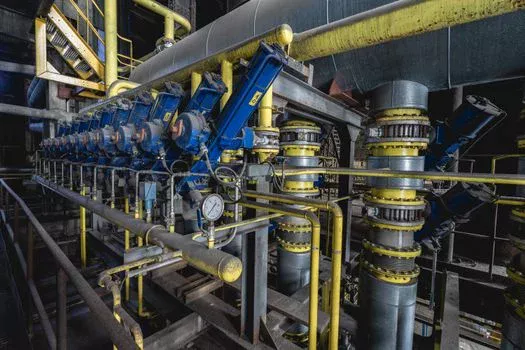
Five-year total cost of ownership for a 500 m³/day Faridabad plant spans ₹4.0–₹5.7 crore across the main configurations, assuming 6% annual inflation on power, chemicals, and labor plus electricity at ₹8/kWh (2026 estimate). TCO, not CAPEX alone, is the number that should reach the board. The breakdown by configuration follows.
A standard MBBR system carries an estimated CAPEX of ₹3.6 crore and accumulates roughly ₹1.1 crore in OPEX over five years, for a TCO of ₹4.7 crore. The UASB + MBBR hybrid starts lower at ₹3.1 crore CAPEX with about ₹90 lakh of five-year OPEX. Its biogas yield adds roughly ₹12 lakh per year in savings, bringing the five-year TCO down to ₹4.0 crore — the best value where effluent suits anaerobic treatment.
A DAF + MBBR system runs a higher CAPEX of ₹3.8 crore with five-year OPEX near ₹1.3 crore, a TCO of ₹5.1 crore justified on oil-and-grease-heavy auto streams. MBR commands the highest CAPEX at ₹4.5 crore with around ₹1.2 crore OPEX, totaling ₹5.7 crore. Its edge is effluent quality fit for reuse rather than the sticker price.
Compliance and reuse flip the ROI. Avoiding a single year of potential fines valued at ₹1.8 crore covers over 50% of an MBBR system's CAPEX. Water reuse valued at ₹50–₹100/m³ against freshwater costs of ₹80–₹150/m³ in Faridabad can recover an MBR system's CAPEX within 3–5 years at 500 m³/day. Higher upfront spend, in other words, often buys the stronger financial return.
| Technology | 5-Year CAPEX (₹ Crore) | 5-Year OPEX (₹ Crore) | Total 5-Year TCO (₹ Crore) | Key Financial Triggers / Savings |
|---|---|---|---|---|
| MBBR | 3.6 | 1.1 | 4.7 | Avoided fines cover 50%+ CAPEX |
| UASB + MBBR | 3.1 | 0.9 (with ₹1.2L/yr biogas savings) | 4.0 | Lower CAPEX, significant energy offset |
| DAF + MBBR | 3.8 | 1.3 | 5.1 | Effective for specific contaminants |
| MBR | 4.5 | 1.2 | 5.7 | Effluent reuse savings (₹50-100/m³), 3-5 yr payback for CAPEX |
Industrial Wastewater Treatment Cost India 2026: National Benchmarks
Industrial wastewater treatment cost in India (2026) tracks the same bands seen in Faridabad: under ₹1 crore for 100–300 m³/day UASB or DAF plants, ₹1–₹3 crore for 300–1,000 m³/day MBBR and hybrid trains, and above ₹3 crore for MBR or advanced oxidation at 1,000+ m³/day. Faridabad sits mid-range because clay soil and Yamuna-adjacent scrutiny add cost without adding capacity. The compliance floor, not the technology ceiling, sets the minimum spend.
Who this fits: Faridabad factories facing 2026 Haryana PCB consent renewals, especially auto, pharma, textile, and food units with 100–1,000 m³/day streams. Who should look elsewhere: units that can route effluent to a common treatment plant under CETP agreements may defer on-site tertiary scope. Export-facing buyers should also watch Europe — EU Urban Wastewater Treatment Directive: Compliance, Deadlines & Tech tracks 2025 directive deadlines whose expectations flow down supplier chains.
Equipment duty maps cleanly across these bands. MBR-integrated systems serve Faridabad auto effluents at TSS 800–1,200 mg/L, DAF machines handle metalworking and food processing FOG, and automated dosing systems stabilize chemical feed under variable loads.
Next step: send your flow rate and pollutant parameters through the request-a-quote form for a sized MBBR, UASB, DAF, or hybrid proposal, with TCO modeled on your tariff, land cost, and consent limits.
Frequently Asked Questions
What is the cheapest wastewater treatment plant for a small Faridabad factory (100 m³/day)?
A UASB system is the cheapest entry point, at ₹18–₹25 lakh CAPEX for 100 m³/day with OPEX near ₹8–₹12/m³. Meeting Haryana PCB standards still requires post-treatment, typically a DAF unit adding ₹5–₹8 lakh. A combined UASB + DAF system for 100 m³/day therefore lands at ₹23–₹33 lakh total CAPEX, with monthly OPEX of roughly ₹24,000–₹36,000.
How much does an MBBR system cost for a Faridabad auto plant (500 m³/day)?
An MBBR system for a 500 m³/day Faridabad auto plant costs ₹1.2–₹1.6 crore in CAPEX, with OPEX of ₹12–₹18/m³. Auto effluents here commonly carry TSS of 800–1,200 mg/L, so a sand filter is usually required to hold the PCB TSS limit. That addition typically raises CAPEX by 8–10%.
What does Haryana PCB compliance cost industrial wastewater plants in Faridabad?
Haryana PCB compliance costs industrial wastewater plants roughly ₹15–₹25 lakh for online monitoring of COD, TSS, and pH, with real-time data submitted to the Board. Permitting adds ₹3–₹8 lakh across PCB NOCs and municipal approvals. The exposure dwarfs both: fines run ₹5 lakh per day as of the 2025 update, so monitoring spend is cheap insurance.
What is a typical Faridabad factory ETP OPEX per cubic meter?
A Faridabad factory ETP typically spends ₹8–₹25 per cubic meter treated. Power leads at ₹6–₹12/m³ (0.8–1.5 kWh/m³ at ₹8/kWh), chemicals add ₹1.8–₹5/m³, labor runs roughly ₹3–₹6/m³, and membrane plants reserve ₹5–₹15/m³ for replacement every 3–5 years. Annual maintenance adds 2–5% of CAPEX.
What are the Haryana PCB compliance requirements for Faridabad factories in 2026?
By 2026, Faridabad factories discharging toward the Yamuna must meet COD at or below 50 mg/L, BOD at or below 30 mg/L, TSS at or below 100 mg/L, oil and grease below 10 mg/L, and pH of 6.5–8.5. Online monitoring of COD, TSS, and pH with real-time submission to Haryana PCB is mandatory, an investment of ₹15–₹25 lakh. Penalties stand at ₹5 lakh per day as of the 2025 update.
Can I reuse treated wastewater in my Faridabad factory to save costs?
Yes — reuse is increasingly viable, but it requires tertiary treatment with advanced filtration and disinfection. MBR systems produce effluent at COD below 30 mg/L and TSS below 5 mg/L, with CAPEX of ₹3,500–₹5,000/m³/day. Savings of ₹50–₹100/m³ against freshwater at ₹80–₹150/m³ deliver a 3–5 year payback for a 500 m³/day system.
What are the hidden costs of wastewater treatment plants in Faridabad?
Five hidden costs matter most. Land in NIT and Sector 58 industrial zones runs ₹500–₹1,500/sq ft. Regulatory permitting costs ₹3–₹8 lakh for PCB NOCs and municipal approvals. Civil work carries a potential 15% premium on clay-heavy soil. Membrane replacement adds ₹5–₹15/m³ every 3–5 years, and operator certification training costs ₹2–₹5 lakh for a 3-month program.